The CodeBreaker Mindset™ Ft. Aneesh Chopra, Arcadia, Chief Strategy Officer


In this conversation, Aneesh Chopra, Chief Strategy Officer of Arcadia, discusses the unique position of Arcadia in the healthcare data landscape, the importance of stakeholder alignment, and the challenges and opportunities in value-based care. He shares insights from his journey in healthcare technology, the role of AI in improving patient outcomes, and the significance of serendipity in business success. The discussion emphasizes the need for a collaborative approach between public and private sectors to drive innovation and improve healthcare delivery.
Chapters
(00:00) Introduction to Arcadia and Market Dynamics
(03:09) Understanding Stakeholders and Business Models in Healthcare
(05:48) Aneesh Chopra's Journey and Insights on Healthcare
(09:03) Tailwinds and Headwinds in Value-Based Care
(11:53) Strategies for Seizing Opportunities in Healthcare
(14:46) The Role of Serendipity in Business Outcomes
(18:07) Pivots and Innovations in Healthcare Technology
(21:13) AI Applications in Healthcare
(24:06) Winning Strategies in a Competitive Market
(27:10) Cultivating The CodeBreaker Mindset™
Episode Resources
Aneesh Chopra | Bio
Chitra Nawbatt | Bio
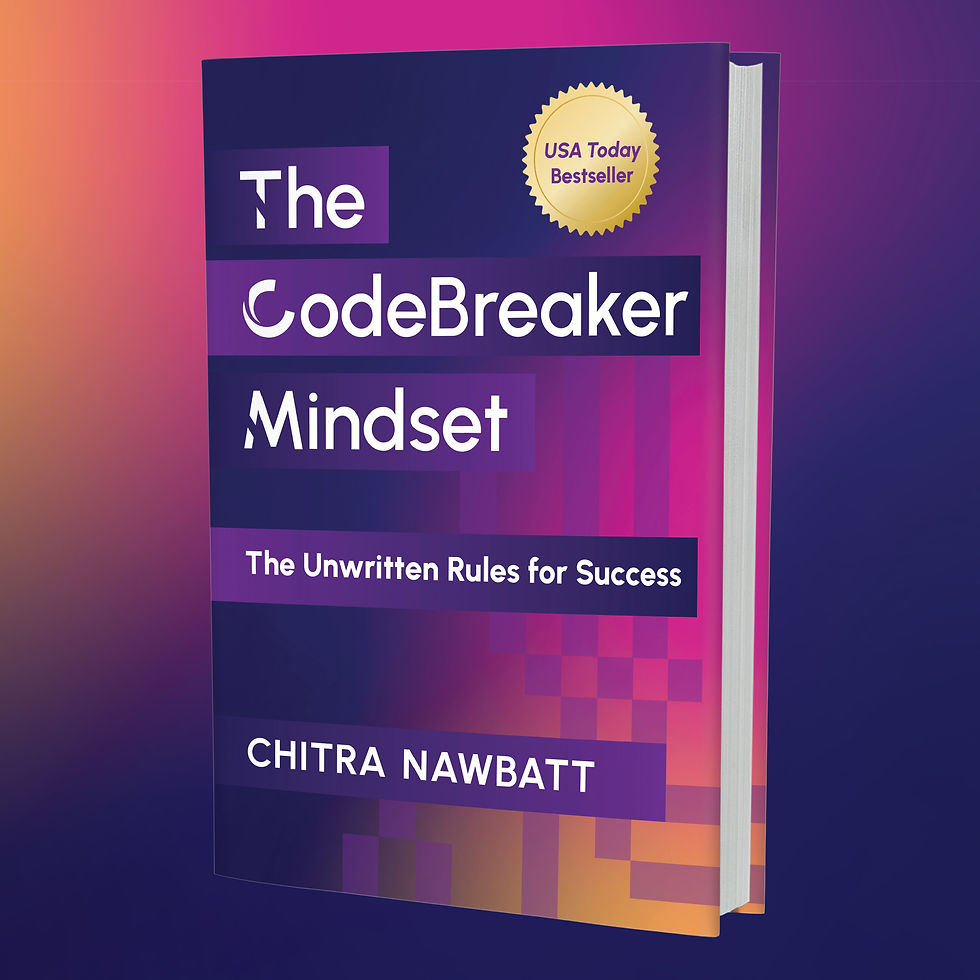
The CodeBreaker Mindset™ book order here: Amazon | Barnes & Noble
The CodeBreaker Mindset™ Ft. Aneesh Chopra, Arcadia, Chief Strategy Officer
Chitra Nawbatt (00:10)
Welcome to The CodeBreaker Mindset™, where leaders share the unwritten rules for success. I'm your host, Chitra Nawbatt. Joining us today is a Aneesh Chopra, chief strategy officer of Arcadia. Aneesh, Welcome. Thank you for joining us.
Aneesh Chopra (00:24)
Thanks Chitra.
Chitra Nawbatt (00:25)
Arcadia market leading health data platform, but 100 million plus in revenue. How is Arcadia different than the thousands of other health tech startups out there that say they do the same thing? Yeah, as well as the larger players like Epic and Oracle.
Aneesh Chopra (00:41)
Well, the good news is, you have to understand the market dynamics. Maybe I'll start with a little bit of a market overview. Then I'll tell you what our role is. We spent the last decade, 15, 20 years digitizing medical records, and we've begun to share those records. But the emphasis has been on managing workflow for clinicians in electronic health records.
But in the, mid to late, 2020 tens, we saw the beginning of this population health movement. And this was the inverse of the electronic health record, in that it was sole purpose was to start aggregating the records to better understand populations, so that you could get ahead of a problem before they come in to see a clinician.
That is where you saw a great deal of market momentum towards, organizations that could use the data, which meant they needed to have the skills to stitch together data from multiple, systems in multiple formats. And Arcadia has been one of the early players in that market and has reached a level of scale at some of the largest academic centers to organize that information effectively.
And so if you were interested in doing your work, looking at a patient's longitudinal record, there are a few choices you could work on to do that. And Arcadia is and has been a market leader in that work, as you know, founded Care Journey, which took the inverted view, which is, a lot of those same records.
A copy is in the government's database if you're a Medicare patient, Medicare Advantage or, Medicaid, and there's over 175 million records stitched together, linked longitudinal records. And so the Care Journey team was one of the, in fact, I think it's still the largest approved commercial researchers that can access that linked longitudinal database. And our purpose was to understand the drivers of high value and low value care.
So we were partners in the market for years, and we're partners in many other organizations as well. But you need to have this sort of data platform for your patients and a benchmark service to know where your how your performance relative to your peers by coming together. We've just dramatically accelerated the roadmap, and it's been like, you know, peanut butter and jelly or Reese's peanut butter cups.
The teams have gelled perfectly and we're moving fast and launching new products and services and several announcements just in the last week. And that is what really positions us for continued success. Organizations that need to deal with the complexity of sourcing data, organizing it, and putting it to its highest and best use. That's what we do.
Chitra Nawbatt (03:19)
So bring to life, because what you just talked about there is very involved, very, very, very complicated, as you said, bring that to life for us in terms of who are the stakeholders and outcomes delivered? Yes, to these different categories of stakeholders.
Aneesh Chopra (03:33)
Yeah. So business model drives a lot of the stakeholders. We live in an economy that's competitive. If you're in a fee for service environment, you want your IT systems to make sure that you can see more patients faster and get paid fairly for each encounter. So you reward technology. Platforms and EHR vendors have heard that signal directly for years.
And so there's a terrific market that gets the encounter efficiency well managed. There's now a new business model that says we think the population that works with you on a semi-regular basis, your primary care physician networks. And we expect that cost to be about 10,000 bucks a year, for a Medicare patient, if you can actually deliver high quality care for 8500, that remaining, savings can be shared up to 70, 80, 90% can be returned back to the network.
So when you've got a business model that is shifted towards lowering the total cost of care by while maintaining quality, there, you put a premium on a different kind of technology infrastructure. There you want to make sure that you have as much real time information about that patient's health status, especially when they're not in your clinic. They might have been in the emergency room.
They might see a specialist without having to come see you first. And when you understand what's happening and you can be much more, tuned to identifying those who's likely seeing a deterioration in their health status, you can more, effectively manage those costs. So the Arcadius stakeholders are the organizations that have a financially aligned incentive to deliver the best outcomes for the patient.
And our job is to give that organization the data analytics Workbench will pull the data out of the electronic health record. We'll add the health plan record. We'll touch a tap. The national networks to bring in, records from the other practices that are in the community and organize that information in the most effective and efficient way to serve as opportunities for improvement at care managers or analyst staff and and so forth.
Chitra Nawbatt (05:48)
Talk about your unique approach to this word alignment. Because that's a that's such a critical word in, in health care. And as part of that, I actually want to get into the rules of the game of health care and Arcadia. So the rules of the game. So this word alignment because it's so critical, different stakeholders. Yeah. How did you get an understanding of each of the stakeholders.
The Rules of the Game
Right. Because your journey you've not always been in health care. You were in technology. You were the first, US chief technology officer for President Barack Obama. Before that, you were Virginia secretary of technology under Governor Tim Kaine. Yes. You're viewed as like a don in health care, because modern health care is recognized as one of the most influential people in the industry.
Aneesh Chopra (06:28)
Very kind. Thank you.
Chitra Nawbatt (06:29)
Talk about your journey and how that has helped you understand these stakeholders. Know how to align them.
Aneesh Chopra (06:37)
Yeah, well, that's been my life's work. So, the connection to Arcadia is one of Arcadia's early customers and advisors, doctor John Halamka. He and I used to ride the mBTA shuttle bus when I was in graduate school. So just to get you a little bit of context setting, I left my undergraduate school at Johns Hopkins in 94 to be an investment banker at Morgan Stanley, and I was in the healthcare group, but my buddies in the technology group, they took a little company called Netscape Public, and I was somewhat familiar with the internet because we were just getting email.
Campus was just getting wired up. But I really had, you know, more of like a typewriter, if you will, electron and typewriter to get work done. But when I saw the Netscape IPO, a light bulb went off. The internet could be a platform for incredibly good things. And so while I was interested in the economics of the internet, I ended up going to the Kennedy School on Public Policy to study the implications of this for public goods, health, education and the environment.
And John was a grad student at MIT. So we take the mBTA shuttle bus together from Boston to Cambridge. And so I was just fascinated by what you can do, to, to make the health care system better with the internet. But it was obvious to me that incentives had gotten in the way, because if I can use the internet to build faster, that doesn't necessarily mean my mom's going to get healthier.
Just means maybe the administrative processes will transfer from paper to to digital to get to a place where we can use technology for the greatest good part of our Swat team. Going into the Obama administration, we were on the transition team together. Todd Park, Farzad Mustachio, and a couple other guys. We wrote a draft. We kind of like an open letter to the National coordinator for health I.T. to say, please, please, please take the $35 billion of the High Tech Act and make sure that we reward a clinical outcome and let the technology evolve to iterate and improve towards that outcome.
We recommended the Million Hearts initiative. You know, there's a fairly clear clinical need for, reducing heart attacks that are avoidable. Pretty good idea. Million heart attacks we could avoid if we were just actively monitoring blood pressure and are counseling patients, maybe putting on an aspirin, managing their, their blood pressure, addressing cholesterol. So smoking cessation programs, if you could do some low cost interventions we could.
I mean, could you imagine reducing a million heart attacks. So we said, look, imagine that's the North Star. What would be the technology ecosystem that would facilitate outcomes towards that goal? And easier said than done. We tried in the Obama first term to marry the Affordable Care Act implementation with the technology roadmap. And, you know, you never going to get those things right.
But the theory was, if we could accelerate the adoption of electronic health records and we knew what technologies would be needed to be successful in a more value or population based model, then the demand signal from the market, having seen the opportunity to save trillions of dollars, should have naturally taken the baton from the government into the hands of the private sector to drive the flywheel of a modern, more connected, more coordinated health care system.
For lots of reasons, we didn't get there, but that's been my life's work for the last 20 years. To try to bring that vision to life.
Chitra Nawbatt (10:16)
So fast forward to today. Yes, talk about the top tailwind that Arcadia has and then the top headwind. Yeah.
Aneesh Chopra (10:28)
Well, the tailwind is pretty clear. The supply of data that is now available for sharing is skyrocket ING. Interoperability is working. Paper systems are now digital, almost ubiquitous. Health plans are sharing longitudinal records in a way that they didn't really have. The capacity to do in the past. So the supply of data is growing, which puts a premium on organizations that can help people make the best use of it.
I mean, AI tools are exactly built for that last mile interpretation layer on a large, well-organized data set. So running AI on fragmented, siloed healthcare data may not get you the best advice on the next step of a patient's journey. When you can first assemble a much more accurate longitudinal record that understands the patient's comorbidities and other, context about why they're, health status is the way it is.
So the work of Arcadia in building that longitudinal health record is kind of like the foundation layer of what this is incredible excitement innovation is doing in the age of AI. So that, to me is what gives us the biggest tailwind, the supply of data, the ability to orchestrate and then to bring those applications, the headwind is the obvious one.
The ultimate value based care business model is Medicare Advantage. CMS is capitated the dollars to the plans. The plans of every incentive to lower the total cost of care. And there's been some debate about the appropriate compensation models for those plans, because you have to take into consideration the expected cost of a single Medicare patient to fund, the Ma plan and to avoid adverse selection.
But those things can be, abused in terms of the, the economic model. And you hear things like up coding and other, you know, kind of, market realities that have frustrated people as to why, you know, value based care should be about making sure we deliver quality care, not just financially engineered, documented care.
So, the headwind there is the administration, both the Trump administration and the, Biden administration. They have continued, you know, I think the Department of Justice just unveiled a lawsuit against the United around this topic of risk adjustment and coding, and that's been launched by the Trump administration. So, there may be, a little bit of headwind in the economic model of value based care if we can't tune the instruments correctly.
Chitra Nawbatt (13:01)
So what's your pattern recognition? Take us into your pattern recognition on what's the unwritten rule, if you will, the unwritten rule, the hack if there is one on how you seize opportunity on the tailwind side and how you address that headwind.
Aneesh Chopra (13:18)
So to me, this is my jam, and the opportunity is to see the three basic principles. One and acknowledgment that health care is public. Private, which means that, we need to have the private sector to organize in order to take the handoff from the Washington frameworks to policymakers. And so you can kind of address this by saying, I'm going to help Washington set the right policy or I'm going to strengthen the quality of the handoff between Washington and the public private sector.
And I'm going to try to organize the demand signal or the community to become better partners with the government. I think that handshake that you see in Washington, which is both Democrats and Republicans, agree we need a higher value, higher quality delivery system. But when they hand it off to the private sector, they're not getting the expected results.
So point one in my in my three part harmony here is to understand that the root of the opportunity is at the public private interface. Number two, you best influence the public private interface through industry consensus standards. What that means is instead of yelling louder, paying it for a higher quality lobbyist and screaming, change word A to B!
What I want to do is that internet adage rough consensus running code. Nothing beats getting a few people to say, look, we're going to build the the operating system for a value oriented delivery model, but we're going to test ways in which we can make it better, faster, cheaper. So yes, public, private, yes, industry consensus standards. And then here comes the the most powerful hack.
It turns out you only need a half a dozen organizations in the coalition of the willing to get evidence of industry adoption of a new way of of running, a health care delivery. And if we can get enough early adopters that show promising results, you can slingshot back through the government to recognize that that alternative approach is the new foundation and can be the requirement for everybody.
To give you a simple example, it was very difficult for consumers to access their health information. In the beginning of the Obama administration, as we began, began the digitization of health care. I could look at my data through a portal, but I couldn't connect it to an app I trust to help me understand it so I could see my data.
I could print out a copy of my data, but I. I can't really interpret my data through a marketplace of applications. So the Obama administration pushed hard on the meaningful use program to get to a place where we could more easily, proverbially connect an app of our choice to the to our health data. But it took half a dozen partners epic, Cerner, EA Clinical Works, and a few others meditech to say we're going to work on something we're to launch the Argonaut Project.
John Halamka makes another appearance, and we got maybe a dozen stakeholders to say, we're going to work on this and who showed up. But Apple Health before Apple Health was announced. So Apple famously, is secretive about all new products, but in health care they decided to engage in standards. And what does that mean within a few years, Apple announces Apple Health works with maybe a dozen or so health systems, many of whom were on epic, epic, worked with Apple in this industry consensus process, not through a proprietary connection, but through an open standard.
And that was so successful that when Congress passed the Cures Act, that framework of a fire API, which is the name of the standard that we worked on with Apple Health, became the new normal. So now all government sponsored plans and all certified electronic health records have to be able to communicate your and my health information in a fire API format, which allows us to organize it, aggregate it through an app of our choice.
So the hack is the formula for change is you focus on change at the public private interface, you go down the path of standards as a way to get to scale in a very fragmented, decentralized market, and you get early adopters to work together to test out the viability, such that if we could validate it works, we can scale through regulation.
That's the hack for change. And we're going to make that move on, liberating, oncology data, social determinants, data, patient longitudinal records data. And that's all coming.
Chitra Nawbatt (18:07)
So leveraging that framework let's get into the pivots.
The Pivots
Aneesh Chopra (18:10)
Yes.
Chitra Nawbatt (18:11)
Where have you either put in place that framework or talk about, a significant pivot that you've made in business?
Aneesh Chopra (18:22)
Well, this is a very interesting, history lesson. When we launched Care Journey, the predecessor to Arcadia, the thesis was we could take previously government health data using modern, in this case, analytics tools to shine light on opportunities for improvement and in care delivery that would be rewarded a value based care business model. And to your earliest comment about Arcadia. And the market is full of thousands of companies. Care journey was one of those thousands of companies, and in 2014 15 we were getting our first set of contracts. The only data that we could access was, patient level data that was given by CMS to these accountable care organizations that had signed up for a contract called the Medicare Shared Savings Program.
So we were in the business, like many, many, many other companies, to say, look, you have this digital file, give us a copy and see what we can do with our analytics engine to make you a little bit more effective at your job. And that was a very competitive market. Our mutual friend Steve Classical was one of my first customers, and we had several others that were very early adopters and supportive of us, building products with them to show the power.
And, it became pretty clear that that crowded market of making insights off of a patient level data may not be the best place for us to differentiate. Well, the policy I worked on for many years to open up the government health data, finally reached the the the implementation stage late 2015. Andy Slavitt, then the CMS administrator, announced he was going to reform the program that would allow today, academic researchers could do research studies on the data.
So well, we're going to add a program called, a commercial researcher, ergo an innovator. And so Care Journey applied to be one of the country's first innovators to get access to health information by logging in, not asking individual class go. Can you share your Delaware Valley ACO or Jefferson Health data? But to say no, I'm going to look up every doctor in America, every patient in America, and I'm going to draw broad conclusions about high value and low value care, and then sell insights and derivative works off of that base.
So we pivoted from being patient level insight to really the largest commercial researcher to extract insights on the aggregate data. And that became the heart of our business for the next almost decade. And we are back to the future in that, now that we've merged with Arcadia, now we're putting both pieces together. If you have patient level data and access to the national aggregate data and benchmarks, you really have all the tools you need to thrive in value based care.
Chitra Nawbatt (21:15)
So now with this combined new entity and congratulations, and given your deep understanding of the health care ecosystem, especially technology, artificial intelligence.
Aneesh Chopra (21:26)
Oh, yeah.
Chitra Nawbatt (21:27)
Where are you guys? What's the top top use case where you guys are going gangbusters on artificial intelligence, the level of investment and the outcomes.
Aneesh Chopra (21:37)
Yeah, well, everyone understands summarization of data is a perfect use case for generative AI. So we have a patient, 360. We should have a better name for it, but we call it patient 360, which is the linked longitudinal view of the patient with all the real time encounters, the longitudinal claims history, the H.R records, the network records, we stitch them all together.
And then we've got an LLM that can we use that one of the, frontier models. And we tune them to give us the best description of what that, patient needs. And then we deliver that insight to the physicians point of care through a smart on fire application. Again, regulations allow third party vendors to build applications that can sit atop a very powerful certified electronic health record.
And so epic Cerner, Athena, they all have, these fire servers. So our clients are increasingly saying, hey, we want your insights at the point of care. And AI becomes a mechanism for more easily understanding what it is that the patient's health history is telling us. And to service the key care gaps that need to be addressed. So that's by far the biggest application.
We're also experimenting with mapping. So if you loaded, data in multiple formats, you want to kind of standardize that into an open data model. And so some of that has historically been custom developer mapping kits. Now you can almost put an LLM into the work of, of of translation. And so that's another area that's getting a lot of attention.
And I remain we made an announcement this week, with a company called League where another company called Atreus, where we are beginning to open up our underlying data assets to our marketplace partners so they can build products and services on top of the Arcadia platform, obviously, with our customers permission and focus. And so we're able to bring algorithms to our member data that may not we may not have been the ones to to generate that algorithm, but we are distributing it through our, our trusted marketplace.
Chitra Nawbatt (23:41)
But across each of the each of those dimensions you just talked about, you can you have many competitors, as you know. Right. And so so how do you win? How do you win at that? Whether it's the insights piece, or any of the 2 to 3 categories you just talked about, is it who's going to throw is that you guys throwing the most amount of dollars?
Is it the engineers to perfect the LMS? The, the the learning language learning models. How do you win?
Aneesh Chopra (24:06)
I think the way you win is the customer achieves the business outcome they're asking you to work on, which in this case is to achieve shared savings. So we we have a lot in the Bay area thinking around the technology itself is going to drive, the result and the truth of the matter is the best technology in the world, in the hands of folks that don't want to use it or don't really feel compelled to log in, is gathering dust.
It could be the best model, but if it's not put to action, it's not going to do anything. So we really sort of put our energy on activating the use of these models in workflow and business strategy and review. And that to me is the key to we have motivated customers because of the aligned incentives. And we're making it easy for them to interact with the AI models.
And we are working with them to test what's the best way for you to implement and learn what it can do to improve the overall care trajectory. So to me, it's that systems mindset, the outcomes mindset that remains the key differentiator to why we're able to thrive in an age when you can substitute the underlying technology with some ease.
Chitra Nawbatt (25:14)
I want to get into the magic because there's something you talked about meeting John Halamka riding the bus. Fast forward. He's on the board of Arcadia, advisory board, care journey, being acquired by Arcadia. So this notion of the magic serendipity, what is your definition? What's your take on serendipity? And where has serendipity played a critical role in a business outcome?
The Magic
Aneesh Chopra (25:41)
Yeah. Well, serendipity is, maybe in my language, you kind of make your own luck. So, that is definitely, In fact, we are filming this interview in the hotel where I had the very first conversation with Arcadia about us coming together. Now, we have many mutual friends in private equity. And I'm friendly, in a way, thinking that perhaps, the firm we launched, Care Journey, might be part of a larger private equity strategy.
So as I was thinking about ways to scale up our features in a broader feature set, I was naturally assuming that our home would be in some private equity engineered, combination. And so the serendipity, of having a partner meeting where we were going after opportunities to partner on a whole range of subjects actually ended up resulting in, a pivot in my mind about us actually working together and in pursuit of actually, full on partnerships.
So maybe, maybe serendipity is, you know what I thought does take that time in the meeting that day around this subject? You know? Yeah. Who knows? But luck, in this case, an open mind and a willingness to engage your friends and partners, even in ways they hadn't thought about as to why you were having that meeting in the first place.
Chitra Nawbatt (27:10)
And what's your advice on how to cultivate The CodeBreaker Mindset™?
Aneesh Chopra (27:14)
Listen, if you don't know the problem you're trying to solve really, really, really well, you're going to chase your tail. And, The CodeBreaker Mindset™, I hope, is about understanding why and in what context it is that code exists that you want to break and, that spend $0.90 of your dollar thinking about the why, the problem, the issue, and then be creative, as we all are, in identifying an approach to tackle that problem in a novel way and not taking the current mindset of it's never been done before.
We've tried all the things that doesn't work, but if you're good at defining the problem, you can be creative and confident with The CodeBreaker Mindset™ to dive in in a way that you hadn't thought about. Maybe I'll leave you with this thought about The CodeBreaker Mindset™ around, you know, some of the small victories we had in the early Obama administration days.
Maybe the blue button story is a great way to wrap up this, conversation. The, in the health care delivery and interoperability world, it's very paternalistic. A doctor should be able to share with another doctor, like a consult my record with your record. And how do we build systems that allow that kind of free flowing of information while making sure that my medical record doesn't end up in the wrong place?
And there's been, many years of debate about how to do that. But an interesting question, provoked by a meeting at the Markel Foundation that Todd Park and Peter Levin attended, that I wasn't there, said, I think it was Adam Bosworth. One of the gentlemen who invented the XML. I wish there was like, a button, maybe a blue, a blue button that could be available to me to push.
That allows me to take my records and organize them the way I want as a patient, and bring it with me to the doctor's office. And, that really struck me as a completely different approach to the interoperability problem. It's not solving the B2B networks. It's enabling consumer access to both pull the data out of this ecosystem into their own home safely and securely, and then offering on ramps to share that information back.
And, when President Obama was given the opportunity, he issued a call to action to the disabled at a speech to the Disabled Veterans to say, I have challenged my team to give you a blue button this fall that would allow you to push, and access your own health information to use it as you wish. Over a million veterans within 90 days of that speech had access to the blue button, and Medicare patients were in the same boat and off we ran.
So that code breaker mindset to say interoperability should be about going through the patient and allowing the patient to organize and share. That was a fresh look at the underlying problem.
Chitra Nawbatt (30:20)
Aneesh, thank you so much for joining us.
Aneesh Chopra (30:22)
Thank you for having me.
Chitra Nawbatt (30:25)
Thank you for supporting The CodeBreaker Mindset™. For more episodes, go to www.ChitraNawbatt.com to like and subscribe. Connect with me on social media @ChitraNawbatt.
The CodeBreaker Mindset™ Ft. Aneesh Chopra, Arcadia, Chief Strategy Officer
Chitra Nawbatt (00:10)
Welcome to The CodeBreaker Mindset™, where leaders share the unwritten rules for success. I'm your host, Chitra Nawbatt. Joining us today is a Aneesh Chopra, chief strategy officer of Arcadia. Aneesh, Welcome. Thank you for joining us.
Aneesh Chopra (00:24)
Thanks Chitra.
Chitra Nawbatt (00:25)
Arcadia market leading health data platform, but 100 million plus in revenue. How is Arcadia different than the thousands of other health tech startups out there that say they do the same thing? Yeah, as well as the larger players like Epic and Oracle.
Aneesh Chopra (00:41)
Well, the good news is, you have to understand the market dynamics. Maybe I'll start with a little bit of a market overview. Then I'll tell you what our role is. We spent the last decade, 15, 20 years digitizing medical records, and we've begun to share those records. But the emphasis has been on managing workflow for clinicians in electronic health records.
But in the, mid to late, 2020 tens, we saw the beginning of this population health movement. And this was the inverse of the electronic health record, in that it was sole purpose was to start aggregating the records to better understand populations, so that you could get ahead of a problem before they come in to see a clinician.
That is where you saw a great deal of market momentum towards, organizations that could use the data, which meant they needed to have the skills to stitch together data from multiple, systems in multiple formats. And Arcadia has been one of the early players in that market and has reached a level of scale at some of the largest academic centers to organize that information effectively.
And so if you were interested in doing your work, looking at a patient's longitudinal record, there are a few choices you could work on to do that. And Arcadia is and has been a market leader in that work, as you know, founded Care Journey, which took the inverted view, which is, a lot of those same records.
A copy is in the government's database if you're a Medicare patient, Medicare Advantage or, Medicaid, and there's over 175 million records stitched together, linked longitudinal records. And so the Care Journey team was one of the, in fact, I think it's still the largest approved commercial researchers that can access that linked longitudinal database. And our purpose was to understand the drivers of high value and low value care.
So we were partners in the market for years, and we're partners in many other organizations as well. But you need to have this sort of data platform for your patients and a benchmark service to know where your how your performance relative to your peers by coming together. We've just dramatically accelerated the roadmap, and it's been like, you know, peanut butter and jelly or Reese's peanut butter cups.
The teams have gelled perfectly and we're moving fast and launching new products and services and several announcements just in the last week. And that is what really positions us for continued success. Organizations that need to deal with the complexity of sourcing data, organizing it, and putting it to its highest and best use. That's what we do.
Chitra Nawbatt (03:19)
So bring to life, because what you just talked about there is very involved, very, very, very complicated, as you said, bring that to life for us in terms of who are the stakeholders and outcomes delivered? Yes, to these different categories of stakeholders.
Aneesh Chopra (03:33)
Yeah. So business model drives a lot of the stakeholders. We live in an economy that's competitive. If you're in a fee for service environment, you want your IT systems to make sure that you can see more patients faster and get paid fairly for each encounter. So you reward technology. Platforms and EHR vendors have heard that signal directly for years.
And so there's a terrific market that gets the encounter efficiency well managed. There's now a new business model that says we think the population that works with you on a semi-regular basis, your primary care physician networks. And we expect that cost to be about 10,000 bucks a year, for a Medicare patient, if you can actually deliver high quality care for 8500, that remaining, savings can be shared up to 70, 80, 90% can be returned back to the network.
So when you've got a business model that is shifted towards lowering the total cost of care by while maintaining quality, there, you put a premium on a different kind of technology infrastructure. There you want to make sure that you have as much real time information about that patient's health status, especially when they're not in your clinic. They might have been in the emergency room.
They might see a specialist without having to come see you first. And when you understand what's happening and you can be much more, tuned to identifying those who's likely seeing a deterioration in their health status, you can more, effectively manage those costs. So the Arcadius stakeholders are the organizations that have a financially aligned incentive to deliver the best outcomes for the patient.
And our job is to give that organization the data analytics Workbench will pull the data out of the electronic health record. We'll add the health plan record. We'll touch a tap. The national networks to bring in, records from the other practices that are in the community and organize that information in the most effective and efficient way to serve as opportunities for improvement at care managers or analyst staff and and so forth.
Chitra Nawbatt (05:48)
Talk about your unique approach to this word alignment. Because that's a that's such a critical word in, in health care. And as part of that, I actually want to get into the rules of the game of health care and Arcadia. So the rules of the game. So this word alignment because it's so critical, different stakeholders. Yeah. How did you get an understanding of each of the stakeholders.
The Rules of the Game
Right. Because your journey you've not always been in health care. You were in technology. You were the first, US chief technology officer for President Barack Obama. Before that, you were Virginia secretary of technology under Governor Tim Kaine. Yes. You're viewed as like a don in health care, because modern health care is recognized as one of the most influential people in the industry.
Aneesh Chopra (06:28)
Very kind. Thank you.
Chitra Nawbatt (06:29)
Talk about your journey and how that has helped you understand these stakeholders. Know how to align them.
Aneesh Chopra (06:37)
Yeah, well, that's been my life's work. So, the connection to Arcadia is one of Arcadia's early customers and advisors, doctor John Halamka. He and I used to ride the mBTA shuttle bus when I was in graduate school. So just to get you a little bit of context setting, I left my undergraduate school at Johns Hopkins in 94 to be an investment banker at Morgan Stanley, and I was in the healthcare group, but my buddies in the technology group, they took a little company called Netscape Public, and I was somewhat familiar with the internet because we were just getting email.
Campus was just getting wired up. But I really had, you know, more of like a typewriter, if you will, electron and typewriter to get work done. But when I saw the Netscape IPO, a light bulb went off. The internet could be a platform for incredibly good things. And so while I was interested in the economics of the internet, I ended up going to the Kennedy School on Public Policy to study the implications of this for public goods, health, education and the environment.
And John was a grad student at MIT. So we take the mBTA shuttle bus together from Boston to Cambridge. And so I was just fascinated by what you can do, to, to make the health care system better with the internet. But it was obvious to me that incentives had gotten in the way, because if I can use the internet to build faster, that doesn't necessarily mean my mom's going to get healthier.
Just means maybe the administrative processes will transfer from paper to to digital to get to a place where we can use technology for the greatest good part of our Swat team. Going into the Obama administration, we were on the transition team together. Todd Park, Farzad Mustachio, and a couple other guys. We wrote a draft. We kind of like an open letter to the National coordinator for health I.T. to say, please, please, please take the $35 billion of the High Tech Act and make sure that we reward a clinical outcome and let the technology evolve to iterate and improve towards that outcome.
We recommended the Million Hearts initiative. You know, there's a fairly clear clinical need for, reducing heart attacks that are avoidable. Pretty good idea. Million heart attacks we could avoid if we were just actively monitoring blood pressure and are counseling patients, maybe putting on an aspirin, managing their, their blood pressure, addressing cholesterol. So smoking cessation programs, if you could do some low cost interventions we could.
I mean, could you imagine reducing a million heart attacks. So we said, look, imagine that's the North Star. What would be the technology ecosystem that would facilitate outcomes towards that goal? And easier said than done. We tried in the Obama first term to marry the Affordable Care Act implementation with the technology roadmap. And, you know, you never going to get those things right.
But the theory was, if we could accelerate the adoption of electronic health records and we knew what technologies would be needed to be successful in a more value or population based model, then the demand signal from the market, having seen the opportunity to save trillions of dollars, should have naturally taken the baton from the government into the hands of the private sector to drive the flywheel of a modern, more connected, more coordinated health care system.
For lots of reasons, we didn't get there, but that's been my life's work for the last 20 years. To try to bring that vision to life.
Chitra Nawbatt (10:16)
So fast forward to today. Yes, talk about the top tailwind that Arcadia has and then the top headwind. Yeah.
Aneesh Chopra (10:28)
Well, the tailwind is pretty clear. The supply of data that is now available for sharing is skyrocket ING. Interoperability is working. Paper systems are now digital, almost ubiquitous. Health plans are sharing longitudinal records in a way that they didn't really have. The capacity to do in the past. So the supply of data is growing, which puts a premium on organizations that can help people make the best use of it.
I mean, AI tools are exactly built for that last mile interpretation layer on a large, well-organized data set. So running AI on fragmented, siloed healthcare data may not get you the best advice on the next step of a patient's journey. When you can first assemble a much more accurate longitudinal record that understands the patient's comorbidities and other, context about why they're, health status is the way it is.
So the work of Arcadia in building that longitudinal health record is kind of like the foundation layer of what this is incredible excitement innovation is doing in the age of AI. So that, to me is what gives us the biggest tailwind, the supply of data, the ability to orchestrate and then to bring those applications, the headwind is the obvious one.
The ultimate value based care business model is Medicare Advantage. CMS is capitated the dollars to the plans. The plans of every incentive to lower the total cost of care. And there's been some debate about the appropriate compensation models for those plans, because you have to take into consideration the expected cost of a single Medicare patient to fund, the Ma plan and to avoid adverse selection.
But those things can be, abused in terms of the, the economic model. And you hear things like up coding and other, you know, kind of, market realities that have frustrated people as to why, you know, value based care should be about making sure we deliver quality care, not just financially engineered, documented care.
So, the headwind there is the administration, both the Trump administration and the, Biden administration. They have continued, you know, I think the Department of Justice just unveiled a lawsuit against the United around this topic of risk adjustment and coding, and that's been launched by the Trump administration. So, there may be, a little bit of headwind in the economic model of value based care if we can't tune the instruments correctly.
Chitra Nawbatt (13:01)
So what's your pattern recognition? Take us into your pattern recognition on what's the unwritten rule, if you will, the unwritten rule, the hack if there is one on how you seize opportunity on the tailwind side and how you address that headwind.
Aneesh Chopra (13:18)
So to me, this is my jam, and the opportunity is to see the three basic principles. One and acknowledgment that health care is public. Private, which means that, we need to have the private sector to organize in order to take the handoff from the Washington frameworks to policymakers. And so you can kind of address this by saying, I'm going to help Washington set the right policy or I'm going to strengthen the quality of the handoff between Washington and the public private sector.
And I'm going to try to organize the demand signal or the community to become better partners with the government. I think that handshake that you see in Washington, which is both Democrats and Republicans, agree we need a higher value, higher quality delivery system. But when they hand it off to the private sector, they're not getting the expected results.
So point one in my in my three part harmony here is to understand that the root of the opportunity is at the public private interface. Number two, you best influence the public private interface through industry consensus standards. What that means is instead of yelling louder, paying it for a higher quality lobbyist and screaming, change word A to B!
What I want to do is that internet adage rough consensus running code. Nothing beats getting a few people to say, look, we're going to build the the operating system for a value oriented delivery model, but we're going to test ways in which we can make it better, faster, cheaper. So yes, public, private, yes, industry consensus standards. And then here comes the the most powerful hack.
It turns out you only need a half a dozen organizations in the coalition of the willing to get evidence of industry adoption of a new way of of running, a health care delivery. And if we can get enough early adopters that show promising results, you can slingshot back through the government to recognize that that alternative approach is the new foundation and can be the requirement for everybody.
To give you a simple example, it was very difficult for consumers to access their health information. In the beginning of the Obama administration, as we began, began the digitization of health care. I could look at my data through a portal, but I couldn't connect it to an app I trust to help me understand it so I could see my data.
I could print out a copy of my data, but I. I can't really interpret my data through a marketplace of applications. So the Obama administration pushed hard on the meaningful use program to get to a place where we could more easily, proverbially connect an app of our choice to the to our health data. But it took half a dozen partners epic, Cerner, EA Clinical Works, and a few others meditech to say we're going to work on something we're to launch the Argonaut Project.
John Halamka makes another appearance, and we got maybe a dozen stakeholders to say, we're going to work on this and who showed up. But Apple Health before Apple Health was announced. So Apple famously, is secretive about all new products, but in health care they decided to engage in standards. And what does that mean within a few years, Apple announces Apple Health works with maybe a dozen or so health systems, many of whom were on epic, epic, worked with Apple in this industry consensus process, not through a proprietary connection, but through an open standard.
And that was so successful that when Congress passed the Cures Act, that framework of a fire API, which is the name of the standard that we worked on with Apple Health, became the new normal. So now all government sponsored plans and all certified electronic health records have to be able to communicate your and my health information in a fire API format, which allows us to organize it, aggregate it through an app of our choice.
So the hack is the formula for change is you focus on change at the public private interface, you go down the path of standards as a way to get to scale in a very fragmented, decentralized market, and you get early adopters to work together to test out the viability, such that if we could validate it works, we can scale through regulation.
That's the hack for change. And we're going to make that move on, liberating, oncology data, social determinants, data, patient longitudinal records data. And that's all coming.
Chitra Nawbatt (18:07)
So leveraging that framework let's get into the pivots.
The Pivots
Aneesh Chopra (18:10)
Yes.
Chitra Nawbatt (18:11)
Where have you either put in place that framework or talk about, a significant pivot that you've made in business?
Aneesh Chopra (18:22)
Well, this is a very interesting, history lesson. When we launched Care Journey, the predecessor to Arcadia, the thesis was we could take previously government health data using modern, in this case, analytics tools to shine light on opportunities for improvement and in care delivery that would be rewarded a value based care business model. And to your earliest comment about Arcadia. And the market is full of thousands of companies. Care journey was one of those thousands of companies, and in 2014 15 we were getting our first set of contracts. The only data that we could access was, patient level data that was given by CMS to these accountable care organizations that had signed up for a contract called the Medicare Shared Savings Program.
So we were in the business, like many, many, many other companies, to say, look, you have this digital file, give us a copy and see what we can do with our analytics engine to make you a little bit more effective at your job. And that was a very competitive market. Our mutual friend Steve Classical was one of my first customers, and we had several others that were very early adopters and supportive of us, building products with them to show the power.
And, it became pretty clear that that crowded market of making insights off of a patient level data may not be the best place for us to differentiate. Well, the policy I worked on for many years to open up the government health data, finally reached the the the implementation stage late 2015. Andy Slavitt, then the CMS administrator, announced he was going to reform the program that would allow today, academic researchers could do research studies on the data.
So well, we're going to add a program called, a commercial researcher, ergo an innovator. And so Care Journey applied to be one of the country's first innovators to get access to health information by logging in, not asking individual class go. Can you share your Delaware Valley ACO or Jefferson Health data? But to say no, I'm going to look up every doctor in America, every patient in America, and I'm going to draw broad conclusions about high value and low value care, and then sell insights and derivative works off of that base.
So we pivoted from being patient level insight to really the largest commercial researcher to extract insights on the aggregate data. And that became the heart of our business for the next almost decade. And we are back to the future in that, now that we've merged with Arcadia, now we're putting both pieces together. If you have patient level data and access to the national aggregate data and benchmarks, you really have all the tools you need to thrive in value based care.
Chitra Nawbatt (21:15)
So now with this combined new entity and congratulations, and given your deep understanding of the health care ecosystem, especially technology, artificial intelligence.
Aneesh Chopra (21:26)
Oh, yeah.
Chitra Nawbatt (21:27)
Where are you guys? What's the top top use case where you guys are going gangbusters on artificial intelligence, the level of investment and the outcomes.
Aneesh Chopra (21:37)
Yeah, well, everyone understands summarization of data is a perfect use case for generative AI. So we have a patient, 360. We should have a better name for it, but we call it patient 360, which is the linked longitudinal view of the patient with all the real time encounters, the longitudinal claims history, the H.R records, the network records, we stitch them all together.
And then we've got an LLM that can we use that one of the, frontier models. And we tune them to give us the best description of what that, patient needs. And then we deliver that insight to the physicians point of care through a smart on fire application. Again, regulations allow third party vendors to build applications that can sit atop a very powerful certified electronic health record.
And so epic Cerner, Athena, they all have, these fire servers. So our clients are increasingly saying, hey, we want your insights at the point of care. And AI becomes a mechanism for more easily understanding what it is that the patient's health history is telling us. And to service the key care gaps that need to be addressed. So that's by far the biggest application.
We're also experimenting with mapping. So if you loaded, data in multiple formats, you want to kind of standardize that into an open data model. And so some of that has historically been custom developer mapping kits. Now you can almost put an LLM into the work of, of of translation. And so that's another area that's getting a lot of attention.
And I remain we made an announcement this week, with a company called League where another company called Atreus, where we are beginning to open up our underlying data assets to our marketplace partners so they can build products and services on top of the Arcadia platform, obviously, with our customers permission and focus. And so we're able to bring algorithms to our member data that may not we may not have been the ones to to generate that algorithm, but we are distributing it through our, our trusted marketplace.
Chitra Nawbatt (23:41)
But across each of the each of those dimensions you just talked about, you can you have many competitors, as you know. Right. And so so how do you win? How do you win at that? Whether it's the insights piece, or any of the 2 to 3 categories you just talked about, is it who's going to throw is that you guys throwing the most amount of dollars?
Is it the engineers to perfect the LMS? The, the the learning language learning models. How do you win?
Aneesh Chopra (24:06)
I think the way you win is the customer achieves the business outcome they're asking you to work on, which in this case is to achieve shared savings. So we we have a lot in the Bay area thinking around the technology itself is going to drive, the result and the truth of the matter is the best technology in the world, in the hands of folks that don't want to use it or don't really feel compelled to log in, is gathering dust.
It could be the best model, but if it's not put to action, it's not going to do anything. So we really sort of put our energy on activating the use of these models in workflow and business strategy and review. And that to me is the key to we have motivated customers because of the aligned incentives. And we're making it easy for them to interact with the AI models.
And we are working with them to test what's the best way for you to implement and learn what it can do to improve the overall care trajectory. So to me, it's that systems mindset, the outcomes mindset that remains the key differentiator to why we're able to thrive in an age when you can substitute the underlying technology with some ease.
Chitra Nawbatt (25:14)
I want to get into the magic because there's something you talked about meeting John Halamka riding the bus. Fast forward. He's on the board of Arcadia, advisory board, care journey, being acquired by Arcadia. So this notion of the magic serendipity, what is your definition? What's your take on serendipity? And where has serendipity played a critical role in a business outcome?
The Magic
Aneesh Chopra (25:41)
Yeah. Well, serendipity is, maybe in my language, you kind of make your own luck. So, that is definitely, In fact, we are filming this interview in the hotel where I had the very first conversation with Arcadia about us coming together. Now, we have many mutual friends in private equity. And I'm friendly, in a way, thinking that perhaps, the firm we launched, Care Journey, might be part of a larger private equity strategy.
So as I was thinking about ways to scale up our features in a broader feature set, I was naturally assuming that our home would be in some private equity engineered, combination. And so the serendipity, of having a partner meeting where we were going after opportunities to partner on a whole range of subjects actually ended up resulting in, a pivot in my mind about us actually working together and in pursuit of actually, full on partnerships.
So maybe, maybe serendipity is, you know what I thought does take that time in the meeting that day around this subject? You know? Yeah. Who knows? But luck, in this case, an open mind and a willingness to engage your friends and partners, even in ways they hadn't thought about as to why you were having that meeting in the first place.
Chitra Nawbatt (27:10)
And what's your advice on how to cultivate The CodeBreaker Mindset™?
Aneesh Chopra (27:14)
Listen, if you don't know the problem you're trying to solve really, really, really well, you're going to chase your tail. And, The CodeBreaker Mindset™, I hope, is about understanding why and in what context it is that code exists that you want to break and, that spend $0.90 of your dollar thinking about the why, the problem, the issue, and then be creative, as we all are, in identifying an approach to tackle that problem in a novel way and not taking the current mindset of it's never been done before.
We've tried all the things that doesn't work, but if you're good at defining the problem, you can be creative and confident with The CodeBreaker Mindset™ to dive in in a way that you hadn't thought about. Maybe I'll leave you with this thought about The CodeBreaker Mindset™ around, you know, some of the small victories we had in the early Obama administration days.
Maybe the blue button story is a great way to wrap up this, conversation. The, in the health care delivery and interoperability world, it's very paternalistic. A doctor should be able to share with another doctor, like a consult my record with your record. And how do we build systems that allow that kind of free flowing of information while making sure that my medical record doesn't end up in the wrong place?
And there's been, many years of debate about how to do that. But an interesting question, provoked by a meeting at the Markel Foundation that Todd Park and Peter Levin attended, that I wasn't there, said, I think it was Adam Bosworth. One of the gentlemen who invented the XML. I wish there was like, a button, maybe a blue, a blue button that could be available to me to push.
That allows me to take my records and organize them the way I want as a patient, and bring it with me to the doctor's office. And, that really struck me as a completely different approach to the interoperability problem. It's not solving the B2B networks. It's enabling consumer access to both pull the data out of this ecosystem into their own home safely and securely, and then offering on ramps to share that information back.
And, when President Obama was given the opportunity, he issued a call to action to the disabled at a speech to the Disabled Veterans to say, I have challenged my team to give you a blue button this fall that would allow you to push, and access your own health information to use it as you wish. Over a million veterans within 90 days of that speech had access to the blue button, and Medicare patients were in the same boat and off we ran.
So that code breaker mindset to say interoperability should be about going through the patient and allowing the patient to organize and share. That was a fresh look at the underlying problem.
Chitra Nawbatt (30:20)
Aneesh, thank you so much for joining us.
Aneesh Chopra (30:22)
Thank you for having me.
Chitra Nawbatt (30:25)
Thank you for supporting The CodeBreaker Mindset™. For more episodes, go to www.ChitraNawbatt.com to like and subscribe. Connect with me on social media @ChitraNawbatt.
Disclaimer: the show notes and transcript are powered by artificial intelligence (AI).
Featured Episodes and Insights