The CodeBreaker Mindset™ Ft. Dr. Kameron Matthews, Cityblock Health, Chief Health Officer


In this conversation, Dr. Kameron Matthews, Chief Health Officer of Cityblock Health, discusses the innovative approach of Cityblock Health in providing integrated healthcare services to marginalized communities. She shares her journey from government roles to leading a healthcare startup, emphasizing the importance of data-driven decision-making, the challenges and opportunities in the healthcare landscape, and the role of artificial intelligence in enhancing patient care. Dr. Matthews also highlights the significance of leadership, strategy execution, and cultivating a growth mindset in navigating the complexities of healthcare.
Chapters
(00:00) Introduction to Cityblock Health
(02:02) Dr. Matthews' Journey and Leadership Philosophy
(03:36) Navigating Tailwinds and Headwinds in Healthcare
(05:49) Unwritten Rules of Strategy and Execution
(07:41) Pivots in Business: Voluntary and Involuntary
(09:09) Data-Driven Decision Making and Outlier Analysis
(12:41) Artificial Intelligence in Healthcare
(14:57) Stakeholder Experience and Engagement
(16:58) Cultivating The CodeBreaker Mindset™
Episode Resources
Dr. Kameron Matthews | Bio
Chitra Nawbatt | Bio
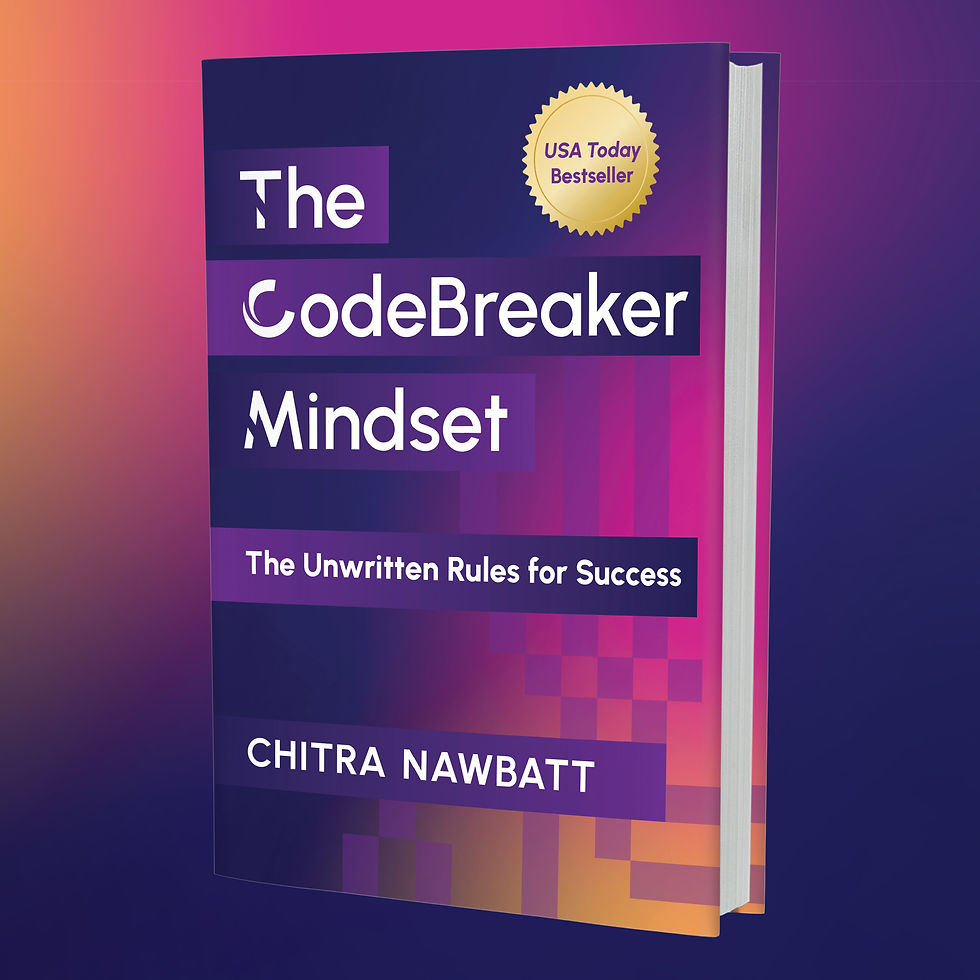
The CodeBreaker Mindset™ book order here: Amazon | Barnes & Noble
The CodeBreaker Mindset™ Ft. Dr. Kameron Matthews, Cityblock Health, Chief Health Officer
Chitra Nawbatt (00:10)
Welcome to The CodeBreaker Mindset™, where leaders share the unwritten rules for success. I'm your host, Chitra Nawbatt. Joining us today is Dr. Kameron Matthews, chief health officer of Cityblock Health. Kameron, welcome. Thank you for joining us.
Dr. Kameron Matthews (00:24)
Thank you, Chitra. This is my pleasure.
Chitra Nawbatt (00:26)
Cityblock Health is characterized as a unicorn with more than $6 billion in valuation. Your CEO, Toyin Ajayi, was recently recognized in the time Magazine woman of the year list. What is Cityblock Health and how is it different from other health startups?
Dr. Kameron Matthews (00:42)
I love how we're different. Cityblock Health is an advanced primary care practice. We are tech enabled, we are data driven, and we are focused on helping our communities. We target our services to Medicaid and dual eligible beneficiaries, really trying to provide them an integrated approach to their health care, to their well-being. And we're doing this in a space where we are able to bring value to themselves, to our stakeholders, their insurance companies, the health systems we work with, again, all tech enabled in an effort to make sure we're transformed health care, not just for the individuals we're treating, but for our partners as well.
Chitra Nawbatt (01:17)
Bring that to life for us. Quantify numbers of patients outcomes. Specifics.
Dr. Kameron Matthews (01:24)
Sure. Currently, we're across eight different markets with more than 100,000 members, and we do this in a care model that allows us to reach them virtually, in person and even in their homes. Our outcomes are in every way impressive around decreasing utilization, hospitalizations, emergency departments, especially even in the behavioral health space, because we do take care of a good number of patients who have serious mental illness or in every way improving quality metrics, quality scores, or helping with risk adjustment.
It's a holistic approach to primary care and again, overall health for our members.
Chitra Nawbatt (02:02)
Before we get into some of the issues you're facing in the market and how you're navigating that as a leader, how did you come to Cityblock Health? Because you started off in government as an intern for Senator Orrin Hatch. Then you went to the U.S. Department of Veterans Affairs as chief Medical officer, Cityblock Health. A little bit on your journey to here.
Dr. Kameron Matthews (02:19)
Yeah. So I'm a family physician by training. Always wanted to work with marginalized communities. So actually, after a medical school and residency training, I actually worked at Cook County Jail in Chicago treating the most underserved patient population. Then a couple of federally qualified health centers in Chicago. Then I transitioned to the VA, where I held roles in their managed care office, a program called Community Care, and became chief medical officer.
In my final year during the Covid pandemic and working on their EHR modernization program. VA is an integrated health system, so for me, it was a very easy transition to Cityblock because we're offering an integrated care model that is value based, same as VA. It's really about having a patient centric model. And I learned so much and I'm applying so much from the VA into city work.
Chitra Nawbatt (03:07)
So that word integrate it. Let's talk about those integrated skills, leadership abilities into the rules of the game, if you will, in what you're facing at Cityblock. So talk about a top tailwind and then a top headwind that Cityblock is facing right now. And then how you're navigating that, how do you seize that tailwind opportunity.
How do you address that headwind opportunity? The unwritten rules.
The Rules of the Game
Dr. Kameron Matthews (03:38)
Tailwinds are, numerous to be honest. We are working with a patient population, that unfortunately still deserves a fair amount of attention and needs some transformation within the health system. Working with low income communities, marginalized communities, there's a space for managed care. There is a space for value based care. So we're really taking advantage of that, especially when you're looking at, the duals populations and how we're helping those low income, Medicare eligible beneficiaries.
There's a lot of, again, integration that needs to occur between the Medicare and Medicaid programs. We as a health care provider, as a primary care practice, are at the perfect space to bring those programs together. So we're really, at the lead and and really seeing that tailwind as, a mission, more than anything, the headwinds are real.
I mean, throughout health care throughout 2020 for, everyone, providers and payers saw increased utilization. There's still a fair amount of recovery of deferred care from the pandemic. There's still a lot of need to control utilization to rightsize it. So we are working in that space and actually seeing some successes. Definitely keeping our our utilization down. We're responsible for total cost of care and quality.
So in every way treating our patients as whole patients again, from a primary care perspective, which is, of course, what I believe in as a family physician.
Chitra Nawbatt (05:05)
But take us a little bit into the the unwritten rules, right? Because you have such a rich experience. You've talked about the headwind in the tailwind. What's your unwritten rule to how to, come up with strategy execution to, to navigate both?
Dr. Kameron Matthews (05:21)
I think for me, definitely at the VA and I'm seeing it as well in Cityblock, there is no sense to strategizing in in a bubble. You know, we as an executive team, of course, under our twins amazing leadership, we strategize. We are in every way trying to make sure that our go to market strategy is fitting for our main stakeholders.
But in order for our performance to be the success that it is, that strategy also has to includes operational excellence. So we need to be leaning in hearing from our different markets, recognizing the differences from state to state and building our model in response to not just their needs, but of course, our broader stakeholders. So I think the unwritten rule is having really an open growth mindset, in the sense that we are not in any way just trying to apply the same solutions to this population.
We're trying to design new solutions for them, whether it's technology based, whether it's, through a different type of high touch primary care.
Chitra Nawbatt (06:25)
Who taught you the unwritten rules? How did you figure that out? How do I figure that out?
Dr. Kameron Matthews (06:30)
I think I have had unbelievable mentoring and opportunity again through the VA. I definitely tout a fair amount of, my leadership, knowledge from the individuals that even came through Department of Defense, came through Army, came through Air Force. They train their leaders, unlike we do in any other parts of of business. So I learned a fair amount of rules, from them.
Chitra Nawbatt (06:55)
And is there one consistent written rule and unwritten rule that you attribute to your success as a leader?
Dr. Kameron Matthews (07:03)
I think it would be probably considered a written rule. But definitely my success, is 100% due to the people that I surround myself with and making sure I'm investing in my direct team, making sure that I have communication and transparency with them at all times. I am in no way ever going to tout that I can be the one person that brings about the solution, so I need to have the right team around me, and I've invested across multiple different organizations.
The time that it really takes to have the right leaders there who have accountability and that can help me design, can help me strategize.
Chitra Nawbatt (07:41)
You talked about growth, growth mindset and not operating in a bubble that requires pivot. So let's get into the pivots. What's a significant business pivot that you led and talk about a voluntary situation and an involuntary situation.
The Pivots
Dr. Kameron Matthews (07:59)
I know that Cityblock went through this, but I, of course, spent the pandemic in, in the VA. And that was a significant pivot as a health system that I helped lead from thinking, very short term, and focusing on immediately localized resources to thinking in a broader health system. Fashion Cityblock definitely did this as I look back at their successes as well.
But pivoting the different modalities of care, pivoting the telemedicine, so many of us did this. But in the VA, it was even more critical because of the acute care nature of the health system, moving resources from New York to New Orleans to eventually other parts of the country. That in itself was not something we had done at that scale.
And I was very proud, to bring forward a lot of those solutions and to also recognize that we needed to work, again in a growth mindset, not be fearful of potentially making mistakes, making decisions and moving on them immediately. That was what the pandemic required. But I think it's the right mindset outside of the pandemic as well.
You know, move fast, and not be afraid of breaking things.
Chitra Nawbatt (09:09)
What informs that mindset? Because it's about spotting signals, right? Being reactive versus proactive. So to get ahead, and pivot at the appropriate time, what are the signals that you're, that you're looking for that's constantly informing?
Dr. Kameron Matthews (09:23)
Yeah. Being data driven allows and not being so fascinated by your regular dashboards. Looking beyond your traditional operational metrics and finding those red flags so that you can pivot easily. I think is a skill set that a lot of leaders still need to adopt. I actually prefer once a dashboard, once I get comfortable in a dashboard, once I see that my operators are are functioning to a certain level, I want a completely new dashboard.
I want a completely different set of metrics. And I think sometimes we get very comfortable and stuck in, certain measurement that isn't going to be able to provide you, that opportunity to pivot that that opportunity to see where red flags are occurring. So I like surrounding myself and the most amount of data as possible, as opposed to restricting it just to those, maybe executive level metrics.
Chitra Nawbatt (10:21)
On that point. Do you study outliers?
Dr. Kameron Matthews (10:23)
Most definitely.
Chitra Nawbatt (10:24)
Give us an example.
Dr. Kameron Matthews (10:25)
Most definitely. So and I think so much of this, to be honest, so much of this goes back to my clinical training, which I think maybe for a lot of people in the business space, they don't necessarily have the benefit of. But, as a clinician, we are always looking at those outliers, whether at a population level or an individual.
I need to know, where certain lab metrics may be. I need to understand how a patient is engaging with their care team. I need to understand every outlier. So that I can actually continue to preserve their health. That's, I think a different mindset for every patient could be an outlier. And then when you look at the population level, I'm always about understanding the top and the bottom of the bell curve.
And so that's what we design a lot of our programs around, whether it's advanced behavioral health or pregnancy. Now, at Cityblock in the VA, it was it was a totally different, set of metrics, but it always was about understanding that outliers, designing solutions to target their needs, but then recognizing we also needed larger population solutions as well.
Chitra Nawbatt (11:34)
So when you talk about data, looking at the outliers, designing solutions based on the needs of outliers, how do you how do you develop, how do you continuously develop and evolve your pattern recognition? The algorithm.
Dr. Kameron Matthews (11:49)
You know, it's it's over time, I think, again, it's about, not getting too comfortable in the data that's placed in front of you, but constantly asking those questions and constantly asking, and expecting different cuts of the data, because the comfort level is where you're going to miss those new trends that you have to respond to.
So again, one of my, my, supervisors and mentors in the VA, drove people crazy at times, always asking for new dashboards and new metrics. And people would get so comfortable over here. And he's already thinking over here. That's exactly what we at the leadership level should be asking for. Getting people not just pivot activity, but pivot their mindset.
Ask the new question. Ask the question that this data isn't revealing. So I think part of being able to spot those trends is, first and foremost, being able to ask the question.
Chitra Nawbatt (12:48)
The word trend. Artificial intelligence is not a trend. Artificial intelligence, is the new norm. Talk about a top use case at scale at Cityblock. Where you're investing.
Dr. Kameron Matthews (13:00)
Yeah. Yeah.
Chitra Nawbatt (13:01)
And the impact.
Dr. Kameron Matthews (13:02)
Yeah. So we, other than I won't even, listed as a top one, but our first real, focus for a lot of health systems have is on ambient documentation. Right. So you know, it's it's helping with burnout. It's helping, with efficiency within the clinical visit. But really, what we're, we're jumping on to now is really having I take on, patient summaries and, and really, with the complexity of our patients having AI, bring about, it's non-human skill set, it's data driven approaches to pull forth important information so that we as the clinicians, the doctors and the nurses, we can actually then take those summaries and act more efficiently and effectively.
The amount of time on some of our patients medical records of 203 hundred patients, that's hours worth of a clinician's time when I can have I do that in 10s. So really, that clinical summary work, I know there's there's many solutions on the market. We're looking at how, we need to have a particular tailored solution, for our work.
That is in every way going to bring efficiency that I think is going to show some real ROI.
Chitra Nawbatt (14:15)
Well, and on that ROI, talk about the impact to stakeholder experience from doing that and talk about the different stakeholders and that that cost benefit tradeoff between the amount of dollars you have to invest to get that output at scale and material impact, positive impact to stakeholder experience.
Dr. Kameron Matthews (14:35)
The more patients that we can see, the more that we can improve their health care. And our engagement numbers reflect that in every way that we have that ability to outreach and to get past the concerns of churn and Medicaid to to actually, engage with our patients, earn their trust and prevent that attrition. The more patients that we can see, the more efficient my team is on a daily basis, the more we can improve their health, control costs and improve quality metrics.
So it's it's it's definitely there as a part of our larger model, that we can engage, that we can maintain those relationships and maintain that continuity with our members, our stakeholders, who, are the health systems, the payers that we work with, see in our outcomes, the strength of having an engagement focused model. And so taking away that admin function, taking away the need for someone with a physician license to spend time in a medical record, as opposed to talking with a patient that has real, that has a return.
Chitra Nawbatt (15:34)
I want to get into, the magic, how do you define serendipity versus intuition?
The Magic
Dr. Kameron Matthews (15:42)
Serendipity is the word that I actually use for my entire career. I wound up at Cityblocks serendipitously through a connection to Toyin. I wound up a VA, funnily enough, through a link on LinkedIn. I don't know if I told you that before. I, I really believe that I live with a mission I and my career is is mission driven.
And so, the serendipity of making those connections, of having those relationships has brought me the experience that I need to then be at a place like Cityblock where I can help transform. I think the serendipity within our model, is probably more so at the patient level that we are truly there to connect with them, to build these relationships, to maintain that trust.
And we do so, on a very high touch when necessary, opportunity with our community health partners, you know, at the business scale is not serendipity. It is planning. It is tactical. It is strategic. But we need to allow our care teams that opportunity to flex to, to, to again, knock on that door and be in the home with a member, to go to another medical appointment with a member.
All of that results in the positive outcomes that we see.
Chitra Nawbatt (16:58)
Kameron, what's your advice on how to cultivate The CodeBreaker Mindset™?
Dr. Kameron Matthews (17:02)
I, I in every way think that the reason why I've been able to break the code, I love this title, is that I haven't been afraid to take on new responsibilities. I think the serendipity of my career path has led me to roles where I'm taking on an entirely new space that I've never been exposed to.
And I think particularly as women, we fear that. I think we are very used to, getting into our comfort zone. And I think my mindset is that we have leadership skills, perhaps that we've gained over time, perhaps that are a bit more innate. But that can be applied in any scenario in, in any role that you may take on as leader.
The operational pieces behind whatever your role is, those can be learned. But those other skills that you build that are based on experience, that's what's transferable. So I encourage any leader to break the code just to by getting outside of their comfort zone.
Chitra Nawbatt (17:59)
Kameron, thank you so much for joining us.
Dr. Kameron Matthews (18:02)
You're welcome. You're welcome. Thank you for the conversation.
Chitra Nawbatt (18:05)
Thank you for supporting The CodeBreaker Mindset™. For more episodes, go to www.ChitraNawbatt.com to like and subscribe. Connect with me on social media @ChitraNawbatt .
The CodeBreaker Mindset™ Ft. Dr. Kameron Matthews, Cityblock Health, Chief Health Officer
Chitra Nawbatt (00:10)
Welcome to The CodeBreaker Mindset™, where leaders share the unwritten rules for success. I'm your host, Chitra Nawbatt. Joining us today is Dr. Kameron Matthews, chief health officer of Cityblock Health. Kameron, welcome. Thank you for joining us.
Dr. Kameron Matthews (00:24)
Thank you, Chitra. This is my pleasure.
Chitra Nawbatt (00:26)
Cityblock Health is characterized as a unicorn with more than $6 billion in valuation. Your CEO, Toyin Ajayi, was recently recognized in the time Magazine woman of the year list. What is Cityblock Health and how is it different from other health startups?
Dr. Kameron Matthews (00:42)
I love how we're different. Cityblock Health is an advanced primary care practice. We are tech enabled, we are data driven, and we are focused on helping our communities. We target our services to Medicaid and dual eligible beneficiaries, really trying to provide them an integrated approach to their health care, to their well-being. And we're doing this in a space where we are able to bring value to themselves, to our stakeholders, their insurance companies, the health systems we work with, again, all tech enabled in an effort to make sure we're transformed health care, not just for the individuals we're treating, but for our partners as well.
Chitra Nawbatt (01:17)
Bring that to life for us. Quantify numbers of patients outcomes. Specifics.
Dr. Kameron Matthews (01:24)
Sure. Currently, we're across eight different markets with more than 100,000 members, and we do this in a care model that allows us to reach them virtually, in person and even in their homes. Our outcomes are in every way impressive around decreasing utilization, hospitalizations, emergency departments, especially even in the behavioral health space, because we do take care of a good number of patients who have serious mental illness or in every way improving quality metrics, quality scores, or helping with risk adjustment.
It's a holistic approach to primary care and again, overall health for our members.
Chitra Nawbatt (02:02)
Before we get into some of the issues you're facing in the market and how you're navigating that as a leader, how did you come to Cityblock Health? Because you started off in government as an intern for Senator Orrin Hatch. Then you went to the U.S. Department of Veterans Affairs as chief Medical officer, Cityblock Health. A little bit on your journey to here.
Dr. Kameron Matthews (02:19)
Yeah. So I'm a family physician by training. Always wanted to work with marginalized communities. So actually, after a medical school and residency training, I actually worked at Cook County Jail in Chicago treating the most underserved patient population. Then a couple of federally qualified health centers in Chicago. Then I transitioned to the VA, where I held roles in their managed care office, a program called Community Care, and became chief medical officer.
In my final year during the Covid pandemic and working on their EHR modernization program. VA is an integrated health system, so for me, it was a very easy transition to Cityblock because we're offering an integrated care model that is value based, same as VA. It's really about having a patient centric model. And I learned so much and I'm applying so much from the VA into city work.
Chitra Nawbatt (03:07)
So that word integrate it. Let's talk about those integrated skills, leadership abilities into the rules of the game, if you will, in what you're facing at Cityblock. So talk about a top tailwind and then a top headwind that Cityblock is facing right now. And then how you're navigating that, how do you seize that tailwind opportunity.
How do you address that headwind opportunity? The unwritten rules.
The Rules of the Game
Dr. Kameron Matthews (03:38)
Tailwinds are, numerous to be honest. We are working with a patient population, that unfortunately still deserves a fair amount of attention and needs some transformation within the health system. Working with low income communities, marginalized communities, there's a space for managed care. There is a space for value based care. So we're really taking advantage of that, especially when you're looking at, the duals populations and how we're helping those low income, Medicare eligible beneficiaries.
There's a lot of, again, integration that needs to occur between the Medicare and Medicaid programs. We as a health care provider, as a primary care practice, are at the perfect space to bring those programs together. So we're really, at the lead and and really seeing that tailwind as, a mission, more than anything, the headwinds are real.
I mean, throughout health care throughout 2020 for, everyone, providers and payers saw increased utilization. There's still a fair amount of recovery of deferred care from the pandemic. There's still a lot of need to control utilization to rightsize it. So we are working in that space and actually seeing some successes. Definitely keeping our our utilization down. We're responsible for total cost of care and quality.
So in every way treating our patients as whole patients again, from a primary care perspective, which is, of course, what I believe in as a family physician.
Chitra Nawbatt (05:05)
But take us a little bit into the the unwritten rules, right? Because you have such a rich experience. You've talked about the headwind in the tailwind. What's your unwritten rule to how to, come up with strategy execution to, to navigate both?
Dr. Kameron Matthews (05:21)
I think for me, definitely at the VA and I'm seeing it as well in Cityblock, there is no sense to strategizing in in a bubble. You know, we as an executive team, of course, under our twins amazing leadership, we strategize. We are in every way trying to make sure that our go to market strategy is fitting for our main stakeholders.
But in order for our performance to be the success that it is, that strategy also has to includes operational excellence. So we need to be leaning in hearing from our different markets, recognizing the differences from state to state and building our model in response to not just their needs, but of course, our broader stakeholders. So I think the unwritten rule is having really an open growth mindset, in the sense that we are not in any way just trying to apply the same solutions to this population.
We're trying to design new solutions for them, whether it's technology based, whether it's, through a different type of high touch primary care.
Chitra Nawbatt (06:25)
Who taught you the unwritten rules? How did you figure that out? How do I figure that out?
Dr. Kameron Matthews (06:30)
I think I have had unbelievable mentoring and opportunity again through the VA. I definitely tout a fair amount of, my leadership, knowledge from the individuals that even came through Department of Defense, came through Army, came through Air Force. They train their leaders, unlike we do in any other parts of of business. So I learned a fair amount of rules, from them.
Chitra Nawbatt (06:55)
And is there one consistent written rule and unwritten rule that you attribute to your success as a leader?
Dr. Kameron Matthews (07:03)
I think it would be probably considered a written rule. But definitely my success, is 100% due to the people that I surround myself with and making sure I'm investing in my direct team, making sure that I have communication and transparency with them at all times. I am in no way ever going to tout that I can be the one person that brings about the solution, so I need to have the right team around me, and I've invested across multiple different organizations.
The time that it really takes to have the right leaders there who have accountability and that can help me design, can help me strategize.
Chitra Nawbatt (07:41)
You talked about growth, growth mindset and not operating in a bubble that requires pivot. So let's get into the pivots. What's a significant business pivot that you led and talk about a voluntary situation and an involuntary situation.
The Pivots
Dr. Kameron Matthews (07:59)
I know that Cityblock went through this, but I, of course, spent the pandemic in, in the VA. And that was a significant pivot as a health system that I helped lead from thinking, very short term, and focusing on immediately localized resources to thinking in a broader health system. Fashion Cityblock definitely did this as I look back at their successes as well.
But pivoting the different modalities of care, pivoting the telemedicine, so many of us did this. But in the VA, it was even more critical because of the acute care nature of the health system, moving resources from New York to New Orleans to eventually other parts of the country. That in itself was not something we had done at that scale.
And I was very proud, to bring forward a lot of those solutions and to also recognize that we needed to work, again in a growth mindset, not be fearful of potentially making mistakes, making decisions and moving on them immediately. That was what the pandemic required. But I think it's the right mindset outside of the pandemic as well.
You know, move fast, and not be afraid of breaking things.
Chitra Nawbatt (09:09)
What informs that mindset? Because it's about spotting signals, right? Being reactive versus proactive. So to get ahead, and pivot at the appropriate time, what are the signals that you're, that you're looking for that's constantly informing?
Dr. Kameron Matthews (09:23)
Yeah. Being data driven allows and not being so fascinated by your regular dashboards. Looking beyond your traditional operational metrics and finding those red flags so that you can pivot easily. I think is a skill set that a lot of leaders still need to adopt. I actually prefer once a dashboard, once I get comfortable in a dashboard, once I see that my operators are are functioning to a certain level, I want a completely new dashboard.
I want a completely different set of metrics. And I think sometimes we get very comfortable and stuck in, certain measurement that isn't going to be able to provide you, that opportunity to pivot that that opportunity to see where red flags are occurring. So I like surrounding myself and the most amount of data as possible, as opposed to restricting it just to those, maybe executive level metrics.
Chitra Nawbatt (10:21)
On that point. Do you study outliers?
Dr. Kameron Matthews (10:23)
Most definitely.
Chitra Nawbatt (10:24)
Give us an example.
Dr. Kameron Matthews (10:25)
Most definitely. So and I think so much of this, to be honest, so much of this goes back to my clinical training, which I think maybe for a lot of people in the business space, they don't necessarily have the benefit of. But, as a clinician, we are always looking at those outliers, whether at a population level or an individual.
I need to know, where certain lab metrics may be. I need to understand how a patient is engaging with their care team. I need to understand every outlier. So that I can actually continue to preserve their health. That's, I think a different mindset for every patient could be an outlier. And then when you look at the population level, I'm always about understanding the top and the bottom of the bell curve.
And so that's what we design a lot of our programs around, whether it's advanced behavioral health or pregnancy. Now, at Cityblock in the VA, it was it was a totally different, set of metrics, but it always was about understanding that outliers, designing solutions to target their needs, but then recognizing we also needed larger population solutions as well.
Chitra Nawbatt (11:34)
So when you talk about data, looking at the outliers, designing solutions based on the needs of outliers, how do you how do you develop, how do you continuously develop and evolve your pattern recognition? The algorithm.
Dr. Kameron Matthews (11:49)
You know, it's it's over time, I think, again, it's about, not getting too comfortable in the data that's placed in front of you, but constantly asking those questions and constantly asking, and expecting different cuts of the data, because the comfort level is where you're going to miss those new trends that you have to respond to.
So again, one of my, my, supervisors and mentors in the VA, drove people crazy at times, always asking for new dashboards and new metrics. And people would get so comfortable over here. And he's already thinking over here. That's exactly what we at the leadership level should be asking for. Getting people not just pivot activity, but pivot their mindset.
Ask the new question. Ask the question that this data isn't revealing. So I think part of being able to spot those trends is, first and foremost, being able to ask the question.
Chitra Nawbatt (12:48)
The word trend. Artificial intelligence is not a trend. Artificial intelligence, is the new norm. Talk about a top use case at scale at Cityblock. Where you're investing.
Dr. Kameron Matthews (13:00)
Yeah. Yeah.
Chitra Nawbatt (13:01)
And the impact.
Dr. Kameron Matthews (13:02)
Yeah. So we, other than I won't even, listed as a top one, but our first real, focus for a lot of health systems have is on ambient documentation. Right. So you know, it's it's helping with burnout. It's helping, with efficiency within the clinical visit. But really, what we're, we're jumping on to now is really having I take on, patient summaries and, and really, with the complexity of our patients having AI, bring about, it's non-human skill set, it's data driven approaches to pull forth important information so that we as the clinicians, the doctors and the nurses, we can actually then take those summaries and act more efficiently and effectively.
The amount of time on some of our patients medical records of 203 hundred patients, that's hours worth of a clinician's time when I can have I do that in 10s. So really, that clinical summary work, I know there's there's many solutions on the market. We're looking at how, we need to have a particular tailored solution, for our work.
That is in every way going to bring efficiency that I think is going to show some real ROI.
Chitra Nawbatt (14:15)
Well, and on that ROI, talk about the impact to stakeholder experience from doing that and talk about the different stakeholders and that that cost benefit tradeoff between the amount of dollars you have to invest to get that output at scale and material impact, positive impact to stakeholder experience.
Dr. Kameron Matthews (14:35)
The more patients that we can see, the more that we can improve their health care. And our engagement numbers reflect that in every way that we have that ability to outreach and to get past the concerns of churn and Medicaid to to actually, engage with our patients, earn their trust and prevent that attrition. The more patients that we can see, the more efficient my team is on a daily basis, the more we can improve their health, control costs and improve quality metrics.
So it's it's it's definitely there as a part of our larger model, that we can engage, that we can maintain those relationships and maintain that continuity with our members, our stakeholders, who, are the health systems, the payers that we work with, see in our outcomes, the strength of having an engagement focused model. And so taking away that admin function, taking away the need for someone with a physician license to spend time in a medical record, as opposed to talking with a patient that has real, that has a return.
Chitra Nawbatt (15:34)
I want to get into, the magic, how do you define serendipity versus intuition?
The Magic
Dr. Kameron Matthews (15:42)
Serendipity is the word that I actually use for my entire career. I wound up at Cityblocks serendipitously through a connection to Toyin. I wound up a VA, funnily enough, through a link on LinkedIn. I don't know if I told you that before. I, I really believe that I live with a mission I and my career is is mission driven.
And so, the serendipity of making those connections, of having those relationships has brought me the experience that I need to then be at a place like Cityblock where I can help transform. I think the serendipity within our model, is probably more so at the patient level that we are truly there to connect with them, to build these relationships, to maintain that trust.
And we do so, on a very high touch when necessary, opportunity with our community health partners, you know, at the business scale is not serendipity. It is planning. It is tactical. It is strategic. But we need to allow our care teams that opportunity to flex to, to, to again, knock on that door and be in the home with a member, to go to another medical appointment with a member.
All of that results in the positive outcomes that we see.
Chitra Nawbatt (16:58)
Kameron, what's your advice on how to cultivate The CodeBreaker Mindset™?
Dr. Kameron Matthews (17:02)
I, I in every way think that the reason why I've been able to break the code, I love this title, is that I haven't been afraid to take on new responsibilities. I think the serendipity of my career path has led me to roles where I'm taking on an entirely new space that I've never been exposed to.
And I think particularly as women, we fear that. I think we are very used to, getting into our comfort zone. And I think my mindset is that we have leadership skills, perhaps that we've gained over time, perhaps that are a bit more innate. But that can be applied in any scenario in, in any role that you may take on as leader.
The operational pieces behind whatever your role is, those can be learned. But those other skills that you build that are based on experience, that's what's transferable. So I encourage any leader to break the code just to by getting outside of their comfort zone.
Chitra Nawbatt (17:59)
Kameron, thank you so much for joining us.
Dr. Kameron Matthews (18:02)
You're welcome. You're welcome. Thank you for the conversation.
Chitra Nawbatt (18:05)
Thank you for supporting The CodeBreaker Mindset™. For more episodes, go to www.ChitraNawbatt.com to like and subscribe. Connect with me on social media @ChitraNawbatt .
Disclaimer: the show notes and transcript are powered by artificial intelligence (AI).
Featured Episodes and Insights