The CodeBreaker Mindset™ Ft. Ken Ohashi, Brooks Brothers, CEO


In this conversation, Ken Ohashi, CEO of Brooks Brothers, shares his career journey from Accenture to leading one of America's oldest apparel brands. He discusses the importance of recognizing one's strengths, the pivotal moments in his career, and the challenges he faced during the turnaround of Brooks Brothers amidst the COVID-19 pandemic. Ohashi emphasizes the significance of leadership, communication, and cultural change in navigating the complexities of running a historic brand. In this conversation, Ken Ohashi discusses his journey as CEO of Brooks Brothers, focusing on the importance of establishing a strong corporate culture, driving change, and aligning organizational goals. He shares insights on navigating challenges during the COVID-19 pandemic, the significance of creative strategy and trend spotting, and the role of human connection in business. Ohashi also emphasizes the integration of AI in retail, the evolving influence of media and brand ambassadors, and the power of serendipity in achieving success. He concludes with thoughts on cultivating The CodeBreaker Mindset™ to navigate complexities in leadership.
Chapters
(00:00) Introduction and Purpose of the Conversation
(00:32) Ken Ohashi's Career Journey
(09:38) Transitioning to Brooks Brothers CEO
(13:07) Navigating Challenges as CEO
(17:54) Changing Organizational Culture and Processes
(20:22) Establishing Corporate Culture and Values
(22:24) Aligning Organizational Goals and Incentives
(24:40) The Pivot
(28:21) Understanding Trends and Human Connection in Business
(30:48) The Role of Outliers in Innovation
(33:19) Integrating AI in Retail
(35:52) Skills for the Future in a Tech-Driven World
(39:56) Choosing Brand Ambassadors and Their Impact
(51:36) Overcoming Personal and Professional Challenges
(50:12) Cultivating The CodeBreaker Mindset™
Episode Resources
Ken Ohashi | Bio
Chitra Nawbatt | Bio
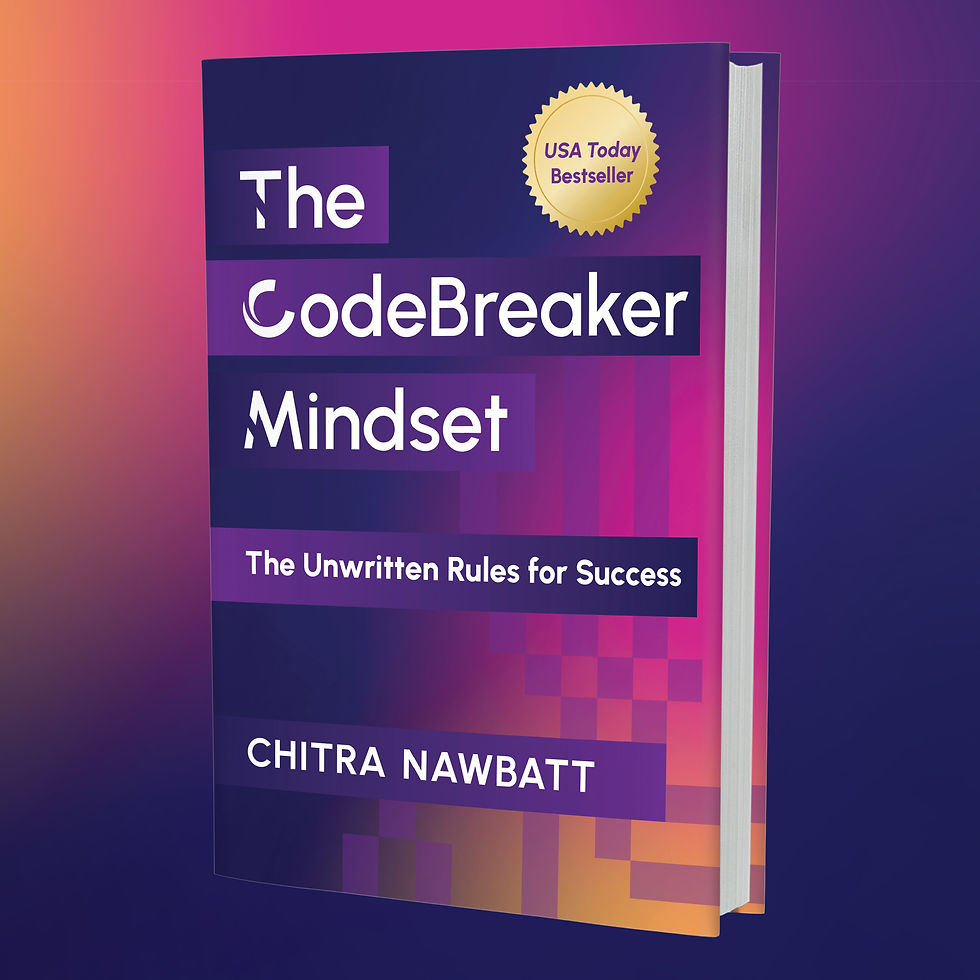
The CodeBreaker Mindset™ book order here: Amazon | Barnes & Noble
The CodeBreaker Mindset™ Ft. Ken Ohashi, Brooks Brothers, CEO
Chitra Nawbatt (00:11)
Welcome to The CodeBreaker Mindset™, where leaders and influencers share the rules, pivots, and serendipity to achieving goals and dreams. I'm your host, Chitra Nawbatt. Joining us today is Ken Ohashi, Brooks Brothers CEO. Ken, welcome. Thank you for joining us.
Ken Ohashi (00:28)
Thank you so much for having me. I'm excited to be here.
Chitra Nawbatt (00:32)
You started your career at Accenture in Audit, and you have a CPA, Certified Professional Accountant designation. You moved into consumer goods, taking on leadership roles at Aeropostale, Authentic Brands Group, and Brooks Brothers, where you've been the CEO since 2020. How did you go from studying accounting at Hofstra University in Long Island, New York, to becoming CEO of the iconic Brooks Brothers?
Ken Ohashi (00:59)
So I'll try to keep this story as concise and maybe we could just double click into areas that you find interesting. But I do think it is a combination of sort of working hard, kind of knowing where your skills lie and where your talents lie, and to some degree being honest about what you're good at and what you're not good at. And then, again you know, being at the right place at the right time, right? It's also about this notion of serendipity. And I think the most important thing is attaching yourself to leaders that see something in you that maybe you don't necessarily see in yourself. That was also a very, very important part of my journey.
Chitra Nawbatt (01:40)
So walk us through how you go from Accenture, leaving that, getting into consumer goods, then to the CEO of Brooks Brothers. Walk us through some of those phases.
Ken Ohashi (01:53)
Sure. So just to go back a little bit, think it's important to go back to sort of where I started my career in terms of audit and accounting. I grew up in a family, totally blue-collar. I had very little guidance on what to do and what career to sort of go into. My father was in the restaurant business. I just knew I really wanted a white-collar job. And at the time we had a family friend who was an accounting major and you know I kind of just followed him. I was good at math. I really loved business so I thought okay this feels like this would be something very stable and that I would enjoy. So I just went for it. So I went to college. I grew up in a household where sort of my mother was deeply religious so college was somewhat just I would say was not something that was encouraged in my household. And so that was unusual. And so I went to a college that was a regional college, two towns over. I promised my mother I would continue to be very, very active in church and that I really needed to build a skill so that I could get a job. So that was, I think, the first layer of me finding this job. And what I would say is at that point at Arthur Anderson, and we can talk about this a little bit more. I really started to understand what I was good at and what I wasn't good at at Arthur Anderson and all that sort of came alive for me in that very first job.
Chitra Nawbatt (03:30)
And then from Arthur Anderson, which then became Accenture, how do you then go into Aeropostale Authentic Brands Group?
Ken Ohashi (03:39)
That's a great question. as many people know with Arthur Anderson, know, Enron happened in the year 2002, the partner that was on the big account Merck that I was kind of a one of the senior leaders on. He told us he basically said, you know, Arthur Anderson, we're in trouble. And I think everyone should really start thinking about what sort of their next steps are. And at the time, I think the Arthur Anderson teams had already started talking to the other big accounting firms to try to consolidate businesses and start thinking about. And so he said, hey, if I go to another accounting firm, I'll definitely take you guys. And so that's going to happen. You don't have to worry. But I also saw it as an opportunity to kind of be curious about what else was out there. And at the time, a recruiter approached me about Aeropostale which was pre-IPO at the time.
I remember I went to go talk to one of the partners that I was close with and I said, what do you think about this? And he said, why don't you take a chance on it? And he said, if it doesn't work out, I'll take you back within six months. If it's more than six months, it's going to be a problem because you'll probably be stale or rusty. And that sort of gave me the permission to kind of take a risk with my career. And that was, you know, we talk about pivots, like pivots that happen. That was a major pivot that happened for me.
Chitra Nawbatt (05:12)
So then you go to, you take the plunge, you go to Aeropostale, then what happens? And you go into a finance role.
Ken Ohashi (05:18)
Yeah. I go into a finance role, finance and accounting. I go into an SEC reporting role
Chitra Nawbatt (05:27)
Super sexy, SEC reporting.
Ken Ohashi (05:25)
And a bunch of things happen. Like it was a small company. Yeah, it was a small company growing very quickly and like everybody was wearing multiple hats and I was doing the SEC reporting, but at the same time, I think when we went public, we didn't realize how many sell side analysts and investors would be following the company and wanting constant information and my CFO just couldn't at the time My CFO's name was Mike Cunningham. He ended up being one of my key mentors again another pivot for me.
He just couldn't handle the call volume. All these institutional investors were constantly calling him. And so he was like, okay, why don't you just talk to my head of SEC reporting, because he does all the filings, and he understands the business. And so I literally started to spend 50, 60 % of my day talking to these institutional investors and also sell side analysts. And they started to ask me very, very detailed questions about the business, more strategic questions about the business. And I have found myself like having to accelerate my knowledge about the larger business very very quickly.
Chitra Nawbatt (06:31)
Wow. So then how then do you pivot into from finance, you then start to lead, lead, lead businesses, right? How, what happens there? How do you make that shift?
Ken Ohashi (06:44)
Well, there was a step in between that. At some point, the investor relations media piece, that piece of my job became bigger and bigger and bigger. And at some point, my CFO came to me and he said, you know, when I look at sort of the work that you're doing on SEC reporting and sort of the financial piece, and I look at sort of your passion for getting in front of people and being more strategic and talking about the business, you know, you kind of, I'm gonna give you the option to really think about what you wanna pursue. And in that moment, I became, you know, the head of investor relations and really the company spokesperson. I was in charge of all of media. So I did a big career pivot at that point in time. And then from that, actually, after Michael Cunningham left the organization, Mark Miller, who was our head of strategy, became my boss. He became the CFO of the company. And he looked at me and he said, you know, I think you could be doing something more. And that was another pivot point where somebody, a leader, really saw something in me and he said, I think we should move you into more of a strategy role in developing growing businesses because you understand this business so well.
And so that's when he kind of moved me more into, I would say, an operating role where I was in charge of all of the international business. So finding international franchisees, licensees, forming joint ventures with some of the partners internationally. So that was, again, another big pivot. Put me in an operating role, really took me out of the finance organization. And I did that for a number of years and we, I just hit the ground running and really showed that I could operate these businesses. So in less than five years at Aeropostale, I think we grew to a couple of hundred points to sale all over the world. And that was definitely a exciting time for me.
Chitra Nawbatt (08:47)
And then where does Authentic Brands come in?
Ken Ohashi (08:48)
So, Aeropostale eventually runs into trouble. They go into bankruptcy. At the time, my division, which was...It had all of this franchise revenue and licensing revenue coming in was the most profitable and only profitable division. And when Jamie Salter at Authentic Brands Group came and bought Aeropostale, he saw what I had done with the international business. And he said, I really want you to come work for me at Authentic Brands Group and be have more of an oversight over all of the brands at Authentic Brands Group, help me grow and develop them with a focus on international. And so I spent four years at Authentic Brands Group, ultimately becoming the President of International, running all the brands outside the U.S.
Chitra Nawbatt (09:38)
And then how do you get tapped to become CEO of Brooks Brothers?
Ken Ohashi (09:52)
Well, I mean, I think for me...International,
And for those that have done international roles, and at that point I had been doing it for almost a decade, I was on the road 50, 60, 70 % of the time. I had two young children at home, and I think COVID happened, and the music stops, and you realize what's important. So I had to reshuffle my priorities, and one of the things, and Jamie had been, and I had been talking about it a year prior, but I really want to go back to the operating side of the business, focus on one business, really love brand building.
I love really working with stores and being involved with stores and the teams there. And that was something that I didn't get to do as much at Authentic Brands Group. So we had been having that dialogue for a while. And when COVID happened, Authentic Brands, which owns a ton of brands, which, you know, between Nautica and Nine West and Forever 21 and Vince Camuto, and they own the intellectual property for David Beckham and Shaquille O'Neal and Muhammad Ali and Elvis and Marilyn Monroe, very, very large company. During COVID, we went on a really, there was a lot of opportunity to buy broken consumer brands. And so I started working on the M&A with Jamie on some of these brands and Brooks Brothers came across the table. And I immediately knew that it was a brand that I deeply respected. And I kind of had a vision for what I would do if I was the CEO there. So Jamie and I really started conversations about allowing me to run that business.
Chitra Nawbatt (11:14)
So you then become CEO of Brooks Brothers and as you said, iconic brand, right? It's high-end American luxury fashion company founded in 1818. And at one time it was a multi-billion dollar brand and it's the oldest apparel brand still in operation in the United States. Company files for bankruptcy in the summer of 2020. You become the CEO in September of 2020.
Ken Ohashi (11:23)
Yeah.
The Rules of the Game
Chitra Nawbatt (11:40)
How do you figure out, and now let's get into the rules of the game, right? Let's get into the rules of the game. How do you figure out the written and the unwritten rules of becoming the CEO of this iconic historic brand that you then have to turn around, which is a very difficult thing to do. And it's COVID at that time.
Ken Ohashi (11:59)
Yeah. Yeah, I think you can get like, I think there's two ways I've seen people approach it two different ways. One is sort of like blow it up and start over. And the second is sort of like work with what you have and then sort of unpeel it like an onion. And like for me, you know, working with so many turnarounds and restructures and repositioning as part of being an authentic brands group, I knew that there was so much power in the brand that we just really needed to unpeel it and unpeel it. But I did know that right out the gate, we needed to build the creative nucleus of the brand right away. And so my first hire was Michael Bastian, who's my creative director. I actually started talking to him in July when we started working on the due diligence, because I sort of knew that he would be the guy that would. And Brooks Brothers historically been a very dress shirt and suit brand. I knew he was the guy that was really going to make it more of a lifestyle brand. So really at at that point. Remember, it was covid. Nobody was wearing a suit. I knew he was the guy that would unlock the casual side of the business and do it in a way that felt authentic to the brand.
Chitra Nawbatt (13:07)
And so going a little bit further, you're CEO, you're navigating, figuring this out, your take of written rules and being a CEO, especially in a turnaround situation, and your take on the unwritten rules that you've learned or formulated on your own along the way.
Ken Ohashi (13:30)
Yeah, I mean, I think people underestimate, like really staying close to your board. Because at the end of the day, if you're publicly traded, right, you have the pressure of, Oh my God, all these investors and what's the press saying? I just really had to manage the expectations of my board, right? Like actually, you know, the first, the results were worse than we had anticipated when we came out the gate. I mean, the first week I got the business, I mean, it was down 70%. We're sitting in the middle of COVID. New York City's at a standstill. There are no sales in any of the stores in New York City.
So, staying close to Jamie, who I already had a relationship with, and David Simon was really important. They were super supportive. So I think one of the unwritten rules is like, you're a CEO, but you still have a boss. just like you would, just treated them just like I treated my bosses. I kept them in touch with what was happening, what I thought was sort of the risk, where the business honestly I thought was headed, and like what we were doing to pivot. So like staying really close and managing expectations through that was like very helpful and it just took the pressure off of me in a lot of ways.
Chitra Nawbatt (14:40)
Do you manage expectations? And if you can talk a little bit more about not only your bosses, the board, but here you are, right? You take on this company, it comes with a whole bunch of people, a whole bunch of people, a whole bunch of vendors, a whole bunch of stakeholders that are new to you and you're new to them. And so what's that process in terms of you know, flushing out all your critical stakeholders, building those relationships and reading the room, reading what they say and reading the EQ, what the stakeholders don't say.
Ken Ohashi (15:15)
Yeah. Yeah.
And listen, it was hard because I think there's a bunch of buckets there. So let's just start with the teams, because that's the most important thing. It's tough. You're coming in. You want to repivot the business to a completely different direction. The company's used to doing things like this. And you're saying we need to do it like that. And so there's a lot of fallout in that. And ultimately, you have a very short period of time to make decisions about human capital and talent. And the truth is that I turn the majority of the senior executives in a short period of time. But ultimately the ones that I did retain and keep with me saw the vision, were excited about where we were going with the business, and they wanted to be on the team. And you can't wait.
In a moment like that, you have to figure out who's going to be rallying behind you, especially your senior executives and who's not. And the people that are not, like you got to get, you have to create space to understand why they're not. And if it ends up being something that doesn't make sense to you, go forward, then they're not the right people on your team. They're going to be miserable and they're going to create an environment that's just tough overall. So making those decisions very quickly, I think was, was key for me and getting my senior executive team in the right place was very, very important.
Chitra Nawbatt (16:34)
How do you read the room? How do you read your stakeholders?
Ken Ohashi (16:38)
I did a ton of town halls, over communicated. I sat in the trenches with the teams. I think also like, you know, when you're a CEO and Brooks Brothers has almost 2000 employees, like you can focus on your 12 direct reports that you have. And, you know, my head merchant, Luca Mendola has been with the company for 25 years. A lot of the teams that had been here were really looking at him to say like, is this new CEO ok or not? Like, you know, they were reading his cues, his body language, what he said about me and the way that I act, and so keeping the teams that, especially the executives that I was retaining, was important because they will do a lot of the heavy lift about like how things are going. I can't be in every single conversation, every single meeting, but there's definitely a trickle effect. So keeping the senior executives close, we did an offsite out the gate, mapped out strategic initiatives, and you know, I think they immediately, you know, making sure that I stuff the culture that I have this thing behind me, but like work hard and be nice to people. I was like super nice to everyone out the gate. And that was something that they had were not neither expecting or, you know, had been used to.
Chitra Nawbatt (17:54)
Huh. And you know, something you talked about that, you you inherit this team, they're used to doing things a certain way. Let's sort of talk about this notion of status quo thinking, right? So how much status quo thinking and operating were you dealing with, right, in people process systems? What are the pros of that? What are the cons of that? Let's start with that first.
Ken Ohashi (18:21)
I think what ends up happening with the organizations like Brooks Brothers, which at some point was very large, is you have big teams, you start to build more processes, you build more layers, people want more reporting that doesn't go anywhere. So like, we had to break all that down. So I would say like, that is something and ultimately, for me, I don't want people wasting time on doing decks and, you know, grandstanding for executives and like doing presentations. At Brooks Brothers, we don't have any executive management decks. Like I don't want to see a single deck. So even when teams are taking me through best sellers, we're going, they're showing me the product and they're talking to me about the product. I'm not having them spend hours and hours on decks. And so like that sort of culture is something that I had to break through. And ultimately for me, it was like, if it's not impacting sales and moving the customer forward, like we can't, we can't focus on it. Like if, if everybody isn't marching against that in the moment, it doesn't make sense to kind of like do the work against something that is like non-value-add work. So really critically looking at every single thing. Like I remember I would be looking at multiple reports and I would ask people like, which report do we use? So like one of the first things that I did was like standardize the reporting so that we're all looking at the same thing across the company and the teams.
And that cut out the workload as you can imagine like day one. you know, tremendously. So I think that is a combination of just kind of refocusing everyone on what's important. And I came up, I really came out with a start. Like we were, it's my head of marketing and head of brand Arthur Wayne always says, we're the oldest startup that is in existence because we have such a startup mentality here at Brooks Brothers because we had to start from zero with nothing. And then we had to build the business, but you wouldn't think that because it's Brooks Brothers and it's, and it's been around for so long.
Chitra Nawbatt (20:22)
But you know what you just described there, so changing people processes, culture at scale. Can you double click in terms of how did you actually change and rewire people process culture? Like how did you actually do it? And how did you get it to stick?
Ken Ohashi (20:41)
It's a good question.I mean, again, it starts with having leadership buy-in and making sure that it trickles down. I spent a lot of time in the details, and that's the truth, know, questioning everything, asking what's important and the historical. I think for me, was also like, you know, who wanted this report first and where did this come from? And it gets back to there were some executives that had a certain style that wanted like massive, massive, massive reporting.
And then you never cut out the reporting, right? You just add more and more reports over time. And so like really understanding that and analyzing that was important. And also for me, setting corporate culture was very important. So I came out the gate with these are the tenants and how we treat each other and how we run the company. And then at the same time, really defining Brooks Brothers and the brand values for me was very important. So we were doing that very, very quickly over the first year. So really kind of resetting philanthropic initiatives at Brooks Brothers was important. And we did a lot of work around sort of the American success story and redefining what the American success story looks like, because I think that was the moment in time to do it for Brooks Brothers. And since doing that, that that's been we've had huge momentum in that area. And it just really feels right for us and the brand and the business. So that's been a huge success. But spending a lot of time on the why and constantly asking why, you know, why are we here? Why? Why are we doing this? You know, what is sort of the intention with all the things that we're doing? I think was very, very important.
Chitra Nawbatt (22:24)
And I asked you that question about how do you get the change or the rewiring to stick? Because you know, many of us have been in whether it's a large company or a startup or a small company, right? There could be a new management change and it's like, yep, there's going to be change. And folks are like, I've been in these situations where it's like, okay, here we go again, three months, six months, you're waiting for it to revert back, right? Or you're always looking over your shoulder that when is it going to revert back? And so that's why I asked, like how do you get it to stick? you also incentivize people differently? Do you recruit different agents of change in the new way at different levels of the organization? Because to get it to stick and you've been there now four years, that's significant, right?
Ken Ohashi (23:10)
Yeah, I think for me, getting the entire organizations to be really results, result focused was key. I think the company had never shared financial information prior to me being the CEO. They hadn't paid bonus in several years. So the incentive comp piece was important for me and sharing like, how are we doing as a company? So getting everybody to realign on what is sort of the EBITDA of the company, what's the top line sales, how are we growing by channel, really sharing with the teams, like why we're doing certain things was important. and educating the teams on what's motivating me as CEO and how does that trickle down by channel and how can you play a part in it. And really, I think the big thing for me also was reiterating like, hey, I know I'm the CEO of this company, but this is your company too. And it's important for you to feel like you have a voice and you're vested. And I do generally feel like people here at Brooks Brothers really feel like it is their company and they have a voice.
And I run the business very, very flat, meaning people are in my office all day long of varying levels. That is something that I think is very unconventional and I learned from working with Jamie Salter, who's like the founder of Authentic Brands Group, because I think he does an incredible job working very high in the organization. Like he'll run the entire top to bottom of the organization. That's something I learned from him. And I think that people really feel invested in that.
The Pivots
Chitra Nawbatt (24:40)
Let's get into the pivots because you talked about that word earlier and you've already started to describe some. Let's get into the pivots. What were some of the biggest, toughest challenges, barriers you faced as CEO and in turning around this business?
Ken Ohashi (24:43)
Yeah.
Chitra Nawbatt (24:58)
Because it was not profitable, you've turned it around to profitability within four years, which is where you are now at a place of profitability, right? So what are some of the biggest barriers, challenges you faced and how did you tackle it?
Ken Ohashi (25:11)
I think there's a few, right? Like one, if we just start with the top line of the business and the sales of the business, one was the business was majority dress shirts and suits. And we were sitting in the middle of COVID and nobody was buying suits or dress shirts. Everybody was, you know, moving into casual wear and sweatpants, right?
Chitra Nawbatt (25:31)
Yeah.
Ken Ohashi (25:32)
So like Lululemon was hot. And that was probably the major pivot we made. We swung the business from call it and the business was like 18 % casual when I got here and they were like chinos and add on, know, Casual Friday sort of apparel and we bring on Michael was part of that journey to like bring that casual elements for Brooks Brother. So if you go on Brooks Brothers.com today, you'll see like, my God, I can buy like Monday through Sunday at Brooks Brothers and that is the work that we did with Michael up front and now 45 % of our business is actually what I consider casual. So that was a big, big pivot that we made. And we had to like, it had to trickle down all the way down to the resources. Cause it just, it isn't about design. It's whether it's not just about design. It's whether can we produce it? Do we have the factories? Do we understand the fabrics? And then can the stores sell it? Right? Like do the store teams know how to sell it? So we had to really make that pivot all the way down the entire organization.
Chitra Nawbatt (26:36)
And so getting into the creative, because you talked about this a little bit earlier right? Is a critical skill here, that creative and seeing trends before others do. What's your take on that and what's your process?
Ken Ohashi (26:53)
It's a good question. like every single piece of our business, like there's a creative component, right? And so when I think about the product design piece, I think Michael balances looking forward and then also looking back. I think the beauty of Brooks Brothers is, you know, we have 200 years of history. So part of the journey was actually going back to move forward. And so really looking at the things that historically did great for Brooks Brothers, like this year we relaunch our collegiate back to campus campaign. You know, in the 1960s, 70s and 80s, Brooks Brothers was a destination for sort of Ivy League college and going back to campus. like bringing those elements back. you know, looking in unconventional places for inspiration has been a huge unlock for us at Brooks Brothers and even doing things like launching the vintage shop where we celebrate our vintage product that's been around for 100 years, you know, working with some of the best vintage dealers in the U.S. and then opening up that shop for us on our brooksbrothers.com website. That has just been, you know, a totally cool journey.
So I think, yes, constantly. The teams are obviously looking at trends, they're looking at runway, but they're also like excited to go back into the archives and look at vintage product for inspiration. So I think from a design perspective, know, we're definitely, there's a breath of creativity that happens there.
Chitra Nawbatt (28:21)
But on that look back precedent on the look forward, right? When it comes to spotting trends, being ahead of the trends, setting trends, how do you do that? And what are the sources of data, signals, pattern recognition that you tap into?
Ken Ohashi (28:41)
I think for me, you know, the anchor of it, fundamentally for me is about understanding human emotion and human connection. Like if that's the filter for me, like that's really how I think about the world and look at the world. And I think, know, Chitra, you and I were talking about it earlier, but I'm not just looking at sort of fashion and apparel brands. I'm really looking at everything. You know, I'm looking at the way it's easy for you to set up service in your Tesla through your app, right? It's easy for which companies make it seamless to communicate with their customers over text. Like what hotels are doing that little surprise and delight that really makes customers excited. What airline is doing a great loyalty program that really their high spend, you know, it's not really about the miles anymore with the airlines. It's really about how much you spend and then what does that like first class, business class traveler, what matters to them, right? Maybe it used to be like, it's a mileage ticket somewhere, but maybe it's lounge access now, right? So it's kind of understanding that human psyche and demand, particularly around our luxury consumer, is the thing that is my filtering mechanism for kind of how I think about the business and how I look at the world. And then also just this natural human nature of building the best teams, particularly in our stores. And the reason why I love stores so much is stores is really where that human connection and interaction happens. That journey happens in the stores. And I think whether it's your teams or from a product perspective, everything you're doing right or the opportunities for you to do things better happens in stores. It's really hard to see that digitally. And...
You know for me, kind of thinking through that human connections and what's that point where I can really connect with that customer is very, important. And with a brand like Brooks Brothers where the loyalty is so high, it's more important.
Chitra Nawbatt (30:48)
How do you think about outliers? And do you study outliers? Do you dissect the outliers and bring that into your process?
Ken Ohashi (31:00)
That's a great question. Sure I read the book outliers. I have to say, no, go for it.
Chitra Nawbatt (31:09)
But just even this notion, go ahead. No, no, I was just going to say even this, this note, because especially when you talk about the creative and the trends, right? And being in touch with the human, the emotions of the customer, and you're studying a lot of disparate, you're studying hospitality, you're studying automotive, you're studying, you know, fashion, retail experience, right? Because, you know, there's, there's data, there's the perception and you're making a bet, you're making a call. But as part of that, there's outliers, right? You and I were talking earlier, 25, 30 years ago, selling online was not a thing. Omnichannel and selling online versus in store was very much viewed as an outlier. Then that became innovation. And now that's the status quo. That's the norm. So how do you think about studying outliers and what you extract from that?
Ken Ohashi (31:45)
Yeah.
Ken Ohashi (32:01)
Yeah, I mean, I'm deeply curious about how humans will evolve and how things will evolve. And I think obviously the hot topic is the integration of AI and what happens. I do think the benefit of Brooks Brothers is that we are, if we were sort of like you're making the soup and the stew, we're sort of a slow boil. Like it really is about like quality craftsmanship, taking a long time to do things, do things correctly versus like rush and do them. So like that speed to market is less relevant for both my customer and me. So I think it's important for me to like make sure that we see what's happening around us. I don't feel the pressure to be first, but I do feel the pressure to be very curious and aware of what's happening because I think that period of adoption is shrinking more and more and more. So like if something happens in AI where there's a material change in how we look at design and development and marketing, we don't have to be the first to kind of put out there and integrate it, but we need to make sure that we can adopt it quickly.
Don't know if that makes any sense. So I think for me, it's like making sure that I'm aware of like, are the things that are happening out there? And what are the changes that are happening in my industry? And staying deeply curious on that is very important.
Chitra Nawbatt (33:19)
You talked about AI, so let's get into that. What's your pattern recognition on the necessary ingredients to build and scale profitable tech and AI enabled consumer and retail companies?
Ken Ohashi (33:33)
Yeah, you know, we've been integrating AI. Obviously, the easiest piece is sort of the call center and customer service, because a lot, the majority of the things that people are calling in for, like, where's my package? You know, or sort of how do I, you know, you know, I haven't got my refund on my return yet. Where is it? You know, so those things can be answered through AI and we're integrating those very, very quickly. I think what's interesting when I think about AI on a broader scale. And I was, I was at a lunch on a panel yesterday and I was really talking about this is I feel like we, what I'm most excited for are the people within my organization that I think are the critical thinkers, that are the artists and that are the creatives. Because I think AI is going to be able to give a lot of output in things that are, there's a rhyme rhythm, there's a structure to it. But I think, understanding the nuance and the gray, asking the right questions, being able to edit these creative processes that we go through is something that I think is going to be a very, very valuable skill set as we look forward.
So I am trying to bring in more more people within the organization at all levels that are critical thinkers that are, you know, are creative. You know, I was at a dinner with a President of one of the city colleges here and she said something so interesting. She said, we need to develop more artists. Every student needs to be an artist. And at that moment, she wasn't saying, hey, some people aren't going to go into management consulting or Wall Street. That's not what her message was. Her message was that: For young people today, and I look at my own kids who are tweens, there's an artistic output with social media and the way that they use technology, there's an artistic output that every kid has that they are able to bring to life. And that is something that's very, very exciting because that is not something that's going to be able to be replicated exactly the way you want in AI without some sort of filtering process that happens.
Chitra Nawbatt (35:52)
And on that note, what are the, to deal then, to deal with all this rapid pace of technology, AI, that no one will be able to get away from regardless of what your industry is. What do you think are those skills and mindset that can benefit anyone regardless of their age to equip themselves for the future?
Ken Ohashi (36:13)
I... Sorry. Now go for it. No, sorry, I interrupted you. You want to finish your question?
Chitra Nawbatt (36:17)
No. No! To equip themselves for the future, to live, to thrive, to compete, to do whatever they define as meaningful.
Ken Ohashi (36:28)
Yeah, I think making AI your friend as soon as possible and working with AI is probably the biggest unlock, I think, for people you know downloading chat GPT, my kids use it all the time now, and becoming familiar with how it works and what it can possibly do. I actually think in some interesting way, AI is going to also create a lot of new jobs because the things that we're unable to do today, we're going to be able to do with AI and that is going to create more jobs. So where do you sit in that journey? Do you sit there a step behind or do you sit there rowing with AI is ultimately I think the question that everyone has to ask themselves in the leadership role.
Chitra Nawbatt (37:18)
Let's talk about media for a moment because you've had a lot of experience with media in your various roles. What's your view? What's your pattern recognition on the role that media, social media, and the use of celebrities and influencers will have in consumer goods, retail going forward?
Ken Ohashi (37:38)
Such a great point. There was definitely this moment where it was all about the influencers and it was all about social media and how social media performing and how's the click through and the consumers obviously consuming five seconds videos like all day long and how do you constantly breakthrough? don't know, philosophically I think right now, Brooks Brothers, we're at a place where you have to be everywhere all the time. I don't think it's about one channel. I think influencers are incredibly important to one audience. It has to feel authentic. They have to be the real user of your product because I think one of the things that the consumer can see through right now is you know, things that don't feel authentic. So making sure that every ambassador that you use actually was a user of the product prior to you approaching them or working with them is something that we do at Brooks Brothers. Jalen Brunson and his dad were consumers of Brooks Brothers before we signed him up, and that's one of the things that I loved about him. So that I think is important, but being everywhere all the time, and I think that's really hard to do, and it costs a lot of money to do that. So you have to kind of figure out, you know, how to do that.
But I also think one of things that I'm doing is just taking dollars out of media and actually spending it on how do I...How do I continue? And this gets back to human connection is how do I invest more in my best customers? So do we throw private events for our best customers? Do I send them gifts every quarter? You know, what are the things that we can do to really build those relationships with those customers? I think is something that's important because the power of one Brooks Brothers customer over a lifetime, because typically when we get that customer in and they make a second purchase, we have them for a very, very long time. They're extraordinarily loyal. Two out of three of my customers are Brooks Brothers loyal customers. I think investing and kind of rethinking how we think about the customer, because the end goal is a combination of being visible in front of your current customer so you stay top of mind, but also getting a new customer, right? That's what media, that’s the end goal. And so for us, how we get there, I think, is continuing to evolve.
Chitra Nawbatt (39:56)
When you talked about Jalen Brunson earlier and just using him as an example and he is an instrument, know, star basketball player for the New York Knicks, him and his father were already customers of you, of Brooks Brothers as you said, but how does that come about, right? How does that come about in terms of deciding on him to be your brand ambassador? You know, how do you decide and ink that relationship? And then how do you sort of track or how does that create value for you? And what is that value?
Ken Ohashi (40:24)
Yeah. Yeah. I mean, so going back to what we were talking about earlier was when we first purchased Brooks Brothers, and Brooks Brothers has long defined what a successful person looks like, right? Like for years, and you have this image of somebody on Wall Street, usually a male, right? And it was a very narrow view of what American success looks like. And so when I joined Brooks Brothers, I really thought to myself, wow, like, what success looks like in America is continuing to evolve, and what the face of that is continuing to evolve. And when you think about startups, or you think about athletes, or you think about celebrities, those are all success stories, and those are things that we should continue to embrace. So we set out that value system pretty early on in the organization, and someone in my organization came to me, it was my head of digital at the time, and he said, I really think we should dress or consider Jalen Brunson as our brand ambassador.
And he said he is everything that defines success in America. He is hardworking. He is serious. He is disciplined. He's philanthropic. You know, all of the qualities that we all look up to. And so, you know, we've been dressing New York great since 1818 and the team met with him and we fell in love with him. We thought he was perfect. And what was amazing for us was his dad was also a really incredible part of his story. And his dad obviously a Brooks Brothers customer as well. And we love that intergenerational story because Brooks Brothers is really about, people are constantly coming up to me and be like, my father worked Brooks, my father worked Brooks Brothers and so did my grandfather, my great grandfather. I'm constantly getting those stories. So it also played into that as well for us. So it was perfect. But, you know, again, you know, whether it's our partnership with Gold House or, you know, whether it's our partnership with StartOut, which is LGBTQ organization that focuses on entrepreneurs or founders. We see every opportunity as broadening what that success story looks like in America and being there for that consumer.
Chitra Nawbatt (42:45)
And then, how does that translate to the value, right? So like, for example, so just finishing off the Jalen piece, how does that show up then in terms of value and what is that value for you?
Ken Ohashi (42:55)
Are you talking about like what is the value for the consumer for the brand all of that?
Chitra Nawbatt (42:53)
Yeah, for the brand, for translating it to revenue or other consumers now coming to your store and buying your product because they see that type of ambassador in Jalen is.
Ken Ohashi (43:03)
Yeah, yeah. Well, I think for me, you know, the big I look at it from a bunch of viewpoints, but one is, you know, kind of resetting the perception of the brand and making sure that we feel like we are serving a broad audience and making sure that everyone feels welcome in a Brooks Brothers store. I think the second thing, you know, is from a tactical product perspective, we have a big focus around made to measure and our custom suiting business. And, you know, I think I talked to a lot of people that don't think the Brooks Brothers product is going to fit. Actually, 50 % of our business is actually slim fit. But really showing the consumer that we can do custom suiting on an NBA basketball star is an incredibly powerful message for that product and that vertical. So I think it's not just one thing. I think it does a lot of things for the brand and the business, which we're super excited about. And every piece of clothing that we put on Jalen Brunson, as you can see, fits perfectly. So we're super excited about that and projecting that out to the consumer.
Chitra Nawbatt (44:22)
Ken, what's a critical situation in life and business where you felt that you were hijacked either by yourself or someone else? This notion of self-sabotage or someone else sabotaging you?
Ken Ohashi (44:42)
That's a good question. Most of the time things have been good. So I don't really feel like I have a ton of examples there. But I would say that, you know, I've been through two bankruptcies, right? Between Arthur Anderson and Aeropostale and those are scary moments.
You know, those are really, really scary moments where you have to do a lot of soul searching. And do I stay? Do I go? I built this business. I have this team. I'm super loyal to, you know, how do we pay for the mortgage? Right. Like all these things come up. And I think there are I think when you're in a leadership role, there are a ton of external factors that you have to navigate through that are really high stress. And what I say to my teams often is you are responsible for holding the anxiety of your teams, right in those moments. And I have felt that so many times in my career where I really felt like I held the, how to hold the anxiety for my teams and be steady when things were really difficult. So I think for me, you know, the external forces of bankruptcy, particularly with Aeropostale was really hard because my division was performing so well and the business in the, in the U.S. was very tough. And so there was this huge dichotomy that was happening within, you know, the company.
The Magic
Chitra Nawbatt (46:10)
You use this word serendipity earlier, Ken. Let's get into the magic. How do you define serendipity and where has serendipity? Go ahead, go ahead.
Ken Ohashi (46:14)
Yeah.
Right place, right time. Right place, right time.
Chitra Nawbatt (46:25)
And then where did serendipity play a critical role in your journey, either your personal life and your business life?
Ken Ohashi (46:33)
Ugh! Such a good question. I mean, I think it shows up every day in some way. I think the most important thing about it, serendipity, I think is to stay open. And whether I think about that moment, the moments where, you know, I met my husband Adam 15 years ago and now we have two beautiful children, we've been happily married for 14 years, is in the moment that, you know, we decided to have children, and you know, balancing these careers was a moment where things were open for me, right? Like I had an open heart about what was possible. And I think serendipity only works if you have that openness in that moment and that grounding. And, you know, whether it was taking the opportunity at Brooks Brothers when Jamie and I were talking about it or making that pivot in my career at Aeropostale that I talked about earlier, it was really all in a moment where I felt like I had a strong foundation and I sort of had an open heart to be curious and to try things is when it sort of all unlocked for me.
Chitra Nawbatt (47:44)
Did serendipity play a role in the turnaround of Brooks Brothers? Because for you to turn this company around within four years is very significant.
Ken Ohashi (47:54)
Sure, I think it had to, right? I think the team only goes so far. I think something happened where, I think in some weird way, COVID forced the company to think bigger and broader about its offerings. And then, when weddings came back and people had to go back to the office, serendipity played a role where all of a sudden people needed suits again, right? And like dress, dress up and, you know, go to parties and occasions. So all those things worked in our favor. So yeah, I think every moment creates an opportunity and you have that opportunity to make a decision of what you do with that. And I think you look back and you're like, wow, was that serendipity? And
Chitra Nawbatt (48:42)
But on that point of serendipity, you know, when people had to go back and, you know, the weddings or the events or get back into the office, what drew them to you versus going to many of the other fancy, sexy luxury brands out there and to some dimensions of the customer, they might've viewed Brooks Brothers as being a little bit sort of slower, older, outdated.
Ken Ohashi (49:04)
Yeah, yeah, I mean, I think we had been redoing marketing, reigniting the brand, reeducating the consumer. So I think that work did pay off when that consumer came back. And we're continuing to reap the benefits of that today, right? I mean, we're having a great year and the business continues to be successful, knock on wood. But, you know, I do think the teams did an incredible job, you know, setting that foundation. but again, you know, I think it gets back to like something happens. But, is everything in place for that thing to really happen, right? And like everything, so suits came back and occasion came back, but we had built that foundation for it to thrive in that moment. And, you know, even if it's as simple as like moving into that right relationship with someone, is your heart and mindset in the right place to actually support that? And that's one short serendipity, but you had actually, you were ready for it. And I think for Brooks Brothers, we were ready for it when the business came back for us.
Chitra Nawbatt (50:02)
Ken, what does The CodeBreaker Mindset™ mean to you?
Ken Ohashi (50:07)
The CodeBreaker Mindset™ is, and I think you've asked incredible questions, is really understanding the gray that happens in life and leadership, understanding what's really important, what moves the needle, and what isn't important. And I think being able to see the nuance of that is sort of The CodeBreaker in my mind.
Chitra Nawbatt (50:12)
And what's your advice on how to cultivate The CodeBreaker Mindset™?
Ken Ohashi (50:42)
That's a good question. I think there's moments of really understanding yourself. I really push my teams to be introspective thinkers. And then I think it gets back to philosophically, I always want to get to the right answer, I don't care if I'm right or wrong. And I think having that mindset will shortcut a lot of noise along the way, because people can really get mired into process and politics and people dynamics. But ultimately, if you can see the North Star clearly, and you can get there faster, I think you will cut out a lot of that noise. And also, I think the nuance is understanding which relationships will get you there faster and making sure that you cultivate those relationships I think is incredibly important.
Chitra Nawbatt (51:39)
And how do you figure out which relationships will get you there faster?
Ken Ohashi (51:42)
Someone once told me I was doing business in China and they said, who's the decision maker in the room? Because there were so many people in the room. I think that ultimately there's always a decision maker in the room. And there's that person that can lift you. And figuring out who that is and what's important and how you get there is, again, it's about getting to the right answer and not having to be right. And that person is paving the way for the right answer.
So understanding that very quickly I think is key.
Chitra Nawbatt (52:17)
Ken, thank you so much for joining us.
Ken Ohashi (52:20)
Thank you.
Chitra Nawbatt (52:22)
Thank you for supporting The CodeBreaker Mindset™.
For more episodes go to www.chitranawbatt.com to like and subscribe. Connect with me on social media @ChitraNawbatt.
The CodeBreaker Mindset™ Ft. Ken Ohashi, Brooks Brothers, CEO
Chitra Nawbatt (00:11)
Welcome to The CodeBreaker Mindset™, where leaders and influencers share the rules, pivots, and serendipity to achieving goals and dreams. I'm your host, Chitra Nawbatt. Joining us today is Ken Ohashi, Brooks Brothers CEO. Ken, welcome. Thank you for joining us.
Ken Ohashi (00:28)
Thank you so much for having me. I'm excited to be here.
Chitra Nawbatt (00:32)
You started your career at Accenture in Audit, and you have a CPA, Certified Professional Accountant designation. You moved into consumer goods, taking on leadership roles at Aeropostale, Authentic Brands Group, and Brooks Brothers, where you've been the CEO since 2020. How did you go from studying accounting at Hofstra University in Long Island, New York, to becoming CEO of the iconic Brooks Brothers?
Ken Ohashi (00:59)
So I'll try to keep this story as concise and maybe we could just double click into areas that you find interesting. But I do think it is a combination of sort of working hard, kind of knowing where your skills lie and where your talents lie, and to some degree being honest about what you're good at and what you're not good at. And then, again you know, being at the right place at the right time, right? It's also about this notion of serendipity. And I think the most important thing is attaching yourself to leaders that see something in you that maybe you don't necessarily see in yourself. That was also a very, very important part of my journey.
Chitra Nawbatt (01:40)
So walk us through how you go from Accenture, leaving that, getting into consumer goods, then to the CEO of Brooks Brothers. Walk us through some of those phases.
Ken Ohashi (01:53)
Sure. So just to go back a little bit, think it's important to go back to sort of where I started my career in terms of audit and accounting. I grew up in a family, totally blue-collar. I had very little guidance on what to do and what career to sort of go into. My father was in the restaurant business. I just knew I really wanted a white-collar job. And at the time we had a family friend who was an accounting major and you know I kind of just followed him. I was good at math. I really loved business so I thought okay this feels like this would be something very stable and that I would enjoy. So I just went for it. So I went to college. I grew up in a household where sort of my mother was deeply religious so college was somewhat just I would say was not something that was encouraged in my household. And so that was unusual. And so I went to a college that was a regional college, two towns over. I promised my mother I would continue to be very, very active in church and that I really needed to build a skill so that I could get a job. So that was, I think, the first layer of me finding this job. And what I would say is at that point at Arthur Anderson, and we can talk about this a little bit more. I really started to understand what I was good at and what I wasn't good at at Arthur Anderson and all that sort of came alive for me in that very first job.
Chitra Nawbatt (03:30)
And then from Arthur Anderson, which then became Accenture, how do you then go into Aeropostale Authentic Brands Group?
Ken Ohashi (03:39)
That's a great question. as many people know with Arthur Anderson, know, Enron happened in the year 2002, the partner that was on the big account Merck that I was kind of a one of the senior leaders on. He told us he basically said, you know, Arthur Anderson, we're in trouble. And I think everyone should really start thinking about what sort of their next steps are. And at the time, I think the Arthur Anderson teams had already started talking to the other big accounting firms to try to consolidate businesses and start thinking about. And so he said, hey, if I go to another accounting firm, I'll definitely take you guys. And so that's going to happen. You don't have to worry. But I also saw it as an opportunity to kind of be curious about what else was out there. And at the time, a recruiter approached me about Aeropostale which was pre-IPO at the time.
I remember I went to go talk to one of the partners that I was close with and I said, what do you think about this? And he said, why don't you take a chance on it? And he said, if it doesn't work out, I'll take you back within six months. If it's more than six months, it's going to be a problem because you'll probably be stale or rusty. And that sort of gave me the permission to kind of take a risk with my career. And that was, you know, we talk about pivots, like pivots that happen. That was a major pivot that happened for me.
Chitra Nawbatt (05:12)
So then you go to, you take the plunge, you go to Aeropostale, then what happens? And you go into a finance role.
Ken Ohashi (05:18)
Yeah. I go into a finance role, finance and accounting. I go into an SEC reporting role
Chitra Nawbatt (05:27)
Super sexy, SEC reporting.
Ken Ohashi (05:25)
And a bunch of things happen. Like it was a small company. Yeah, it was a small company growing very quickly and like everybody was wearing multiple hats and I was doing the SEC reporting, but at the same time, I think when we went public, we didn't realize how many sell side analysts and investors would be following the company and wanting constant information and my CFO just couldn't at the time My CFO's name was Mike Cunningham. He ended up being one of my key mentors again another pivot for me.
He just couldn't handle the call volume. All these institutional investors were constantly calling him. And so he was like, okay, why don't you just talk to my head of SEC reporting, because he does all the filings, and he understands the business. And so I literally started to spend 50, 60 % of my day talking to these institutional investors and also sell side analysts. And they started to ask me very, very detailed questions about the business, more strategic questions about the business. And I have found myself like having to accelerate my knowledge about the larger business very very quickly.
Chitra Nawbatt (06:31)
Wow. So then how then do you pivot into from finance, you then start to lead, lead, lead businesses, right? How, what happens there? How do you make that shift?
Ken Ohashi (06:44)
Well, there was a step in between that. At some point, the investor relations media piece, that piece of my job became bigger and bigger and bigger. And at some point, my CFO came to me and he said, you know, when I look at sort of the work that you're doing on SEC reporting and sort of the financial piece, and I look at sort of your passion for getting in front of people and being more strategic and talking about the business, you know, you kind of, I'm gonna give you the option to really think about what you wanna pursue. And in that moment, I became, you know, the head of investor relations and really the company spokesperson. I was in charge of all of media. So I did a big career pivot at that point in time. And then from that, actually, after Michael Cunningham left the organization, Mark Miller, who was our head of strategy, became my boss. He became the CFO of the company. And he looked at me and he said, you know, I think you could be doing something more. And that was another pivot point where somebody, a leader, really saw something in me and he said, I think we should move you into more of a strategy role in developing growing businesses because you understand this business so well.
And so that's when he kind of moved me more into, I would say, an operating role where I was in charge of all of the international business. So finding international franchisees, licensees, forming joint ventures with some of the partners internationally. So that was, again, another big pivot. Put me in an operating role, really took me out of the finance organization. And I did that for a number of years and we, I just hit the ground running and really showed that I could operate these businesses. So in less than five years at Aeropostale, I think we grew to a couple of hundred points to sale all over the world. And that was definitely a exciting time for me.
Chitra Nawbatt (08:47)
And then where does Authentic Brands come in?
Ken Ohashi (08:48)
So, Aeropostale eventually runs into trouble. They go into bankruptcy. At the time, my division, which was...It had all of this franchise revenue and licensing revenue coming in was the most profitable and only profitable division. And when Jamie Salter at Authentic Brands Group came and bought Aeropostale, he saw what I had done with the international business. And he said, I really want you to come work for me at Authentic Brands Group and be have more of an oversight over all of the brands at Authentic Brands Group, help me grow and develop them with a focus on international. And so I spent four years at Authentic Brands Group, ultimately becoming the President of International, running all the brands outside the U.S.
Chitra Nawbatt (09:38)
And then how do you get tapped to become CEO of Brooks Brothers?
Ken Ohashi (09:52)
Well, I mean, I think for me...International,
And for those that have done international roles, and at that point I had been doing it for almost a decade, I was on the road 50, 60, 70 % of the time. I had two young children at home, and I think COVID happened, and the music stops, and you realize what's important. So I had to reshuffle my priorities, and one of the things, and Jamie had been, and I had been talking about it a year prior, but I really want to go back to the operating side of the business, focus on one business, really love brand building.
I love really working with stores and being involved with stores and the teams there. And that was something that I didn't get to do as much at Authentic Brands Group. So we had been having that dialogue for a while. And when COVID happened, Authentic Brands, which owns a ton of brands, which, you know, between Nautica and Nine West and Forever 21 and Vince Camuto, and they own the intellectual property for David Beckham and Shaquille O'Neal and Muhammad Ali and Elvis and Marilyn Monroe, very, very large company. During COVID, we went on a really, there was a lot of opportunity to buy broken consumer brands. And so I started working on the M&A with Jamie on some of these brands and Brooks Brothers came across the table. And I immediately knew that it was a brand that I deeply respected. And I kind of had a vision for what I would do if I was the CEO there. So Jamie and I really started conversations about allowing me to run that business.
Chitra Nawbatt (11:14)
So you then become CEO of Brooks Brothers and as you said, iconic brand, right? It's high-end American luxury fashion company founded in 1818. And at one time it was a multi-billion dollar brand and it's the oldest apparel brand still in operation in the United States. Company files for bankruptcy in the summer of 2020. You become the CEO in September of 2020.
Ken Ohashi (11:23)
Yeah.
The Rules of the Game
Chitra Nawbatt (11:40)
How do you figure out, and now let's get into the rules of the game, right? Let's get into the rules of the game. How do you figure out the written and the unwritten rules of becoming the CEO of this iconic historic brand that you then have to turn around, which is a very difficult thing to do. And it's COVID at that time.
Ken Ohashi (11:59)
Yeah. Yeah, I think you can get like, I think there's two ways I've seen people approach it two different ways. One is sort of like blow it up and start over. And the second is sort of like work with what you have and then sort of unpeel it like an onion. And like for me, you know, working with so many turnarounds and restructures and repositioning as part of being an authentic brands group, I knew that there was so much power in the brand that we just really needed to unpeel it and unpeel it. But I did know that right out the gate, we needed to build the creative nucleus of the brand right away. And so my first hire was Michael Bastian, who's my creative director. I actually started talking to him in July when we started working on the due diligence, because I sort of knew that he would be the guy that would. And Brooks Brothers historically been a very dress shirt and suit brand. I knew he was the guy that was really going to make it more of a lifestyle brand. So really at at that point. Remember, it was covid. Nobody was wearing a suit. I knew he was the guy that would unlock the casual side of the business and do it in a way that felt authentic to the brand.
Chitra Nawbatt (13:07)
And so going a little bit further, you're CEO, you're navigating, figuring this out, your take of written rules and being a CEO, especially in a turnaround situation, and your take on the unwritten rules that you've learned or formulated on your own along the way.
Ken Ohashi (13:30)
Yeah, I mean, I think people underestimate, like really staying close to your board. Because at the end of the day, if you're publicly traded, right, you have the pressure of, Oh my God, all these investors and what's the press saying? I just really had to manage the expectations of my board, right? Like actually, you know, the first, the results were worse than we had anticipated when we came out the gate. I mean, the first week I got the business, I mean, it was down 70%. We're sitting in the middle of COVID. New York City's at a standstill. There are no sales in any of the stores in New York City.
So, staying close to Jamie, who I already had a relationship with, and David Simon was really important. They were super supportive. So I think one of the unwritten rules is like, you're a CEO, but you still have a boss. just like you would, just treated them just like I treated my bosses. I kept them in touch with what was happening, what I thought was sort of the risk, where the business honestly I thought was headed, and like what we were doing to pivot. So like staying really close and managing expectations through that was like very helpful and it just took the pressure off of me in a lot of ways.
Chitra Nawbatt (14:40)
Do you manage expectations? And if you can talk a little bit more about not only your bosses, the board, but here you are, right? You take on this company, it comes with a whole bunch of people, a whole bunch of people, a whole bunch of vendors, a whole bunch of stakeholders that are new to you and you're new to them. And so what's that process in terms of you know, flushing out all your critical stakeholders, building those relationships and reading the room, reading what they say and reading the EQ, what the stakeholders don't say.
Ken Ohashi (15:15)
Yeah. Yeah.
And listen, it was hard because I think there's a bunch of buckets there. So let's just start with the teams, because that's the most important thing. It's tough. You're coming in. You want to repivot the business to a completely different direction. The company's used to doing things like this. And you're saying we need to do it like that. And so there's a lot of fallout in that. And ultimately, you have a very short period of time to make decisions about human capital and talent. And the truth is that I turn the majority of the senior executives in a short period of time. But ultimately the ones that I did retain and keep with me saw the vision, were excited about where we were going with the business, and they wanted to be on the team. And you can't wait.
In a moment like that, you have to figure out who's going to be rallying behind you, especially your senior executives and who's not. And the people that are not, like you got to get, you have to create space to understand why they're not. And if it ends up being something that doesn't make sense to you, go forward, then they're not the right people on your team. They're going to be miserable and they're going to create an environment that's just tough overall. So making those decisions very quickly, I think was, was key for me and getting my senior executive team in the right place was very, very important.
Chitra Nawbatt (16:34)
How do you read the room? How do you read your stakeholders?
Ken Ohashi (16:38)
I did a ton of town halls, over communicated. I sat in the trenches with the teams. I think also like, you know, when you're a CEO and Brooks Brothers has almost 2000 employees, like you can focus on your 12 direct reports that you have. And, you know, my head merchant, Luca Mendola has been with the company for 25 years. A lot of the teams that had been here were really looking at him to say like, is this new CEO ok or not? Like, you know, they were reading his cues, his body language, what he said about me and the way that I act, and so keeping the teams that, especially the executives that I was retaining, was important because they will do a lot of the heavy lift about like how things are going. I can't be in every single conversation, every single meeting, but there's definitely a trickle effect. So keeping the senior executives close, we did an offsite out the gate, mapped out strategic initiatives, and you know, I think they immediately, you know, making sure that I stuff the culture that I have this thing behind me, but like work hard and be nice to people. I was like super nice to everyone out the gate. And that was something that they had were not neither expecting or, you know, had been used to.
Chitra Nawbatt (17:54)
Huh. And you know, something you talked about that, you you inherit this team, they're used to doing things a certain way. Let's sort of talk about this notion of status quo thinking, right? So how much status quo thinking and operating were you dealing with, right, in people process systems? What are the pros of that? What are the cons of that? Let's start with that first.
Ken Ohashi (18:21)
I think what ends up happening with the organizations like Brooks Brothers, which at some point was very large, is you have big teams, you start to build more processes, you build more layers, people want more reporting that doesn't go anywhere. So like, we had to break all that down. So I would say like, that is something and ultimately, for me, I don't want people wasting time on doing decks and, you know, grandstanding for executives and like doing presentations. At Brooks Brothers, we don't have any executive management decks. Like I don't want to see a single deck. So even when teams are taking me through best sellers, we're going, they're showing me the product and they're talking to me about the product. I'm not having them spend hours and hours on decks. And so like that sort of culture is something that I had to break through. And ultimately for me, it was like, if it's not impacting sales and moving the customer forward, like we can't, we can't focus on it. Like if, if everybody isn't marching against that in the moment, it doesn't make sense to kind of like do the work against something that is like non-value-add work. So really critically looking at every single thing. Like I remember I would be looking at multiple reports and I would ask people like, which report do we use? So like one of the first things that I did was like standardize the reporting so that we're all looking at the same thing across the company and the teams.
And that cut out the workload as you can imagine like day one. you know, tremendously. So I think that is a combination of just kind of refocusing everyone on what's important. And I came up, I really came out with a start. Like we were, it's my head of marketing and head of brand Arthur Wayne always says, we're the oldest startup that is in existence because we have such a startup mentality here at Brooks Brothers because we had to start from zero with nothing. And then we had to build the business, but you wouldn't think that because it's Brooks Brothers and it's, and it's been around for so long.
Chitra Nawbatt (20:22)
But you know what you just described there, so changing people processes, culture at scale. Can you double click in terms of how did you actually change and rewire people process culture? Like how did you actually do it? And how did you get it to stick?
Ken Ohashi (20:41)
It's a good question.I mean, again, it starts with having leadership buy-in and making sure that it trickles down. I spent a lot of time in the details, and that's the truth, know, questioning everything, asking what's important and the historical. I think for me, was also like, you know, who wanted this report first and where did this come from? And it gets back to there were some executives that had a certain style that wanted like massive, massive, massive reporting.
And then you never cut out the reporting, right? You just add more and more reports over time. And so like really understanding that and analyzing that was important. And also for me, setting corporate culture was very important. So I came out the gate with these are the tenants and how we treat each other and how we run the company. And then at the same time, really defining Brooks Brothers and the brand values for me was very important. So we were doing that very, very quickly over the first year. So really kind of resetting philanthropic initiatives at Brooks Brothers was important. And we did a lot of work around sort of the American success story and redefining what the American success story looks like, because I think that was the moment in time to do it for Brooks Brothers. And since doing that, that that's been we've had huge momentum in that area. And it just really feels right for us and the brand and the business. So that's been a huge success. But spending a lot of time on the why and constantly asking why, you know, why are we here? Why? Why are we doing this? You know, what is sort of the intention with all the things that we're doing? I think was very, very important.
Chitra Nawbatt (22:24)
And I asked you that question about how do you get the change or the rewiring to stick? Because you know, many of us have been in whether it's a large company or a startup or a small company, right? There could be a new management change and it's like, yep, there's going to be change. And folks are like, I've been in these situations where it's like, okay, here we go again, three months, six months, you're waiting for it to revert back, right? Or you're always looking over your shoulder that when is it going to revert back? And so that's why I asked, like how do you get it to stick? you also incentivize people differently? Do you recruit different agents of change in the new way at different levels of the organization? Because to get it to stick and you've been there now four years, that's significant, right?
Ken Ohashi (23:10)
Yeah, I think for me, getting the entire organizations to be really results, result focused was key. I think the company had never shared financial information prior to me being the CEO. They hadn't paid bonus in several years. So the incentive comp piece was important for me and sharing like, how are we doing as a company? So getting everybody to realign on what is sort of the EBITDA of the company, what's the top line sales, how are we growing by channel, really sharing with the teams, like why we're doing certain things was important. and educating the teams on what's motivating me as CEO and how does that trickle down by channel and how can you play a part in it. And really, I think the big thing for me also was reiterating like, hey, I know I'm the CEO of this company, but this is your company too. And it's important for you to feel like you have a voice and you're vested. And I do generally feel like people here at Brooks Brothers really feel like it is their company and they have a voice.
And I run the business very, very flat, meaning people are in my office all day long of varying levels. That is something that I think is very unconventional and I learned from working with Jamie Salter, who's like the founder of Authentic Brands Group, because I think he does an incredible job working very high in the organization. Like he'll run the entire top to bottom of the organization. That's something I learned from him. And I think that people really feel invested in that.
The Pivots
Chitra Nawbatt (24:40)
Let's get into the pivots because you talked about that word earlier and you've already started to describe some. Let's get into the pivots. What were some of the biggest, toughest challenges, barriers you faced as CEO and in turning around this business?
Ken Ohashi (24:43)
Yeah.
Chitra Nawbatt (24:58)
Because it was not profitable, you've turned it around to profitability within four years, which is where you are now at a place of profitability, right? So what are some of the biggest barriers, challenges you faced and how did you tackle it?
Ken Ohashi (25:11)
I think there's a few, right? Like one, if we just start with the top line of the business and the sales of the business, one was the business was majority dress shirts and suits. And we were sitting in the middle of COVID and nobody was buying suits or dress shirts. Everybody was, you know, moving into casual wear and sweatpants, right?
Chitra Nawbatt (25:31)
Yeah.
Ken Ohashi (25:32)
So like Lululemon was hot. And that was probably the major pivot we made. We swung the business from call it and the business was like 18 % casual when I got here and they were like chinos and add on, know, Casual Friday sort of apparel and we bring on Michael was part of that journey to like bring that casual elements for Brooks Brother. So if you go on Brooks Brothers.com today, you'll see like, my God, I can buy like Monday through Sunday at Brooks Brothers and that is the work that we did with Michael up front and now 45 % of our business is actually what I consider casual. So that was a big, big pivot that we made. And we had to like, it had to trickle down all the way down to the resources. Cause it just, it isn't about design. It's whether it's not just about design. It's whether can we produce it? Do we have the factories? Do we understand the fabrics? And then can the stores sell it? Right? Like do the store teams know how to sell it? So we had to really make that pivot all the way down the entire organization.
Chitra Nawbatt (26:36)
And so getting into the creative, because you talked about this a little bit earlier right? Is a critical skill here, that creative and seeing trends before others do. What's your take on that and what's your process?
Ken Ohashi (26:53)
It's a good question. like every single piece of our business, like there's a creative component, right? And so when I think about the product design piece, I think Michael balances looking forward and then also looking back. I think the beauty of Brooks Brothers is, you know, we have 200 years of history. So part of the journey was actually going back to move forward. And so really looking at the things that historically did great for Brooks Brothers, like this year we relaunch our collegiate back to campus campaign. You know, in the 1960s, 70s and 80s, Brooks Brothers was a destination for sort of Ivy League college and going back to campus. like bringing those elements back. you know, looking in unconventional places for inspiration has been a huge unlock for us at Brooks Brothers and even doing things like launching the vintage shop where we celebrate our vintage product that's been around for 100 years, you know, working with some of the best vintage dealers in the U.S. and then opening up that shop for us on our brooksbrothers.com website. That has just been, you know, a totally cool journey.
So I think, yes, constantly. The teams are obviously looking at trends, they're looking at runway, but they're also like excited to go back into the archives and look at vintage product for inspiration. So I think from a design perspective, know, we're definitely, there's a breath of creativity that happens there.
Chitra Nawbatt (28:21)
But on that look back precedent on the look forward, right? When it comes to spotting trends, being ahead of the trends, setting trends, how do you do that? And what are the sources of data, signals, pattern recognition that you tap into?
Ken Ohashi (28:41)
I think for me, you know, the anchor of it, fundamentally for me is about understanding human emotion and human connection. Like if that's the filter for me, like that's really how I think about the world and look at the world. And I think, know, Chitra, you and I were talking about it earlier, but I'm not just looking at sort of fashion and apparel brands. I'm really looking at everything. You know, I'm looking at the way it's easy for you to set up service in your Tesla through your app, right? It's easy for which companies make it seamless to communicate with their customers over text. Like what hotels are doing that little surprise and delight that really makes customers excited. What airline is doing a great loyalty program that really their high spend, you know, it's not really about the miles anymore with the airlines. It's really about how much you spend and then what does that like first class, business class traveler, what matters to them, right? Maybe it used to be like, it's a mileage ticket somewhere, but maybe it's lounge access now, right? So it's kind of understanding that human psyche and demand, particularly around our luxury consumer, is the thing that is my filtering mechanism for kind of how I think about the business and how I look at the world. And then also just this natural human nature of building the best teams, particularly in our stores. And the reason why I love stores so much is stores is really where that human connection and interaction happens. That journey happens in the stores. And I think whether it's your teams or from a product perspective, everything you're doing right or the opportunities for you to do things better happens in stores. It's really hard to see that digitally. And...
You know for me, kind of thinking through that human connections and what's that point where I can really connect with that customer is very, important. And with a brand like Brooks Brothers where the loyalty is so high, it's more important.
Chitra Nawbatt (30:48)
How do you think about outliers? And do you study outliers? Do you dissect the outliers and bring that into your process?
Ken Ohashi (31:00)
That's a great question. Sure I read the book outliers. I have to say, no, go for it.
Chitra Nawbatt (31:09)
But just even this notion, go ahead. No, no, I was just going to say even this, this note, because especially when you talk about the creative and the trends, right? And being in touch with the human, the emotions of the customer, and you're studying a lot of disparate, you're studying hospitality, you're studying automotive, you're studying, you know, fashion, retail experience, right? Because, you know, there's, there's data, there's the perception and you're making a bet, you're making a call. But as part of that, there's outliers, right? You and I were talking earlier, 25, 30 years ago, selling online was not a thing. Omnichannel and selling online versus in store was very much viewed as an outlier. Then that became innovation. And now that's the status quo. That's the norm. So how do you think about studying outliers and what you extract from that?
Ken Ohashi (31:45)
Yeah.
Ken Ohashi (32:01)
Yeah, I mean, I'm deeply curious about how humans will evolve and how things will evolve. And I think obviously the hot topic is the integration of AI and what happens. I do think the benefit of Brooks Brothers is that we are, if we were sort of like you're making the soup and the stew, we're sort of a slow boil. Like it really is about like quality craftsmanship, taking a long time to do things, do things correctly versus like rush and do them. So like that speed to market is less relevant for both my customer and me. So I think it's important for me to like make sure that we see what's happening around us. I don't feel the pressure to be first, but I do feel the pressure to be very curious and aware of what's happening because I think that period of adoption is shrinking more and more and more. So like if something happens in AI where there's a material change in how we look at design and development and marketing, we don't have to be the first to kind of put out there and integrate it, but we need to make sure that we can adopt it quickly.
Don't know if that makes any sense. So I think for me, it's like making sure that I'm aware of like, are the things that are happening out there? And what are the changes that are happening in my industry? And staying deeply curious on that is very important.
Chitra Nawbatt (33:19)
You talked about AI, so let's get into that. What's your pattern recognition on the necessary ingredients to build and scale profitable tech and AI enabled consumer and retail companies?
Ken Ohashi (33:33)
Yeah, you know, we've been integrating AI. Obviously, the easiest piece is sort of the call center and customer service, because a lot, the majority of the things that people are calling in for, like, where's my package? You know, or sort of how do I, you know, you know, I haven't got my refund on my return yet. Where is it? You know, so those things can be answered through AI and we're integrating those very, very quickly. I think what's interesting when I think about AI on a broader scale. And I was, I was at a lunch on a panel yesterday and I was really talking about this is I feel like we, what I'm most excited for are the people within my organization that I think are the critical thinkers, that are the artists and that are the creatives. Because I think AI is going to be able to give a lot of output in things that are, there's a rhyme rhythm, there's a structure to it. But I think, understanding the nuance and the gray, asking the right questions, being able to edit these creative processes that we go through is something that I think is going to be a very, very valuable skill set as we look forward.
So I am trying to bring in more more people within the organization at all levels that are critical thinkers that are, you know, are creative. You know, I was at a dinner with a President of one of the city colleges here and she said something so interesting. She said, we need to develop more artists. Every student needs to be an artist. And at that moment, she wasn't saying, hey, some people aren't going to go into management consulting or Wall Street. That's not what her message was. Her message was that: For young people today, and I look at my own kids who are tweens, there's an artistic output with social media and the way that they use technology, there's an artistic output that every kid has that they are able to bring to life. And that is something that's very, very exciting because that is not something that's going to be able to be replicated exactly the way you want in AI without some sort of filtering process that happens.
Chitra Nawbatt (35:52)
And on that note, what are the, to deal then, to deal with all this rapid pace of technology, AI, that no one will be able to get away from regardless of what your industry is. What do you think are those skills and mindset that can benefit anyone regardless of their age to equip themselves for the future?
Ken Ohashi (36:13)
I... Sorry. Now go for it. No, sorry, I interrupted you. You want to finish your question?
Chitra Nawbatt (36:17)
No. No! To equip themselves for the future, to live, to thrive, to compete, to do whatever they define as meaningful.
Ken Ohashi (36:28)
Yeah, I think making AI your friend as soon as possible and working with AI is probably the biggest unlock, I think, for people you know downloading chat GPT, my kids use it all the time now, and becoming familiar with how it works and what it can possibly do. I actually think in some interesting way, AI is going to also create a lot of new jobs because the things that we're unable to do today, we're going to be able to do with AI and that is going to create more jobs. So where do you sit in that journey? Do you sit there a step behind or do you sit there rowing with AI is ultimately I think the question that everyone has to ask themselves in the leadership role.
Chitra Nawbatt (37:18)
Let's talk about media for a moment because you've had a lot of experience with media in your various roles. What's your view? What's your pattern recognition on the role that media, social media, and the use of celebrities and influencers will have in consumer goods, retail going forward?
Ken Ohashi (37:38)
Such a great point. There was definitely this moment where it was all about the influencers and it was all about social media and how social media performing and how's the click through and the consumers obviously consuming five seconds videos like all day long and how do you constantly breakthrough? don't know, philosophically I think right now, Brooks Brothers, we're at a place where you have to be everywhere all the time. I don't think it's about one channel. I think influencers are incredibly important to one audience. It has to feel authentic. They have to be the real user of your product because I think one of the things that the consumer can see through right now is you know, things that don't feel authentic. So making sure that every ambassador that you use actually was a user of the product prior to you approaching them or working with them is something that we do at Brooks Brothers. Jalen Brunson and his dad were consumers of Brooks Brothers before we signed him up, and that's one of the things that I loved about him. So that I think is important, but being everywhere all the time, and I think that's really hard to do, and it costs a lot of money to do that. So you have to kind of figure out, you know, how to do that.
But I also think one of things that I'm doing is just taking dollars out of media and actually spending it on how do I...How do I continue? And this gets back to human connection is how do I invest more in my best customers? So do we throw private events for our best customers? Do I send them gifts every quarter? You know, what are the things that we can do to really build those relationships with those customers? I think is something that's important because the power of one Brooks Brothers customer over a lifetime, because typically when we get that customer in and they make a second purchase, we have them for a very, very long time. They're extraordinarily loyal. Two out of three of my customers are Brooks Brothers loyal customers. I think investing and kind of rethinking how we think about the customer, because the end goal is a combination of being visible in front of your current customer so you stay top of mind, but also getting a new customer, right? That's what media, that’s the end goal. And so for us, how we get there, I think, is continuing to evolve.
Chitra Nawbatt (39:56)
When you talked about Jalen Brunson earlier and just using him as an example and he is an instrument, know, star basketball player for the New York Knicks, him and his father were already customers of you, of Brooks Brothers as you said, but how does that come about, right? How does that come about in terms of deciding on him to be your brand ambassador? You know, how do you decide and ink that relationship? And then how do you sort of track or how does that create value for you? And what is that value?
Ken Ohashi (40:24)
Yeah. Yeah. I mean, so going back to what we were talking about earlier was when we first purchased Brooks Brothers, and Brooks Brothers has long defined what a successful person looks like, right? Like for years, and you have this image of somebody on Wall Street, usually a male, right? And it was a very narrow view of what American success looks like. And so when I joined Brooks Brothers, I really thought to myself, wow, like, what success looks like in America is continuing to evolve, and what the face of that is continuing to evolve. And when you think about startups, or you think about athletes, or you think about celebrities, those are all success stories, and those are things that we should continue to embrace. So we set out that value system pretty early on in the organization, and someone in my organization came to me, it was my head of digital at the time, and he said, I really think we should dress or consider Jalen Brunson as our brand ambassador.
And he said he is everything that defines success in America. He is hardworking. He is serious. He is disciplined. He's philanthropic. You know, all of the qualities that we all look up to. And so, you know, we've been dressing New York great since 1818 and the team met with him and we fell in love with him. We thought he was perfect. And what was amazing for us was his dad was also a really incredible part of his story. And his dad obviously a Brooks Brothers customer as well. And we love that intergenerational story because Brooks Brothers is really about, people are constantly coming up to me and be like, my father worked Brooks, my father worked Brooks Brothers and so did my grandfather, my great grandfather. I'm constantly getting those stories. So it also played into that as well for us. So it was perfect. But, you know, again, you know, whether it's our partnership with Gold House or, you know, whether it's our partnership with StartOut, which is LGBTQ organization that focuses on entrepreneurs or founders. We see every opportunity as broadening what that success story looks like in America and being there for that consumer.
Chitra Nawbatt (42:45)
And then, how does that translate to the value, right? So like, for example, so just finishing off the Jalen piece, how does that show up then in terms of value and what is that value for you?
Ken Ohashi (42:55)
Are you talking about like what is the value for the consumer for the brand all of that?
Chitra Nawbatt (42:53)
Yeah, for the brand, for translating it to revenue or other consumers now coming to your store and buying your product because they see that type of ambassador in Jalen is.
Ken Ohashi (43:03)
Yeah, yeah. Well, I think for me, you know, the big I look at it from a bunch of viewpoints, but one is, you know, kind of resetting the perception of the brand and making sure that we feel like we are serving a broad audience and making sure that everyone feels welcome in a Brooks Brothers store. I think the second thing, you know, is from a tactical product perspective, we have a big focus around made to measure and our custom suiting business. And, you know, I think I talked to a lot of people that don't think the Brooks Brothers product is going to fit. Actually, 50 % of our business is actually slim fit. But really showing the consumer that we can do custom suiting on an NBA basketball star is an incredibly powerful message for that product and that vertical. So I think it's not just one thing. I think it does a lot of things for the brand and the business, which we're super excited about. And every piece of clothing that we put on Jalen Brunson, as you can see, fits perfectly. So we're super excited about that and projecting that out to the consumer.
Chitra Nawbatt (44:22)
Ken, what's a critical situation in life and business where you felt that you were hijacked either by yourself or someone else? This notion of self-sabotage or someone else sabotaging you?
Ken Ohashi (44:42)
That's a good question. Most of the time things have been good. So I don't really feel like I have a ton of examples there. But I would say that, you know, I've been through two bankruptcies, right? Between Arthur Anderson and Aeropostale and those are scary moments.
You know, those are really, really scary moments where you have to do a lot of soul searching. And do I stay? Do I go? I built this business. I have this team. I'm super loyal to, you know, how do we pay for the mortgage? Right. Like all these things come up. And I think there are I think when you're in a leadership role, there are a ton of external factors that you have to navigate through that are really high stress. And what I say to my teams often is you are responsible for holding the anxiety of your teams, right in those moments. And I have felt that so many times in my career where I really felt like I held the, how to hold the anxiety for my teams and be steady when things were really difficult. So I think for me, you know, the external forces of bankruptcy, particularly with Aeropostale was really hard because my division was performing so well and the business in the, in the U.S. was very tough. And so there was this huge dichotomy that was happening within, you know, the company.
The Magic
Chitra Nawbatt (46:10)
You use this word serendipity earlier, Ken. Let's get into the magic. How do you define serendipity and where has serendipity? Go ahead, go ahead.
Ken Ohashi (46:14)
Yeah.
Right place, right time. Right place, right time.
Chitra Nawbatt (46:25)
And then where did serendipity play a critical role in your journey, either your personal life and your business life?
Ken Ohashi (46:33)
Ugh! Such a good question. I mean, I think it shows up every day in some way. I think the most important thing about it, serendipity, I think is to stay open. And whether I think about that moment, the moments where, you know, I met my husband Adam 15 years ago and now we have two beautiful children, we've been happily married for 14 years, is in the moment that, you know, we decided to have children, and you know, balancing these careers was a moment where things were open for me, right? Like I had an open heart about what was possible. And I think serendipity only works if you have that openness in that moment and that grounding. And, you know, whether it was taking the opportunity at Brooks Brothers when Jamie and I were talking about it or making that pivot in my career at Aeropostale that I talked about earlier, it was really all in a moment where I felt like I had a strong foundation and I sort of had an open heart to be curious and to try things is when it sort of all unlocked for me.
Chitra Nawbatt (47:44)
Did serendipity play a role in the turnaround of Brooks Brothers? Because for you to turn this company around within four years is very significant.
Ken Ohashi (47:54)
Sure, I think it had to, right? I think the team only goes so far. I think something happened where, I think in some weird way, COVID forced the company to think bigger and broader about its offerings. And then, when weddings came back and people had to go back to the office, serendipity played a role where all of a sudden people needed suits again, right? And like dress, dress up and, you know, go to parties and occasions. So all those things worked in our favor. So yeah, I think every moment creates an opportunity and you have that opportunity to make a decision of what you do with that. And I think you look back and you're like, wow, was that serendipity? And
Chitra Nawbatt (48:42)
But on that point of serendipity, you know, when people had to go back and, you know, the weddings or the events or get back into the office, what drew them to you versus going to many of the other fancy, sexy luxury brands out there and to some dimensions of the customer, they might've viewed Brooks Brothers as being a little bit sort of slower, older, outdated.
Ken Ohashi (49:04)
Yeah, yeah, I mean, I think we had been redoing marketing, reigniting the brand, reeducating the consumer. So I think that work did pay off when that consumer came back. And we're continuing to reap the benefits of that today, right? I mean, we're having a great year and the business continues to be successful, knock on wood. But, you know, I do think the teams did an incredible job, you know, setting that foundation. but again, you know, I think it gets back to like something happens. But, is everything in place for that thing to really happen, right? And like everything, so suits came back and occasion came back, but we had built that foundation for it to thrive in that moment. And, you know, even if it's as simple as like moving into that right relationship with someone, is your heart and mindset in the right place to actually support that? And that's one short serendipity, but you had actually, you were ready for it. And I think for Brooks Brothers, we were ready for it when the business came back for us.
Chitra Nawbatt (50:02)
Ken, what does The CodeBreaker Mindset™ mean to you?
Ken Ohashi (50:07)
The CodeBreaker Mindset™ is, and I think you've asked incredible questions, is really understanding the gray that happens in life and leadership, understanding what's really important, what moves the needle, and what isn't important. And I think being able to see the nuance of that is sort of The CodeBreaker in my mind.
Chitra Nawbatt (50:12)
And what's your advice on how to cultivate The CodeBreaker Mindset™?
Ken Ohashi (50:42)
That's a good question. I think there's moments of really understanding yourself. I really push my teams to be introspective thinkers. And then I think it gets back to philosophically, I always want to get to the right answer, I don't care if I'm right or wrong. And I think having that mindset will shortcut a lot of noise along the way, because people can really get mired into process and politics and people dynamics. But ultimately, if you can see the North Star clearly, and you can get there faster, I think you will cut out a lot of that noise. And also, I think the nuance is understanding which relationships will get you there faster and making sure that you cultivate those relationships I think is incredibly important.
Chitra Nawbatt (51:39)
And how do you figure out which relationships will get you there faster?
Ken Ohashi (51:42)
Someone once told me I was doing business in China and they said, who's the decision maker in the room? Because there were so many people in the room. I think that ultimately there's always a decision maker in the room. And there's that person that can lift you. And figuring out who that is and what's important and how you get there is, again, it's about getting to the right answer and not having to be right. And that person is paving the way for the right answer.
So understanding that very quickly I think is key.
Chitra Nawbatt (52:17)
Ken, thank you so much for joining us.
Ken Ohashi (52:20)
Thank you.
Chitra Nawbatt (52:22)
Thank you for supporting The CodeBreaker Mindset™.
For more episodes go to www.chitranawbatt.com to like and subscribe. Connect with me on social media @ChitraNawbatt.
Disclaimer: the show notes and transcript are powered by artificial intelligence (AI).
Featured Episodes and Insights