The CodeBreaker Mindset™ Ft. AJ Jones II, Starbucks, EVP, Chief Corporate Affairs Officer


In this episode of The CodeBreaker Mindset™, host Chitra Nawbatt speaks with AJ Jones II, Starbucks Chief Corporate Affairs Officer. They discuss the intricacies of leading corporate affairs at Starbucks, the importance of stakeholder management, and AJ's unique journey from overcoming a stutter to becoming a corporate leader. The conversation delves into the challenges and opportunities facing Starbucks, including the impact of AI on customer experience, the company's strategic pivots, and the role of serendipity in career success. AJ emphasizes the importance of listening, understanding risk, and cultivating a mindset that embraces opportunity over conventional advice.
Chapters
00:00 Introduction to Starbucks and Corporate Affairs
03:03 Stakeholder Management and Community Connectivity
05:54 AJ's Journey: From Stutter to Corporate Leader
09:08 Understanding the Rules of the Game
11:59 Tailwinds and Headwinds for Starbucks
14:48 Innovation and AI in Customer Experience
18:08 Pivots and Business Strategy at Starbucks
21:01 The Role of Serendipity in Career Success
23:53 Cultivating The CodeBreaker Mindset™
Episode Resources
AJ Jones II | Bio
Chitra Nawbatt | Bio
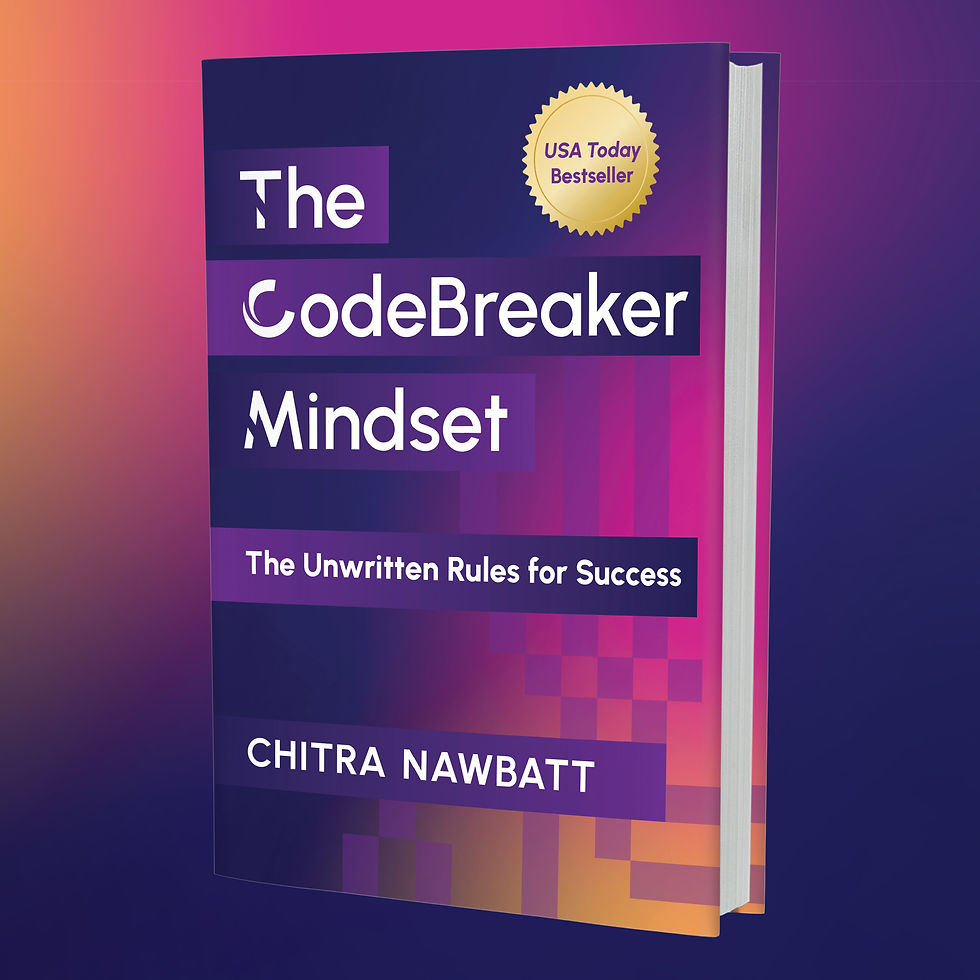
The CodeBreaker Mindset™ book order here: Amazon | Barnes & Noble
The CodeBreaker Mindset™, Ft. AJ Jones II, Starbucks, EVP, Chief Corporate Affairs Officer
Chitra Nawbatt (00:10)
Welcome to The CodeBreaker Mindset™, where leaders share the unwritten rules for success. I'm your host Chitra Nawbatt. Joining us today is AJ Jones, Starbucks chief corporate Affairs Officer. AJ welcome. Thank you for joining us.AJ Jones II (00:24)
Thank you so much Chitra. I'm so excited to be here and so grateful for your time. And thank you for inviting me on the show.Chitra Nawbatt (00:29)
Starbucks $36 billion in revenue.AJ Jones II (00:33)
Yes.Chitra Nawbatt (00:34)
Coffee, tea? Yes. And a few other things.AJ Jones II (00:36)
Little treats.Chitra Nawbatt (00:37)
Tell us about the company and what's involved in leading corporate affairs.AJ Jones II (00:42)
Wonderful. So we are a company 53 years old. We have over 41,000 stores across the globe. We're in 88 markets. We right now currently have about 17,000 stores in North America between Canada and the United States. Within that, we have a split between what we call wholly owned and also license. When you go inside a Starbucks, in a grocery store or hotel or in an airport, that what we call a license business.And when you go inside of Starbucks on your local corner and local neighborhood, that would be more likely of a wholly owned store. We have been able to create, as you rightfully noted, a almost a 30 plus being our business on an annual revenue. We are 128 billion in terms of enterprise value or market cap. We have over half a million people who work for our company each and every day.
And we're in a green apron. And within that, we are able to do 100 million transactions per week. And so for us, we have a sense and a connectivity to communities and also to the world in ways that others are. Do not.
Chitra Nawbatt (01:42)
When you talk about connectivity to communities in the world, break down each of the different stakeholders and the value you drive to those stakeholders, because a lot of folks just think about the folks behind the counter and the consumer, the person who goes in to get their beverage, their food items. But you have many more stakeholders.AJ Jones II (02:01)
Absolutely. It takes, I like to say to people, it takes a lot to sell a cup of coffee, globally. Not only do we have our farmers who are responsible for helping us to source coffee from all across the globe. We have over 200 farmers, who we do that on a regular basis, and that is often the tie to various blends and various customizations that we look to make sure we offer the best in terms of quality of coffee.We also serve as tea to as well, and that's also a global orientation. And in terms of those who are a part of our growing and our roasting and also our manufacturing and production. We also, if you will, when you go into a community, you got to ask for permission to open up, whether it's a drive thru or a cafe or a pickup store.
And all of those require, whether it be city stakeholders, everything from those who are responsible for traffic flows and responsibilities in terms of being able to occupy a certain space to landlords, to those who also are thinking about economic development in their communities. Oftentimes, we are the signal for our community in terms of growth and expansion. And in many places overseas, we are also a signal of modernity, if you will, and what's to come next.
And so there's so much that is involved in terms of stakeholder management. The other piece is you can imagine we also have whether it's the media, whether it's also influencers and personalities. We are the only brand where people walk in with a TikTok version of a drink and ask, can it be made? And so for us, that is a huge responsibility that we hold, but one that we take dear.
Recognizing that we have to look at the various audiences that are part and parcel to make us make to making this the fifth most recognized brand in the world.
Chitra Nawbatt (03:35)
I want to pick up on two words you just mentioned, media and audience, and bring that together in communications. Yes. And dip a little bit into your background, which is you spent about 25 years as a communications strategist, and you started your career working for Congressman Jim Clyburn. So talk about your journey to Starbucks, government communications strategist. You worked a little bit for Burson companies such as Gilliard and Vanda Pharmaceuticals.Chitra Nawbatt (04:01)
Yes. Your journey to Starbucks?AJ Jones II (04:03)
Yes, yes. Well, my journey to Starbucks actually is a unique one, and I'm probably one of the most unique communicators to have this role. The reason why is because when I was a kid, I actually had a severe stutter and stammer problem. In fact, from the age of 6 to 16, I had a very difficult time actually being able to articulate and formulate words or be able to actually hold conversation in any kind of clean and unique way.And so the idea of if you just saw me at 15 to say that I would be speaking on behalf of one of those well-recognized brands in the world, or will be working on the communication strategies, whether it be in terms of Congress or public publicly traded companies. It just would not have been a thing. But my journey, actually enough, started even a little bit before Jim Clyburn started.
Actually working with the United Nations. In fact, I had a chance to be a short term consultant on a number of different projects in Latin America, also in the Middle East, as well as in South Asia and also in Europe. And so I had this, if you will, international Bug and Glo and Global Bug didn't quite know where that fit was.
I wound up getting an opportunity to go to Capitol Hill to advise, if you will, on health care policy. And that took me to the highest of levels, where I wound up working for Jim Clyburn, who was the majority whip at the time and handled both financial services and also health care as well as foreign policy. When I was speaking about leaving, I had an incredible mentor who came to me and fortunately he has since passed guy by name of Bernard Tyson.
He was a former CEO of Kaiser Permanente, and he had a just an incredible impact on my life between him and another star. About a woman by the name of Robin Louise. I'm sorry. Robin Lynn. Lynne Washington. Sorry about that. I, I wound up having this incredible experience as a result, and they really informed me in ways that I could have never have imagined and kind of help me on my path in terms of being a corporate leader, but more importantly, a person who was able to understand to take these unique skills and really combine them together and all types of purposes public policy, government affairs, communications, and even the way in which one thinks about corporations really kind of wraps itself around how well you can articulate both mission value and possibility. Ultimately, that's what holds us together. That's what allows for corporations to have a perpetual motion, and also allows for us to consider whether or not we want to buy or not buy, whether we want to participate and not participate, whether we want to align and align.
So, so much of my job is really thinking about what is the alignment that's necessary for all the different stakeholders and audiences that we're required to, to support. And then, more importantly, how do we think about them and carry if you will, through their mission and their ideals and their values to the values of the company and allow for those things to move forward accordingly, and then be able to do that in a very unique package called a product that ultimately gets handed off to you at a hand-off point.
Chitra Nawbatt (06:54)
So with everything that you just described, I want to get into the rules of the game.
The Rules of the Game
AJ Jones II (06:57)
Yes.Chitra Nawbatt (06:58)
Because everything you just described is very intricate, aligning, diverse, complex stakeholders. How did you how did you learn the written and the unwritten rules of the game? And and what are those?AJ Jones II (07:10)
Yes. Well, I think definitely working internationally, but also working on Capitol Hill and even times after that. One of the things that I recognize, you can't truly represent any individual stakeholder unless you're able to be the best listener. So I focused on being quote unquote, the chief listening officer for any stakeholder that was there. When people know that you actually are listening to them.You can articulate better for for the needs and the issues and the concerns that they have at the table than if you are trying to assert or to assume what you think those needs are. The other pieces I have never heard of anybody walking out of the room because a person listened too much. What people want to know is ultimately when I do raise a concern or I have an issue, or when I have an idea, where is the place where I can ultimately go to do that, and listening becomes a key part of that.
The second piece is understanding what I call risk proposition. The ability to understand risk forecasting, risk analysis, and also to be able to articulate risk in an appropriate way. When you're able to think about what stakeholders are asking for, what the company is required to do, and then how do we perform against the various metrics that we are are having judgment calls come into place and judgment calls are basically don't take action, if you will, of risk taking.
Chitra Nawbatt (08:27)
Performance judgment risk taking. Let's bring that together. Absolutely. Talk about top tailwind for the company right now.AJ Jones II (08:36)
Yes.Chitra Nawbatt (08:37)
And top headwind for the company. Sure. Set that context.AJ Jones II (08:40)
Yes.Chitra Nawbatt (08:41)
And then we'll we'll go forward after you set that cost.AJ Jones II (08:43)
Absolutely. We have a really unique and beautiful brand. Globally. We only have to even put the word star once we can show the siren. And everybody knows exactly what they're looking for and what they are going to partake in. And there are many people who value that. Our brand is strong globally. The I.T, the Q scores of our brand are very high globally too as well.And we have a customer base that knows this and has an expectation. And we have incredible partners, people who work in our stores who are able to bring a life to beverages. And all of the, the necessary, aspects, if you will, of the experience together. And so from that standpoint, we have a motivated, employee base or as we call our partner base.
When you have a motivated and well-informed customer, and when you have a product that's really uniquely designed to only be delivered by a company like ourselves in a really wonderful position from that standpoint. The other piece is that we often have demand that we just can't meet. Sometimes in the mornings, I'm sure you might have experience where there may be a number of people who are asking for drinks.
And in the cafe, there's also mobile ordering pay that are coming in. There's also more wanting delivery and all that's happening. So there is no lack, if you will, of interest and energy within the store. The question is how do we best serve that and how do we meet those expectations in a timely manner and also in a manner that also actualize this, if you will, quality at each and every turn.
So that becomes the, tailwind that we have. The headwind that we have, quite frankly, is we are a discretionary spend. And when the consumer is faced with everything from high inflation to uncertainty in the job market to uncertainty, if you will, and consumer sentiment, all those things do weigh on, if you will, the consumer and the consumer then has think about making choices oftentimes in terms of where they spend their resources and why do they spend that?
We try to make ourselves be not only the delightful treat, if you will, but more importantly, something that's a go to on a regular basis. The consistency that a person says, well, of all the things that will be going on, I'm going to make room for this purchase, particularly from Starbucks. And so that is the unique challenge that we are facing.
If you are right now. I say the other piece that we're facing is a change in terms of customer expectations. When we built the stores, the stores really were around cafe experience and coming in and sitting down and enjoying having conversations like you and I are having today. Customers want to come in, they want convenience. They want it quick.
They want to be able to put a push a button and walk in and grab it and go. And so how do we shift, if you will, the business model to accommodate for both ends? One for those who want to come and sit and actually partake, and those who want to just kind of come in and remember back out because they got their next meeting or their next, their next call to attend to.
Chitra Nawbatt (11:24)
So with what you just described, yes. Your pattern recognition.AJ Jones II (11:29)
Yes.
Chitra Nawbatt (11:29)
Unwritten rule on how you solve on the headwind side and how you seize opportunity on the tailwind side.AJ Jones II (11:38)
So I think on the headwind side, the unique piece you talk about pattern recognition is also recognizing that we aren't the only ones facing this problem. So you can take pieces and parts of different ways that people have tried to solve certain elements and be able to bring those up. So from a headwind standpoint, one of the things that we're focusing on a lot is what we call supply chain management.And really thinking very deeply around how does supply chain become this unique engine that really unlocks not only for the customer experience, but also for the partner experience in terms of what they're able to provide on a consistent basis? And then how do we also do that in a way that's also efficient and reduces waste and other elements that are involved, to be able to really bring that product along.
The other piece is also shortening the timeline between concept and innovation and delivery of a new drink and new beverage. You know, sometimes the timeline itself can be stretched and be extenuating because of various aspects in terms of testing or different things and steps one has to go through. And we think we can think more deeply about how we can align those to really kind of take advantage of those tailwinds.
And quite frankly, also think about the redesign of our stores to make our stores much more oriented around the new customer behavior and demand. So one of the things I failed to mention was that today, 72% of all the drinks we sell are cold drinks, but the business was actually built for more of a hot drink performance than a hot drinks delivery.
So changing that is going to be that piece. In terms of how do we address some of the headwinds? There's kind of three things. And and Brian has been really kind of key on our new CEO has been really keen on this one, is really trying to reintroduce the brand back to the global customer. And you've probably seen we have new ads and new elements that we're bringing in to better right now and remind people, but also give people a sense of freshness and new things to come.
They have a sense of anticipation, if you will, what the brand has to offer. The second piece is really thinking about how do we truly go global in a real way? We are a company that's based in Seattle. Its purpose? We represent a global brand. And how do we think about the re-engineering of our business to function globally to as well?
And then the other piece is really being, I think about how do we leverage certain types of models of technology to really be able to allow for that flywheel of development and also for performance really kick in. I know everybody's talking about AI, and we obviously have been focusing on that too as well. We had an AI program and a project that we had called Deep Brew, which really looks at our mechanics around supply chain.
But now some think about AI in other ways in terms of what does consumer opportunity is that we have in terms of recommendations or consumer profiles, or being able to think about analytics in terms of buying behavior or even redemption behavior. When people give gift cards, all these are things that now we can think much more deeply about in terms of looking at AI as a way of being able to allow some of that for.
Chitra Nawbatt (14:30)
Well, what you're talking about now gets into the pivot. So let's talk about the pivots. Yeah. Since you just talked about artificial intelligence I talk for uses case at scale where you are investing and level of investment if you can share and the outcomes.The Pivots
AJ Jones II (14:44)
Yeah. I would say to you about bringing your confidence is at the highs of levels. We definitely looking at AI in terms of how do we adjust the partner and the customer experience partner being employee experience and customer experience right now we have a number of apps that partners have to use in order to be able to interface and do that day to day job.We think that we can use AI to allow for us to eliminate many of those apps and allow for a much more connected and deeper plug in, if you will, and to the way in which they run the business, and also their appearances and understanding of what the mechanics of the business are. Imagine, for instance, when if you were to know the the AI program, what your milk load is and how soon the milk is supposed to expire.
And in thinking through, instead of having to worry about checking the individual dates on the milk, you can actually think about having a an alert that says to you, hey, the skim milk that's in the refrigerator right now will go bad in the next three months. Do we think about some type of offering where skim milk becomes a necessary part of that delivery?
So therefore we're not throwing that skim milk out or wasting that skim. These are things that you can start to think about in reference to it. You can also think about taste profiles. So this gets more into the customer side. We are known as a as a coffee business. But in many respects we also are a tastemaker. I mean, nobody thought to put pumpkin spice inside coffee until we decided to.
And now today, nobody knows that it's fall until Pumpkin spice Latte launches, right? But in a sense, because we've put pumpkin spice in coffee, that opens up the door for other additives to be considered, whether it's ginger or cinnamon or apple that now kind of runs across that gradient in terms of taste profiles. Well, imagine using AI to help us think about what are other combinations that can yield the same kind of performance, if you will, in terms of beverage, appreciation and also consumption.
So we think about those things as ways meaning leverage there.
Chitra Nawbatt (16:40)
With some of what you just described. You're getting into new horizons of innovation for the company. Absolutely. And let's talk about that. Because over the last several years, several years, maybe 7 to 8 years or so, Starbucks, used to have a lock on the market no longer it's hit some, some, elongate, elongated rough patch, lost its edge in customer experience and loyalty.Food and beverage quality. Increased competition from McDonald's and Dunkin Donuts. I used to drink the the strawberry smoothie with protein. I think in around 2015, 2016, you discontinued it. By the way, I just want to flag up for the potential correlation between the strawberry smoothie.
AJ Jones II (17:19)
And the great thing is, I want to make that call. If I was to make that call to me, a different call and.Chitra Nawbatt (17:24)
Starbucks troubles over the last few years. So how do you how do you recover? You touched on it a little bit, but let's double click and go deeper in terms of next horizon of innovation, where you attract the customer, you retain them, but you still also, are able to navigate against that, that durability, transactional risk that you constantly face.Sure, sure. I think Brian is has set the company on pace for that. The reason why our strategy is called back to Starbucks is that we're looking back at the fundamentals and saying, how do we make sure we're thoughtful around the retention of the customer? How do we make sure that we are giving that sense a specialized and personalized feel?
You know, one of the unique things Brian had had, help us to bring back was, you know, Sharpies back inside stores. I know a lot of people were like, the Sharpies had a Sharpies had anything to do with coffee. But there's a lot to be said when a person is writing on your cup and telling you, hey, have a wonderful day, or go out there and you know and knock them out.
There's just little pieces like that that remind people that beyond the beverage, there is a connection that is here and there's something that special around that. And so as we start to think about those elements and also elements in terms of how we manage our our partner base to ensure that we have the appropriate amount of labor inside the store to better meet all the demands.
These are things that are really kind of back to Starbucks that that was their one of the first, one of the first decisions that Brian made, which I was very proud of because I have family members who are affected by this, was eliminating the the changes in pricing, if you will, between dairy and alt milks and being able to allow for those that have price harmonization.
That was a big deal for folks who are oat milk drinkers who may have been paying an additional amount to have oat milk. And I think that opens up, if you will, the appreciation to the customer and the customer experience. I think you're going to see more and more of that as we move forward from him. And then quite frankly, really thinking about the operating model, he is really kind of putting a number of plans in place to make sure that the operating model is, is that it is as efficiently tied and connected to the stores as much as possible in terms of store performance.
Chitra Nawbatt (19:43)
Talk about a significant business pivot that you've led.AJ Jones II (19:47)
Oh my goodness. The question is what we're trying everyone that that's been a part of I so I think I actually want to go back and talk a little bit about some experience even before I because they inform Starbucks. So for those who may or may not know, I there's always this piece about. So tell me what was Capitol Hill like.And I often tell people what my swan song was, the bank bailout. I was one of the lead negotiators for Tarp and my responsibilities, if you will, because I was on the floor. I was a part of the what it called the whip office. The whip office is responsible for getting the votes and counting votes. And part of my responsibility was negotiating the package to be able to allow for it to pass.
AJ Jones II (20:28)
To be fair, what happened post financial bailout, to this day, you were still living with, all the elements around disclosures, if you will, to the SEC about how business performs everything around risk and risk adjustment. Those are things that are now in the businesses too, as well. And also the way in which you one thinks about how banks are capitalized aspects in terms of your money, how your money moves, the the performance responsibilities for the Federal Reserve, for the Federal Reserve, all those are things that came out of that.And that's been a major global pivot, if you will, and required us to rewrite the rules in terms of, the Basel Accords, if you will, that govern the monetary systems. And so so that was a part of that. The other piece I was a part of was when the negotiations were happening in terms of the auto bailout, because, as you know, at the time, there were the auto industry was also, impacted too, as well.
Many of the things that are in place today came out of that. And so for me to be at the center of that conversation was part and parcel. And it's kind of funny now, I was involved with what the rewriting of the derivative policy. As you know, most companies use derivatives as a way of hedging, whether they're default swaps, interest rate swaps or what have you.
I was right to center those things. And how those how those are being used today was part and parcel to that term. When I came into more of the more of the, corporate side, I was I came right at a time when Gilead Sciences had found this cure for hepatitis C, and the question became, what should be the way in which a cure for a disease, particularly if it has a latency to it?
How should that be rolled out? How should it be paid for? Who? Who should be the proper patient to be able to receive that? And then how does you do that across various spectrums where you have diseases impacted in various communities. And so again, that was a major pivot, because now when we start thinking about the way in which vaccines are rolled out and how they are, how they are distributed, the way in which we think about the pricing models, that at this day around pharmaceuticals, all of that in many respects, can be pointed back to some of the things that happened during the time where you had sciences.
And then when I think about my time on the public sector side, I was, as you know, I worked at the the Kellogg Foundation, one of the responsibilities I had in philanthropy was looking at something called narrative change. How do we bring different voices into the various structures of media today, so that different stories can be told, or wider stories can be told about a similar subject today that is part and parcel to how you see Hulu, Netflix, or all of your streaming channels that will have various different voices that now are being able to be activated as a result of some of those investments that we made early on as a part of philanthropy.
So I bring all of those, and then I come to a place like Starbucks, and one of the first things we had to do when I first arrived was rethink the way in which we institute risk analysis and risk perspective, and also measuring, customer as well as, audience feedback in a very different format, and in thinking about the way in which we measure that against both KPIs and social media and, and also our public policy and our public engagements.
So that has been so key in terms of the business transformation. There. One of the things that you might have, remembered or heard about, there was this whole drink, that whole new drink platform that Howard had helped to lead when he came back. Alito. And being a part of. What does it mean to take code foam and also think about a new beverage mix and blend using olive oil, and how that can then open up new palates?
Fuel to coffee was something that was amazing to be a part of.
Chitra Nawbatt (24:16)
I want to get into the magic. Yes. What is your definition of serendipity? And where has serendipity played a critical role in a business outcome or, and career outcome?
The MagicAJ Jones II (24:30)
Sure. No. I mean, well, first of all, I do think serendipity, coincidences and for me, blessings because I, I'm a faith led person has been part and parcel to the way in which I arrived to where I am. I truly do believe I am the product of grandmother's prayers and God's favor. And, it's a purpose for me to have met some of the people in my life who didn't want to coming back to be a part of where I am today.I couldn't have designed it any better. I give you this as an example. As I mentioned before, Bernard Tice and I met when I was on Capitol Hill. He gave me the five keys on how to become a corporate executive and I followed those to a tee, and I want to becoming that. But then there were people along the way, as I mentioned before, like Robin Washington and, and even, individuals, a day is a gentleman by the name of Michael Conway, who used to work at Starbucks.
He was part and parcel of bringing me into the ELC, the Executive Leadership Council, and that was all around these unique connections that it came because of moments and places that I was in, in my life. And so for me, just the fact that I went to Iowa for undergrad and didn't know how important Iowa was to the world of public policy and politics, and then one of finding myself here in Washington, DC, and then realizing the value of what that means, and then going from there and having landed in Washington, DC, just right after 2000 and being there all the way up through 2009, and knowing all the different ways in which the country had changed into that. Much of what we are experiencing today in this country, public policy, geopolitics and what have you was effectively crafted and seeded, if you will, within that those first ten years of the 2000. And so for me, I had a front row seat into every aspect of it, and that's just allowed me to be there.
And the last piece I'll say, and I brought this up, a couple of years ago. So my, my wife is Nigerian. My background and I might have mentioned we were married now going on on 28 years when she and I met. We met in Iowa, freshman year, first class. I like to joke. She had her eyes on me from day one, but, I get to tell that story since she's not here.
But, But the reason why I bring this up is because my journey into connecting to the globe started at the moment in Iowa, and that opened up so many doors for me in terms of being able to travel and living in eight countries and helping to launch products in 70 something countries. I mean, it's just it's allow for that richness because of that closeness, an opportunity that was presented through our relationship.
I like to also say that was my first PR campaign when I had to get married, was being able to convince her family and others or whatnot that I was a suitable enough jet.
Chitra Nawbatt (27:36)
What's your advice on how to cultivate The CodeBreaker Mindset™?AJ Jones II (27:42)
I'm very much so. I'll give you a little bit of insight of a piece of advice Bernard gave me. We were talking one day and he asked me, was I a fan of the movie The Matrix? And for those who might remember, that was one of the breakthrough sci fi movies ever. But there was a scene in The Matrix where the Laurence Fishburne, who played Morpheus, and Keanu Reeves, who played neo, they went to top of the roof and he says to Laurence Fishburne says, the kind of Reeves, in order for you to become what you're destined to become, for you to step into your destiny and become truly who you are you have to free your mind. And one of the things that I would say to anybody is, if you're going to go into this path, that you have to free your mind from all the conventional advice that you have been given, advice that me have said, oh, you need to stay at a job for 5 or 10 years before you think about leaving the advice that may have said, oh, you know, if you stay on this path, that this is the only this the path that'll get you to this place or to that place, you really have to free your mind because ultimately, all the counsel people are giving you, even those who love you, oftentimes is with a risk perspective and not what opportunity perspective. And all I would ask is that people would put as much energy into stepping into their destiny as they do about trying to assess their risk, and that was his counsel to me. And if you put that kind of energy around that, it won't make sense to people.Be comfortable with your journey not making sense to anybody. But at some point, folks will read your bio and your resume and it will look like you did everything planned for me. And the reality is, you are truly following some of the passions and opportunities that came your way and leaned into.
Chitra Nawbatt (29:29)
How do you actually do that?AJ Jones II (29:31)
So two ways. One is be comfortable with the idea of having what I call macro micro macros, having macro visions and a macro scale. So oftentimes we get asked the question, what do you want to be in life. Right. That is a macro question at a macro scale. And instead one should maybe ask themselves what do you want to be exceptional at? And so when one thinks about it, if you want to be exceptional at public speaking, if you want to be exceptional and being able to identify patterns, you want to be an exceptional risk assessor, if you will, that will allow for you to then think about the macro application of that possibility way more easily than trying to figure out what is my macro vision and work.And I ultimately arrive. I came to Starbucks having never drank a cup of coffee, never drink a cup of coffee, and I am a tea drinker. And I would often say, if you had to ask someone, who would you want as your chief communicator of a coffee company? People will say, surely someone who loves coffee. But if you are thinking about a person who's not coming to coffee naturally and coming into it, the elements that I'm able to tease out, the nuances I'm able to appreciate the level, the levels of depth and understand that I will be able to dive more deeply into because it's new and it's fresh to me, allows me then to communicate about it in a way that others may not have the same sense of passion, or seems as a intricacies, if you will, in reference to it. Not because they love coffee anymore any less, but just because they've already been appreciated and been affiliated with it. Whereas I'm coming to a brand new and appreciating telling the story. Nothing like when you somebody told you something new and you and then having to retell it, you tell it in a way that almost you already seen your very fiber. And that's allows for me to be able to that.
Chitra Nawbatt (31:32)
You talked about people give you advice often from a risk perspective as opposed to an opportunity perspective. Yes, that was the other dimension. When you talked about freeing your mind.AJ Jones II (31:40)
Yes.Chitra Nawbatt (31:42)
How do you fortify your own thinking? Block out the noise, if you will. How do you filter constructively between folks giving you advice from the risk perspective versus an opportunity perspective?AJ Jones II (31:57)
Yeah. Two things.Chitra Nawbatt (31:59)
One, and I say that because, yeah, the conditioning, yes, yes tends to be more inclined to that risk. Absolutely. That's one of the things I actually talk about in my book. The CodeBreaker Mindset™ comes from from a child. Yes, mom and dad or your environment will say, don't do that. Don't do that. Don't do that. Why do you want to do that? Don't do that. So there's there's this inherent conditioning from that nurturing from that nature nurture as you get older into school, working in the corporate world or whatever it is, you're a professional, entrepreneur, nonprofit, whatever it is your profession, there is a lot of propensity around advisement and calculation from that risk mindset, or as opposed to the opportunity mindset. So how do you free your mind breakthrough? Because it's a continuous lifelong process.AJ Jones II (32:43)
Oh absolutely. Yeah. So two things. One is if you are a student and reader, and if when you were a student and a reader of history, all of those from which you may appreciate value and even try to model after they were incredible risk takers, they understood very acutely, whether it be in the world of business or the politics world of civil rights or what have you.They were exceptional, if you will, and being able to understand not only the moment that was in front of them and the need to be able to meet that moment, meeting a moment is taking a risk. And so ultimately, when you become comfortable with the idea, for me to be able to meet the moment, a risk has to be taken.
And I don't know of anybody who's been able to succeed in life well, at some point, meaning a moment that was thrust upon them. And that is really where the definition around, I would say, going from being okay and being great is truly defined. You know, the the we we accept this in athletics for some reason where when it comes down to it, we want the ball and whoever is the person who's willing to take the risk to lose the game and also win it, and that is the unique element. Are you willing to be that person, be comfortable with that. And so when I look at those who which I admire and take note of, they were exceptional. And I what I read about them is where did they take the risk? Where did they make that judgment call to meet that particular moment? And because ultimately that's where the learning comes in.
And the second piece, again, it's kind of, a man of faith. I do believe in the idea and the dynamic around timing. Timing is so key to when you're taking risk, but more importantly, how you assess for risk. There's a there's a there's an, I'm a Bible reader and there's a book in the Bible called Ecclesiastes. And in chapter three the chapter is called A Time for everything. And it speaks to the usage of time. And the last verse in that particular chapter says that they have never seen anyone have a greater sense of satisfaction and happiness when they have it in the toil of the work that they do. And so there should be some calculation between what time you are allocating to the the work that you are doing, and the level of happiness and excitement and appreciation that you're having out of it. And that allows you to take risks more easily as a result.
Chitra Nawbatt (35:18)
AJ, thank you so much for joining us.AJ Jones II (35:20)
Thank you. Thank you so much. It was wonderful. Looking forward to it. And you're so kind of able to have me on the show.Chitra Nawbatt (35:27)
Thank you for supporting The CodeBreaker Mindset™. For more episodes go to www.ChitraNawbatt.com to like and subscribe. Connect with me on social media @ChitraNawbatt.
The CodeBreaker Mindset™, Ft. AJ Jones II, Starbucks, EVP, Chief Corporate Affairs Officer
Chitra Nawbatt (00:10)
Welcome to The CodeBreaker Mindset™, where leaders share the unwritten rules for success. I'm your host Chitra Nawbatt. Joining us today is AJ Jones, Starbucks chief corporate Affairs Officer. AJ welcome. Thank you for joining us.AJ Jones II (00:24)
Thank you so much Chitra. I'm so excited to be here and so grateful for your time. And thank you for inviting me on the show.Chitra Nawbatt (00:29)
Starbucks $36 billion in revenue.AJ Jones II (00:33)
Yes.Chitra Nawbatt (00:34)
Coffee, tea? Yes. And a few other things.AJ Jones II (00:36)
Little treats.Chitra Nawbatt (00:37)
Tell us about the company and what's involved in leading corporate affairs.AJ Jones II (00:42)
Wonderful. So we are a company 53 years old. We have over 41,000 stores across the globe. We're in 88 markets. We right now currently have about 17,000 stores in North America between Canada and the United States. Within that, we have a split between what we call wholly owned and also license. When you go inside a Starbucks, in a grocery store or hotel or in an airport, that what we call a license business.And when you go inside of Starbucks on your local corner and local neighborhood, that would be more likely of a wholly owned store. We have been able to create, as you rightfully noted, a almost a 30 plus being our business on an annual revenue. We are 128 billion in terms of enterprise value or market cap. We have over half a million people who work for our company each and every day.
And we're in a green apron. And within that, we are able to do 100 million transactions per week. And so for us, we have a sense and a connectivity to communities and also to the world in ways that others are. Do not.
Chitra Nawbatt (01:42)
When you talk about connectivity to communities in the world, break down each of the different stakeholders and the value you drive to those stakeholders, because a lot of folks just think about the folks behind the counter and the consumer, the person who goes in to get their beverage, their food items. But you have many more stakeholders.AJ Jones II (02:01)
Absolutely. It takes, I like to say to people, it takes a lot to sell a cup of coffee, globally. Not only do we have our farmers who are responsible for helping us to source coffee from all across the globe. We have over 200 farmers, who we do that on a regular basis, and that is often the tie to various blends and various customizations that we look to make sure we offer the best in terms of quality of coffee.We also serve as tea to as well, and that's also a global orientation. And in terms of those who are a part of our growing and our roasting and also our manufacturing and production. We also, if you will, when you go into a community, you got to ask for permission to open up, whether it's a drive thru or a cafe or a pickup store.
And all of those require, whether it be city stakeholders, everything from those who are responsible for traffic flows and responsibilities in terms of being able to occupy a certain space to landlords, to those who also are thinking about economic development in their communities. Oftentimes, we are the signal for our community in terms of growth and expansion. And in many places overseas, we are also a signal of modernity, if you will, and what's to come next.
And so there's so much that is involved in terms of stakeholder management. The other piece is you can imagine we also have whether it's the media, whether it's also influencers and personalities. We are the only brand where people walk in with a TikTok version of a drink and ask, can it be made? And so for us, that is a huge responsibility that we hold, but one that we take dear.
Recognizing that we have to look at the various audiences that are part and parcel to make us make to making this the fifth most recognized brand in the world.
Chitra Nawbatt (03:35)
I want to pick up on two words you just mentioned, media and audience, and bring that together in communications. Yes. And dip a little bit into your background, which is you spent about 25 years as a communications strategist, and you started your career working for Congressman Jim Clyburn. So talk about your journey to Starbucks, government communications strategist. You worked a little bit for Burson companies such as Gilliard and Vanda Pharmaceuticals.Chitra Nawbatt (04:01)
Yes. Your journey to Starbucks?AJ Jones II (04:03)
Yes, yes. Well, my journey to Starbucks actually is a unique one, and I'm probably one of the most unique communicators to have this role. The reason why is because when I was a kid, I actually had a severe stutter and stammer problem. In fact, from the age of 6 to 16, I had a very difficult time actually being able to articulate and formulate words or be able to actually hold conversation in any kind of clean and unique way.And so the idea of if you just saw me at 15 to say that I would be speaking on behalf of one of those well-recognized brands in the world, or will be working on the communication strategies, whether it be in terms of Congress or public publicly traded companies. It just would not have been a thing. But my journey, actually enough, started even a little bit before Jim Clyburn started.
Actually working with the United Nations. In fact, I had a chance to be a short term consultant on a number of different projects in Latin America, also in the Middle East, as well as in South Asia and also in Europe. And so I had this, if you will, international Bug and Glo and Global Bug didn't quite know where that fit was.
I wound up getting an opportunity to go to Capitol Hill to advise, if you will, on health care policy. And that took me to the highest of levels, where I wound up working for Jim Clyburn, who was the majority whip at the time and handled both financial services and also health care as well as foreign policy. When I was speaking about leaving, I had an incredible mentor who came to me and fortunately he has since passed guy by name of Bernard Tyson.
He was a former CEO of Kaiser Permanente, and he had a just an incredible impact on my life between him and another star. About a woman by the name of Robin Louise. I'm sorry. Robin Lynn. Lynne Washington. Sorry about that. I, I wound up having this incredible experience as a result, and they really informed me in ways that I could have never have imagined and kind of help me on my path in terms of being a corporate leader, but more importantly, a person who was able to understand to take these unique skills and really combine them together and all types of purposes public policy, government affairs, communications, and even the way in which one thinks about corporations really kind of wraps itself around how well you can articulate both mission value and possibility. Ultimately, that's what holds us together. That's what allows for corporations to have a perpetual motion, and also allows for us to consider whether or not we want to buy or not buy, whether we want to participate and not participate, whether we want to align and align.
So, so much of my job is really thinking about what is the alignment that's necessary for all the different stakeholders and audiences that we're required to, to support. And then, more importantly, how do we think about them and carry if you will, through their mission and their ideals and their values to the values of the company and allow for those things to move forward accordingly, and then be able to do that in a very unique package called a product that ultimately gets handed off to you at a hand-off point.
Chitra Nawbatt (06:54)
So with everything that you just described, I want to get into the rules of the game.
The Rules of the Game
AJ Jones II (06:57)
Yes.Chitra Nawbatt (06:58)
Because everything you just described is very intricate, aligning, diverse, complex stakeholders. How did you how did you learn the written and the unwritten rules of the game? And and what are those?AJ Jones II (07:10)
Yes. Well, I think definitely working internationally, but also working on Capitol Hill and even times after that. One of the things that I recognize, you can't truly represent any individual stakeholder unless you're able to be the best listener. So I focused on being quote unquote, the chief listening officer for any stakeholder that was there. When people know that you actually are listening to them.You can articulate better for for the needs and the issues and the concerns that they have at the table than if you are trying to assert or to assume what you think those needs are. The other pieces I have never heard of anybody walking out of the room because a person listened too much. What people want to know is ultimately when I do raise a concern or I have an issue, or when I have an idea, where is the place where I can ultimately go to do that, and listening becomes a key part of that.
The second piece is understanding what I call risk proposition. The ability to understand risk forecasting, risk analysis, and also to be able to articulate risk in an appropriate way. When you're able to think about what stakeholders are asking for, what the company is required to do, and then how do we perform against the various metrics that we are are having judgment calls come into place and judgment calls are basically don't take action, if you will, of risk taking.
Chitra Nawbatt (08:27)
Performance judgment risk taking. Let's bring that together. Absolutely. Talk about top tailwind for the company right now.AJ Jones II (08:36)
Yes.Chitra Nawbatt (08:37)
And top headwind for the company. Sure. Set that context.AJ Jones II (08:40)
Yes.Chitra Nawbatt (08:41)
And then we'll we'll go forward after you set that cost.AJ Jones II (08:43)
Absolutely. We have a really unique and beautiful brand. Globally. We only have to even put the word star once we can show the siren. And everybody knows exactly what they're looking for and what they are going to partake in. And there are many people who value that. Our brand is strong globally. The I.T, the Q scores of our brand are very high globally too as well.And we have a customer base that knows this and has an expectation. And we have incredible partners, people who work in our stores who are able to bring a life to beverages. And all of the, the necessary, aspects, if you will, of the experience together. And so from that standpoint, we have a motivated, employee base or as we call our partner base.
When you have a motivated and well-informed customer, and when you have a product that's really uniquely designed to only be delivered by a company like ourselves in a really wonderful position from that standpoint. The other piece is that we often have demand that we just can't meet. Sometimes in the mornings, I'm sure you might have experience where there may be a number of people who are asking for drinks.
And in the cafe, there's also mobile ordering pay that are coming in. There's also more wanting delivery and all that's happening. So there is no lack, if you will, of interest and energy within the store. The question is how do we best serve that and how do we meet those expectations in a timely manner and also in a manner that also actualize this, if you will, quality at each and every turn.
So that becomes the, tailwind that we have. The headwind that we have, quite frankly, is we are a discretionary spend. And when the consumer is faced with everything from high inflation to uncertainty in the job market to uncertainty, if you will, and consumer sentiment, all those things do weigh on, if you will, the consumer and the consumer then has think about making choices oftentimes in terms of where they spend their resources and why do they spend that?
We try to make ourselves be not only the delightful treat, if you will, but more importantly, something that's a go to on a regular basis. The consistency that a person says, well, of all the things that will be going on, I'm going to make room for this purchase, particularly from Starbucks. And so that is the unique challenge that we are facing.
If you are right now. I say the other piece that we're facing is a change in terms of customer expectations. When we built the stores, the stores really were around cafe experience and coming in and sitting down and enjoying having conversations like you and I are having today. Customers want to come in, they want convenience. They want it quick.
They want to be able to put a push a button and walk in and grab it and go. And so how do we shift, if you will, the business model to accommodate for both ends? One for those who want to come and sit and actually partake, and those who want to just kind of come in and remember back out because they got their next meeting or their next, their next call to attend to.
Chitra Nawbatt (11:24)
So with what you just described, yes. Your pattern recognition.AJ Jones II (11:29)
Yes.
Chitra Nawbatt (11:29)
Unwritten rule on how you solve on the headwind side and how you seize opportunity on the tailwind side.AJ Jones II (11:38)
So I think on the headwind side, the unique piece you talk about pattern recognition is also recognizing that we aren't the only ones facing this problem. So you can take pieces and parts of different ways that people have tried to solve certain elements and be able to bring those up. So from a headwind standpoint, one of the things that we're focusing on a lot is what we call supply chain management.And really thinking very deeply around how does supply chain become this unique engine that really unlocks not only for the customer experience, but also for the partner experience in terms of what they're able to provide on a consistent basis? And then how do we also do that in a way that's also efficient and reduces waste and other elements that are involved, to be able to really bring that product along.
The other piece is also shortening the timeline between concept and innovation and delivery of a new drink and new beverage. You know, sometimes the timeline itself can be stretched and be extenuating because of various aspects in terms of testing or different things and steps one has to go through. And we think we can think more deeply about how we can align those to really kind of take advantage of those tailwinds.
And quite frankly, also think about the redesign of our stores to make our stores much more oriented around the new customer behavior and demand. So one of the things I failed to mention was that today, 72% of all the drinks we sell are cold drinks, but the business was actually built for more of a hot drink performance than a hot drinks delivery.
So changing that is going to be that piece. In terms of how do we address some of the headwinds? There's kind of three things. And and Brian has been really kind of key on our new CEO has been really keen on this one, is really trying to reintroduce the brand back to the global customer. And you've probably seen we have new ads and new elements that we're bringing in to better right now and remind people, but also give people a sense of freshness and new things to come.
They have a sense of anticipation, if you will, what the brand has to offer. The second piece is really thinking about how do we truly go global in a real way? We are a company that's based in Seattle. Its purpose? We represent a global brand. And how do we think about the re-engineering of our business to function globally to as well?
And then the other piece is really being, I think about how do we leverage certain types of models of technology to really be able to allow for that flywheel of development and also for performance really kick in. I know everybody's talking about AI, and we obviously have been focusing on that too as well. We had an AI program and a project that we had called Deep Brew, which really looks at our mechanics around supply chain.
But now some think about AI in other ways in terms of what does consumer opportunity is that we have in terms of recommendations or consumer profiles, or being able to think about analytics in terms of buying behavior or even redemption behavior. When people give gift cards, all these are things that now we can think much more deeply about in terms of looking at AI as a way of being able to allow some of that for.
Chitra Nawbatt (14:30)
Well, what you're talking about now gets into the pivot. So let's talk about the pivots. Yeah. Since you just talked about artificial intelligence I talk for uses case at scale where you are investing and level of investment if you can share and the outcomes.The Pivots
AJ Jones II (14:44)
Yeah. I would say to you about bringing your confidence is at the highs of levels. We definitely looking at AI in terms of how do we adjust the partner and the customer experience partner being employee experience and customer experience right now we have a number of apps that partners have to use in order to be able to interface and do that day to day job.We think that we can use AI to allow for us to eliminate many of those apps and allow for a much more connected and deeper plug in, if you will, and to the way in which they run the business, and also their appearances and understanding of what the mechanics of the business are. Imagine, for instance, when if you were to know the the AI program, what your milk load is and how soon the milk is supposed to expire.
And in thinking through, instead of having to worry about checking the individual dates on the milk, you can actually think about having a an alert that says to you, hey, the skim milk that's in the refrigerator right now will go bad in the next three months. Do we think about some type of offering where skim milk becomes a necessary part of that delivery?
So therefore we're not throwing that skim milk out or wasting that skim. These are things that you can start to think about in reference to it. You can also think about taste profiles. So this gets more into the customer side. We are known as a as a coffee business. But in many respects we also are a tastemaker. I mean, nobody thought to put pumpkin spice inside coffee until we decided to.
And now today, nobody knows that it's fall until Pumpkin spice Latte launches, right? But in a sense, because we've put pumpkin spice in coffee, that opens up the door for other additives to be considered, whether it's ginger or cinnamon or apple that now kind of runs across that gradient in terms of taste profiles. Well, imagine using AI to help us think about what are other combinations that can yield the same kind of performance, if you will, in terms of beverage, appreciation and also consumption.
So we think about those things as ways meaning leverage there.
Chitra Nawbatt (16:40)
With some of what you just described. You're getting into new horizons of innovation for the company. Absolutely. And let's talk about that. Because over the last several years, several years, maybe 7 to 8 years or so, Starbucks, used to have a lock on the market no longer it's hit some, some, elongate, elongated rough patch, lost its edge in customer experience and loyalty.Food and beverage quality. Increased competition from McDonald's and Dunkin Donuts. I used to drink the the strawberry smoothie with protein. I think in around 2015, 2016, you discontinued it. By the way, I just want to flag up for the potential correlation between the strawberry smoothie.
AJ Jones II (17:19)
And the great thing is, I want to make that call. If I was to make that call to me, a different call and.Chitra Nawbatt (17:24)
Starbucks troubles over the last few years. So how do you how do you recover? You touched on it a little bit, but let's double click and go deeper in terms of next horizon of innovation, where you attract the customer, you retain them, but you still also, are able to navigate against that, that durability, transactional risk that you constantly face.Sure, sure. I think Brian is has set the company on pace for that. The reason why our strategy is called back to Starbucks is that we're looking back at the fundamentals and saying, how do we make sure we're thoughtful around the retention of the customer? How do we make sure that we are giving that sense a specialized and personalized feel?
You know, one of the unique things Brian had had, help us to bring back was, you know, Sharpies back inside stores. I know a lot of people were like, the Sharpies had a Sharpies had anything to do with coffee. But there's a lot to be said when a person is writing on your cup and telling you, hey, have a wonderful day, or go out there and you know and knock them out.
There's just little pieces like that that remind people that beyond the beverage, there is a connection that is here and there's something that special around that. And so as we start to think about those elements and also elements in terms of how we manage our our partner base to ensure that we have the appropriate amount of labor inside the store to better meet all the demands.
These are things that are really kind of back to Starbucks that that was their one of the first, one of the first decisions that Brian made, which I was very proud of because I have family members who are affected by this, was eliminating the the changes in pricing, if you will, between dairy and alt milks and being able to allow for those that have price harmonization.
That was a big deal for folks who are oat milk drinkers who may have been paying an additional amount to have oat milk. And I think that opens up, if you will, the appreciation to the customer and the customer experience. I think you're going to see more and more of that as we move forward from him. And then quite frankly, really thinking about the operating model, he is really kind of putting a number of plans in place to make sure that the operating model is, is that it is as efficiently tied and connected to the stores as much as possible in terms of store performance.
Chitra Nawbatt (19:43)
Talk about a significant business pivot that you've led.AJ Jones II (19:47)
Oh my goodness. The question is what we're trying everyone that that's been a part of I so I think I actually want to go back and talk a little bit about some experience even before I because they inform Starbucks. So for those who may or may not know, I there's always this piece about. So tell me what was Capitol Hill like.And I often tell people what my swan song was, the bank bailout. I was one of the lead negotiators for Tarp and my responsibilities, if you will, because I was on the floor. I was a part of the what it called the whip office. The whip office is responsible for getting the votes and counting votes. And part of my responsibility was negotiating the package to be able to allow for it to pass.
AJ Jones II (20:28)
To be fair, what happened post financial bailout, to this day, you were still living with, all the elements around disclosures, if you will, to the SEC about how business performs everything around risk and risk adjustment. Those are things that are now in the businesses too, as well. And also the way in which you one thinks about how banks are capitalized aspects in terms of your money, how your money moves, the the performance responsibilities for the Federal Reserve, for the Federal Reserve, all those are things that came out of that.And that's been a major global pivot, if you will, and required us to rewrite the rules in terms of, the Basel Accords, if you will, that govern the monetary systems. And so so that was a part of that. The other piece I was a part of was when the negotiations were happening in terms of the auto bailout, because, as you know, at the time, there were the auto industry was also, impacted too, as well.
Many of the things that are in place today came out of that. And so for me to be at the center of that conversation was part and parcel. And it's kind of funny now, I was involved with what the rewriting of the derivative policy. As you know, most companies use derivatives as a way of hedging, whether they're default swaps, interest rate swaps or what have you.
I was right to center those things. And how those how those are being used today was part and parcel to that term. When I came into more of the more of the, corporate side, I was I came right at a time when Gilead Sciences had found this cure for hepatitis C, and the question became, what should be the way in which a cure for a disease, particularly if it has a latency to it?
How should that be rolled out? How should it be paid for? Who? Who should be the proper patient to be able to receive that? And then how does you do that across various spectrums where you have diseases impacted in various communities. And so again, that was a major pivot, because now when we start thinking about the way in which vaccines are rolled out and how they are, how they are distributed, the way in which we think about the pricing models, that at this day around pharmaceuticals, all of that in many respects, can be pointed back to some of the things that happened during the time where you had sciences.
And then when I think about my time on the public sector side, I was, as you know, I worked at the the Kellogg Foundation, one of the responsibilities I had in philanthropy was looking at something called narrative change. How do we bring different voices into the various structures of media today, so that different stories can be told, or wider stories can be told about a similar subject today that is part and parcel to how you see Hulu, Netflix, or all of your streaming channels that will have various different voices that now are being able to be activated as a result of some of those investments that we made early on as a part of philanthropy.
So I bring all of those, and then I come to a place like Starbucks, and one of the first things we had to do when I first arrived was rethink the way in which we institute risk analysis and risk perspective, and also measuring, customer as well as, audience feedback in a very different format, and in thinking about the way in which we measure that against both KPIs and social media and, and also our public policy and our public engagements.
So that has been so key in terms of the business transformation. There. One of the things that you might have, remembered or heard about, there was this whole drink, that whole new drink platform that Howard had helped to lead when he came back. Alito. And being a part of. What does it mean to take code foam and also think about a new beverage mix and blend using olive oil, and how that can then open up new palates?
Fuel to coffee was something that was amazing to be a part of.
Chitra Nawbatt (24:16)
I want to get into the magic. Yes. What is your definition of serendipity? And where has serendipity played a critical role in a business outcome or, and career outcome?
The MagicAJ Jones II (24:30)
Sure. No. I mean, well, first of all, I do think serendipity, coincidences and for me, blessings because I, I'm a faith led person has been part and parcel to the way in which I arrived to where I am. I truly do believe I am the product of grandmother's prayers and God's favor. And, it's a purpose for me to have met some of the people in my life who didn't want to coming back to be a part of where I am today.I couldn't have designed it any better. I give you this as an example. As I mentioned before, Bernard Tice and I met when I was on Capitol Hill. He gave me the five keys on how to become a corporate executive and I followed those to a tee, and I want to becoming that. But then there were people along the way, as I mentioned before, like Robin Washington and, and even, individuals, a day is a gentleman by the name of Michael Conway, who used to work at Starbucks.
He was part and parcel of bringing me into the ELC, the Executive Leadership Council, and that was all around these unique connections that it came because of moments and places that I was in, in my life. And so for me, just the fact that I went to Iowa for undergrad and didn't know how important Iowa was to the world of public policy and politics, and then one of finding myself here in Washington, DC, and then realizing the value of what that means, and then going from there and having landed in Washington, DC, just right after 2000 and being there all the way up through 2009, and knowing all the different ways in which the country had changed into that. Much of what we are experiencing today in this country, public policy, geopolitics and what have you was effectively crafted and seeded, if you will, within that those first ten years of the 2000. And so for me, I had a front row seat into every aspect of it, and that's just allowed me to be there.
And the last piece I'll say, and I brought this up, a couple of years ago. So my, my wife is Nigerian. My background and I might have mentioned we were married now going on on 28 years when she and I met. We met in Iowa, freshman year, first class. I like to joke. She had her eyes on me from day one, but, I get to tell that story since she's not here.
But, But the reason why I bring this up is because my journey into connecting to the globe started at the moment in Iowa, and that opened up so many doors for me in terms of being able to travel and living in eight countries and helping to launch products in 70 something countries. I mean, it's just it's allow for that richness because of that closeness, an opportunity that was presented through our relationship.
I like to also say that was my first PR campaign when I had to get married, was being able to convince her family and others or whatnot that I was a suitable enough jet.
Chitra Nawbatt (27:36)
What's your advice on how to cultivate The CodeBreaker Mindset™?AJ Jones II (27:42)
I'm very much so. I'll give you a little bit of insight of a piece of advice Bernard gave me. We were talking one day and he asked me, was I a fan of the movie The Matrix? And for those who might remember, that was one of the breakthrough sci fi movies ever. But there was a scene in The Matrix where the Laurence Fishburne, who played Morpheus, and Keanu Reeves, who played neo, they went to top of the roof and he says to Laurence Fishburne says, the kind of Reeves, in order for you to become what you're destined to become, for you to step into your destiny and become truly who you are you have to free your mind. And one of the things that I would say to anybody is, if you're going to go into this path, that you have to free your mind from all the conventional advice that you have been given, advice that me have said, oh, you need to stay at a job for 5 or 10 years before you think about leaving the advice that may have said, oh, you know, if you stay on this path, that this is the only this the path that'll get you to this place or to that place, you really have to free your mind because ultimately, all the counsel people are giving you, even those who love you, oftentimes is with a risk perspective and not what opportunity perspective. And all I would ask is that people would put as much energy into stepping into their destiny as they do about trying to assess their risk, and that was his counsel to me. And if you put that kind of energy around that, it won't make sense to people.Be comfortable with your journey not making sense to anybody. But at some point, folks will read your bio and your resume and it will look like you did everything planned for me. And the reality is, you are truly following some of the passions and opportunities that came your way and leaned into.
Chitra Nawbatt (29:29)
How do you actually do that?AJ Jones II (29:31)
So two ways. One is be comfortable with the idea of having what I call macro micro macros, having macro visions and a macro scale. So oftentimes we get asked the question, what do you want to be in life. Right. That is a macro question at a macro scale. And instead one should maybe ask themselves what do you want to be exceptional at? And so when one thinks about it, if you want to be exceptional at public speaking, if you want to be exceptional and being able to identify patterns, you want to be an exceptional risk assessor, if you will, that will allow for you to then think about the macro application of that possibility way more easily than trying to figure out what is my macro vision and work.And I ultimately arrive. I came to Starbucks having never drank a cup of coffee, never drink a cup of coffee, and I am a tea drinker. And I would often say, if you had to ask someone, who would you want as your chief communicator of a coffee company? People will say, surely someone who loves coffee. But if you are thinking about a person who's not coming to coffee naturally and coming into it, the elements that I'm able to tease out, the nuances I'm able to appreciate the level, the levels of depth and understand that I will be able to dive more deeply into because it's new and it's fresh to me, allows me then to communicate about it in a way that others may not have the same sense of passion, or seems as a intricacies, if you will, in reference to it. Not because they love coffee anymore any less, but just because they've already been appreciated and been affiliated with it. Whereas I'm coming to a brand new and appreciating telling the story. Nothing like when you somebody told you something new and you and then having to retell it, you tell it in a way that almost you already seen your very fiber. And that's allows for me to be able to that.
Chitra Nawbatt (31:32)
You talked about people give you advice often from a risk perspective as opposed to an opportunity perspective. Yes, that was the other dimension. When you talked about freeing your mind.AJ Jones II (31:40)
Yes.Chitra Nawbatt (31:42)
How do you fortify your own thinking? Block out the noise, if you will. How do you filter constructively between folks giving you advice from the risk perspective versus an opportunity perspective?AJ Jones II (31:57)
Yeah. Two things.Chitra Nawbatt (31:59)
One, and I say that because, yeah, the conditioning, yes, yes tends to be more inclined to that risk. Absolutely. That's one of the things I actually talk about in my book. The CodeBreaker Mindset™ comes from from a child. Yes, mom and dad or your environment will say, don't do that. Don't do that. Don't do that. Why do you want to do that? Don't do that. So there's there's this inherent conditioning from that nurturing from that nature nurture as you get older into school, working in the corporate world or whatever it is, you're a professional, entrepreneur, nonprofit, whatever it is your profession, there is a lot of propensity around advisement and calculation from that risk mindset, or as opposed to the opportunity mindset. So how do you free your mind breakthrough? Because it's a continuous lifelong process.AJ Jones II (32:43)
Oh absolutely. Yeah. So two things. One is if you are a student and reader, and if when you were a student and a reader of history, all of those from which you may appreciate value and even try to model after they were incredible risk takers, they understood very acutely, whether it be in the world of business or the politics world of civil rights or what have you.They were exceptional, if you will, and being able to understand not only the moment that was in front of them and the need to be able to meet that moment, meeting a moment is taking a risk. And so ultimately, when you become comfortable with the idea, for me to be able to meet the moment, a risk has to be taken.
And I don't know of anybody who's been able to succeed in life well, at some point, meaning a moment that was thrust upon them. And that is really where the definition around, I would say, going from being okay and being great is truly defined. You know, the the we we accept this in athletics for some reason where when it comes down to it, we want the ball and whoever is the person who's willing to take the risk to lose the game and also win it, and that is the unique element. Are you willing to be that person, be comfortable with that. And so when I look at those who which I admire and take note of, they were exceptional. And I what I read about them is where did they take the risk? Where did they make that judgment call to meet that particular moment? And because ultimately that's where the learning comes in.
And the second piece, again, it's kind of, a man of faith. I do believe in the idea and the dynamic around timing. Timing is so key to when you're taking risk, but more importantly, how you assess for risk. There's a there's a there's an, I'm a Bible reader and there's a book in the Bible called Ecclesiastes. And in chapter three the chapter is called A Time for everything. And it speaks to the usage of time. And the last verse in that particular chapter says that they have never seen anyone have a greater sense of satisfaction and happiness when they have it in the toil of the work that they do. And so there should be some calculation between what time you are allocating to the the work that you are doing, and the level of happiness and excitement and appreciation that you're having out of it. And that allows you to take risks more easily as a result.
Chitra Nawbatt (35:18)
AJ, thank you so much for joining us.AJ Jones II (35:20)
Thank you. Thank you so much. It was wonderful. Looking forward to it. And you're so kind of able to have me on the show.Chitra Nawbatt (35:27)
Thank you for supporting The CodeBreaker Mindset™. For more episodes go to www.ChitraNawbatt.com to like and subscribe. Connect with me on social media @ChitraNawbatt.
Disclaimer: the show notes and transcript are powered by artificial intelligence (AI).
Featured Episodes and Insights