The CodeBreaker Mindset™ Ft. Bruce Cohen, Academy and Tony Award winning and Emmy nominated Producer


Bruce Cohen, Academy Award and Tony Award-winning producer, shares his journey to becoming a Hollywood A-list producer, and the importance of setting intentions and manifesting dreams. He emphasizes the need for hard work, dedication, and a strong work ethic in the film industry. Cohen also discusses the role of relationships and networking in Hollywood, highlighting the importance of building genuine connections and earning the respect of industry professionals. He shares insights into the rules of the game in Hollywood and the responsibilities of being a producer. He emphasizes the role of intuition and serendipity in seizing opportunities and discusses the concept of ‘The CodeBreaker Mindset™'—understanding human dynamics to achieve professional goals. Throughout the discussion, Cohen provides practical advice and personal anecdotes that illustrate the complexities and rewards of working in Hollywood.
Chapters
(00:11) Introduction and Bruce’s Background
(00:33) Dreaming of Winning an Oscar
(06:51) Discovering a Passion for Film
(25:16) The Rules of the Game in Hollywood
(30:27) Building Genuine Relationships in Hollywood
(34:46) Navigating Power-Broking in Hollywood
(47:30) Building Relationships in Film and TV
(54:59) Navigating the Producer-Actor Dynamic
(57:32) Understanding Project Selection and Pivots
(01:13:32) The Role of Intuition and Serendipity
(01:18:13) Cultivating The Codebreaker Mindset™
Episode Resources
Bruce Cohen | Bio
Chitra Nawbatt | Bio
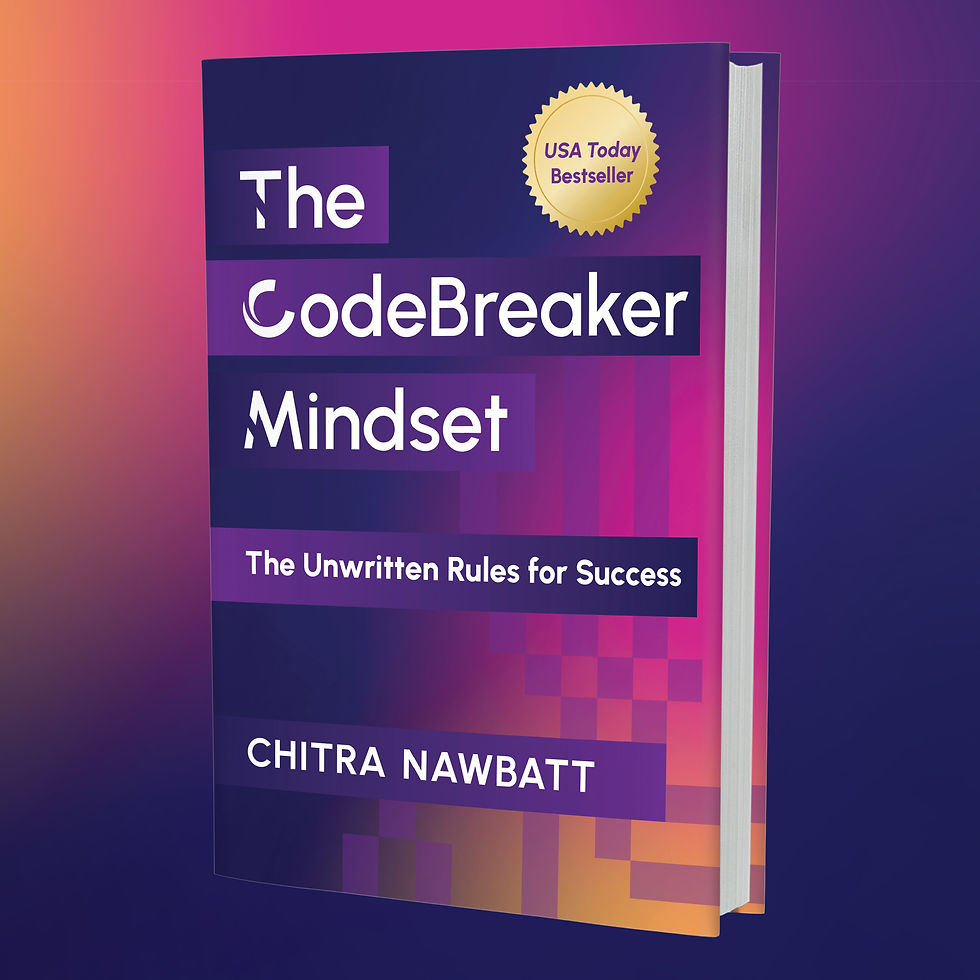
The CodeBreaker Mindset™ book order here: Amazon | Barnes & Noble
The CodeBreaker Mindset™ Ft. Bruce Cohen, Academy and Tony Award winning and Emmy nominated Producer
Chitra Nawbatt (00:11)
Welcome to The CodeBreaker Mindset™, where leaders and influencers share their path to achieving goals and dreams. I'm your host, Chitra Nawbatt. Joining us today is Bruce Cohen, Academy and Tony Award winning and Emmy nominated producer. Bruce, welcome. Thank you for joining us.
Bruce Cohen (00:30)
Thank you so much. I'm so happy and excited to be here.
Chitra Nawbatt (00:33)
You've been a Hollywood producer for 40 plus years, making over 25 films and several TV shows. You've won the Academy Award for Best Picture for Producing American Beauty. It also won awards from the Golden Globes, British Academy of Film and Television, and Producers Guild of America.
Bruce Cohen (00:36)
God help me.
Chitra Nawbatt (00:55)
Then you were nominated for the Academy Award for Best Picture for Milk and Silver Linings Playbook. When you were a child, did you dream of becoming an Oscar -winning producer? Take us through your journey to the heights of Hollywood.
Bruce Cohen (01:11)
Well, actually, yes, it was my specific dream. What happened was when I was eight years old, my parents were going out of town and my two grandmothers came to take care of my sister and I, and they let us stay up and watch the Academy Awards. And I was immediately struck by the whole thing. I felt like I had entered some alternate fantasy world and when I saw people winning that golden Oscar that night, I thought to myself, I want one of those. And that became my goal in life. It wasn't a money goal or even really a career goal or a power goal or any other goal, although it ended up sort of relating to different ones of those. It was very specifically to win the Oscar.
And embarrassingly, when I got nominated for American Beauty, that next, that day, I heard from pretty much everyone I had ever met in my entire life. And every single one of them, this is the embarrassing part, every single one of them said to me, you told me your goal in life was to win an Oscar. I was like, my God, did I literally tell everyone I could get my hands on? And the answer was yes.
But, If I hadn't been before that really locked in, you know, I'm a very big believer in setting your intentions and the power of manifestation, because in my case, I was able to manifest my specific dream in life.
Chitra Nawbatt (02:50)
And how did you manifest it?
Bruce Cohen (02:53)
Well, that was a long journey of so let's see, I was like 38 ish when I won. Yeah, I was actually, you it's funny, I'd never really done the math. It was exactly 30 years from intention to winning. And it was a series of steps.
Chitra Nawbatt (03:17)
And one thing, Bruce, let's face it, how many people at the age of 38 win the Academy Award? That is spectacular. So when we talk about how did you manifest it, take us through from eight years old.
Bruce Cohen (03:32)
There was, there's a, have said that Dan Jinx, my producing partner, who was actually even a year or two younger than me, that we were two of the youngest producers ever to win best picture, if not the youngest. We've never actually checked the statistics, but we definitely were on the younger side. Well, funnily enough, from the age of eight to the age of about 20, I didn't even realize that I wanted to have a career in motion pictures.
I knew I wanted to win an Oscar, but I hadn't yet really connected it to what that would actually mean. And back in those days, for all you kids out there, this is a long time ago, this was before People Magazine, it was before Entertainment Weekly, it was before Entertainment Tonight. People didn't really know, like you knew what an actor was in movies, you maybe understood who a famous director was, but there was very little understanding of any other jobs in the entertainment industry.
So, I hadn't really even heard of producing. I didn't know that producing was a job necessarily. And I also didn't necessarily know what I wanted to do in the film business. I just had this crazy dream that I wanted to win an Oscar. I worked very hard in high school. It was important to me to try and get into a really good college, because I felt like that would be a good career path to success.
I got into Yale University, which was my dream come true. And Bart Giamatti was the president of Yale. He's no longer with us. He was a true Renaissance man. He had been president of Yale and then he retired from that to become commissioner of Major League Baseball before he passed away. And Paul Giamatti, the famous Academy Award winning actor is his son actually.
And Bart Giamatti was president of Yale when I was there. And the first day we were at Yale, we had the freshmen address where all the freshmen gathered. And what Bart Giamatti said to us was, think of all the reasons why you're at Yale. Think of your goals in life. Think of what you hope to achieve. Think of what your parents want you to achieve. And now I want you to throw that all away. And I want you to use these next four years to find your passion in life. How are you gonna make a difference? How are you gonna live a fulfilling life, loving what you do, and how are you gonna make the world a better place? And as you may be able to hear just from me repeating it, those words imprinted in me at the time they gave me the chills when I heard them, I knew that it was some type of spiritual calling directly to me and hopefully all the others listening. And those words have been with me ever since.
And, two years later, I had taken a film course and I was walking down, there's a famous bar at Yale called Morrie's where the Whiffenpoofs used to always sing since Cole Porter wrote the Whiffenpoofs song in like 1918 or something. I'm sure getting all my dates wrong for the fact checkers. But I was walking by Morrie's my sophomore year and I literally, I stopped.
And I said, probably out loud, because it's a bit of a crazy habit I have when I'm thinking of exciting thoughts is I'll just speak, talk to myself out loud. I literally said, oh my God, I'm having my Bart Giamatti moment. I want to do film. And that was the moment where I decided that film was actually going to be my career, which again, it's pretty funny because I had already decided I wanted to win the Oscar when I was eight, but I hadn't really made that connection of what it meant. But that day I did.
So I decided to major in film, I decided to go into a career in film. And I got an internship in Los Angeles, because Hollywood, even still now, but certainly then there was very little film anywhere else in the country at that point. So I moved out to Los Angeles the summer before my senior year. I was a clerk at Warner Brothers. I got a job. They asked me to come back when I graduated, said, you, you have a job here. We like you come back and you'll have a job at Warner Brothers when you graduate.
So that was swanky to be back at senior year at college and to already have a job in Hollywood at Warner Brothers. When I, when I graduated and they had said at the end of my summer, they're like, you'll have a desk, you'll have a, you know, a salary. So I was super excited. I move out there and they're like, Oh It turns out we can't really hire you. You're just going to be a summer intern again, although it's paid internship. But I'm an extremely glass half full kind of person. That's also stood me very well. I've gotten a lot of validation. The more positive I have remained in my outlook throughout my life, the better things have happened to me. So I'm not saying it will work for everyone, although I do encourage you to try it.
But for me, positive thinking and looking on the bright side of everything has really paid off over and over and over and again and So many a lot of people when I've told the story have always said like you know my god, that must have been so annoying and depressing when you got there and here you thought you had a job for the whole year and then you found out you didn't have one and I was like No, I actually took it just the opposite. I I thought I'm really glad I didn't know this earlier because then I'd be really bummed. Now I'm here, I've moved to LA, I've got my whole life in front of me, I'm getting paid, you know, so what? I'll just jump in and get started. And at Warner Brothers, it was a desk job in post -production as a clerk. I really loved the people I was working with and I loved the job, but people kept saying to me versions of, you've got to get on the set. If you stay here, you're going to be stuck behind the desk your whole career, just like we are.
You've got a future in front of you and the movie making and the film business on the sets where it's really happening, those are the people that make the movies and you've got to find some way to get on a set. And so I started asking people, how do you get on a set? And one thing that I heard from a couple of people was a training program that the Directors Guild ran to train you to be assistant directors. And they're the people with the walkie talkies, if you've ever been on a film set that run around organizing everything.
And so one of my bosses at that point, I had moved into the still photography department. And he said, there's a movie shooting on the lot at Warner Brothers. It was protocol starring Goldie Hawn. And they have a DG trainee. That's what the program was called. So would you like me to arrange for you to spend the day on the set and you can follow the DG trainee around to see what the job is and I was like, my God, like that would be incredible.
So I went on my first set at Warner Brothers and I walked on and I was like there for about a half an hour sort of watching. And I realized that this team of assistant directors were the people who were running around organizing everything. And I thought to myself, Oh this is just like being sophomore class president on my high school, which I had been putting on the homecoming dance. You have like the decorations committee and the ticket sales committee and the band committee and all the different committees need to put all their different areas together to make a dance.
And filming was sort of like that, although it's all the departments have to come together every 20 minutes to 45 minutes to make a shot. So it's like you're putting on 50 homecoming dances each day, as far as all the different shots that make up a movie. Because one of the things, if you haven't visited a film or television set, there's a couple things that everyone's struck with. One is that there's a lot of sitting around waiting. So it does look sort of boring, but that's really just what's happening in front of the camera, because it takes a long time in between each time that you're filming.
And, the work then, which the assistant directors are very involved in, is behind the scenes, where everyone's running around organizing stuff. And all the different departments of a film have to come together. The lighting, the cinematography, the costumes, the makeup, the wardrobe, the acting, the script. And not only does every different department need to do their job, but they all have to happen in a very specific order, or the whole thing falls apart.
And the assistant directors are the only ones who really care about which order because every other department will just do their job. So the ADs as we're called, our job is to make sure everything's in sequence. A silly, stupid example of what I'm talking about, but it's a good one is that the woman actress is in a wig for her character and the wig takes two hours to put on.
And if her turtleneck sweater that she needs in the movie or that she's wearing to the set that day, if she hadn't changed out of that sweater and put her actual costume on for the film before she spent two hours putting her wig on, that time would have been wasted. You get to the wig and you're like, shit, now the wig's gonna come off to get the turtleneck off to get the shirt on.
So that's just like the simplest example of everything has to be in a specific order. And when you have 40 or 50 different elements for each shot, you have to sequence them all. So it's a very fun, very complicated job. And it's also very left brain, right brain. It's both creative because ultimately filmmaking is creative and you're trying to make art and you're always wanting to think ahead about what's gonna be the best thing for the shot, but it's also very practical. Budget, schedule, time, money, what is which.
So that was another piece that stood me very well for my producing career is the left brain, right brain. And also I think part of the many reasons why I love producing to this day is because you're using all sides of your brain.
When I started assistant directing, I didn't really even know what a producer was at that point. But that's when I got very lucky and the first film that I ever was a DJ, well, (a), I got lucky to get into the training program and (b), I got lucky that my first job was on The Color Purple, the original film with Steven Spielberg. But let's pause for a second and talk about luck because I believe in order to be a CodeBreaker. You do need luck for success.
That's absolutely a part of the recipe, but luck only takes you so far in my opinion and in most cases. Luck might get you the interview, but luck is not going to get you the job. Your skill and presentation is going to get you the job. Luck will put you in the right place at the right time to give you the opportunity to convert it into something, but then you need to actually convert the opportunity into something.
So I feel like it's this two -part combination of always keeping your intentions and manifestations set and your positive outlook primed to fall into the lucky situation. But then the minute your luck works for you, that's when the work begins. And that's when you have to figure out how you're going to convert the luck into something that helps you. My story that really, I've been very blessed and fortunate because I feel like throughout my life, I have these seminal stories that are so loud, if you will, that they really taught me that lesson that I stuck with. Wanting the Oscar at age eight, hearing Bart Giamatti tell me those words freshman year in college and and this is another seminal story that the first, my first DGA training job was on a television series called Hill Street Blues, which was a very successful, prestigious television show. I was on the fifth season and by that point it had redefined television. It was winning all these Emmys. It was a critical hit, a commercial hit.
And so the mindset on Hill Street Blues was every single person on that cast and crew showed up every morning to make extraordinary, superlative, groundbreaking television. Not just good, not just great, but something very special that you've never seen, that had never been seen before. So how lucky and blessed are you to be in a job where that's the goal that everyone's working towards every day.
And so that also...That was another loud message. I heard that was like, that's interesting. Here's my first set. And this is what everyone's going for. You know, that's really something to, to hope for, for the rest of my career, or at least to, you know, aspire to. After about three months on Hill Street Blues, even though the season was going, the training program took me off the show because they wanted trainees to get lots of different experience.
So they let you stay on a movie for the whole three months a movie would shoot, but they wouldn't let you stay on a television show for the whole nine months that the season took. So suddenly I'm out of work. When I was leaving on my last day of Hill Street Blues, a couple of different people said to me, you're the best trainee we've ever had. And that was very meaningful to me because it was my first job and I was probably like the 15th trainee in the five seasons of Hill Street Blues.
So I thought, okay, well, that's good. That's something to work with.
Chitra Nawbatt (18:07)
that’s
Bruce Cohen (18:08)
If I'm the best trainee they've ever had, you know, maybe I'm onto something. So a week goes by, there's no other work for me. Two weeks, a month, two months, three months. I have no work. I'm not getting paid. I'm ready, waiting for my next gig. I can't take another job. I actually had to file for unemployment.
Bruce Cohen (18:28)
Which was really hard because you had to go to the unemployment office every two weeks and prove all the different ways you were looking for a job. But I actually couldn't be looking for, my only way to look for a job was to wait for the director of the program to call me and have another job. So finally one morning I called her, Dina Bachelor, her name was, she was terrific. And I was a little frustrated. I'm like, Dina, I've been out of work for three months. I'm collecting unemployment. I had the most incredible time in Hill Street Blues.
Chitra Nawbatt (18:42)
Oh wow.
Bruce Cohen (18:57)
When am I gonna have another job in this training program? And she said to me, she goes, well, I said, what? She said, well, there's this movie and they're interviewing three candidates. And most movies we don't even let interview, we just assigned a trainee, but this movie is a really big deal. So we agreed to let them meet three choices. They only wanted to meet people who had been in the program for a year and a half or two or more, were super experienced and had done a super great job. But the interviews are this afternoon, I've only filled two of the slots. And since you did such a great job on Hill Street Blues, and since you happened to call me this morning, I'm gonna let you take the third slot and go interview for this movie at Warner Brothers called Moonsong. So I had been...
Chitra Nawbatt (19:54)
wow.
Bruce Cohen (19:51)
Warner Brothers is where I had just been clerking. So I called my friend who worked at Warner Brothers, who was actually secretary to the president of Warner Brothers at the time, who had been a buddy of all the people in my department, not the president, but the assistant. And they were called secretaries back in that day. And I called Judith and I said, you know, I have an interview for this movie called Moonsong. And she said, my God, that's the secret code name for the color purple directed by Steven Spielberg.
This is the post ET, post Raiders of the Lost Ark, post -Jaws Steven Spielberg. So I knew loudly, I'm like, oh here's a huge stroke of luck that I've been given. And now I have to convert it into a job. This could change my life. So I thought to myself, well, what are the tools at my disposal to try and get this job?
And what I came to is, the main thing I knew was my disadvantages. They want someone who's experienced, who's been in the program for two years, and she's given me the information that I'm the only one who isn't that among the three candidates. But they also want someone who's really good. And I have these people at Hill Street Blues who told me they were the best trainee they've ever had. So if that's true, maybe have a shot.
So my goal going into the interview was to try and make sure that the second assistant director and the first assistant director who I was interviewing with would call someone at Hill Street Blues to check my references. And I had asked them, I mentioned that at some point in the interview, and I remember thinking at the time, they're not gonna do that. They didn't really respond. It just sort of, I just kept talking and they just kept listening.
So the interview went well, but as I'm leaving, I...thought to myself, have I achieved my goal of trying to blow past the disadvantages that I'm at to get this job? And I thought, no, I haven't. And so I stopped sort of dramatically because suddenly I'm like thinking all this in my head and the interview's over, I'm out the door, I stop at the door and turn back around and they're like, what? And I go, I just have one more thing to say.
For you, I'm just another candidate that you're interviewing. But for me, this opportunity could change the entire course of my life and career. And I have one small ask before I leave. And they sort of leaned in, they're like, what is it? And I was like, would you just promise me before I go out the door that you will call someone to Hill Street Blues?
It's just, 30 seconds of your life, but it could change my entire life. And they looked into my eyes and they said, yes, we will call. And this time I believed them and I felt they would. And I ended up getting the job and within the three or four first days of work, we were already really good friends. And I was like, you know, I'm so curious, like, why did you hire me? And they said, well, we weren't going to, even though we loved you in the interview, but you didn't really have any experience.
But then, you seemed so insistent about us calling Hill Street Blues that we felt like we had to do it. And we remembered really late on Friday night, the interview had been on Friday afternoon. So we call Hill Street Blues at like nine in the evening. We didn't really feel anyone would still be there. And this guy picked up the phone and goes, this is Scott Brazil. And Scott Brazil was one of the executive producers of the show. So he was a big boss.
He just happened to be working late that night. He just happened to pick up the phone. The whole staff and the assistants were gone or he would never have gotten on the phone to begin with. And he was clearly very harried because he didn't really want to be talking to whoever it was. And the AD said, so sorry to bother you, Mr. Brazil, but we just wanted to check a reference on this trainee Bruce Cohen who were interviewing and Scott Brazil said, if you don't hire that kid, it's the biggest mistake you'll ever make and hung up the phone.
And so they hired me and I got the job and I ended up working with Steven Spielberg and his producers at the time, Cathy Kennedy and Frank Marshall for the whole rest of my career. I work with them or engage with them in different ways to this day.
It's Kathy and Frank are the reason why I'm a producer because I saw them producing on Color Purple and on the next five or six movies that I assisted directed at Amblin Entertainment, which was Spielberg's production company and still is. They are what inspired me to be a producer. When the American Beauty script came in to Dan Jinx and I, we took it to Steven Spielberg and he made it at DreamWorks.
So, literally that moment as I had thought it might, changed my entire life and set up everything that happened since then was all a result of me getting that job.
The Rules of the Game
Chitra Nawbatt (25:16)
That story is unbelievable. It's one of those one out of eight billion plus people on the planet type of stories. And it touches on so many things that you talked about. Preparation, technical quote unquote luck, but what do do with it? Passion, intentionality, so many elements. And I think different people at different stages in their life and career are listening to it, may not fully pick up on some of the elements. And it's exactly why I'm, we're creating this whole concept around The Codebreaker Mindset™. So I want to actually break it down for people talking about from that journey, that super rich journey, rules of the game, the pivots of what you talked about and the magic if you will.
So let's first talk about the rules of the game. What are the written and unwritten rules of the game in being an A -list Academy Award winning Hollywood producer?
Bruce Cohen (26:15)
Well, I think that they'd sort of go from macro to micro. The macro thoughts are communication and personal skills, which is both personal and personnel. And that's, you know, at the end of the day, the core of being a human being is how you deal with other human beings.
From the moment you wake up to the moment you go to sleep every single day. And there's an infinite number of ways to do that. But I believe and have found, and certainly for myself, the higher you can score on the scale of disaster to perfection, as far as your dealings with all of the human beings you come in contact with all day long, the better you're gonna be.
I mean, I truly believe that's how you set yourself up for success, is to try and have the cleanest, clearest, most moral, best communication and dealings with every single person you come in contact with. Now, that's an impossible dream, which of course is good. You're not, everyone is gonna have horrible interactions with someone every single day.
For those parents in the group, my husband and I, our daughter's 13, obviously we know that there's not a day goes by that we can not honestly say at the end of the day that we could have done something better as far as parenting skills go, even though we would much rather blame our child for being a hideous monster, not that they weren't. And that's such a great lesson is having it, if you ever need to work on your personal and personnel skills, have a kid.
But the, but that's always the goal is to continue to hone those relationships doesn't mean being obsequious. It doesn't mean being dishonest. Sometimes you have to be tough. Sometimes you have to be strong. But I believe you don't ever have to be mean. Mean is never going to get you what you want.
It's how do you find a way to be strong and to be authoritative if that is what's called for, but to do it in a way that is respectful of other people. It also links to me with this idea that I think about and talk about all the time, because one of the other things that I love about producing is the...how undervalued and underappreciated the actual skill of producing is because I believe every single human being has to produce their day every single day. From the moment when you open your eyes in the morning, the only person in charge of producing your day is you. What are you going to accomplish? What are your goals? What do you want to achieve?
How are you gonna do it? How many different departments in your life are involved in each thing you need to do that day? And what's the sequence of things that need to happen to get the best result? I feel like it's an exact metaphor for producing on a film or television set is producing your life. So producing is a skill that I feel everyone, it can only help if you have that and start thinking about that.
And that combination of the presentation and the communication of the idea along with the sequencing of how it should be done is really the whole ball of wax. If you're doing things in the right way and in the right order, it's going to lead to success for you, whether that's cooking the meal correctly or winning an Academy Award for best picture.
Chitra Nawbatt (30:27)
Well, what do you think most people don't understand about filmmaking and about Hollywood? Because they see the final product, they see all the glam, the stars on the red carpet, the fancy awards, the big film premieres. What do you think most people don't really understand about filmmaking and how Hollywood works?
Bruce Cohen (30:49)
I think the main thing people don't understand is how hard everyone's working. And I think the other thing that people don't know, and they wouldn't really have a way of knowing unless they're in the industry, is how...how hard and determined and superlative the work ethic is.
The whole idea in Hollywood is perfection. This idea of like, it's just a job. That is not how Hollywood thinks of things. It's like the quest for a phenomenal piece of entertainment that is going to thrill people around the world, which is, believe it or not, how pretty much everything starts. Now, most things don't get that way. You're watching thinking, then you're listening to me, you're thinking, well, why are so many movies and television shows bad?
That's because just by definition, the chances that anything is going to be superb is always so small, but that's how it starts. Everyone's trying to make something beautiful or entertaining or important or scare the crap out of you or make you laugh or make you cry, something that is going to thrill people around the world. And the work ethic that Hollywood brings to that is so strong and so determined. Social lives take a backseat, personal lives take a backseat, relationships take a backseat. You know, it's not a clock punch nine to five life.
It's a group of thousands, tens of thousands, hundreds of thousands of people, in this case, around the world, who want to give everything they have to creating this content for everyone. And I find that really thrilling and really exciting and really moving. But it's incredibly hard work. The hours are long. When I was assistant directing, which I did for a decade in my 20s,
During the week, I work and I slept. That was it. Literally, your turnaround, it's called the unions, because in the old days, they just work everyone to death. Now, you have a certain amount of hours that they have to give the crew between the time you end in one night and the time you start in the next morning. And those hours can be either eight hours, eight hours for some union crew, 12 hours if you're an actor and then it can be somewhere in between. But literally all you have time to do in those hours is leave the set, pack up your stuff, get home, eat a meal, go to sleep, get up the next morning and go back to work.
So you have no life and you do it because you love the thrill, you love the job, you love making the product, you're hoping that it'll pay off once you get to be a producer, can have a little more, you you could actually go out to dinner when you're filming sometimes, but still when you're on location shooting and on the set, you know, there are months where you're working and you're sleeping and then you have the, you have the weekends off and then you know that once you're finished filming a project until you start filming the next one, you have a lot more free time. so that, that dedication really that sort of inspires the determination to make it amazing. If you're spending that much time doing any job, you want it to have the best possible outcome. So builds on itself.
Chitra Nawbatt (34:46)
How though do you think about and what's your experience with the pure hard work, dedication, merit, driving the results versus many talk about and have experienced the … behind the scenes power -broking in Hollywood, but in media and entertainment in general. The relationships, whether you come from legacy Hollywood families or media entertainment families in terms of whatever level of perceived nepotism or favoritism based on relationships. And a lot of the behind the scenes power -broking. What's your experience with that? Where does that come in?
Bruce Cohen (35:25)
Well, I feel like it's all part of the job, you know, and you're, you want to, and you're allowed to use all of the tools at your disposal if you're going to do an excellent job and if you're going to get the best results. And when you're a producer, when you're a creative producer, a career producer on a film or television show, you're the boss. I mean, that's how it's set up. You do, you also have bosses because you're not writing the check.
You're responsible to the studio or the network or the financier who wrote the check. But for the actual company of people putting who are who are in pre-production, production and post-production making the product, you're the boss. So being the boss is not to be taken lightly.
I mean, that's you know, I believe that you have to, you can't pretend you're not the boss. When you're the boss, you're the boss. And so then what are all of the responsibilities that come along with that? And it's been, for me personally, it's been a really interesting journey. Because I always, part of my gift, which I love is the way that my career started by being this kid, this 24 year old kid on the set of Steven Spielberg's The Color Purple and looking up to him and feeling him as my mentor and then having him notice me and support me in my whole career. One of the really beautiful things, and it's funny, I just emailed this to him two weeks ago because we were talking about, Blink Twice, the new movie that Ihave out that he loved. There's a big part of me that's still that kid. I'll always be that little kid wanting Steven Spielberg's approval. And that has been a great gift to me because it has kept me humble in many ways.
I don't, it's hard like to imagine myself as the 62 year old boss who's had made all this incredible product and had these accolades and won these awards. It's like part of me knows that, but part of me is still the kid. And so it's been a learning curve though to really step into those shoes when you, you know, with power comes responsibility. And so when I, when something goes wrong, when I have an issue, when someone is standing in the way of us making the best possible product, It's my job to wield the power that I have and figure out, you know, oh I actually know the, I can call the chairman of the studio. I can call the head of the network. I can call the, we're, we're dealing with this issue on the marketing team, but the, person's boss, that person's boss, that person's boss.
I'll just call the boss and try and solve a problem on behalf of my team. so it's not that you don't want to, I believe, you don't want to pretend that you don't have the contacts you have and that you haven't accrued the power that you have. You want to have a truthful and honest discussion with yourself of...who you are within the industry. And if you are lucky and fortunate enough to be in a position where your opinion has weight, and when you open your mouth in a meeting, super important people listen to you and think you're smart and think you might have a good idea.
It's your responsibility to voice those opinions and to be prepared and to have that moment. And also though, to be willing to accept the consequences of, you know, if you're recommending that some huge change is going to happen, whether that's a personnel change or a directional change or a creative change, there's a chance that that's going to happen once you voice your opinion.
So it's a constant, you know, and that's another thing that I love about producing, but I think it goes for most careers…That's influx. You know, there's no, two hours or two days are always the same with every new day and with every new situation and with every new film, you have to continually recalibrate, you know, what is, what is my position on this project? What are my relationships vis-a-vis the people that I report to the people that report to me and how best to use all of those relationships to get what I want, which yet another thing that I love about producing. I believe producers are the only people on a project, the only job that does not have their own agenda. Every other job, yes, they want what's best for the film, but they also need to want, they've been paid, they've been hired to want what's best for the director, if they're director, what's best for the writer, what's best for the actor, what's best for the costumes, what's best for the makeup.
So everyone else on the entire set has this conflict of interest where they want what's best for the film, but they also need to want what's best for their job. And sometimes those are the same, but sometimes they're not. But the producer is the only person who does, it's the same. What's best for the producing, is what's best for the project as a whole. There's no separation.
So that is something that I love and lean into is I don't have a personal agenda. My personal agenda is the agenda of the movie or the TV show. So when I say, as I said before, when I use the word I, what's so great about it in the case of producers, it's not ever really what I want. It's what the movie wants. But I'm the one who's the spokesperson for that.
Chitra Nawbatt (42:10)
So let's go back to something you said about Steven Spielberg. When you're working for him, when you were working for him, iconic Academy Award winning Steven Spielberg, you talked about, you said about your intuition, feeling or knowing that you wanted him to be a mentor. There's others who could have been in that situation. I've had colleagues and friends, for example, who worked for the head of DreamWorks Animation when DreamWorks was a really big studio.
And they would fly with the executive, with the CEO on the private jet, and not talk to him, not build a relationship. So people could be in that spot with Steven Spielberg, work hard, do exceptional work. But how did you know that I need to not only do exceptional work, how did you know that I need to really attract the attention of Steven Spielberg and earn and win him over to being a mentor and sponsor in your career?
Bruce Cohen (43:06)
I understood that the only way to get Steven Spielberg's attention and the only way to want Steven Spielberg's attention was to be extraordinary at your work. You don't ask Steven Spielberg, and I kind of feel anyone, you don't ask people, will you be my mentor? You show up. You do your job in a way that is so extraordinary, but not showy either, not ego driven, but just really trying to put in the work of what is the job I've been hired to do? And what is the best possible way to do my job? And what is the way to stick the landing of every single responsibility of my job as flawlessly as I possibly can every day.
And what is the way to even go above and beyond what is the established rules of my job? But that gets very careful and takes a whole other amount of attention because you don't want to step on other people's toes. You don't want to make people above you look bad. You don't want to piss people off. So the, the above and beyond is complicated and takes a lot of time and thought and is constantly working on, about how do you, how superb can you be at your job on any given day and on any given hour? And the good news about that though is that if you're truly, if you're doing superb right, it's a win-win.
By definition, it's helping everyone. It's not just helping you because if it's only helping you and it's not helping the people, then you aren't being superb at your job. The definition of being superb at your job is what is adding to the team, what is adding to the task, what is adding to the goals of whatever it is you're doing. And so I understood somehow, I mean, that it was through my path. I was lucky to be in a position where when I went, that was the luck. The luck is my first boss.
The first boss on the first movie I've ever been on is Steven Spielberg. What am I gonna do about that? And I did notice people trying too hard to get his attention. And I watched that, and I, because part of my job as an AD is you're around the director a lot, because the whole team's like waiting for the director's needs. And so I noticed that people were always trying to get his attention. And I also noticed that people would get so nervous or excited or a combination when they had his attention that they would talk too long. I actually remember specifically, I noticed it's like, huh, these people keep, they try, all they want is their big moment with Steven Spielberg. And then when they get it, they don't get to the verb. That's how I just understood it and described it.
Meaning, like, don't give an introductory 20 minutes before you get to the subject. What have you done to earn his time? Why do you need his time? What do you actually have to say that is worth his time? He's super busy. He's directing a movie and that's true of any director and that's really true of honoring anyone who is the boss is they're really busy.
Bruce Cohen (43:56)
Their job is not to listen to you unless what you have to say is helping them do what they need. So get to the verb. And that's something that I started doing with him and continue to this day. That's always been my goal with him in person, on phone calls, in emails. And it's a huge lesson that I took with everyone else. Get to the verb.
And so you're not wasting people's time. That's not your job. It's not helping you. It's not helping them. Don't waste their time.
Chitra Nawbatt (47:30)
Bruce, staying with this theme of relationships, film and TV involve creating and building relationships and networks with complex, nuanced stakeholders. Whether it's actors, media and studio executives, directors, producers, casting agents, writers, stylists, managers, agents. These people have strong personalities and can be temperamental. Which stakeholders are most critical to your work? And if you can share examples of how you've built enduring relationships with them.
Bruce Cohen (48:00)
Well, I think all stakeholders are critical. That's part of the fun and challenge of producing is communication and having strong, organic, honest flow with everyone is important. you might have the instinct to prioritize a boss or someone who you felt was more important or a movie star, but I think that's gonna come back and bite you in the ass at some point because actually, if you're rubbing the prop person or the makeup person or the wardrobe person the wrong way, that could head things south just as quickly. So to me, that's part of the job is to try and have the best possible communication with all your stakeholders because you never know which ones are going to be the ones that help you most get to your goal of having the best possible product and which ones are the ones that are gonna get in your way the quickest if they're not feeling listened to.
Chitra Nawbatt (49:15)
You mentioned the product and the product that we all see are the folks in front of the camera. Can you share the producer-actor relationship building dynamic? Because you've worked with some legendary actors and figures such as Oprah Winfrey, Bradley Cooper, Robert De Niro, Jennifer Lawrence, Coleman Domingo, Anupam Kher. How did you build lasting relationships with iconic figures like these?
Bruce Cohen (49:41)
Well, I do agree that the actor-producer relationship is a very important one because they are the front line, as you said, of the creative. I mean, that is what the audience is going to be watching is actors giving hopefully phenomenal performances. And like all human beings, actors are all very different. And part of my job as a producer is really trying to get to know the actors in each production and learn from them as to what they need to really do their best work. And certainly the more experienced actors, the ones who've been at it for a while and the ones who are really phenomenal, they get to a point where they know very clearly what works for them and what doesn't, where they need help, where they don't need help. And so that's part of the challenge, but a really fun challenge is trying to make sure that you're providing the exact type of producing for that actor that the actor needs. And so it's a sort of that's the two step processes, learning what it is that they want from you as a producer and how that relationship can work best and then providing it for them to the best of your ability.
Chitra Nawbatt (51:02)
And is there a certain consistent thing that you've noticed with actors in terms of how you add value, something that they look for time and again from you?
Bruce Cohen (51:10)
I mean, one area certainly is giving them the environment that they need to do great work. And so that may be very different specifically, but it's always comes down to that is, they know, I mean, acting is it remains to me, absolutely mysterious magic, you know, to be talking to someone as themselves one minute and then watching them in front of the camera completely transform into their character. And I've been lucky in many cases, watching a performance that I know is completely spectacular slash may be getting nominated for an Oscar or winning one. To this day, I will never understand how that's possible and how actors pull that off.
But I do understand that what that they need of specific environment around them, which is everything from when they were asked to be on the set and how and what and why it's the it's everything that goes into their process from the moment they take the role to the moment the camera's rolling. So it's figuring out what is the environment that each actor needs to do their best work and then trying to create that environment for them.
Chitra Nawbatt (52:35)
And what about the folks behind the camera? Because you've collaborated with some tremendous global figures. We talked about Steven Spielberg earlier. You've also executive produced with former President Barack Obama and Michelle Obama your film, Rustin for Netflix. Being able to collaborate with such significant figures like that behind the scenes, how do you even get into those intersections, meet those folks, build relationships, and then collaborate to create together?
Bruce Cohen (53:07)
Well, the pressure is on you in the case of this specific question, but really kind of in general in life, I feel the pressure is on you to be superb and to exceed expectations. And that's really how you're going to have continuing relationships when you're dealing with some of the most brilliant minds on the planet, which as two examples, I certainly consider Steven Spielberg and Barack Obama to be, the way that you're going to get their trust is if you have something to contribute to the conversation. And so that's a continuing quest of mine as a producer. And there's also a large part of self-editing, which I take seriously, is that, If I don't have anything brilliant to say, I'm not saying anything. And what you want to do, I believe, is to be as smart and concise and value added as possible when you open your mouth. And so that's the goal. It's a lot easier said than done, but I think it's a great goal to have and it takes a lot of work. If you're just casual about what comes out of your mouth at work, that's not a recipe for success.
You need to really put a tremendous amount of time and effort into thinking of the right things to say, understanding when the time is to say them, and also understanding when whatever you were thinking of saying is actually not going to contribute to the conversation or further your goal of having Steven Spielberg and Barack Obama think that you're also smart and that they're interested in your opinion.
Chitra Nawbatt (54:59)
Let's go further on this word of understanding in terms of understanding how you take on projects. Because making films and TV shows are a very tough business, both in terms of the creation process and the economics of the industry are always under siege. Revenue and profit can be unpredictable because there's high uncertainty around the commercial success of a film and getting distribution may be a challenge. Take us into your process of how you take on a project. And are there data signals, pattern recognition at play that inform whether you take on a project?
Bruce Cohen (55:40)
A lot of producing at the core of it, you are a salesman. You are trying to sell people projects. You're trying to sell writers, directors, and actors to come onto your project. You're trying, once you are putting a crew together, you're trying to sell everyone on what it is that we're trying to make and the best possible way to make it. So that's a core part of the job is being a salesperson.
And what I learned early on about myself is that when I am deeply passionate about what I'm talking about and what I completely believe, when I completely believe in what I'm saying, I'm actually an excellent salesperson. When that's not the case, I'm a terrible salesperson. There are naturally born salespeople who are good at selling you what they want to sell you whether they actually personally believe in something or not. And I'm not judging those people. And in fact, I admire that skill. I learned that's not a skill I have. I'm only a good salesperson if I actually am deeply passionate about what I'm selling. And that then I leaned into that. And that in some ways, I consider a gift because it made it easier for me to figure out the types of projects I was looking for, which is for better or worse, I am only taking on projects that I am deeply passionate about and that I so completely believe in the potential of, because I know that if I don't, I'm not gonna be a good salesperson for that project. And so that's really a good natural indicator of a smaller number of projects that I'm actually going to be able to get involved with.
The Pivots
Chitra Nawbatt (57:32)
I have to imagine producing, it involves a lot of pivots. So I want to get into this notion of the pivots. Hollywood, as we've talked about, constantly high risk, high stakes. Films and shows can go viral and be big hits to not memorable, to huge flops. What's your review, post-mortem, and learning process in producing?
Bruce Cohen (57:56)
Well, one of, speaking of pivots in particularly, in particular, well, speaking of pivots in particular, my producing mentor I mentioned earlier, one of the primary ones with Kathy Kennedy, who's one of the great producers of all time. what she, one of the many things she really taught me was it's the producer's job to ask the big questions, which often are the scariest.
But they're the elephant in the room most obvious questions such as, this project really working at all? Like, is there a good movie here? Did we make a mistake even taking this on? Do we have the wrong director? Does the actor need to be recast? Are we shooting at the wrong location? And a lot of times, if the answer to that question is that you do have a problem, it's gonna be a huge issue. It's gonna cost you time, it's gonna cost you money, and it might bring the whole project to a complete standstill. And so the inclination on behalf of a lot of people is, we don't wanna ask those questions. Like, don't ask that question because the answer is too scary to contemplate. But Kathy's philosophy, and I feel deeply that she's right, and I've taken it on as my own.
That's exactly when you have to ask those questions. And no one else is going to ask them in many cases, but the producer, you're the one who's running things and people are looking to you to think about the big questions. They're more worried about the small questions. So you always have to be willing. I think it's a great tool to be ready to pivot at any moment. Now, the forum in which you really often are asking it to yourself first or just to one or two people at the inner sanctum. No, you're not going on the set and announcing in front of hundred people that you're thinking of replacing the director, obviously. And you may decide once you have thought about the question and put all the information together that you're not, you're going to stay the course, but you need to be willing to think about and at least consider any and every pivot, no matter how drastic it sounds. And then once you’re, able to be honest about what the pivots are, then you can gather the information you need to decide if you're going to pivot and if so, when and where and how
Chitra Nawbatt (01:00:32)
Is there an example that you might share? And you know not asking you to spill the tea here, but whether there's a director or an actor that you did have to recast and how you handle that delicate situation, especially if it's a well-known director or actor.
Bruce Cohen (01:00:51)
For me, it's more been actors, but there have been times when an actor has been needed to replace or a crew member and or a writer and often, you know, replacing someone is not fun. No one really wants to do it. And now even more, there's a, there's a more appropriate awareness from the human resource angle of what you can and cannot say to people whenever you are needing to let someone go or replace them. You really need to consult the HR people who at wherever entity you're working for, often the attorneys, because what you would just want to say as a person and what you're allowed to say legally or what is appropriate to say are very different things. So it's a difficult and complicated situation and unfortunate always. And the first step that I believe is coming forward and letting everyone know this is my job. That is not an area that you want to pass the buck. even if you're, which in many cases, you're not the direct supervisor of the person, but. Also in many cases, that still means that you as the producer are the best person to make the change. So that's a whole skill in and of itself, but it's an important one. And you want to handle those situations with as much forthrightness and respect as possible. But you also need to, in many cases, you have to put your own ego aside, again, as we've talked about in the past, it's not really about making yourself feel good or doing the thing that's comfortable for you. It's about handling the situation in a way that's going to be the best way and the most by the book way for the production. And that's what you have to do, whether you like it or not.
Chitra Nawbatt (01:03:02)
Yeah! Is there a person that stands out for you that you had to have that conversation with where it was just very instructive to however you move forward? Is there one of those sort of pivotal conversations that really stands out to you?
Bruce Cohen (01:03:15)
Yes, on a recent film, we had to replace an actor and it was very important in that particular situation that I do not get into the specifics of why we were letting that person go. So that was a complicated tightrope. And once I understood that there were limitations to what I could say and why, I prepped very carefully and very specifically with the attorneys from the financier because I really wanted to make sure I understood what I was saying and what I wasn't saying. And the actor actually ended up making it very difficult for me because they were pushing to get the exact information that I was not at liberty to disclose. Although, then, which was an interesting lesson for me, I found the conversation extremely uncomfortable and extremely difficult. And I was feeling very upset and even guilty in some ways that I couldn't give the person the information that they wanted. After they were let go, I later found out that they absolutely had that information. They knew exactly.
Chitra Nawbatt (01:04:40)
Oh wow.
Bruce Cohen (01:04:42)
what they had done and the whole bit of, can't imagine what I could have done, you must tell me was actually a complete performance and a good one, I will say. But then again, they are an actor. So that was actually, that was a good validation lesson of, know, here I am feeling all worried that I wasn't able to give them the information and that turned out not to be the case.
Chitra Nawbatt (01:05:09)
How do you equip yourself emotionally and mentally to handle and endure the high risk, high stakes, seesaw nature of Hollywood? Because you've been at it now for 40 plus years, right? And on top of that, it's also an industry where you work, you earn income, you don't work. It can be a bit tough, right? So how did you fortify yourself to deal with these highs and lows?
Bruce Cohen (01:05:38)
I think that it comes from experience. It is one way, one area that the longer you've been in the business, it certainly helps. And for me, it's been perhaps a while coming, but I'm pretty clear now that this is, you hear the cliches, but they're true. It's not life and death. It is not brain surgery and it will all be fine. So I really, it's harder to convince yourself of this when you don't believe it. And it's easier, it gets easier when you get to a point that you actually know that it's true. And what you know that it's true is it will work itself out. It feels like a complete disaster right now and everyone's extremely upset and there's a huge amount of money at stake and it's all just a complete nightmare. But, like almost all the other complete nightmares that you've dealt with in your career, it actually is going to work itself out. Not by itself. I mean, you need to be part of the solution, but (A), it is going to get better and (B), getting angry about it or getting anxious about it or letting your blood pressure go up about it. None of that's going to help. The calmer you can stay, and the cooler you are. And also, on the other hand, the warmer, as in the more empathetic and friendly you can be in these situations, the better the solution is going to be, which is both good for your own mental health and also good for the solution. And one easy tool trick that you learn is it tends to be in the worst situation is the more a lot of people are yelling or extremely agitated. And a lot of times if there's two sides, both of them have heightened. And once you sort of lock into realizing that those are the very moments where you being calmer and you not adding a third voice to the two parties screaming at each other, but you being the mediator in the middle, who's trying to find common ground, that's how you get to a solution and move on.
Chitra Nawbatt (01:08:07)
When it comes to pivots, often pivots come from this notion of being hijacked, whether by yourself in terms of self-sabotage or by someone else. Share with us a situation where you were hijacked by yourself. How did you recover and pivot? And then also share a situation when you were sabotaged by somebody else and how you recovered and pivoted.
Bruce Cohen (01:08:35)
I've worked very hard, those are good questions. I've worked very hard to not be hijacked by myself. I think that that's, know, surely I don't do it all the time, but it is, that is always a goal of mine is whenever I'm in a situation, and this is really work and life both, where I'm really agitated about something, I do have a sort of automatic mechanism now where I'll feel that and I'll stop.
And I'll say, is this a real problem or is this a problem of my creation? And almost all the time I have found that while there might be some element of a problem that's real, there's always a tremendous amount around it that I have decided to create into more of a problem. And giving myself the freedom to realize, like drop all the stuff, drop the 90 % of what you are creating and just keep the 10 % that actually is the problem, that's really the pathway to finding the solution.
And then what was the second part of it was if.
Chitra Nawbatt (01:09:43)
And what about an example of when you were sabotaged by someone else and how you recover and pivot from that? Perhaps something that was very key in your life journey where someone really tried to mess you up.
Bruce Cohen (01:10:02)
There's also through experience and through knowledge of my job and a knowledge that I'm actually good at my job, which I don't think it helps anyone to sort of be overly modest. You need to have a sense of who you are and where you stand in the world. So there's a side of me that's actually very tough. And when someone pisses me off because they're attempting to sabotage the project and or me or that combination, I very often now, have the resources and the contacts to snap that person right out of it. And I don't hesitate.
You know, when I come across, and often, a lot of times it's not me, they're trying to sabotage someone else in the project. And I hear about it, and with one phone call, I can shut that down really quick. And I'm not, I don't hesitate to do that because that can spread like a cancer really quickly through a production. So if someone is being a bad actor, I will use every tool at my disposal to shut that person down as soon as possible and have become effective at that.
The Magic
Chitra Nawbatt (01:11:36)
Let's get into this notion in life and in business and career around the magic. How do you define serendipity?
Bruce Cohen (01:11:46)
I believe, and my life for me has been proof, that there is magic everywhere. I mean, the number of times that magical things have happened to me is really infinite. And it continues on a daily basis. And I feel like it's a self-fulfilling prophecy that the more you believe in it, the more it's gonna happen. And if you don't believe in it, it's really not gonna happen. But it's also not something you can fake. So you know, I was going to say, encourage you to believe in magic, but that's something you really have to come to. But once you put your trust in magic and in serendipity and in the universe, I find that it just happens over and over and over and over again. And I'm always on the lookout for that. know, when something is handed to me serendipitously, a person or a project, I want to jump on it right away and I want to take full advantage of that moment in time to make the most of what I've been given. Something that I've been talking about only recently, but I like it a lot, is this idea, you hear people talking about pushing the rock uphill, pushing the rock uphill. Well, I believe there is no pushing the rock up. Rocks don't get pushed uphill. Rocks either get pushed sideways or down.
And I'm always looking for those moments. I'm not wasting my time trying to push the rock uphill. It's not gonna go uphill. I'm looking for the serendipitous moment where the rock can go straight ahead or even better down. And then I'm jumping on those moments and making the rock go in that direction.
Chitra Nawbatt (01:13:32)
So then where do you bring intuition into the equation? Because a lot of our conversation, you've talked about the serendipity and how you first got to work with Steven Spielberg on the Color Purple. But part of it also is this notion of intuition. so interested in terms of where and how you access intuition in terms of how you seize an opportunity or your gut says, hey, that particular actor should be in our project. How do you access intuition?
Bruce Cohen (01:14:02)
Well, I think a lot of it is self-awareness that you really, I feel the tougher you can be on yourself to really have a true understanding of who you are and how you're affecting people, the better off you're gonna be. If you understand in any given situation, exactly how people are reacting to you and what they're actually thinking of what you're saying and who you are. The more accurate you are on that, the better you're going to be and the more you're going to be able to make the magic happen. But if you're on the other hand, if you're diluted and if the way you think you're coming off to people is actually the opposite of how you're coming off to people, then you're not going to get anything accomplished.
So it's really spending a lot of time and effort and energy and work on understanding who you are and how you're coming off to people. And to me, that connects to intuition because that's when those moments happen, when you actually are in sync with the person you're talking about and something happens and your intuition is now is the moment to pitch my idea to this person. But it's gotta be a good idea and you have to have read the moment right. If they're not into you or they don't have time for you, then your pitch, is what's gonna move your life and the project forward is gonna fail. And what you wanna try and do is when you open your mouth to pitch something, which we do all the time in life and at work, you wanna succeed.
And the more information you can give yourself to know you're going to succeed, the better.
Chitra Nawbatt (01:16:04)
So in this conversation, we've talked about the written and unwritten rules, the pivots, the magic, all elements of The CodeBreaker Mindset™. What's your take on The CodeBreaker Mindset™?
Bruce Cohen (01:16:20)
Well, I mean, it's a lot of it's sort of all the different components of what we've just been talking about is in many cases, the code you're trying to break are other human beings. As much as you want to, whatever your goal is, professionally or personally, most of the time, it's other people that are in between you and your goal. So to me, The CodeBreaker Mindset™ is understanding who you are, understanding who the person is you're speaking to, using every cue at your disposal to figure out how you want the conversation to go, what you want to bring up, when you want to bring it up, how you want to bring it up, and then trying to make that happen. You want to, you know, you're trying to stick the landing and really, the more you can do that in every phone call, in every email, in every conversation, you're trying to stick the landing. Now, if and if you're trying to think too hard about that, A, you'll drive yourself crazy and B, there's probably just not enough bandwidth in the human brain. It has to come naturally.
So I think that's another skill to the CodeBreaking mindset is you have your goal of how you want to break the code and why, and then you need to work to, the more intuitive it becomes where you just are sticking landings left, right, and center, because that's a skill that you've developed and it starts to come natural to you, the better.
Chitra Nawbatt (01:18:13)
And what you just said, there's a continuous notion to it. It's not static. And so what's your advice on how to cultivate The CodeBreaker Mindset™?
Bruce Cohen (01:18:23)
Well, the metaphor that just sort of came out, but we'll go with it because I think it's good, is sticking the landing. And I think that one piece of advice is that's what you want to start looking for. If you're still in the phase where it's not coming intuitively to you yet, and you want to get better at it or work on it, it's really try thinking about after every phone call and after every meeting and after every email “Did I stick the landing?” And I think you'll know whether you did or not. And the more honest with yourself you can be, the better. And if you did stick the landing, why? What did you do right? How did it work? What was the interaction with the other person or in the meeting that made it work? And I can pretty much guarantee you that a huge part of sticking the landing is that the things that came out of your mouth were smart and value added and nice.
I'd say those are three triangles of the landing stick. Or on the other hand, if you didn't stick the landing, what went wrong? And how can you do better the next time? And I also think that one earlier access point is emails and texts, because those you can ask yourself, did I stick the landing before you send them? And I highly recommend that. That's much more in our control. A meeting or a phone call or a Zoom is fluid, but the written word is not. So take your time on every business email, personal email and every text. Before you send it in the heat of the moment, reread it and think, is this gonna stick the landing or not?
Chitra Nawbatt (01:20:10)
Bruce, this has been beyond a master class. Thank you so much for joining us.
Bruce Cohen (01:20:18)
It's been really fun and my pleasure and thank you for having me.
Chitra Nawbatt (01:20:24)
Thank you for supporting The CodeBreaker Mindset™. For more episodes, go to
www.ChitraNawbatt.com to like and subscribe. Connect with me on social media
@ChitraNawbatt.
The CodeBreaker Mindset™ Ft. Bruce Cohen, Academy and Tony Award winning and Emmy nominated Producer
Chitra Nawbatt (00:11)
Welcome to The CodeBreaker Mindset™, where leaders and influencers share their path to achieving goals and dreams. I'm your host, Chitra Nawbatt. Joining us today is Bruce Cohen, Academy and Tony Award winning and Emmy nominated producer. Bruce, welcome. Thank you for joining us.
Bruce Cohen (00:30)
Thank you so much. I'm so happy and excited to be here.
Chitra Nawbatt (00:33)
You've been a Hollywood producer for 40 plus years, making over 25 films and several TV shows. You've won the Academy Award for Best Picture for Producing American Beauty. It also won awards from the Golden Globes, British Academy of Film and Television, and Producers Guild of America.
Bruce Cohen (00:36)
God help me.
Chitra Nawbatt (00:55)
Then you were nominated for the Academy Award for Best Picture for Milk and Silver Linings Playbook. When you were a child, did you dream of becoming an Oscar -winning producer? Take us through your journey to the heights of Hollywood.
Bruce Cohen (01:11)
Well, actually, yes, it was my specific dream. What happened was when I was eight years old, my parents were going out of town and my two grandmothers came to take care of my sister and I, and they let us stay up and watch the Academy Awards. And I was immediately struck by the whole thing. I felt like I had entered some alternate fantasy world and when I saw people winning that golden Oscar that night, I thought to myself, I want one of those. And that became my goal in life. It wasn't a money goal or even really a career goal or a power goal or any other goal, although it ended up sort of relating to different ones of those. It was very specifically to win the Oscar.
And embarrassingly, when I got nominated for American Beauty, that next, that day, I heard from pretty much everyone I had ever met in my entire life. And every single one of them, this is the embarrassing part, every single one of them said to me, you told me your goal in life was to win an Oscar. I was like, my God, did I literally tell everyone I could get my hands on? And the answer was yes.
But, If I hadn't been before that really locked in, you know, I'm a very big believer in setting your intentions and the power of manifestation, because in my case, I was able to manifest my specific dream in life.
Chitra Nawbatt (02:50)
And how did you manifest it?
Bruce Cohen (02:53)
Well, that was a long journey of so let's see, I was like 38 ish when I won. Yeah, I was actually, you it's funny, I'd never really done the math. It was exactly 30 years from intention to winning. And it was a series of steps.
Chitra Nawbatt (03:17)
And one thing, Bruce, let's face it, how many people at the age of 38 win the Academy Award? That is spectacular. So when we talk about how did you manifest it, take us through from eight years old.
Bruce Cohen (03:32)
There was, there's a, have said that Dan Jinx, my producing partner, who was actually even a year or two younger than me, that we were two of the youngest producers ever to win best picture, if not the youngest. We've never actually checked the statistics, but we definitely were on the younger side. Well, funnily enough, from the age of eight to the age of about 20, I didn't even realize that I wanted to have a career in motion pictures.
I knew I wanted to win an Oscar, but I hadn't yet really connected it to what that would actually mean. And back in those days, for all you kids out there, this is a long time ago, this was before People Magazine, it was before Entertainment Weekly, it was before Entertainment Tonight. People didn't really know, like you knew what an actor was in movies, you maybe understood who a famous director was, but there was very little understanding of any other jobs in the entertainment industry.
So, I hadn't really even heard of producing. I didn't know that producing was a job necessarily. And I also didn't necessarily know what I wanted to do in the film business. I just had this crazy dream that I wanted to win an Oscar. I worked very hard in high school. It was important to me to try and get into a really good college, because I felt like that would be a good career path to success.
I got into Yale University, which was my dream come true. And Bart Giamatti was the president of Yale. He's no longer with us. He was a true Renaissance man. He had been president of Yale and then he retired from that to become commissioner of Major League Baseball before he passed away. And Paul Giamatti, the famous Academy Award winning actor is his son actually.
And Bart Giamatti was president of Yale when I was there. And the first day we were at Yale, we had the freshmen address where all the freshmen gathered. And what Bart Giamatti said to us was, think of all the reasons why you're at Yale. Think of your goals in life. Think of what you hope to achieve. Think of what your parents want you to achieve. And now I want you to throw that all away. And I want you to use these next four years to find your passion in life. How are you gonna make a difference? How are you gonna live a fulfilling life, loving what you do, and how are you gonna make the world a better place? And as you may be able to hear just from me repeating it, those words imprinted in me at the time they gave me the chills when I heard them, I knew that it was some type of spiritual calling directly to me and hopefully all the others listening. And those words have been with me ever since.
And, two years later, I had taken a film course and I was walking down, there's a famous bar at Yale called Morrie's where the Whiffenpoofs used to always sing since Cole Porter wrote the Whiffenpoofs song in like 1918 or something. I'm sure getting all my dates wrong for the fact checkers. But I was walking by Morrie's my sophomore year and I literally, I stopped.
And I said, probably out loud, because it's a bit of a crazy habit I have when I'm thinking of exciting thoughts is I'll just speak, talk to myself out loud. I literally said, oh my God, I'm having my Bart Giamatti moment. I want to do film. And that was the moment where I decided that film was actually going to be my career, which again, it's pretty funny because I had already decided I wanted to win the Oscar when I was eight, but I hadn't really made that connection of what it meant. But that day I did.
So I decided to major in film, I decided to go into a career in film. And I got an internship in Los Angeles, because Hollywood, even still now, but certainly then there was very little film anywhere else in the country at that point. So I moved out to Los Angeles the summer before my senior year. I was a clerk at Warner Brothers. I got a job. They asked me to come back when I graduated, said, you, you have a job here. We like you come back and you'll have a job at Warner Brothers when you graduate.
So that was swanky to be back at senior year at college and to already have a job in Hollywood at Warner Brothers. When I, when I graduated and they had said at the end of my summer, they're like, you'll have a desk, you'll have a, you know, a salary. So I was super excited. I move out there and they're like, Oh It turns out we can't really hire you. You're just going to be a summer intern again, although it's paid internship. But I'm an extremely glass half full kind of person. That's also stood me very well. I've gotten a lot of validation. The more positive I have remained in my outlook throughout my life, the better things have happened to me. So I'm not saying it will work for everyone, although I do encourage you to try it.
But for me, positive thinking and looking on the bright side of everything has really paid off over and over and over and again and So many a lot of people when I've told the story have always said like you know my god, that must have been so annoying and depressing when you got there and here you thought you had a job for the whole year and then you found out you didn't have one and I was like No, I actually took it just the opposite. I I thought I'm really glad I didn't know this earlier because then I'd be really bummed. Now I'm here, I've moved to LA, I've got my whole life in front of me, I'm getting paid, you know, so what? I'll just jump in and get started. And at Warner Brothers, it was a desk job in post -production as a clerk. I really loved the people I was working with and I loved the job, but people kept saying to me versions of, you've got to get on the set. If you stay here, you're going to be stuck behind the desk your whole career, just like we are.
You've got a future in front of you and the movie making and the film business on the sets where it's really happening, those are the people that make the movies and you've got to find some way to get on a set. And so I started asking people, how do you get on a set? And one thing that I heard from a couple of people was a training program that the Directors Guild ran to train you to be assistant directors. And they're the people with the walkie talkies, if you've ever been on a film set that run around organizing everything.
And so one of my bosses at that point, I had moved into the still photography department. And he said, there's a movie shooting on the lot at Warner Brothers. It was protocol starring Goldie Hawn. And they have a DG trainee. That's what the program was called. So would you like me to arrange for you to spend the day on the set and you can follow the DG trainee around to see what the job is and I was like, my God, like that would be incredible.
So I went on my first set at Warner Brothers and I walked on and I was like there for about a half an hour sort of watching. And I realized that this team of assistant directors were the people who were running around organizing everything. And I thought to myself, Oh this is just like being sophomore class president on my high school, which I had been putting on the homecoming dance. You have like the decorations committee and the ticket sales committee and the band committee and all the different committees need to put all their different areas together to make a dance.
And filming was sort of like that, although it's all the departments have to come together every 20 minutes to 45 minutes to make a shot. So it's like you're putting on 50 homecoming dances each day, as far as all the different shots that make up a movie. Because one of the things, if you haven't visited a film or television set, there's a couple things that everyone's struck with. One is that there's a lot of sitting around waiting. So it does look sort of boring, but that's really just what's happening in front of the camera, because it takes a long time in between each time that you're filming.
And, the work then, which the assistant directors are very involved in, is behind the scenes, where everyone's running around organizing stuff. And all the different departments of a film have to come together. The lighting, the cinematography, the costumes, the makeup, the wardrobe, the acting, the script. And not only does every different department need to do their job, but they all have to happen in a very specific order, or the whole thing falls apart.
And the assistant directors are the only ones who really care about which order because every other department will just do their job. So the ADs as we're called, our job is to make sure everything's in sequence. A silly, stupid example of what I'm talking about, but it's a good one is that the woman actress is in a wig for her character and the wig takes two hours to put on.
And if her turtleneck sweater that she needs in the movie or that she's wearing to the set that day, if she hadn't changed out of that sweater and put her actual costume on for the film before she spent two hours putting her wig on, that time would have been wasted. You get to the wig and you're like, shit, now the wig's gonna come off to get the turtleneck off to get the shirt on.
So that's just like the simplest example of everything has to be in a specific order. And when you have 40 or 50 different elements for each shot, you have to sequence them all. So it's a very fun, very complicated job. And it's also very left brain, right brain. It's both creative because ultimately filmmaking is creative and you're trying to make art and you're always wanting to think ahead about what's gonna be the best thing for the shot, but it's also very practical. Budget, schedule, time, money, what is which.
So that was another piece that stood me very well for my producing career is the left brain, right brain. And also I think part of the many reasons why I love producing to this day is because you're using all sides of your brain.
When I started assistant directing, I didn't really even know what a producer was at that point. But that's when I got very lucky and the first film that I ever was a DJ, well, (a), I got lucky to get into the training program and (b), I got lucky that my first job was on The Color Purple, the original film with Steven Spielberg. But let's pause for a second and talk about luck because I believe in order to be a CodeBreaker. You do need luck for success.
That's absolutely a part of the recipe, but luck only takes you so far in my opinion and in most cases. Luck might get you the interview, but luck is not going to get you the job. Your skill and presentation is going to get you the job. Luck will put you in the right place at the right time to give you the opportunity to convert it into something, but then you need to actually convert the opportunity into something.
So I feel like it's this two -part combination of always keeping your intentions and manifestations set and your positive outlook primed to fall into the lucky situation. But then the minute your luck works for you, that's when the work begins. And that's when you have to figure out how you're going to convert the luck into something that helps you. My story that really, I've been very blessed and fortunate because I feel like throughout my life, I have these seminal stories that are so loud, if you will, that they really taught me that lesson that I stuck with. Wanting the Oscar at age eight, hearing Bart Giamatti tell me those words freshman year in college and and this is another seminal story that the first, my first DGA training job was on a television series called Hill Street Blues, which was a very successful, prestigious television show. I was on the fifth season and by that point it had redefined television. It was winning all these Emmys. It was a critical hit, a commercial hit.
And so the mindset on Hill Street Blues was every single person on that cast and crew showed up every morning to make extraordinary, superlative, groundbreaking television. Not just good, not just great, but something very special that you've never seen, that had never been seen before. So how lucky and blessed are you to be in a job where that's the goal that everyone's working towards every day.
And so that also...That was another loud message. I heard that was like, that's interesting. Here's my first set. And this is what everyone's going for. You know, that's really something to, to hope for, for the rest of my career, or at least to, you know, aspire to. After about three months on Hill Street Blues, even though the season was going, the training program took me off the show because they wanted trainees to get lots of different experience.
So they let you stay on a movie for the whole three months a movie would shoot, but they wouldn't let you stay on a television show for the whole nine months that the season took. So suddenly I'm out of work. When I was leaving on my last day of Hill Street Blues, a couple of different people said to me, you're the best trainee we've ever had. And that was very meaningful to me because it was my first job and I was probably like the 15th trainee in the five seasons of Hill Street Blues.
So I thought, okay, well, that's good. That's something to work with.
Chitra Nawbatt (18:07)
that’s
Bruce Cohen (18:08)
If I'm the best trainee they've ever had, you know, maybe I'm onto something. So a week goes by, there's no other work for me. Two weeks, a month, two months, three months. I have no work. I'm not getting paid. I'm ready, waiting for my next gig. I can't take another job. I actually had to file for unemployment.
Bruce Cohen (18:28)
Which was really hard because you had to go to the unemployment office every two weeks and prove all the different ways you were looking for a job. But I actually couldn't be looking for, my only way to look for a job was to wait for the director of the program to call me and have another job. So finally one morning I called her, Dina Bachelor, her name was, she was terrific. And I was a little frustrated. I'm like, Dina, I've been out of work for three months. I'm collecting unemployment. I had the most incredible time in Hill Street Blues.
Chitra Nawbatt (18:42)
Oh wow.
Bruce Cohen (18:57)
When am I gonna have another job in this training program? And she said to me, she goes, well, I said, what? She said, well, there's this movie and they're interviewing three candidates. And most movies we don't even let interview, we just assigned a trainee, but this movie is a really big deal. So we agreed to let them meet three choices. They only wanted to meet people who had been in the program for a year and a half or two or more, were super experienced and had done a super great job. But the interviews are this afternoon, I've only filled two of the slots. And since you did such a great job on Hill Street Blues, and since you happened to call me this morning, I'm gonna let you take the third slot and go interview for this movie at Warner Brothers called Moonsong. So I had been...
Chitra Nawbatt (19:54)
wow.
Bruce Cohen (19:51)
Warner Brothers is where I had just been clerking. So I called my friend who worked at Warner Brothers, who was actually secretary to the president of Warner Brothers at the time, who had been a buddy of all the people in my department, not the president, but the assistant. And they were called secretaries back in that day. And I called Judith and I said, you know, I have an interview for this movie called Moonsong. And she said, my God, that's the secret code name for the color purple directed by Steven Spielberg.
This is the post ET, post Raiders of the Lost Ark, post -Jaws Steven Spielberg. So I knew loudly, I'm like, oh here's a huge stroke of luck that I've been given. And now I have to convert it into a job. This could change my life. So I thought to myself, well, what are the tools at my disposal to try and get this job?
And what I came to is, the main thing I knew was my disadvantages. They want someone who's experienced, who's been in the program for two years, and she's given me the information that I'm the only one who isn't that among the three candidates. But they also want someone who's really good. And I have these people at Hill Street Blues who told me they were the best trainee they've ever had. So if that's true, maybe have a shot.
So my goal going into the interview was to try and make sure that the second assistant director and the first assistant director who I was interviewing with would call someone at Hill Street Blues to check my references. And I had asked them, I mentioned that at some point in the interview, and I remember thinking at the time, they're not gonna do that. They didn't really respond. It just sort of, I just kept talking and they just kept listening.
So the interview went well, but as I'm leaving, I...thought to myself, have I achieved my goal of trying to blow past the disadvantages that I'm at to get this job? And I thought, no, I haven't. And so I stopped sort of dramatically because suddenly I'm like thinking all this in my head and the interview's over, I'm out the door, I stop at the door and turn back around and they're like, what? And I go, I just have one more thing to say.
For you, I'm just another candidate that you're interviewing. But for me, this opportunity could change the entire course of my life and career. And I have one small ask before I leave. And they sort of leaned in, they're like, what is it? And I was like, would you just promise me before I go out the door that you will call someone to Hill Street Blues?
It's just, 30 seconds of your life, but it could change my entire life. And they looked into my eyes and they said, yes, we will call. And this time I believed them and I felt they would. And I ended up getting the job and within the three or four first days of work, we were already really good friends. And I was like, you know, I'm so curious, like, why did you hire me? And they said, well, we weren't going to, even though we loved you in the interview, but you didn't really have any experience.
But then, you seemed so insistent about us calling Hill Street Blues that we felt like we had to do it. And we remembered really late on Friday night, the interview had been on Friday afternoon. So we call Hill Street Blues at like nine in the evening. We didn't really feel anyone would still be there. And this guy picked up the phone and goes, this is Scott Brazil. And Scott Brazil was one of the executive producers of the show. So he was a big boss.
He just happened to be working late that night. He just happened to pick up the phone. The whole staff and the assistants were gone or he would never have gotten on the phone to begin with. And he was clearly very harried because he didn't really want to be talking to whoever it was. And the AD said, so sorry to bother you, Mr. Brazil, but we just wanted to check a reference on this trainee Bruce Cohen who were interviewing and Scott Brazil said, if you don't hire that kid, it's the biggest mistake you'll ever make and hung up the phone.
And so they hired me and I got the job and I ended up working with Steven Spielberg and his producers at the time, Cathy Kennedy and Frank Marshall for the whole rest of my career. I work with them or engage with them in different ways to this day.
It's Kathy and Frank are the reason why I'm a producer because I saw them producing on Color Purple and on the next five or six movies that I assisted directed at Amblin Entertainment, which was Spielberg's production company and still is. They are what inspired me to be a producer. When the American Beauty script came in to Dan Jinx and I, we took it to Steven Spielberg and he made it at DreamWorks.
So, literally that moment as I had thought it might, changed my entire life and set up everything that happened since then was all a result of me getting that job.
The Rules of the Game
Chitra Nawbatt (25:16)
That story is unbelievable. It's one of those one out of eight billion plus people on the planet type of stories. And it touches on so many things that you talked about. Preparation, technical quote unquote luck, but what do do with it? Passion, intentionality, so many elements. And I think different people at different stages in their life and career are listening to it, may not fully pick up on some of the elements. And it's exactly why I'm, we're creating this whole concept around The Codebreaker Mindset™. So I want to actually break it down for people talking about from that journey, that super rich journey, rules of the game, the pivots of what you talked about and the magic if you will.
So let's first talk about the rules of the game. What are the written and unwritten rules of the game in being an A -list Academy Award winning Hollywood producer?
Bruce Cohen (26:15)
Well, I think that they'd sort of go from macro to micro. The macro thoughts are communication and personal skills, which is both personal and personnel. And that's, you know, at the end of the day, the core of being a human being is how you deal with other human beings.
From the moment you wake up to the moment you go to sleep every single day. And there's an infinite number of ways to do that. But I believe and have found, and certainly for myself, the higher you can score on the scale of disaster to perfection, as far as your dealings with all of the human beings you come in contact with all day long, the better you're gonna be.
I mean, I truly believe that's how you set yourself up for success, is to try and have the cleanest, clearest, most moral, best communication and dealings with every single person you come in contact with. Now, that's an impossible dream, which of course is good. You're not, everyone is gonna have horrible interactions with someone every single day.
For those parents in the group, my husband and I, our daughter's 13, obviously we know that there's not a day goes by that we can not honestly say at the end of the day that we could have done something better as far as parenting skills go, even though we would much rather blame our child for being a hideous monster, not that they weren't. And that's such a great lesson is having it, if you ever need to work on your personal and personnel skills, have a kid.
But the, but that's always the goal is to continue to hone those relationships doesn't mean being obsequious. It doesn't mean being dishonest. Sometimes you have to be tough. Sometimes you have to be strong. But I believe you don't ever have to be mean. Mean is never going to get you what you want.
It's how do you find a way to be strong and to be authoritative if that is what's called for, but to do it in a way that is respectful of other people. It also links to me with this idea that I think about and talk about all the time, because one of the other things that I love about producing is the...how undervalued and underappreciated the actual skill of producing is because I believe every single human being has to produce their day every single day. From the moment when you open your eyes in the morning, the only person in charge of producing your day is you. What are you going to accomplish? What are your goals? What do you want to achieve?
How are you gonna do it? How many different departments in your life are involved in each thing you need to do that day? And what's the sequence of things that need to happen to get the best result? I feel like it's an exact metaphor for producing on a film or television set is producing your life. So producing is a skill that I feel everyone, it can only help if you have that and start thinking about that.
And that combination of the presentation and the communication of the idea along with the sequencing of how it should be done is really the whole ball of wax. If you're doing things in the right way and in the right order, it's going to lead to success for you, whether that's cooking the meal correctly or winning an Academy Award for best picture.
Chitra Nawbatt (30:27)
Well, what do you think most people don't understand about filmmaking and about Hollywood? Because they see the final product, they see all the glam, the stars on the red carpet, the fancy awards, the big film premieres. What do you think most people don't really understand about filmmaking and how Hollywood works?
Bruce Cohen (30:49)
I think the main thing people don't understand is how hard everyone's working. And I think the other thing that people don't know, and they wouldn't really have a way of knowing unless they're in the industry, is how...how hard and determined and superlative the work ethic is.
The whole idea in Hollywood is perfection. This idea of like, it's just a job. That is not how Hollywood thinks of things. It's like the quest for a phenomenal piece of entertainment that is going to thrill people around the world, which is, believe it or not, how pretty much everything starts. Now, most things don't get that way. You're watching thinking, then you're listening to me, you're thinking, well, why are so many movies and television shows bad?
That's because just by definition, the chances that anything is going to be superb is always so small, but that's how it starts. Everyone's trying to make something beautiful or entertaining or important or scare the crap out of you or make you laugh or make you cry, something that is going to thrill people around the world. And the work ethic that Hollywood brings to that is so strong and so determined. Social lives take a backseat, personal lives take a backseat, relationships take a backseat. You know, it's not a clock punch nine to five life.
It's a group of thousands, tens of thousands, hundreds of thousands of people, in this case, around the world, who want to give everything they have to creating this content for everyone. And I find that really thrilling and really exciting and really moving. But it's incredibly hard work. The hours are long. When I was assistant directing, which I did for a decade in my 20s,
During the week, I work and I slept. That was it. Literally, your turnaround, it's called the unions, because in the old days, they just work everyone to death. Now, you have a certain amount of hours that they have to give the crew between the time you end in one night and the time you start in the next morning. And those hours can be either eight hours, eight hours for some union crew, 12 hours if you're an actor and then it can be somewhere in between. But literally all you have time to do in those hours is leave the set, pack up your stuff, get home, eat a meal, go to sleep, get up the next morning and go back to work.
So you have no life and you do it because you love the thrill, you love the job, you love making the product, you're hoping that it'll pay off once you get to be a producer, can have a little more, you you could actually go out to dinner when you're filming sometimes, but still when you're on location shooting and on the set, you know, there are months where you're working and you're sleeping and then you have the, you have the weekends off and then you know that once you're finished filming a project until you start filming the next one, you have a lot more free time. so that, that dedication really that sort of inspires the determination to make it amazing. If you're spending that much time doing any job, you want it to have the best possible outcome. So builds on itself.
Chitra Nawbatt (34:46)
How though do you think about and what's your experience with the pure hard work, dedication, merit, driving the results versus many talk about and have experienced the … behind the scenes power -broking in Hollywood, but in media and entertainment in general. The relationships, whether you come from legacy Hollywood families or media entertainment families in terms of whatever level of perceived nepotism or favoritism based on relationships. And a lot of the behind the scenes power -broking. What's your experience with that? Where does that come in?
Bruce Cohen (35:25)
Well, I feel like it's all part of the job, you know, and you're, you want to, and you're allowed to use all of the tools at your disposal if you're going to do an excellent job and if you're going to get the best results. And when you're a producer, when you're a creative producer, a career producer on a film or television show, you're the boss. I mean, that's how it's set up. You do, you also have bosses because you're not writing the check.
You're responsible to the studio or the network or the financier who wrote the check. But for the actual company of people putting who are who are in pre-production, production and post-production making the product, you're the boss. So being the boss is not to be taken lightly.
I mean, that's you know, I believe that you have to, you can't pretend you're not the boss. When you're the boss, you're the boss. And so then what are all of the responsibilities that come along with that? And it's been, for me personally, it's been a really interesting journey. Because I always, part of my gift, which I love is the way that my career started by being this kid, this 24 year old kid on the set of Steven Spielberg's The Color Purple and looking up to him and feeling him as my mentor and then having him notice me and support me in my whole career. One of the really beautiful things, and it's funny, I just emailed this to him two weeks ago because we were talking about, Blink Twice, the new movie that Ihave out that he loved. There's a big part of me that's still that kid. I'll always be that little kid wanting Steven Spielberg's approval. And that has been a great gift to me because it has kept me humble in many ways.
I don't, it's hard like to imagine myself as the 62 year old boss who's had made all this incredible product and had these accolades and won these awards. It's like part of me knows that, but part of me is still the kid. And so it's been a learning curve though to really step into those shoes when you, you know, with power comes responsibility. And so when I, when something goes wrong, when I have an issue, when someone is standing in the way of us making the best possible product, It's my job to wield the power that I have and figure out, you know, oh I actually know the, I can call the chairman of the studio. I can call the head of the network. I can call the, we're, we're dealing with this issue on the marketing team, but the, person's boss, that person's boss, that person's boss.
I'll just call the boss and try and solve a problem on behalf of my team. so it's not that you don't want to, I believe, you don't want to pretend that you don't have the contacts you have and that you haven't accrued the power that you have. You want to have a truthful and honest discussion with yourself of...who you are within the industry. And if you are lucky and fortunate enough to be in a position where your opinion has weight, and when you open your mouth in a meeting, super important people listen to you and think you're smart and think you might have a good idea.
It's your responsibility to voice those opinions and to be prepared and to have that moment. And also though, to be willing to accept the consequences of, you know, if you're recommending that some huge change is going to happen, whether that's a personnel change or a directional change or a creative change, there's a chance that that's going to happen once you voice your opinion.
So it's a constant, you know, and that's another thing that I love about producing, but I think it goes for most careers…That's influx. You know, there's no, two hours or two days are always the same with every new day and with every new situation and with every new film, you have to continually recalibrate, you know, what is, what is my position on this project? What are my relationships vis-a-vis the people that I report to the people that report to me and how best to use all of those relationships to get what I want, which yet another thing that I love about producing. I believe producers are the only people on a project, the only job that does not have their own agenda. Every other job, yes, they want what's best for the film, but they also need to want, they've been paid, they've been hired to want what's best for the director, if they're director, what's best for the writer, what's best for the actor, what's best for the costumes, what's best for the makeup.
So everyone else on the entire set has this conflict of interest where they want what's best for the film, but they also need to want what's best for their job. And sometimes those are the same, but sometimes they're not. But the producer is the only person who does, it's the same. What's best for the producing, is what's best for the project as a whole. There's no separation.
So that is something that I love and lean into is I don't have a personal agenda. My personal agenda is the agenda of the movie or the TV show. So when I say, as I said before, when I use the word I, what's so great about it in the case of producers, it's not ever really what I want. It's what the movie wants. But I'm the one who's the spokesperson for that.
Chitra Nawbatt (42:10)
So let's go back to something you said about Steven Spielberg. When you're working for him, when you were working for him, iconic Academy Award winning Steven Spielberg, you talked about, you said about your intuition, feeling or knowing that you wanted him to be a mentor. There's others who could have been in that situation. I've had colleagues and friends, for example, who worked for the head of DreamWorks Animation when DreamWorks was a really big studio.
And they would fly with the executive, with the CEO on the private jet, and not talk to him, not build a relationship. So people could be in that spot with Steven Spielberg, work hard, do exceptional work. But how did you know that I need to not only do exceptional work, how did you know that I need to really attract the attention of Steven Spielberg and earn and win him over to being a mentor and sponsor in your career?
Bruce Cohen (43:06)
I understood that the only way to get Steven Spielberg's attention and the only way to want Steven Spielberg's attention was to be extraordinary at your work. You don't ask Steven Spielberg, and I kind of feel anyone, you don't ask people, will you be my mentor? You show up. You do your job in a way that is so extraordinary, but not showy either, not ego driven, but just really trying to put in the work of what is the job I've been hired to do? And what is the best possible way to do my job? And what is the way to stick the landing of every single responsibility of my job as flawlessly as I possibly can every day.
And what is the way to even go above and beyond what is the established rules of my job? But that gets very careful and takes a whole other amount of attention because you don't want to step on other people's toes. You don't want to make people above you look bad. You don't want to piss people off. So the, the above and beyond is complicated and takes a lot of time and thought and is constantly working on, about how do you, how superb can you be at your job on any given day and on any given hour? And the good news about that though is that if you're truly, if you're doing superb right, it's a win-win.
By definition, it's helping everyone. It's not just helping you because if it's only helping you and it's not helping the people, then you aren't being superb at your job. The definition of being superb at your job is what is adding to the team, what is adding to the task, what is adding to the goals of whatever it is you're doing. And so I understood somehow, I mean, that it was through my path. I was lucky to be in a position where when I went, that was the luck. The luck is my first boss.
The first boss on the first movie I've ever been on is Steven Spielberg. What am I gonna do about that? And I did notice people trying too hard to get his attention. And I watched that, and I, because part of my job as an AD is you're around the director a lot, because the whole team's like waiting for the director's needs. And so I noticed that people were always trying to get his attention. And I also noticed that people would get so nervous or excited or a combination when they had his attention that they would talk too long. I actually remember specifically, I noticed it's like, huh, these people keep, they try, all they want is their big moment with Steven Spielberg. And then when they get it, they don't get to the verb. That's how I just understood it and described it.
Meaning, like, don't give an introductory 20 minutes before you get to the subject. What have you done to earn his time? Why do you need his time? What do you actually have to say that is worth his time? He's super busy. He's directing a movie and that's true of any director and that's really true of honoring anyone who is the boss is they're really busy.
Bruce Cohen (43:56)
Their job is not to listen to you unless what you have to say is helping them do what they need. So get to the verb. And that's something that I started doing with him and continue to this day. That's always been my goal with him in person, on phone calls, in emails. And it's a huge lesson that I took with everyone else. Get to the verb.
And so you're not wasting people's time. That's not your job. It's not helping you. It's not helping them. Don't waste their time.
Chitra Nawbatt (47:30)
Bruce, staying with this theme of relationships, film and TV involve creating and building relationships and networks with complex, nuanced stakeholders. Whether it's actors, media and studio executives, directors, producers, casting agents, writers, stylists, managers, agents. These people have strong personalities and can be temperamental. Which stakeholders are most critical to your work? And if you can share examples of how you've built enduring relationships with them.
Bruce Cohen (48:00)
Well, I think all stakeholders are critical. That's part of the fun and challenge of producing is communication and having strong, organic, honest flow with everyone is important. you might have the instinct to prioritize a boss or someone who you felt was more important or a movie star, but I think that's gonna come back and bite you in the ass at some point because actually, if you're rubbing the prop person or the makeup person or the wardrobe person the wrong way, that could head things south just as quickly. So to me, that's part of the job is to try and have the best possible communication with all your stakeholders because you never know which ones are going to be the ones that help you most get to your goal of having the best possible product and which ones are the ones that are gonna get in your way the quickest if they're not feeling listened to.
Chitra Nawbatt (49:15)
You mentioned the product and the product that we all see are the folks in front of the camera. Can you share the producer-actor relationship building dynamic? Because you've worked with some legendary actors and figures such as Oprah Winfrey, Bradley Cooper, Robert De Niro, Jennifer Lawrence, Coleman Domingo, Anupam Kher. How did you build lasting relationships with iconic figures like these?
Bruce Cohen (49:41)
Well, I do agree that the actor-producer relationship is a very important one because they are the front line, as you said, of the creative. I mean, that is what the audience is going to be watching is actors giving hopefully phenomenal performances. And like all human beings, actors are all very different. And part of my job as a producer is really trying to get to know the actors in each production and learn from them as to what they need to really do their best work. And certainly the more experienced actors, the ones who've been at it for a while and the ones who are really phenomenal, they get to a point where they know very clearly what works for them and what doesn't, where they need help, where they don't need help. And so that's part of the challenge, but a really fun challenge is trying to make sure that you're providing the exact type of producing for that actor that the actor needs. And so it's a sort of that's the two step processes, learning what it is that they want from you as a producer and how that relationship can work best and then providing it for them to the best of your ability.
Chitra Nawbatt (51:02)
And is there a certain consistent thing that you've noticed with actors in terms of how you add value, something that they look for time and again from you?
Bruce Cohen (51:10)
I mean, one area certainly is giving them the environment that they need to do great work. And so that may be very different specifically, but it's always comes down to that is, they know, I mean, acting is it remains to me, absolutely mysterious magic, you know, to be talking to someone as themselves one minute and then watching them in front of the camera completely transform into their character. And I've been lucky in many cases, watching a performance that I know is completely spectacular slash may be getting nominated for an Oscar or winning one. To this day, I will never understand how that's possible and how actors pull that off.
But I do understand that what that they need of specific environment around them, which is everything from when they were asked to be on the set and how and what and why it's the it's everything that goes into their process from the moment they take the role to the moment the camera's rolling. So it's figuring out what is the environment that each actor needs to do their best work and then trying to create that environment for them.
Chitra Nawbatt (52:35)
And what about the folks behind the camera? Because you've collaborated with some tremendous global figures. We talked about Steven Spielberg earlier. You've also executive produced with former President Barack Obama and Michelle Obama your film, Rustin for Netflix. Being able to collaborate with such significant figures like that behind the scenes, how do you even get into those intersections, meet those folks, build relationships, and then collaborate to create together?
Bruce Cohen (53:07)
Well, the pressure is on you in the case of this specific question, but really kind of in general in life, I feel the pressure is on you to be superb and to exceed expectations. And that's really how you're going to have continuing relationships when you're dealing with some of the most brilliant minds on the planet, which as two examples, I certainly consider Steven Spielberg and Barack Obama to be, the way that you're going to get their trust is if you have something to contribute to the conversation. And so that's a continuing quest of mine as a producer. And there's also a large part of self-editing, which I take seriously, is that, If I don't have anything brilliant to say, I'm not saying anything. And what you want to do, I believe, is to be as smart and concise and value added as possible when you open your mouth. And so that's the goal. It's a lot easier said than done, but I think it's a great goal to have and it takes a lot of work. If you're just casual about what comes out of your mouth at work, that's not a recipe for success.
You need to really put a tremendous amount of time and effort into thinking of the right things to say, understanding when the time is to say them, and also understanding when whatever you were thinking of saying is actually not going to contribute to the conversation or further your goal of having Steven Spielberg and Barack Obama think that you're also smart and that they're interested in your opinion.
Chitra Nawbatt (54:59)
Let's go further on this word of understanding in terms of understanding how you take on projects. Because making films and TV shows are a very tough business, both in terms of the creation process and the economics of the industry are always under siege. Revenue and profit can be unpredictable because there's high uncertainty around the commercial success of a film and getting distribution may be a challenge. Take us into your process of how you take on a project. And are there data signals, pattern recognition at play that inform whether you take on a project?
Bruce Cohen (55:40)
A lot of producing at the core of it, you are a salesman. You are trying to sell people projects. You're trying to sell writers, directors, and actors to come onto your project. You're trying, once you are putting a crew together, you're trying to sell everyone on what it is that we're trying to make and the best possible way to make it. So that's a core part of the job is being a salesperson.
And what I learned early on about myself is that when I am deeply passionate about what I'm talking about and what I completely believe, when I completely believe in what I'm saying, I'm actually an excellent salesperson. When that's not the case, I'm a terrible salesperson. There are naturally born salespeople who are good at selling you what they want to sell you whether they actually personally believe in something or not. And I'm not judging those people. And in fact, I admire that skill. I learned that's not a skill I have. I'm only a good salesperson if I actually am deeply passionate about what I'm selling. And that then I leaned into that. And that in some ways, I consider a gift because it made it easier for me to figure out the types of projects I was looking for, which is for better or worse, I am only taking on projects that I am deeply passionate about and that I so completely believe in the potential of, because I know that if I don't, I'm not gonna be a good salesperson for that project. And so that's really a good natural indicator of a smaller number of projects that I'm actually going to be able to get involved with.
The Pivots
Chitra Nawbatt (57:32)
I have to imagine producing, it involves a lot of pivots. So I want to get into this notion of the pivots. Hollywood, as we've talked about, constantly high risk, high stakes. Films and shows can go viral and be big hits to not memorable, to huge flops. What's your review, post-mortem, and learning process in producing?
Bruce Cohen (57:56)
Well, one of, speaking of pivots in particularly, in particular, well, speaking of pivots in particular, my producing mentor I mentioned earlier, one of the primary ones with Kathy Kennedy, who's one of the great producers of all time. what she, one of the many things she really taught me was it's the producer's job to ask the big questions, which often are the scariest.
But they're the elephant in the room most obvious questions such as, this project really working at all? Like, is there a good movie here? Did we make a mistake even taking this on? Do we have the wrong director? Does the actor need to be recast? Are we shooting at the wrong location? And a lot of times, if the answer to that question is that you do have a problem, it's gonna be a huge issue. It's gonna cost you time, it's gonna cost you money, and it might bring the whole project to a complete standstill. And so the inclination on behalf of a lot of people is, we don't wanna ask those questions. Like, don't ask that question because the answer is too scary to contemplate. But Kathy's philosophy, and I feel deeply that she's right, and I've taken it on as my own.
That's exactly when you have to ask those questions. And no one else is going to ask them in many cases, but the producer, you're the one who's running things and people are looking to you to think about the big questions. They're more worried about the small questions. So you always have to be willing. I think it's a great tool to be ready to pivot at any moment. Now, the forum in which you really often are asking it to yourself first or just to one or two people at the inner sanctum. No, you're not going on the set and announcing in front of hundred people that you're thinking of replacing the director, obviously. And you may decide once you have thought about the question and put all the information together that you're not, you're going to stay the course, but you need to be willing to think about and at least consider any and every pivot, no matter how drastic it sounds. And then once you’re, able to be honest about what the pivots are, then you can gather the information you need to decide if you're going to pivot and if so, when and where and how
Chitra Nawbatt (01:00:32)
Is there an example that you might share? And you know not asking you to spill the tea here, but whether there's a director or an actor that you did have to recast and how you handle that delicate situation, especially if it's a well-known director or actor.
Bruce Cohen (01:00:51)
For me, it's more been actors, but there have been times when an actor has been needed to replace or a crew member and or a writer and often, you know, replacing someone is not fun. No one really wants to do it. And now even more, there's a, there's a more appropriate awareness from the human resource angle of what you can and cannot say to people whenever you are needing to let someone go or replace them. You really need to consult the HR people who at wherever entity you're working for, often the attorneys, because what you would just want to say as a person and what you're allowed to say legally or what is appropriate to say are very different things. So it's a difficult and complicated situation and unfortunate always. And the first step that I believe is coming forward and letting everyone know this is my job. That is not an area that you want to pass the buck. even if you're, which in many cases, you're not the direct supervisor of the person, but. Also in many cases, that still means that you as the producer are the best person to make the change. So that's a whole skill in and of itself, but it's an important one. And you want to handle those situations with as much forthrightness and respect as possible. But you also need to, in many cases, you have to put your own ego aside, again, as we've talked about in the past, it's not really about making yourself feel good or doing the thing that's comfortable for you. It's about handling the situation in a way that's going to be the best way and the most by the book way for the production. And that's what you have to do, whether you like it or not.
Chitra Nawbatt (01:03:02)
Yeah! Is there a person that stands out for you that you had to have that conversation with where it was just very instructive to however you move forward? Is there one of those sort of pivotal conversations that really stands out to you?
Bruce Cohen (01:03:15)
Yes, on a recent film, we had to replace an actor and it was very important in that particular situation that I do not get into the specifics of why we were letting that person go. So that was a complicated tightrope. And once I understood that there were limitations to what I could say and why, I prepped very carefully and very specifically with the attorneys from the financier because I really wanted to make sure I understood what I was saying and what I wasn't saying. And the actor actually ended up making it very difficult for me because they were pushing to get the exact information that I was not at liberty to disclose. Although, then, which was an interesting lesson for me, I found the conversation extremely uncomfortable and extremely difficult. And I was feeling very upset and even guilty in some ways that I couldn't give the person the information that they wanted. After they were let go, I later found out that they absolutely had that information. They knew exactly.
Chitra Nawbatt (01:04:40)
Oh wow.
Bruce Cohen (01:04:42)
what they had done and the whole bit of, can't imagine what I could have done, you must tell me was actually a complete performance and a good one, I will say. But then again, they are an actor. So that was actually, that was a good validation lesson of, know, here I am feeling all worried that I wasn't able to give them the information and that turned out not to be the case.
Chitra Nawbatt (01:05:09)
How do you equip yourself emotionally and mentally to handle and endure the high risk, high stakes, seesaw nature of Hollywood? Because you've been at it now for 40 plus years, right? And on top of that, it's also an industry where you work, you earn income, you don't work. It can be a bit tough, right? So how did you fortify yourself to deal with these highs and lows?
Bruce Cohen (01:05:38)
I think that it comes from experience. It is one way, one area that the longer you've been in the business, it certainly helps. And for me, it's been perhaps a while coming, but I'm pretty clear now that this is, you hear the cliches, but they're true. It's not life and death. It is not brain surgery and it will all be fine. So I really, it's harder to convince yourself of this when you don't believe it. And it's easier, it gets easier when you get to a point that you actually know that it's true. And what you know that it's true is it will work itself out. It feels like a complete disaster right now and everyone's extremely upset and there's a huge amount of money at stake and it's all just a complete nightmare. But, like almost all the other complete nightmares that you've dealt with in your career, it actually is going to work itself out. Not by itself. I mean, you need to be part of the solution, but (A), it is going to get better and (B), getting angry about it or getting anxious about it or letting your blood pressure go up about it. None of that's going to help. The calmer you can stay, and the cooler you are. And also, on the other hand, the warmer, as in the more empathetic and friendly you can be in these situations, the better the solution is going to be, which is both good for your own mental health and also good for the solution. And one easy tool trick that you learn is it tends to be in the worst situation is the more a lot of people are yelling or extremely agitated. And a lot of times if there's two sides, both of them have heightened. And once you sort of lock into realizing that those are the very moments where you being calmer and you not adding a third voice to the two parties screaming at each other, but you being the mediator in the middle, who's trying to find common ground, that's how you get to a solution and move on.
Chitra Nawbatt (01:08:07)
When it comes to pivots, often pivots come from this notion of being hijacked, whether by yourself in terms of self-sabotage or by someone else. Share with us a situation where you were hijacked by yourself. How did you recover and pivot? And then also share a situation when you were sabotaged by somebody else and how you recovered and pivoted.
Bruce Cohen (01:08:35)
I've worked very hard, those are good questions. I've worked very hard to not be hijacked by myself. I think that that's, know, surely I don't do it all the time, but it is, that is always a goal of mine is whenever I'm in a situation, and this is really work and life both, where I'm really agitated about something, I do have a sort of automatic mechanism now where I'll feel that and I'll stop.
And I'll say, is this a real problem or is this a problem of my creation? And almost all the time I have found that while there might be some element of a problem that's real, there's always a tremendous amount around it that I have decided to create into more of a problem. And giving myself the freedom to realize, like drop all the stuff, drop the 90 % of what you are creating and just keep the 10 % that actually is the problem, that's really the pathway to finding the solution.
And then what was the second part of it was if.
Chitra Nawbatt (01:09:43)
And what about an example of when you were sabotaged by someone else and how you recover and pivot from that? Perhaps something that was very key in your life journey where someone really tried to mess you up.
Bruce Cohen (01:10:02)
There's also through experience and through knowledge of my job and a knowledge that I'm actually good at my job, which I don't think it helps anyone to sort of be overly modest. You need to have a sense of who you are and where you stand in the world. So there's a side of me that's actually very tough. And when someone pisses me off because they're attempting to sabotage the project and or me or that combination, I very often now, have the resources and the contacts to snap that person right out of it. And I don't hesitate.
You know, when I come across, and often, a lot of times it's not me, they're trying to sabotage someone else in the project. And I hear about it, and with one phone call, I can shut that down really quick. And I'm not, I don't hesitate to do that because that can spread like a cancer really quickly through a production. So if someone is being a bad actor, I will use every tool at my disposal to shut that person down as soon as possible and have become effective at that.
The Magic
Chitra Nawbatt (01:11:36)
Let's get into this notion in life and in business and career around the magic. How do you define serendipity?
Bruce Cohen (01:11:46)
I believe, and my life for me has been proof, that there is magic everywhere. I mean, the number of times that magical things have happened to me is really infinite. And it continues on a daily basis. And I feel like it's a self-fulfilling prophecy that the more you believe in it, the more it's gonna happen. And if you don't believe in it, it's really not gonna happen. But it's also not something you can fake. So you know, I was going to say, encourage you to believe in magic, but that's something you really have to come to. But once you put your trust in magic and in serendipity and in the universe, I find that it just happens over and over and over and over again. And I'm always on the lookout for that. know, when something is handed to me serendipitously, a person or a project, I want to jump on it right away and I want to take full advantage of that moment in time to make the most of what I've been given. Something that I've been talking about only recently, but I like it a lot, is this idea, you hear people talking about pushing the rock uphill, pushing the rock uphill. Well, I believe there is no pushing the rock up. Rocks don't get pushed uphill. Rocks either get pushed sideways or down.
And I'm always looking for those moments. I'm not wasting my time trying to push the rock uphill. It's not gonna go uphill. I'm looking for the serendipitous moment where the rock can go straight ahead or even better down. And then I'm jumping on those moments and making the rock go in that direction.
Chitra Nawbatt (01:13:32)
So then where do you bring intuition into the equation? Because a lot of our conversation, you've talked about the serendipity and how you first got to work with Steven Spielberg on the Color Purple. But part of it also is this notion of intuition. so interested in terms of where and how you access intuition in terms of how you seize an opportunity or your gut says, hey, that particular actor should be in our project. How do you access intuition?
Bruce Cohen (01:14:02)
Well, I think a lot of it is self-awareness that you really, I feel the tougher you can be on yourself to really have a true understanding of who you are and how you're affecting people, the better off you're gonna be. If you understand in any given situation, exactly how people are reacting to you and what they're actually thinking of what you're saying and who you are. The more accurate you are on that, the better you're going to be and the more you're going to be able to make the magic happen. But if you're on the other hand, if you're diluted and if the way you think you're coming off to people is actually the opposite of how you're coming off to people, then you're not going to get anything accomplished.
So it's really spending a lot of time and effort and energy and work on understanding who you are and how you're coming off to people. And to me, that connects to intuition because that's when those moments happen, when you actually are in sync with the person you're talking about and something happens and your intuition is now is the moment to pitch my idea to this person. But it's gotta be a good idea and you have to have read the moment right. If they're not into you or they don't have time for you, then your pitch, is what's gonna move your life and the project forward is gonna fail. And what you wanna try and do is when you open your mouth to pitch something, which we do all the time in life and at work, you wanna succeed.
And the more information you can give yourself to know you're going to succeed, the better.
Chitra Nawbatt (01:16:04)
So in this conversation, we've talked about the written and unwritten rules, the pivots, the magic, all elements of The CodeBreaker Mindset™. What's your take on The CodeBreaker Mindset™?
Bruce Cohen (01:16:20)
Well, I mean, it's a lot of it's sort of all the different components of what we've just been talking about is in many cases, the code you're trying to break are other human beings. As much as you want to, whatever your goal is, professionally or personally, most of the time, it's other people that are in between you and your goal. So to me, The CodeBreaker Mindset™ is understanding who you are, understanding who the person is you're speaking to, using every cue at your disposal to figure out how you want the conversation to go, what you want to bring up, when you want to bring it up, how you want to bring it up, and then trying to make that happen. You want to, you know, you're trying to stick the landing and really, the more you can do that in every phone call, in every email, in every conversation, you're trying to stick the landing. Now, if and if you're trying to think too hard about that, A, you'll drive yourself crazy and B, there's probably just not enough bandwidth in the human brain. It has to come naturally.
So I think that's another skill to the CodeBreaking mindset is you have your goal of how you want to break the code and why, and then you need to work to, the more intuitive it becomes where you just are sticking landings left, right, and center, because that's a skill that you've developed and it starts to come natural to you, the better.
Chitra Nawbatt (01:18:13)
And what you just said, there's a continuous notion to it. It's not static. And so what's your advice on how to cultivate The CodeBreaker Mindset™?
Bruce Cohen (01:18:23)
Well, the metaphor that just sort of came out, but we'll go with it because I think it's good, is sticking the landing. And I think that one piece of advice is that's what you want to start looking for. If you're still in the phase where it's not coming intuitively to you yet, and you want to get better at it or work on it, it's really try thinking about after every phone call and after every meeting and after every email “Did I stick the landing?” And I think you'll know whether you did or not. And the more honest with yourself you can be, the better. And if you did stick the landing, why? What did you do right? How did it work? What was the interaction with the other person or in the meeting that made it work? And I can pretty much guarantee you that a huge part of sticking the landing is that the things that came out of your mouth were smart and value added and nice.
I'd say those are three triangles of the landing stick. Or on the other hand, if you didn't stick the landing, what went wrong? And how can you do better the next time? And I also think that one earlier access point is emails and texts, because those you can ask yourself, did I stick the landing before you send them? And I highly recommend that. That's much more in our control. A meeting or a phone call or a Zoom is fluid, but the written word is not. So take your time on every business email, personal email and every text. Before you send it in the heat of the moment, reread it and think, is this gonna stick the landing or not?
Chitra Nawbatt (01:20:10)
Bruce, this has been beyond a master class. Thank you so much for joining us.
Bruce Cohen (01:20:18)
It's been really fun and my pleasure and thank you for having me.
Chitra Nawbatt (01:20:24)
Thank you for supporting The CodeBreaker Mindset™. For more episodes, go to
www.ChitraNawbatt.com to like and subscribe. Connect with me on social media
@ChitraNawbatt.
Disclaimer: the show notes and transcript are powered by artificial intelligence (AI).
Featured Episodes and Insights