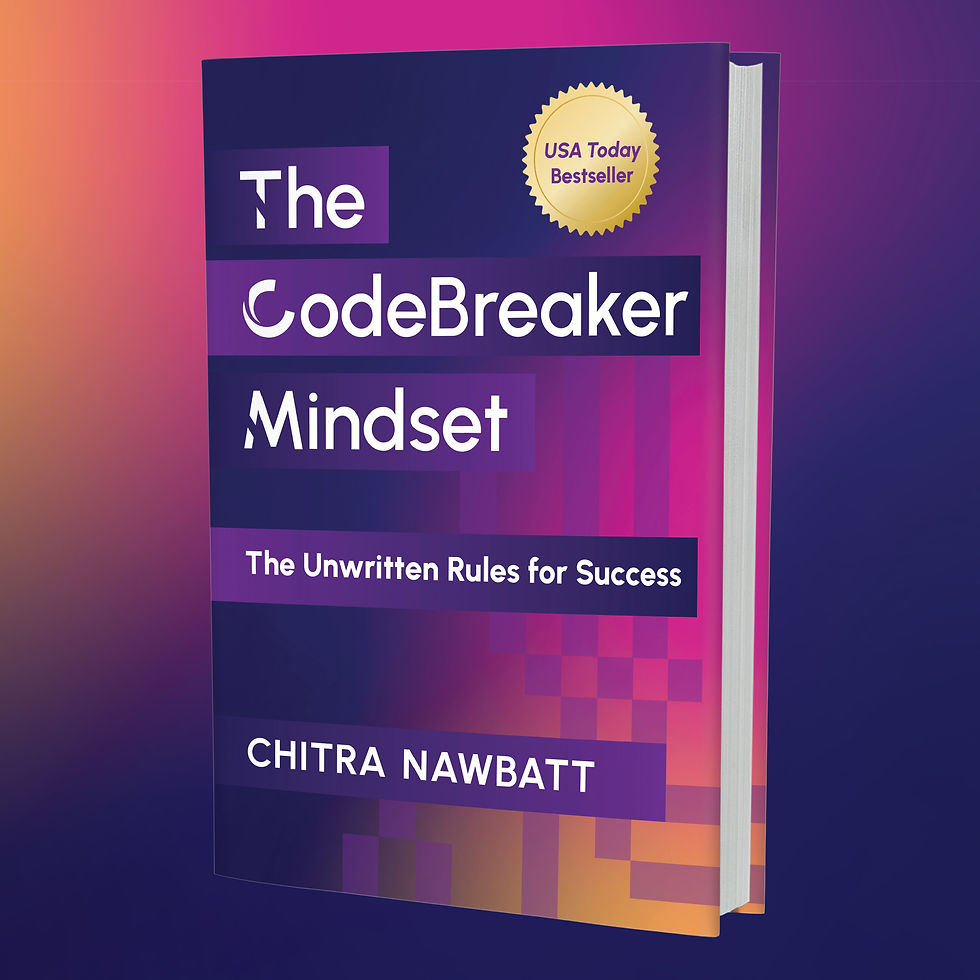
The CodeBreaker Mindset™ Ft. Dr. David Thomas, Morehouse College, President


In this conversation, Professor David Thomas shares his remarkable journey from a young boy inspired by The Civil Rights Movement to becoming the President of Morehouse College. He discusses the importance of understanding the rules of academia, the significance of leadership, and the strategies for successful fundraising. Professor Thomas reflects on his career pivots, the role of serendipity and intuition, and offers valuable insights on how to navigate challenges and create meaningful experiences in life and work.
Chapters
(00:11) Introduction to David Thomas
(00:34) David Thomas's Journey in Academia
(09:56) The Rules of the Game
(12:45) Mastering the Game in Academia
(20:10) Building a Reputational Network
(21:30) Leadership at Morehouse College
(28:51) Fundraising Success at Morehouse
(34:58) Building Relationships with Donors
(40:25) Exceeding Expectations in Leadership
(44:18) Navigating Controversy in Leadership
(48:13) Significant Life Pivots
(01:03:38) The Role of Serendipity and Intuition
(01:11:28) Understanding The CodeBreaker Mindset™
(01:13:06) Parting Wisdom for Navigating Life's Challenges
Episode Resources
Dr. David Thomas | Bio
Chitra Nawbatt | Bio
The CodeBreaker Mindset™ book order here: Amazon | Barnes & Noble
The CodeBreaker Mindset™ Ft. Dr. David Thomas, Morehouse College, President
Chitra Nawbatt (00:11)
Welcome to The CodeBreaker Mindset™, where leaders and influencers share the rules, pivots, and serendipity to achieving goals and dreams. I'm your host, Chitra Nawbatt. Joining us today is Professor David Thomas, Morehouse College President. Professor Thomas, welcome. Thank you for joining us.
David Thomas (00:30)
Thank you, Chitra. It is great to be here.
Chitra Nawbatt (00:34)
Professor Thomas, I'm grateful to have first met you about 15 years ago on the campus of Harvard Business School when I was a student and you were a professor. You've been a trailblazer as the third African-American tenure professor in the school's history. Take us through your journey to first becoming a professor at Wharton Business School at the University of Pennsylvania, then Harvard Business School. Becoming Dean of Georgetown University's McDonough School of Business, and now the 12th President of the iconic Morehouse College.
David Thomas (01:05)
Take you through the journey?
Chitra Nawbatt (01:17)
Yup.
David Thomas (01:24)
Okay. Well, the journey really starts at the beginning. I was born in 1956. The civil rights movement was taking off when I was a young boy in the 60s, I became enamored of the civil rights movement and revolution. And developed this idea that I could be part of changing the world because I saw the world changing around me. I heard people talking about it. I became a fan of Martin Luther King who actually inspired me to want to come to Morehouse as a young boy. So when I applied to college in 1973, I only applied to two colleges, Morehouse where I really wanted to go and Yale University, which I had not really heard of until a counselor encouraged me to apply. And I applied to both. I got into both. I wanted to go to Morehouse, but Morehouse didn't give me any scholarship. And Yale gave me a full ride.
Chitra Nawbatt (03:07)
Wow.
David Thomas (03:13)
So...My father always taught me to follow the money. So I followed the money. As he said, you have zero, I have zero. Morehouse gave you zero, that's a zero.
David Thomas (03:28)
And Yale gave you a full ride, that's a full ride. We don't know where it is, we've never heard of them, but everybody says they're pretty good.
Chitra Nawbatt (03:40)
Amazing.
David Thomas (03:41)
So off I went to Yale. And still, you know, I had this notion that I wanted to be part of changing the world. Got to college, kind of became a student activist, in particular around things related to the experiences of African Americans on the Yale campus, and advocated for increased admissions of black students, increased hiring of black faculty and divestment from South Africa, companies doing business in South Africa, and just in a number of other ways, tried to be part of social change.
Thought I was gonna be a lawyer. Then I discovered that lawyers didn't do what I thought they did. I thought lawyers change the world, they don't. And I discovered an area of in my undergraduate called organizational behavior, which is all about change.
Chitra Nawbatt (05:04)
Mm-hmm
David Thomas (05:06)
And how people develop in organizations and how organizations evolve and change. And it just captured my imagination. Especially given the work I was doing as a student activist. And I went on to get a PhD from Yale in organizational behavior. Did pretty well. My first job was at the University of Pennsylvania and my research was at the intersection of adult development, leadership development, organizational change, and race.
At the time, nobody was doing work on that combination of topics. And most people advised me not to do it because they basically said it's not, it's not mainstream. You won't be able to get published and you'll get pigeonholed as a black guy doing work on race.
Chitra Nawbatt (06:11)
Huh.
David Thomas (06:26)
And I was lucky I had good advisors who basically said to me, you know, what really determines how far you get in this field is whether you're doing work that you're passionate about and you think is important. And you're willing to pay the price to do the quality of work needed to get over those hurdles. And that made it a no-brainer. So I followed what I was passionate about. Which was that intersection. And all good social sciences autobiographical.
Right? So that work morphed into me looking at the patterns that explain how, that explain people of color rising to the highest levels in corporate America. The biographical part of it was, I was studying black people trying to rise in white organizations. I was a black guy trying to rise in white organizations. Penn, Yale, Harvard, they're all pretty white.
David Thomas (07:58)
So in that sense, you know, there was a biographical narrative.
Chitra Nawbatt (08:04)
In parallel, yep.
David Thomas (08:06)
Right, parallel. And everywhere I went, I focused on not getting narrowly pigeonholed and trying to rise to the highest and most influential levels I could. So in academia, that meant becoming an award-winning author, a chair professor, a department chair, a Dean, and then a President.
Chitra Nawbatt (08:53)
Yep.
David Thomas (08:55)
Right? And, I thought I could get there if I just did work that nobody else was doing at the highest levels of quality as judged by other academics.
And I thought that because I was doing work that nobody else was doing, there would be a wow factor. Right?
Chitra Nawbatt (09:28)
Huh. Right.
David Thomas (09:29)
Like wow, nobody's doing work on race that gets published in the best journals in our field. So there must be something there and he's the only guy doing it. So, and. You know, it worked.
The Rules of the Game
Chitra Nawbatt (09:56)
And so then how so from that actually let's dive right into let's dive right into the rules of the game and hit the nail right on the head because you said part of your work, your scholarly work was how people of color how black folks rise to the top in corporate America at the same time. How did you do it through those institutions that you were a part of: Wharton, Harvard Business School, Georgetown that eventually now at Morehouse.
And so directly on that point, how do people do it? How does one rise to the top?
David Thomas (10:38)
Well. One, It starts with. The way I think about it is.
Careers, professions, are the way, my metaphor for them is that they're a game. So I was playing a game. So it starts with do you love the game? I love being an academic. Right? And the bulk of my time was spent at Harvard. So of the 40 years that I've been in academia, 22 of them were at Harvard Business School. And I really loved waking up every day and going to work at the Harvard Business School. So if you love it, you can sustain yourself through the downs. When you don't love it, it eats you up and burns you out. And you become resentful because you paid an enormous price for something that you weren't personally attached to. And if you love it, then you have to say, what are the rules of the game? And can I master those rules so that when people apply them, they arrive at the conclusion that I'm either the number one or number two in the world playing that game.
Chitra Nawbatt (12:45)
And on that point. Let's bring it to life in the context of your journey and then we'll talk about folks and broader, whether it's corporate America, private equity, startups, there's similarities, but for you and your journey, let's bring it to life for all of us in terms of academia, Professor, tenured Professor, Dean, then President. What is the game? And then once you share with us what that game is, talk about what those quote-unquote written rules are, and the unwritten rules.
David Thomas (13:18)
Okay, so...The game in academia, at least as I played it, was really defined by a set of standards for quality research that you had to meet. And if you're doing work, that's new or novel or not in vogue, those rules are applied more rigidly to you than they are to work that is, you know, trending.
And, I just held myself to a higher standard than most of the people around me.
And I was very conscious of that. Right? So if you look at most of my work, it's both qualitative and quantitative. I would not have been as successful if I had only relied on one of those. Right? And that meant doing the work I did took more time. Right, and I had to be willing to put that in. And you also . . .
Chitra Nawbatt (15:02)
How does the game change? Go ahead, sorry, go ahead.
David Thomas (15:03)
No, You know, timing is important in my field. So by that I mean, I was studying issues of diversity going back to the 1980s. Ronald Reagan was President. We were writing articles about how, you know, affirmative action was dead. And that morphed into this topic called diversity. There was a study in the late eighties called Workforce 2000 that was about the browning of the American workforce. And the way I got to Harvard was, the Dean there was being asked by CEOs, what do you guys know about workforce diversity and the browning of the American workforce? He went back to some senior faculty and said, what do we know about this? They said, we don't know anything. He said, well, who's doing work on it out there in the world? And that led them to me. I was at the Wharton School then. I was one of five people in the country doing work on that topic.
Chitra Nawbatt (16:34)
Amazing.
David Thomas (16:36)
Right? So, you know, the world found, the world caught up with me. I didn't catch up with the world.
Chitra Nawbatt (16:43)
Right.
David Thomas (16:45)
Right? And..So my timing was good because I followed my instincts. You know, the other thing I think that's part of the game in academia for black people is you can't be marginalized, especially if you're at a business school. So I made a point of mastering all the tools. Right, and the things people value beyond just whether or not you were being published. So at Harvard Business School, the key thing there is teaching the case method.
Chitra Nawbatt (17:52)
Mmm.
David Thomas (17:54)
So I became what some people would say was a master of the case method teaching. And I avoided assignments that were only about me being black.
Chitra Nawbatt (18:25)
Huh.
David Thomas (18:26)
Right? Because I didn't want to get pigeonholed.
Chitra Nawbatt (18:30)
Yep.
David Thomas (18:41)
And you're known by the company you keep. So I was also very good at only spending significant amounts of time with high-quality people in my field. So that
when somebody would mention my name, somebody with high credibility would say, yeah, David Thomas. He's doing great work, he's a good guy. You need to get to know him.
Chitra Nawbatt (19:13)
Mm.
David Thomas (19:21)
So I had a very strong reputational network that I nurtured. Because I am an introvert, I don't like going to academic conferences. As a matter of fact, my friends used to joke that I would show up on the first day of the conference, get my paper, and then leave and go somewhere else and come back on the last day so that people would think I had been there. And that was my strategy. But when I was there, I spent time with high-quality people. And I was very conscious of that, that I had a reputational network.
Chitra Nawbatt (20:10)
And how do you? And how did you discern who those high-quality people are? And how do you define that? And I say that because whether it's, know, especially in the time we live now, social media, information everywhere, but a lot of that information, it's not always data-driven, it's not always substantive, a lot of shiny objects, a lot of shine, but not necessarily, or it's a lot of shiny, masquerading as high quality. So what's your filter mechanism on finding what you define as high quality that you want to associate yourself with. So discernment.
David Thomas (20:47)
Starts with, starts with who are the people that I respect? That if someone said to me, know what, something about you reminds me of Chitra. And I would say that's a compliment because I respect her. Then I'd want to know, who do you respect? Right? Because your taste function must be close to mine because you taste good to me. So, right?
Chitra Nawbatt (21:21)
Yeah.
David Thomas (21:24)
And, you know.
Chitra Nawbatt (21:30)
And talk about how the rules, when you then become President of Morehouse College, this iconic institution, how then did you figure out what the rules were being a President of this iconic institution and what those rules were, both written and the unwritten rules?
David Thomas (21:54)
So, you know, I had a distinct advantage in that. You know, I had the luxury or luck of having spent the prior 30 years developing a cheat sheet because I studied leadership, I taught leadership, I wrote cases about leaders. You know, Morehouse is a historically black college and university. I grew up in a black community, went to a black church. So I had a cheat sheet about leadership. I also understood the cultural nuances of being in a historically black institution. It's very much like being in the church.
Chitra Nawbatt (23:01)
Mm.
David Thomas (23:03)
You know,, to be quite honest with you, I actually applied the things I taught people about leadership and discovered that if you play it like I wrote it, it actually works. Right? It actually works.
Chitra Nawbatt (23:22)
So share with us, share with us two, three of those top things.
David Thomas (23:37)
Okay, number one is if you're going to change an institution that's been relatively successful, you need to set your change agenda very early and move very fast. Coming in and saying, I'm gonna spend a year to learn the place. That's a year that the forces against change will harden and become more difficult for you to move. Even though a year later, you're much more certain about where you wanna take the place and the reasons why. But the forces against change will have hardened and you can't move it. So, same thing I did when I walked into Georgetown.
I picked five themes and said, these are the five themes we're gonna organize around for the next five years. And picked two or three projects that people said were impossible to do and said, we're gonna do them. And we did them to great success. And if you walk in Georgetown McDonough School of Business today and you ask people, have you ever heard of David Thomas? You'll be shocked at what you hear. You would think I was still there. Because we transformed that place. Same thing here at Morehouse.
Chitra Nawbatt (25:23)
Awesome.
David Thomas (25:31)
We've transformed Morehouse. People will tell you who were here seven years ago, it's not the same place. It's better on a host of dimensions, financially, culturally, reputationally in the world, the things we're doing, the things our faculty are doing, the opportunities our students are getting.
Chitra Nawbatt (26:08)
So you talked about that change agenda and driving change quickly. What's a second or third thing that you said that you, you taught about, you wrote about, and that's what you did at Georgetown and here at Morehouse College? So driving a change agenda quickly and not waiting six, twelve months to start, right? Because your point is, is you're going to have headwinds no matter what, but the quicker you start, the better. And over time, you get more clarity on that direction you want to go in. So that's sort of like one bucket. What are two others?
David Thomas (26:47)
Discover the talent that is hidden in your organization. Right? That there are one of my great blessings at Morehouse is that there are two people who today, in my view, are more critical than I am to the college continuing to thrive. When I got here, they were buried. Nobody talked to them as key people I needed to be talking to. But I paid attention to them and noticed that everything I asked them to do, they achieved above and beyond my expectations and where I had set the bar for them. And they're always there. The same thing was true at Georgetown. Right, there were people who were not considered key players who became critical players for me and were part of why we were able to make a huge difference. You know, the other thing is, change the organizational structure so that it aligns with what you're trying to do.
So here at Morehouse, one of the things I did that even people on my board told me, you know, it didn't make sense was I took our admissions operation and put it underneath marketing and communications.
Chitra Nawbatt (28:49)
Huh.
David Thomas (28:51)
Usually admissions offices are stand-alone operations that report to the President or the Dean.
Chitra Nawbatt (28:58)
Yep.
David Thomas (29:00)
And my view was, you know. To the extent we have to sell ourselves, we have to sell ourselves to families, students, and donors. And we need the messages that are going out from the college aligned to support that.
Right? So admissions started to report to marketing and the result is our admissions statistics have gone through the roof. And we just did Giving Tuesday. This week was Giving Tuesday. Okay. When I got here, on Giving Tuesday, we brought in less than $100,000 dollars and we were paying a company $90,000 dollars to help us with it.
Chitra Nawbatt (30:03)
Wow
David Thomas (30:05)
Right, so you know, this Tuesday we brought in $2.8 million dollars.
Chitra Nawbatt (30:13)
Congratulations, amazing.
David Thomas (30:15)
Yeah. Yeah. And every year we've broken a record for Giving Tuesday. And the important thing about Giving Tuesday is that that's where you attract your small-dollar donors. Average gift, less than a $100 dollars. You know. And that's where a lot of the alumni give and people get.
Chitra Nawbatt (30:33)
Yeah.
David Thomas (30:45)
Right and it also is a great marketing tool to families with sons who are thinking about going to college. So changing the structure of the organization to reflect your strategic intent is another lesson. At Georgetown, we brought together, we had four different MBA products. And we brought them all together and put them under one roof, right? One organizational entity. And you know, that was critical and highly resisted.
Chitra Nawbatt (31:50)
And you know something you said about both at Georgetown as well as Morehouse, how you discovered people in other scenarios under other leadership regimes, those people were not viewed as critical. You found folks at Georgetown, you found folks at Morehouse where you found them to be critical to the organization.
How does that happen, Professor Thomas? How does that happen that, you know, that phrase about “Beauty is in the eye of the beholder”, right? But how does that happen? And I think it happens very often all over the world, regardless of what your organization is, whether it's a nonprofit, for-profit, large, small, that for some people, folks are overlooked. And for other people, those folks are critical to success and exalted.
How does this happen?
David Thomas (32:39)
Yeah, it's all about listening as a leader and what do you listen for? So here's what I would listen for. I would listen for who was listening to me. So if you come to me, if you came to my office and you had a proposal and your rationale for it echoed themes that I was talking about, I would say, okay, this person is listening to me. I'd give you a green light to go do it and then see how you deliver. And judge you purely on your outcomes, right? Did you deliver? And if you delivered,
I would then expand your portfolio, put people who weren't listening underneath you, and then they would say, well, why is she getting the opportunity?
And you know, my response would be, because she's listening. You're not getting it because I don't see that you're listening. And oftentimes what listening for me means is you're willing to put the interests of the school ahead of your own.
Chitra Nawbatt (34:16)
Right, yep.
David Thomas (34:18)
Right, so the two people that come to mind here at Morehouse, they're the only people who've ever been on my senior team that never threw anybody else on the senior team under the bus.
Chitra Nawbatt (34:29)
Huh.
David Thomas (34:31)
Right? You know, they never play the blame game.
Chitra Nawbatt (34:37)
Yeah.
David Thomas (34:38)
And a theme has been we have to break down the silos. So I look for the people who break down the silos by being willing to give up something that might be more beneficial to them.
Chitra Nawbatt (34:58)
And you know, you talked earlier about donors, right? And so let's get into that a little bit because you take over at Morehouse, right? To lead and grow this iconic institution. You talked about Martin Luther King Jr. earlier, which graduated Martin Luther King Jr. and other leaders. So you take over this institution, you've got to grow it. Part of that as the President is you're the face of fundraising, right? And about a year into, you becoming President, right? You then start fundraising and within your first year as more as President of Morehouse College, Robert Smith, the private equity billionaire founder of Vista Equity Partners, he donated $34 million dollars. That was in 2019. A year later, Reed Hastings, the billionaire founder of Netflix, gifted $40 million dollars.
That same year, Mackenzie Scott, billionaire and former wife of Amazon founder Jeff Bezos gave $20 million. Talk about that in terms of these people are very hard to get to. They're complicated, nuanced. How do you reach folks at this altitude, build sticky relationships to the point where you motivate them to donate in this way to Morehouse and its longevity?
David Thomas (36:32)
Yeah, I would add to your list of donors, Oprah Winfrey in my first year in 2019, my first full year, she gave us $13 million dollars at the end of a visit here to campus. So the way I think about it is fundraising is pretty, I have a very simple formula for fundraising and it goes something like this. Every donor, whether they're going to give you $5 or $50 million dollars, only has three questions that they have to get an affirmative answer to. Question number one, is it a worthy cause?
Chitra Nawbatt (37:09)
Huh.
David Thomas (37:19)
That's an easy thing for us to do here at Morehouse. And all we have to do is get people to come visit campus.
So Robert Smith had never been to Morehouse before. He came, he was blown away by what he saw in our students.At the end of the first day he was on campus, he told me he was going to give a million dollars. A year later, that turned into $34 million dollars.
Reed Hastings had never been here before, and alumna Morehouse encouraged him to visit. He came with his wife, Patty. And they spent a morning with our students. And that night sent me a note saying, we're going to give you a million dollars a year. We're so impressed with what you're doing. Because they see that it's a worthy cause. And all we have to do is bring people here to touch it.
Chitra Nawbatt (38:25)
Yeah.
David Thomas (38:28)
So that's question number one. Question number two is, will my gift make a difference? Doesn't matter whether you're giving $5 or $50 million dollars. Will my gift make a difference? So most of our success in fundraising has been scholarships. People see the students, I can explain to you how if you gave me $5, that $5 will enhance some young black man's life chances. $5 here will make a bigger difference than if you give that same $5 to the University of Georgia or Emory or Davidson, right? .
Chitra Nawbatt (39:13)
Mm-hmm.
David Thomas (39:18)
Because we're the number one school for social mobility for men in Georgia. So if you come to Morehouse and you're a working-class or poor kid, the chances that you'll grow up and be in the middle class in a stable way are greater if you come here than if you go to the University of Georgia.
Right? So your $5 is going to make a difference. And the third question is, can I trust the leadership to deliver? That's where I come into play. So I think of every interaction that I have as a development opportunity because people will literally walk away from their interaction with me and have assumptions about the institution and my team. Right? So you know.
Chitra Nawbatt (40:25)
But what do you think puts it over the top? Because whether it's Robert Smith, Reed Hastings, Mackenzie Scott, Oprah Winfrey, these folks travel the world and there's so many worthy causes, right? And they meet other fantastic leaders like yourself and others. And so what puts it over the top for them and cements it, right? In other words, don't you stand out because it's a competitive market even at the highest altitudes and the highest echelons of excellence?
David Thomas (40:46)
Yeah.
David Thomas (40:54)
Chitra, part of it is exceeding people's expectations. So what I try to tell my team is, every little thing we do tells people who we are. So you just take, for example, when I was at Georgetown, we had a board and I would tell my team that board only comes here four times a year. They leave here each time with a narrative about the school. So we've got to exceed their expectations. So the biggest thing my team did that really transformed how our board saw us was they watched the weather reports. One time it was going to rain and they had umbrellas for everybody and they had ordered cars to take people back to their hotels. Well, I'm also on the board of two or three publicly traded companies, Fortune 500 companies, and the largest asset manager in the world, Vanguard. Well, you know, that's the kind of thing you would expect from those companies. You don't expect that from a small, relatively under-resourced college like Morehouse.
But the people on our board are just like me. They go to those other kinds of meetings as well. And they look and they say, gee, these guys are playing at the highest level. That exceeds my expectations. Right? And they unfairly but luckily attribute that to the President.
Chitra Nawbatt (42:32)
Yeah.
David Thomas (43:00)
So they look at that and they say, wow, you know. If they can anticipate me needing a ride to the airport after the meeting and not having to wait for a taxi and I need an umbrella to keep the rain off of me, then I know I can give them a million dollars and they'll make sure it winds up supporting some kid for scholarships. And that's what happens.
The other thing I'm always aware of is, how the leader shows up in public. Right? So, you know, if you go online, there are a lot of interviews with me or, you know, me giving speeches and talks. And I think about each one of those as a moment where I could make a headline and I always have to be conscious of what do I want the headline to be. Because it always creates some kind of emotional reaction.
Chitra Nawbatt (44:17)
Yep.
David Thomas (44:18)
Right? So. You know, you just take, for example, we bought, last year we had Joe Biden give our commencement speech and it was pretty controversial. So I got interviewed by CNN. And lots of colleges and universities were blowing themselves up over what was going on in Gaza.
Chitra Nawbatt (44:50)
Yeah.
David Thomas (44:58)
So I get interviewed and the interviewer from CNN was asking me about what was I gonna do if there were protests at graduation. I had thought about it and I said a couple of things. I said, well, we're gonna allow protests as long as they're respectful and don't disrupt the ceremonies.
I said, and then I said, I'd also made two other decisions. One, I was not going to have the police take anyone off of our campus in zip ties, just so we could continue the graduation. So the guy says, so what are you, what are you going to do? I said, I will shut graduation down immediately.
Chitra Nawbatt (45:55)
Wow.
David Thomas (45:58)
And a lot of significant donors saw that and sent me a note and said, I love your clarity and it's a sign of good leadership at the college.
Chitra Nawbatt (46:08)
Wow.
David Thomas (46:19)
Right? So you gotta be ready for those moments. Same thing. I was one of the only Presidents of a prominent college or university who spoke out in defense of Claudine Gay when she was being brought down at Harvard. Right? And I called it for what it was when they said she was a DEI hire. And I wrote
Chitra Nawbatt (46:48)
Yep.
David Thomas (46:51)
I wrote an op-ed as well as LinkedIn pieces saying essentially that's a racist dog whistle. We need to hear it and call it for what it is. And that tells people who the leader is, right? Because my board told me I shouldn't say anything.
David Thomas (47:12)
You know, like all the other Presidents in the country, duck and cover.
Chitra Nawbatt (47:17)
Yeah.
David Thomas (47:19)
Because there is the risk that some of your donors will not like that.
Chitra Nawbatt (47:24)
Right.
David Thomas (47:25)
Right? So, you know, I'm always very conscious of that. And people see consistency. Right?
Chitra Nawbatt (47:45)
Yeah, which is, you know, are you know, about your sense of conviction? You know, I call it, know, spine of steel, right? Backbone, you know, where, where and what do you have a backbone on? When do you stand up and stand out versus just blending in with the pack? And that's about your own leadership. You know, each person has their own moral compass, but also like also leadership compass in that regard.
David Thomas (48:12)
Right.
The Pivots
Chitra Nawbatt (48:14)
I want to get into the pivots and talk about a significant pivot in your life, career-wise, and how you're impacted, how you recovered. Because we all face pivots in life, right? You know, the voluntary ones where, Hey, I choose to do this or I choose to do that. and the ones which might be tougher for many of us, the involuntary pivots, you go for something, it doesn't work out.
Or you quote unquote, receive a quote-unquote rejection failure, whatever the case may be. Talk about a very significant pivot in your life, career-wise or personal-wise and how you recovered.
David Thomas (49:01)
Well, yeah, career-wise, the most significant one happened very early and that was when I decided I wasn't going to be a lawyer. So had to find something else to do. That's how I became a professor and a consultant. It wasn't a failure, it was just coming to know myself and the world better.
Second major period pivot was in, at one point in the early 2000s, I decided that I could be, that I had set the table such that I could viably become the Dean of the Harvard Business School. And at the end of the day in 2010, they did not select me. They selected a guy who was one of my best friends, who did a fabulous job, who would have been my second choice after me for the job. So then I had to decide what was I going to do. And Harvard was very kind to me. They knew I wanted the job. They made me offers to do other things. But what I wanted to do was be Dean of the Harvard Business School.
And it was a disappointment because it was the first time I felt like I had failed black people. Because if I had become Dean of the Harvard Business School, it would have been the shot heard around the world in the black community. And I had never felt that way before. You know, I never saw myself as an important representative of the black community. You know, that other than being great at what I did, I needed to do something that would really sort of ring the bell. And I knew that if I could become Dean of the Harvard Business School, that would be huge for black people. Just to show you.
Chitra Nawbatt (51:44)
Yep.
David Thomas (51:47)
The guy they picked to be Dean was Indian from India. That day, the internet going into the Harvard Business School shut down.
Chitra Nawbatt (52:02)
And you're talking about Dean Nitin Nohria at the time. Yeah.
David Thomas (52:12)
Yeah, yeah, Nitin. There was so much activity coming in from around the Indian diaspora that it literally shut down the internet at Harvard University. Well, if I had been made dean, that would have happened domestically in the black diaspora. So I had to recover from that. So I basically took the advice I gave my students when they would come back and say, you know, I'm not getting this opportunity and that opportunity at my organization.
You know, and they'd want to know, you know, maybe it has something to do with race. And I would often say to them, you know, is it a good company? And they say, yeah, it's a good company. Other than my disappointment, I like working there. That's the way I felt about the Harvard Business School. It was a great place to go to work for me. Best place I ever worked. I was the happiest I'd ever been there. But what I would say to people is, well, maybe you should go out in the world and see if there's any place else in the world that can see you the way you see yourself. So I saw myself as having the qualities to be a Dean.
Chitra Nawbatt (53:39)
Hmm.
David Thomas (53:48)
I would get calls. Usually, I would ignore them. Then the call came from Georgetown. It intrigued me. It was a high-status, mainstream, predominantly white institution. So I said, okay, can anybody else see me the way I see myself? So I went and generated that opportunity as well as a couple of others that wanted me to come be Dean.. And that created a pivot.
Because I could have stayed at the Harvard Business School and retired a pretty comfortable, perhaps even financially independent person because I was making a lot of money. But I pivoted and went to Georgetown. Turned out by all accounts, I was a pretty good Dean.
Chitra Nawbatt (55:02)
Yep.
David Thomas (55:03)
Some would say exceptional.
Chitra Nawbatt (55:06)
Yeah
David Thomas (55:07)
And my next pivot was leaving Georgetown because I couldn't get on the same page with the President and the Provost after I finished my first term as Dean.
Chitra Nawbatt (55:31)
Mmm.
David Thomas (55:32)
And I decided, you know, if they weren't going to support my ambition to make Georgetown a top 10 business school, then I would go back to Harvard. So I left Georgetown to everybody's surprise, especially the people at Georgetown.
Chitra Nawbatt (55:54)
Yeah.
David Thomas (55:54)
I got offered the deanship at the University of Michigan and decided that, you know, I wanted to go be a Dean to finish my personal work about, you know. Can I leave?
Chitra Nawbatt (56:18)
Yeah.
David Thomas (56:21)
I knew I could. Michigan would have been a bigger, better job and more lucrative, but I didn't need to prove anything to myself. So I went back to Harvard. As soon as I got to Harvard, I got the call to come to Morehouse.
Chitra Nawbatt (56:40)
Wow.
David Thomas (56:40)
Like literally, I had just sat down at my desk at Harvard and the phone rang.
And it was a former student of mine who was now the Chair of the Board at Morehouse, wanting to talk to me about the possibility of coming to be President.
Chitra Nawbatt (57:02)
Wow.
David Thomas (57:05)
And you know, that was another pivot. And that pivot was easier because I've always wanted to change the world and there's no question that if I'm as successful at Morehouse as I've been everywhere else, the likelihood that I will influence the world in positive ways is much greater than if I had stayed at Harvard. And, you know, basically just lived and retired and died Professor Thomas Harvard Business School, which is not a bad moniker on your headstone, but it does not compare with being the 12th President of Morehouse College.
And there will be over 7,000 young black men. Right, when my time on this earth is up, who will say, I was a student at Morehouse when he was the President.
Chitra Nawbatt (58:29)
And you know on that.
David Thomas (58:30)
And one of them will be their generation's Martin Luther King.
Chitra Nawbatt (58:37)
And on that front, before we get into the magic of life. How have you pivoted Morehouse for the next horizon of its identity, and innovation? Because look, driving change, and you talked about this earlier, but driving change in the world is difficult. A lot of headwinds, a lot of resistance in corporate American for-profit environments, much less I think nonprofit environments, academic institutions can be perceived as even more difficult to pivot and get organizations to shift and change. So how have you pivoted Morehouse? Maybe if you pick one specific example for the future in terms of its next horizon of identity, innovation, growth.
David Thomas (59:31)
Yeah, well, one is just we've changed the financial stability and viability of the college. So Forbes, for example, just gave us an A+ rating in terms of our creditworthiness. The best of any historically black college and university in the country.
That opens up a whole set of possibilities, right? And if you look at how we operate now, it's with some of the same sophistication that you see at other places I've been. So I'm on the board of Yale. And the way we handle our investments in our endowment is very similar to what they do.
And you know, so one, the place is much more stable and therefore able to think bigger and make bigger bets.
Chitra Nawbatt (1:00:57)
Got it.
David Thomas (1:01:02)
Two, I've tried to support and empower faculty to be innovative in ways they were not seven years ago. So today we're one of the leading institutions in the world using virtual reality to actually teach. And some virtual reality companies have told me that we're actually number one.
David Thomas (1:01:45)
Right? And, you know, we've also innovated in data sciences. We've created a center on education to bring more black men into the teaching profession at the K to 12 level.
We're having an impact there, that's an innovation. So I think we have a spirit of innovation and experimentation that will take us through the rest of this century that will make a huge difference. We've launched an online degree program that's focused on men with some college, no degree.
Chitra Nawbatt (1:02:35)
YHmm.
David Thomas (1:02:36)
Turns out there are 3.5 million black men in this country with some college, no degree. And we know that whether or not you have a college degree has real consequences for your life chances and your opportunity structure, right? And. For a black man in America, that difference is a million dollars in lifetime earnings. Well, you know, I'm pretty well off, but a million dollars would have made a big difference for me and my family, right?
Chitra Nawbatt (1:03:24)
A many of us. Yeah.
David Thomas (1:03:28)
You know, right? That's several college tuitions. And I'm sensitive to that because I paid a lot of them.
The Magic
Chitra Nawbatt (1:03:38)
And on this phrase you talked about, said, you know, lifetime chances and opportunities. Let's get into the magic, which is, how do you define serendipity and intuition?
David Thomas (1:03:55)
Serendipity. Serendipity is essentially luck.
Right? And what is luck? It's very simple. It's opportunity and preparation meeting at the same time. Opportunity shows up, you're prepared for it. Call it serendipity, I call it luck. Right? And what's the other one you said to define?
Chitra Nawbatt (1:04:25)
Intuition.
David Thomas (1:04:28)
Intuition is when you're confident about something, but you can't explain why you're confident about it. Right? So it's like love and marriage.
Chitra Nawbatt (1:04:56)
Mm.
David Thomas (1:04:58)
Are you married?
Chitra Nawbatt (1:04:59)
I am not. You know that already, but okay.
David Thomas (1:05:06)
Okay. So, right, so, you know. You meet somebody and you just know in your heart of hearts, this person is the one. Why are they the one? All your reasons actually don't add up to make sense for why you wanna spend your life with them and put up with all the stuff you're gonna put up with for the next 30, 40, 50 years. But it's intuition. You're confident about it and you don't quite know why in any formulaic way.
Chitra Nawbatt (1:05:48)
Where did serendipity play a critical role in your journey? And what was that?
David Thomas (1:05:54)
Oh, basically the mentors I've had.
So I've had several people come into my life. Taken interest in me and have confidence in me. And it was just luck. It was literally, they showed up and I was ready for the opportunity to learn and be tutored.
Right? So.
Chitra Nawbatt (1:06:34)
Who was the one of the, a couple of the key mentors you've had?
David Thomas (1:06:38)
Yeah, so the person responsible for me being here today in this position is a guy named Leroy Wells, who's now passed. I met Leroy just my senior year in college. He was the first African-American to get a PhD in my field at Yale. And Yale had the first program in organizational behavior in the country. And for a long time was considered the best program in the country. And he was the first and he struggled but he was really good and we met.
And, you know, it was like falling in love. He was looking for a protege and I was looking for a mentor. And we became extraordinarily close. And he guided my career. When I left college, he got me my first real job and just taught me and modelled for me being willing to speak up and stand up for what was right.
David Thomas (1:08:16)
Second person is a guy named Clay Alderford, who was Leroy's mentor at Yale, which convinced me to go back to Yale to do my PhD. And Clay took me under his wing as a favor to Leroy.
Chitra Nawbatt (1:08:37)
Huh.
David Thomas (1:08:44)
And taught me the unwritten rules. Right?
And, Clay was also very interested in issues and dynamics of race. He was a white man, but he had adopted a black son. And he saw what was happening to his son in the schools of the suburbs where they lived.
Chitra Nawbatt (1:09:17)
Wow.
David Thomas (1:09:21)
And he was very good because, you know, he gave me a window into white people. That I didn't have. I grew up in an all-black environment. When I went to Yale as an undergrad, it was actually quite segregated. The black students lived in their bubble and the white students never invited, at least me into their bubble. You know, they always wondered why are all the black kids sitting together, never dawned on them, all the white kids are sitting together. That's why the black kids are sitting together, right? But Clay sort of gave me a window into white psychology of race. And that was very helpful. And part of why I was successful at Wharton and Harvard and Georgetown. I understand white psychology of race.
Chitra Nawbatt (1:10:40)
Which is...
David Thomas (1:10:43)
Which is, black people make white people anxious.
Right? So you're black, you walk into a room of white people, and there'll be anxiety.
Chitra Nawbatt (1:11:04)
And so how do we solve that? How does that get solved?
David Thomas (1:11:09)
You have to be comfortable.
The black person has to be totally comfortable with themselves so you don't absorb the anxiety. Right?
Chitra Nawbatt (1:11:28)
Professor Thomas, what does The CodeBreaker Mindset™ mean to you?
David Thomas (1:11:35)
I never heard of it till you.
Chitra Nawbatt (1:11:38)
Hahaha.
David Thomas (1:11:43)
The CodeBreaker Mindset™?
Chitra Nawbatt (1:11:45)
Yeah, what's your what's your take? What's your take on The CodeBreaker Mindset™?
David Thomas (1:11:51)
Well, you know, I think it speaks to...
There's a...It's almost like getting the, being able to understand the unspoken, perhaps even unseen rules of the road. Right? So you're breaking the code and therefore you can code switch. Right?
So, you Know right? And you know what code you're most comfortable with, right? So it's kind of like, you know. I've been poor, I've seen rich, and I know I like rich a hell of a lot better.
Chitra Nawbatt (1:13:00)
hahaha
David Thomas (1:13:02)
Right? you know.
Chitra Nawbatt (1:13:06)
Parting, your parting advice, your parting words of wisdom, your parting advice, especially since you have been a scholar in organizational behavior, you've talked about adult leadership, learning, the race dynamic, just the intersection of all of these elements, your life to date, your life to date experience. Here we are. You're parting advice to folks who are trying to get from point A to point B. Try to come up with those plans, get to action, make progress, whatever they're navigating, whatever they've got to learn, whatever they've got to pivot. If you're parting advice.
David Thomas (1:13:47)
My parting advice is twofold.
One is...Don't be consumed with seeking things like you know, the brass ring, right?
But be consumed with trying to create the experience of yourself that you want to have in the world. So I was consumed with creating the experience that I was changing the world. Right, so I thought my research was changing the world. I thought when I went to Georgetown, I could have an impact to change the world. Same thing here at Morehouse, right? I'm just seeking that experience that I'm making a difference to change the world. And.
Some of us seek things, others of us simply seek an experience. And oftentimes, if you're able to seek an experience, you'll make decisions that don't make sense to other people. So like when I told my mother I was no longer gonna be a lawyer, she broke down crying at my graduation.
Chitra Nawbatt (1:15:50)
Yeah.
David Thomas (1:15:48)
Because she was so invested in me being a lawyer. She couldn't even understand when I told her I was going to go get a PhD. She looked at me with tears in her eyes and said, how much does that pay? Right, because it didn't make any sense. You know, she had raised this poor boy in the ghetto, got him through school, now through one of the best colleges in the country, and he's going to go do some shit she can't even understand.
David Thomas (1:16:19)
That was the reaction of most of my friends too, who had gone to Yale with me. They were like, why you wanna do that? But I knew it was because I was trying to go in a direction that would make me feel like I was changing the world. I could change the world. I could be part of that.
And, you know, so try to figure out what's the experience you really want to have in the world and go for that. And oftentimes it won't make sense to other people. But as long as it's making sense to you, you'll do well there.
And you'll know how to deal with your disappointment when it doesn't provide you the experience that you want. So that would, you know, I'm always short on wisdom. So that would be it.
Chitra Nawbatt (1:17:27)
And then you said there was a second, that was the first and then the second?
David Thomas (1:17:31)
Second is just learn to be comfortable with yourself in situations that are not designed for you. Right? And, that's how you actually become powerful as an individual, transcended of what your title is.
You know, when I was at Wharton, there were only two other black professors at the school. And my white colleagues who actually I got along with very well, but the ones who were my vintage age-wise, they would often comment about how comfortable I seemed in that environment. And it was cutthroat. It was brutal for young faculty members.
And they would say, man, you really seem comfortable. But what they were really shocked about was, you're a black guy, and you seem more comfortable than us white guys. You sit in meetings, you say things that everybody else is thinking but won't say.
And, you know, right? Because, you know, I was just comfortable with who I was. anywhere I belong, anywhere I go, I figure I belong. So you just take, for example, I tell my students and my protegees, in particular, the Black ones, don't buy into the notion of imposter syndrome. I think it's a racist ploy to undermine the confidence of minorities and women in predominantly white and male organizations and in roles that potentially can lead them to have real power.
If you're in a room, you're supposed to be there. You're not an imposter. You gotta figure out how to be there. Not be worried about whether I belong or whether I'm posing.
David Thomas (1:20:27)
Right? So I don't believe in imposter syndrome. I think it's a bunch of hooey.
Chitra Nawbatt (1:20:34)
Hmm.
David Thomas (1:20:38)
So to people who weren't confident in the first place in themselves. So, you know, we all love a label that tells us we're normal when we feel abnormal.
Chitra Nawbatt (1:20:51)
Yeah.
David Thomas (1:20:52)
Right?
Chitra Nawbatt (1:20:53)
And I was gonna say on that note, I think that's a great way to conclude our conversation, which is as you're saying to people, be comfortable with who you are. And if you find yourself in a situation, you deserve to be there. Don't second and third-guess yourself, own it.
David Thomas (1:21:16)
Yeah, right. Because you're the only one who can.
You don't own it, nobody can own it for you.
Chitra Nawbatt (1:21:25)
Professor Thomas, thank you so much for joining us.
David Thomas (1:21:30)
Well, thank you. It's been a pleasure. I hope I've been coherent.
Chitra Nawbatt (1:21:38)
Most definitely.
David Thomas (1:21:39)
Okay.
Chitra Nawbatt (01:21:41)
Thank you for supporting The CodeBreaker Mindset™. For more episodes, go to
www.ChitraNawbatt.com to like and subscribe. Connect with me on social media
@ChitraNawbatt.
The CodeBreaker Mindset™ Ft. Dr. David Thomas, Morehouse College, President
Chitra Nawbatt (00:11)
Welcome to The CodeBreaker Mindset™, where leaders and influencers share the rules, pivots, and serendipity to achieving goals and dreams. I'm your host, Chitra Nawbatt. Joining us today is Professor David Thomas, Morehouse College President. Professor Thomas, welcome. Thank you for joining us.
David Thomas (00:30)
Thank you, Chitra. It is great to be here.
Chitra Nawbatt (00:34)
Professor Thomas, I'm grateful to have first met you about 15 years ago on the campus of Harvard Business School when I was a student and you were a professor. You've been a trailblazer as the third African-American tenure professor in the school's history. Take us through your journey to first becoming a professor at Wharton Business School at the University of Pennsylvania, then Harvard Business School. Becoming Dean of Georgetown University's McDonough School of Business, and now the 12th President of the iconic Morehouse College.
David Thomas (01:05)
Take you through the journey?
Chitra Nawbatt (01:17)
Yup.
David Thomas (01:24)
Okay. Well, the journey really starts at the beginning. I was born in 1956. The civil rights movement was taking off when I was a young boy in the 60s, I became enamored of the civil rights movement and revolution. And developed this idea that I could be part of changing the world because I saw the world changing around me. I heard people talking about it. I became a fan of Martin Luther King who actually inspired me to want to come to Morehouse as a young boy. So when I applied to college in 1973, I only applied to two colleges, Morehouse where I really wanted to go and Yale University, which I had not really heard of until a counselor encouraged me to apply. And I applied to both. I got into both. I wanted to go to Morehouse, but Morehouse didn't give me any scholarship. And Yale gave me a full ride.
Chitra Nawbatt (03:07)
Wow.
David Thomas (03:13)
So...My father always taught me to follow the money. So I followed the money. As he said, you have zero, I have zero. Morehouse gave you zero, that's a zero.
David Thomas (03:28)
And Yale gave you a full ride, that's a full ride. We don't know where it is, we've never heard of them, but everybody says they're pretty good.
Chitra Nawbatt (03:40)
Amazing.
David Thomas (03:41)
So off I went to Yale. And still, you know, I had this notion that I wanted to be part of changing the world. Got to college, kind of became a student activist, in particular around things related to the experiences of African Americans on the Yale campus, and advocated for increased admissions of black students, increased hiring of black faculty and divestment from South Africa, companies doing business in South Africa, and just in a number of other ways, tried to be part of social change.
Thought I was gonna be a lawyer. Then I discovered that lawyers didn't do what I thought they did. I thought lawyers change the world, they don't. And I discovered an area of in my undergraduate called organizational behavior, which is all about change.
Chitra Nawbatt (05:04)
Mm-hmm
David Thomas (05:06)
And how people develop in organizations and how organizations evolve and change. And it just captured my imagination. Especially given the work I was doing as a student activist. And I went on to get a PhD from Yale in organizational behavior. Did pretty well. My first job was at the University of Pennsylvania and my research was at the intersection of adult development, leadership development, organizational change, and race.
At the time, nobody was doing work on that combination of topics. And most people advised me not to do it because they basically said it's not, it's not mainstream. You won't be able to get published and you'll get pigeonholed as a black guy doing work on race.
Chitra Nawbatt (06:11)
Huh.
David Thomas (06:26)
And I was lucky I had good advisors who basically said to me, you know, what really determines how far you get in this field is whether you're doing work that you're passionate about and you think is important. And you're willing to pay the price to do the quality of work needed to get over those hurdles. And that made it a no-brainer. So I followed what I was passionate about. Which was that intersection. And all good social sciences autobiographical.
Right? So that work morphed into me looking at the patterns that explain how, that explain people of color rising to the highest levels in corporate America. The biographical part of it was, I was studying black people trying to rise in white organizations. I was a black guy trying to rise in white organizations. Penn, Yale, Harvard, they're all pretty white.
David Thomas (07:58)
So in that sense, you know, there was a biographical narrative.
Chitra Nawbatt (08:04)
In parallel, yep.
David Thomas (08:06)
Right, parallel. And everywhere I went, I focused on not getting narrowly pigeonholed and trying to rise to the highest and most influential levels I could. So in academia, that meant becoming an award-winning author, a chair professor, a department chair, a Dean, and then a President.
Chitra Nawbatt (08:53)
Yep.
David Thomas (08:55)
Right? And, I thought I could get there if I just did work that nobody else was doing at the highest levels of quality as judged by other academics.
And I thought that because I was doing work that nobody else was doing, there would be a wow factor. Right?
Chitra Nawbatt (09:28)
Huh. Right.
David Thomas (09:29)
Like wow, nobody's doing work on race that gets published in the best journals in our field. So there must be something there and he's the only guy doing it. So, and. You know, it worked.
The Rules of the Game
Chitra Nawbatt (09:56)
And so then how so from that actually let's dive right into let's dive right into the rules of the game and hit the nail right on the head because you said part of your work, your scholarly work was how people of color how black folks rise to the top in corporate America at the same time. How did you do it through those institutions that you were a part of: Wharton, Harvard Business School, Georgetown that eventually now at Morehouse.
And so directly on that point, how do people do it? How does one rise to the top?
David Thomas (10:38)
Well. One, It starts with. The way I think about it is.
Careers, professions, are the way, my metaphor for them is that they're a game. So I was playing a game. So it starts with do you love the game? I love being an academic. Right? And the bulk of my time was spent at Harvard. So of the 40 years that I've been in academia, 22 of them were at Harvard Business School. And I really loved waking up every day and going to work at the Harvard Business School. So if you love it, you can sustain yourself through the downs. When you don't love it, it eats you up and burns you out. And you become resentful because you paid an enormous price for something that you weren't personally attached to. And if you love it, then you have to say, what are the rules of the game? And can I master those rules so that when people apply them, they arrive at the conclusion that I'm either the number one or number two in the world playing that game.
Chitra Nawbatt (12:45)
And on that point. Let's bring it to life in the context of your journey and then we'll talk about folks and broader, whether it's corporate America, private equity, startups, there's similarities, but for you and your journey, let's bring it to life for all of us in terms of academia, Professor, tenured Professor, Dean, then President. What is the game? And then once you share with us what that game is, talk about what those quote-unquote written rules are, and the unwritten rules.
David Thomas (13:18)
Okay, so...The game in academia, at least as I played it, was really defined by a set of standards for quality research that you had to meet. And if you're doing work, that's new or novel or not in vogue, those rules are applied more rigidly to you than they are to work that is, you know, trending.
And, I just held myself to a higher standard than most of the people around me.
And I was very conscious of that. Right? So if you look at most of my work, it's both qualitative and quantitative. I would not have been as successful if I had only relied on one of those. Right? And that meant doing the work I did took more time. Right, and I had to be willing to put that in. And you also . . .
Chitra Nawbatt (15:02)
How does the game change? Go ahead, sorry, go ahead.
David Thomas (15:03)
No, You know, timing is important in my field. So by that I mean, I was studying issues of diversity going back to the 1980s. Ronald Reagan was President. We were writing articles about how, you know, affirmative action was dead. And that morphed into this topic called diversity. There was a study in the late eighties called Workforce 2000 that was about the browning of the American workforce. And the way I got to Harvard was, the Dean there was being asked by CEOs, what do you guys know about workforce diversity and the browning of the American workforce? He went back to some senior faculty and said, what do we know about this? They said, we don't know anything. He said, well, who's doing work on it out there in the world? And that led them to me. I was at the Wharton School then. I was one of five people in the country doing work on that topic.
Chitra Nawbatt (16:34)
Amazing.
David Thomas (16:36)
Right? So, you know, the world found, the world caught up with me. I didn't catch up with the world.
Chitra Nawbatt (16:43)
Right.
David Thomas (16:45)
Right? And..So my timing was good because I followed my instincts. You know, the other thing I think that's part of the game in academia for black people is you can't be marginalized, especially if you're at a business school. So I made a point of mastering all the tools. Right, and the things people value beyond just whether or not you were being published. So at Harvard Business School, the key thing there is teaching the case method.
Chitra Nawbatt (17:52)
Mmm.
David Thomas (17:54)
So I became what some people would say was a master of the case method teaching. And I avoided assignments that were only about me being black.
Chitra Nawbatt (18:25)
Huh.
David Thomas (18:26)
Right? Because I didn't want to get pigeonholed.
Chitra Nawbatt (18:30)
Yep.
David Thomas (18:41)
And you're known by the company you keep. So I was also very good at only spending significant amounts of time with high-quality people in my field. So that
when somebody would mention my name, somebody with high credibility would say, yeah, David Thomas. He's doing great work, he's a good guy. You need to get to know him.
Chitra Nawbatt (19:13)
Mm.
David Thomas (19:21)
So I had a very strong reputational network that I nurtured. Because I am an introvert, I don't like going to academic conferences. As a matter of fact, my friends used to joke that I would show up on the first day of the conference, get my paper, and then leave and go somewhere else and come back on the last day so that people would think I had been there. And that was my strategy. But when I was there, I spent time with high-quality people. And I was very conscious of that, that I had a reputational network.
Chitra Nawbatt (20:10)
And how do you? And how did you discern who those high-quality people are? And how do you define that? And I say that because whether it's, know, especially in the time we live now, social media, information everywhere, but a lot of that information, it's not always data-driven, it's not always substantive, a lot of shiny objects, a lot of shine, but not necessarily, or it's a lot of shiny, masquerading as high quality. So what's your filter mechanism on finding what you define as high quality that you want to associate yourself with. So discernment.
David Thomas (20:47)
Starts with, starts with who are the people that I respect? That if someone said to me, know what, something about you reminds me of Chitra. And I would say that's a compliment because I respect her. Then I'd want to know, who do you respect? Right? Because your taste function must be close to mine because you taste good to me. So, right?
Chitra Nawbatt (21:21)
Yeah.
David Thomas (21:24)
And, you know.
Chitra Nawbatt (21:30)
And talk about how the rules, when you then become President of Morehouse College, this iconic institution, how then did you figure out what the rules were being a President of this iconic institution and what those rules were, both written and the unwritten rules?
David Thomas (21:54)
So, you know, I had a distinct advantage in that. You know, I had the luxury or luck of having spent the prior 30 years developing a cheat sheet because I studied leadership, I taught leadership, I wrote cases about leaders. You know, Morehouse is a historically black college and university. I grew up in a black community, went to a black church. So I had a cheat sheet about leadership. I also understood the cultural nuances of being in a historically black institution. It's very much like being in the church.
Chitra Nawbatt (23:01)
Mm.
David Thomas (23:03)
You know,, to be quite honest with you, I actually applied the things I taught people about leadership and discovered that if you play it like I wrote it, it actually works. Right? It actually works.
Chitra Nawbatt (23:22)
So share with us, share with us two, three of those top things.
David Thomas (23:37)
Okay, number one is if you're going to change an institution that's been relatively successful, you need to set your change agenda very early and move very fast. Coming in and saying, I'm gonna spend a year to learn the place. That's a year that the forces against change will harden and become more difficult for you to move. Even though a year later, you're much more certain about where you wanna take the place and the reasons why. But the forces against change will have hardened and you can't move it. So, same thing I did when I walked into Georgetown.
I picked five themes and said, these are the five themes we're gonna organize around for the next five years. And picked two or three projects that people said were impossible to do and said, we're gonna do them. And we did them to great success. And if you walk in Georgetown McDonough School of Business today and you ask people, have you ever heard of David Thomas? You'll be shocked at what you hear. You would think I was still there. Because we transformed that place. Same thing here at Morehouse.
Chitra Nawbatt (25:23)
Awesome.
David Thomas (25:31)
We've transformed Morehouse. People will tell you who were here seven years ago, it's not the same place. It's better on a host of dimensions, financially, culturally, reputationally in the world, the things we're doing, the things our faculty are doing, the opportunities our students are getting.
Chitra Nawbatt (26:08)
So you talked about that change agenda and driving change quickly. What's a second or third thing that you said that you, you taught about, you wrote about, and that's what you did at Georgetown and here at Morehouse College? So driving a change agenda quickly and not waiting six, twelve months to start, right? Because your point is, is you're going to have headwinds no matter what, but the quicker you start, the better. And over time, you get more clarity on that direction you want to go in. So that's sort of like one bucket. What are two others?
David Thomas (26:47)
Discover the talent that is hidden in your organization. Right? That there are one of my great blessings at Morehouse is that there are two people who today, in my view, are more critical than I am to the college continuing to thrive. When I got here, they were buried. Nobody talked to them as key people I needed to be talking to. But I paid attention to them and noticed that everything I asked them to do, they achieved above and beyond my expectations and where I had set the bar for them. And they're always there. The same thing was true at Georgetown. Right, there were people who were not considered key players who became critical players for me and were part of why we were able to make a huge difference. You know, the other thing is, change the organizational structure so that it aligns with what you're trying to do.
So here at Morehouse, one of the things I did that even people on my board told me, you know, it didn't make sense was I took our admissions operation and put it underneath marketing and communications.
Chitra Nawbatt (28:49)
Huh.
David Thomas (28:51)
Usually admissions offices are stand-alone operations that report to the President or the Dean.
Chitra Nawbatt (28:58)
Yep.
David Thomas (29:00)
And my view was, you know. To the extent we have to sell ourselves, we have to sell ourselves to families, students, and donors. And we need the messages that are going out from the college aligned to support that.
Right? So admissions started to report to marketing and the result is our admissions statistics have gone through the roof. And we just did Giving Tuesday. This week was Giving Tuesday. Okay. When I got here, on Giving Tuesday, we brought in less than $100,000 dollars and we were paying a company $90,000 dollars to help us with it.
Chitra Nawbatt (30:03)
Wow
David Thomas (30:05)
Right, so you know, this Tuesday we brought in $2.8 million dollars.
Chitra Nawbatt (30:13)
Congratulations, amazing.
David Thomas (30:15)
Yeah. Yeah. And every year we've broken a record for Giving Tuesday. And the important thing about Giving Tuesday is that that's where you attract your small-dollar donors. Average gift, less than a $100 dollars. You know. And that's where a lot of the alumni give and people get.
Chitra Nawbatt (30:33)
Yeah.
David Thomas (30:45)
Right and it also is a great marketing tool to families with sons who are thinking about going to college. So changing the structure of the organization to reflect your strategic intent is another lesson. At Georgetown, we brought together, we had four different MBA products. And we brought them all together and put them under one roof, right? One organizational entity. And you know, that was critical and highly resisted.
Chitra Nawbatt (31:50)
And you know something you said about both at Georgetown as well as Morehouse, how you discovered people in other scenarios under other leadership regimes, those people were not viewed as critical. You found folks at Georgetown, you found folks at Morehouse where you found them to be critical to the organization.
How does that happen, Professor Thomas? How does that happen that, you know, that phrase about “Beauty is in the eye of the beholder”, right? But how does that happen? And I think it happens very often all over the world, regardless of what your organization is, whether it's a nonprofit, for-profit, large, small, that for some people, folks are overlooked. And for other people, those folks are critical to success and exalted.
How does this happen?
David Thomas (32:39)
Yeah, it's all about listening as a leader and what do you listen for? So here's what I would listen for. I would listen for who was listening to me. So if you come to me, if you came to my office and you had a proposal and your rationale for it echoed themes that I was talking about, I would say, okay, this person is listening to me. I'd give you a green light to go do it and then see how you deliver. And judge you purely on your outcomes, right? Did you deliver? And if you delivered,
I would then expand your portfolio, put people who weren't listening underneath you, and then they would say, well, why is she getting the opportunity?
And you know, my response would be, because she's listening. You're not getting it because I don't see that you're listening. And oftentimes what listening for me means is you're willing to put the interests of the school ahead of your own.
Chitra Nawbatt (34:16)
Right, yep.
David Thomas (34:18)
Right, so the two people that come to mind here at Morehouse, they're the only people who've ever been on my senior team that never threw anybody else on the senior team under the bus.
Chitra Nawbatt (34:29)
Huh.
David Thomas (34:31)
Right? You know, they never play the blame game.
Chitra Nawbatt (34:37)
Yeah.
David Thomas (34:38)
And a theme has been we have to break down the silos. So I look for the people who break down the silos by being willing to give up something that might be more beneficial to them.
Chitra Nawbatt (34:58)
And you know, you talked earlier about donors, right? And so let's get into that a little bit because you take over at Morehouse, right? To lead and grow this iconic institution. You talked about Martin Luther King Jr. earlier, which graduated Martin Luther King Jr. and other leaders. So you take over this institution, you've got to grow it. Part of that as the President is you're the face of fundraising, right? And about a year into, you becoming President, right? You then start fundraising and within your first year as more as President of Morehouse College, Robert Smith, the private equity billionaire founder of Vista Equity Partners, he donated $34 million dollars. That was in 2019. A year later, Reed Hastings, the billionaire founder of Netflix, gifted $40 million dollars.
That same year, Mackenzie Scott, billionaire and former wife of Amazon founder Jeff Bezos gave $20 million. Talk about that in terms of these people are very hard to get to. They're complicated, nuanced. How do you reach folks at this altitude, build sticky relationships to the point where you motivate them to donate in this way to Morehouse and its longevity?
David Thomas (36:32)
Yeah, I would add to your list of donors, Oprah Winfrey in my first year in 2019, my first full year, she gave us $13 million dollars at the end of a visit here to campus. So the way I think about it is fundraising is pretty, I have a very simple formula for fundraising and it goes something like this. Every donor, whether they're going to give you $5 or $50 million dollars, only has three questions that they have to get an affirmative answer to. Question number one, is it a worthy cause?
Chitra Nawbatt (37:09)
Huh.
David Thomas (37:19)
That's an easy thing for us to do here at Morehouse. And all we have to do is get people to come visit campus.
So Robert Smith had never been to Morehouse before. He came, he was blown away by what he saw in our students.At the end of the first day he was on campus, he told me he was going to give a million dollars. A year later, that turned into $34 million dollars.
Reed Hastings had never been here before, and alumna Morehouse encouraged him to visit. He came with his wife, Patty. And they spent a morning with our students. And that night sent me a note saying, we're going to give you a million dollars a year. We're so impressed with what you're doing. Because they see that it's a worthy cause. And all we have to do is bring people here to touch it.
Chitra Nawbatt (38:25)
Yeah.
David Thomas (38:28)
So that's question number one. Question number two is, will my gift make a difference? Doesn't matter whether you're giving $5 or $50 million dollars. Will my gift make a difference? So most of our success in fundraising has been scholarships. People see the students, I can explain to you how if you gave me $5, that $5 will enhance some young black man's life chances. $5 here will make a bigger difference than if you give that same $5 to the University of Georgia or Emory or Davidson, right? .
Chitra Nawbatt (39:13)
Mm-hmm.
David Thomas (39:18)
Because we're the number one school for social mobility for men in Georgia. So if you come to Morehouse and you're a working-class or poor kid, the chances that you'll grow up and be in the middle class in a stable way are greater if you come here than if you go to the University of Georgia.
Right? So your $5 is going to make a difference. And the third question is, can I trust the leadership to deliver? That's where I come into play. So I think of every interaction that I have as a development opportunity because people will literally walk away from their interaction with me and have assumptions about the institution and my team. Right? So you know.
Chitra Nawbatt (40:25)
But what do you think puts it over the top? Because whether it's Robert Smith, Reed Hastings, Mackenzie Scott, Oprah Winfrey, these folks travel the world and there's so many worthy causes, right? And they meet other fantastic leaders like yourself and others. And so what puts it over the top for them and cements it, right? In other words, don't you stand out because it's a competitive market even at the highest altitudes and the highest echelons of excellence?
David Thomas (40:46)
Yeah.
David Thomas (40:54)
Chitra, part of it is exceeding people's expectations. So what I try to tell my team is, every little thing we do tells people who we are. So you just take, for example, when I was at Georgetown, we had a board and I would tell my team that board only comes here four times a year. They leave here each time with a narrative about the school. So we've got to exceed their expectations. So the biggest thing my team did that really transformed how our board saw us was they watched the weather reports. One time it was going to rain and they had umbrellas for everybody and they had ordered cars to take people back to their hotels. Well, I'm also on the board of two or three publicly traded companies, Fortune 500 companies, and the largest asset manager in the world, Vanguard. Well, you know, that's the kind of thing you would expect from those companies. You don't expect that from a small, relatively under-resourced college like Morehouse.
But the people on our board are just like me. They go to those other kinds of meetings as well. And they look and they say, gee, these guys are playing at the highest level. That exceeds my expectations. Right? And they unfairly but luckily attribute that to the President.
Chitra Nawbatt (42:32)
Yeah.
David Thomas (43:00)
So they look at that and they say, wow, you know. If they can anticipate me needing a ride to the airport after the meeting and not having to wait for a taxi and I need an umbrella to keep the rain off of me, then I know I can give them a million dollars and they'll make sure it winds up supporting some kid for scholarships. And that's what happens.
The other thing I'm always aware of is, how the leader shows up in public. Right? So, you know, if you go online, there are a lot of interviews with me or, you know, me giving speeches and talks. And I think about each one of those as a moment where I could make a headline and I always have to be conscious of what do I want the headline to be. Because it always creates some kind of emotional reaction.
Chitra Nawbatt (44:17)
Yep.
David Thomas (44:18)
Right? So. You know, you just take, for example, we bought, last year we had Joe Biden give our commencement speech and it was pretty controversial. So I got interviewed by CNN. And lots of colleges and universities were blowing themselves up over what was going on in Gaza.
Chitra Nawbatt (44:50)
Yeah.
David Thomas (44:58)
So I get interviewed and the interviewer from CNN was asking me about what was I gonna do if there were protests at graduation. I had thought about it and I said a couple of things. I said, well, we're gonna allow protests as long as they're respectful and don't disrupt the ceremonies.
I said, and then I said, I'd also made two other decisions. One, I was not going to have the police take anyone off of our campus in zip ties, just so we could continue the graduation. So the guy says, so what are you, what are you going to do? I said, I will shut graduation down immediately.
Chitra Nawbatt (45:55)
Wow.
David Thomas (45:58)
And a lot of significant donors saw that and sent me a note and said, I love your clarity and it's a sign of good leadership at the college.
Chitra Nawbatt (46:08)
Wow.
David Thomas (46:19)
Right? So you gotta be ready for those moments. Same thing. I was one of the only Presidents of a prominent college or university who spoke out in defense of Claudine Gay when she was being brought down at Harvard. Right? And I called it for what it was when they said she was a DEI hire. And I wrote
Chitra Nawbatt (46:48)
Yep.
David Thomas (46:51)
I wrote an op-ed as well as LinkedIn pieces saying essentially that's a racist dog whistle. We need to hear it and call it for what it is. And that tells people who the leader is, right? Because my board told me I shouldn't say anything.
David Thomas (47:12)
You know, like all the other Presidents in the country, duck and cover.
Chitra Nawbatt (47:17)
Yeah.
David Thomas (47:19)
Because there is the risk that some of your donors will not like that.
Chitra Nawbatt (47:24)
Right.
David Thomas (47:25)
Right? So, you know, I'm always very conscious of that. And people see consistency. Right?
Chitra Nawbatt (47:45)
Yeah, which is, you know, are you know, about your sense of conviction? You know, I call it, know, spine of steel, right? Backbone, you know, where, where and what do you have a backbone on? When do you stand up and stand out versus just blending in with the pack? And that's about your own leadership. You know, each person has their own moral compass, but also like also leadership compass in that regard.
David Thomas (48:12)
Right.
The Pivots
Chitra Nawbatt (48:14)
I want to get into the pivots and talk about a significant pivot in your life, career-wise, and how you're impacted, how you recovered. Because we all face pivots in life, right? You know, the voluntary ones where, Hey, I choose to do this or I choose to do that. and the ones which might be tougher for many of us, the involuntary pivots, you go for something, it doesn't work out.
Or you quote unquote, receive a quote-unquote rejection failure, whatever the case may be. Talk about a very significant pivot in your life, career-wise or personal-wise and how you recovered.
David Thomas (49:01)
Well, yeah, career-wise, the most significant one happened very early and that was when I decided I wasn't going to be a lawyer. So had to find something else to do. That's how I became a professor and a consultant. It wasn't a failure, it was just coming to know myself and the world better.
Second major period pivot was in, at one point in the early 2000s, I decided that I could be, that I had set the table such that I could viably become the Dean of the Harvard Business School. And at the end of the day in 2010, they did not select me. They selected a guy who was one of my best friends, who did a fabulous job, who would have been my second choice after me for the job. So then I had to decide what was I going to do. And Harvard was very kind to me. They knew I wanted the job. They made me offers to do other things. But what I wanted to do was be Dean of the Harvard Business School.
And it was a disappointment because it was the first time I felt like I had failed black people. Because if I had become Dean of the Harvard Business School, it would have been the shot heard around the world in the black community. And I had never felt that way before. You know, I never saw myself as an important representative of the black community. You know, that other than being great at what I did, I needed to do something that would really sort of ring the bell. And I knew that if I could become Dean of the Harvard Business School, that would be huge for black people. Just to show you.
Chitra Nawbatt (51:44)
Yep.
David Thomas (51:47)
The guy they picked to be Dean was Indian from India. That day, the internet going into the Harvard Business School shut down.
Chitra Nawbatt (52:02)
And you're talking about Dean Nitin Nohria at the time. Yeah.
David Thomas (52:12)
Yeah, yeah, Nitin. There was so much activity coming in from around the Indian diaspora that it literally shut down the internet at Harvard University. Well, if I had been made dean, that would have happened domestically in the black diaspora. So I had to recover from that. So I basically took the advice I gave my students when they would come back and say, you know, I'm not getting this opportunity and that opportunity at my organization.
You know, and they'd want to know, you know, maybe it has something to do with race. And I would often say to them, you know, is it a good company? And they say, yeah, it's a good company. Other than my disappointment, I like working there. That's the way I felt about the Harvard Business School. It was a great place to go to work for me. Best place I ever worked. I was the happiest I'd ever been there. But what I would say to people is, well, maybe you should go out in the world and see if there's any place else in the world that can see you the way you see yourself. So I saw myself as having the qualities to be a Dean.
Chitra Nawbatt (53:39)
Hmm.
David Thomas (53:48)
I would get calls. Usually, I would ignore them. Then the call came from Georgetown. It intrigued me. It was a high-status, mainstream, predominantly white institution. So I said, okay, can anybody else see me the way I see myself? So I went and generated that opportunity as well as a couple of others that wanted me to come be Dean.. And that created a pivot.
Because I could have stayed at the Harvard Business School and retired a pretty comfortable, perhaps even financially independent person because I was making a lot of money. But I pivoted and went to Georgetown. Turned out by all accounts, I was a pretty good Dean.
Chitra Nawbatt (55:02)
Yep.
David Thomas (55:03)
Some would say exceptional.
Chitra Nawbatt (55:06)
Yeah
David Thomas (55:07)
And my next pivot was leaving Georgetown because I couldn't get on the same page with the President and the Provost after I finished my first term as Dean.
Chitra Nawbatt (55:31)
Mmm.
David Thomas (55:32)
And I decided, you know, if they weren't going to support my ambition to make Georgetown a top 10 business school, then I would go back to Harvard. So I left Georgetown to everybody's surprise, especially the people at Georgetown.
Chitra Nawbatt (55:54)
Yeah.
David Thomas (55:54)
I got offered the deanship at the University of Michigan and decided that, you know, I wanted to go be a Dean to finish my personal work about, you know. Can I leave?
Chitra Nawbatt (56:18)
Yeah.
David Thomas (56:21)
I knew I could. Michigan would have been a bigger, better job and more lucrative, but I didn't need to prove anything to myself. So I went back to Harvard. As soon as I got to Harvard, I got the call to come to Morehouse.
Chitra Nawbatt (56:40)
Wow.
David Thomas (56:40)
Like literally, I had just sat down at my desk at Harvard and the phone rang.
And it was a former student of mine who was now the Chair of the Board at Morehouse, wanting to talk to me about the possibility of coming to be President.
Chitra Nawbatt (57:02)
Wow.
David Thomas (57:05)
And you know, that was another pivot. And that pivot was easier because I've always wanted to change the world and there's no question that if I'm as successful at Morehouse as I've been everywhere else, the likelihood that I will influence the world in positive ways is much greater than if I had stayed at Harvard. And, you know, basically just lived and retired and died Professor Thomas Harvard Business School, which is not a bad moniker on your headstone, but it does not compare with being the 12th President of Morehouse College.
And there will be over 7,000 young black men. Right, when my time on this earth is up, who will say, I was a student at Morehouse when he was the President.
Chitra Nawbatt (58:29)
And you know on that.
David Thomas (58:30)
And one of them will be their generation's Martin Luther King.
Chitra Nawbatt (58:37)
And on that front, before we get into the magic of life. How have you pivoted Morehouse for the next horizon of its identity, and innovation? Because look, driving change, and you talked about this earlier, but driving change in the world is difficult. A lot of headwinds, a lot of resistance in corporate American for-profit environments, much less I think nonprofit environments, academic institutions can be perceived as even more difficult to pivot and get organizations to shift and change. So how have you pivoted Morehouse? Maybe if you pick one specific example for the future in terms of its next horizon of identity, innovation, growth.
David Thomas (59:31)
Yeah, well, one is just we've changed the financial stability and viability of the college. So Forbes, for example, just gave us an A+ rating in terms of our creditworthiness. The best of any historically black college and university in the country.
That opens up a whole set of possibilities, right? And if you look at how we operate now, it's with some of the same sophistication that you see at other places I've been. So I'm on the board of Yale. And the way we handle our investments in our endowment is very similar to what they do.
And you know, so one, the place is much more stable and therefore able to think bigger and make bigger bets.
Chitra Nawbatt (1:00:57)
Got it.
David Thomas (1:01:02)
Two, I've tried to support and empower faculty to be innovative in ways they were not seven years ago. So today we're one of the leading institutions in the world using virtual reality to actually teach. And some virtual reality companies have told me that we're actually number one.
David Thomas (1:01:45)
Right? And, you know, we've also innovated in data sciences. We've created a center on education to bring more black men into the teaching profession at the K to 12 level.
We're having an impact there, that's an innovation. So I think we have a spirit of innovation and experimentation that will take us through the rest of this century that will make a huge difference. We've launched an online degree program that's focused on men with some college, no degree.
Chitra Nawbatt (1:02:35)
YHmm.
David Thomas (1:02:36)
Turns out there are 3.5 million black men in this country with some college, no degree. And we know that whether or not you have a college degree has real consequences for your life chances and your opportunity structure, right? And. For a black man in America, that difference is a million dollars in lifetime earnings. Well, you know, I'm pretty well off, but a million dollars would have made a big difference for me and my family, right?
Chitra Nawbatt (1:03:24)
A many of us. Yeah.
David Thomas (1:03:28)
You know, right? That's several college tuitions. And I'm sensitive to that because I paid a lot of them.
The Magic
Chitra Nawbatt (1:03:38)
And on this phrase you talked about, said, you know, lifetime chances and opportunities. Let's get into the magic, which is, how do you define serendipity and intuition?
David Thomas (1:03:55)
Serendipity. Serendipity is essentially luck.
Right? And what is luck? It's very simple. It's opportunity and preparation meeting at the same time. Opportunity shows up, you're prepared for it. Call it serendipity, I call it luck. Right? And what's the other one you said to define?
Chitra Nawbatt (1:04:25)
Intuition.
David Thomas (1:04:28)
Intuition is when you're confident about something, but you can't explain why you're confident about it. Right? So it's like love and marriage.
Chitra Nawbatt (1:04:56)
Mm.
David Thomas (1:04:58)
Are you married?
Chitra Nawbatt (1:04:59)
I am not. You know that already, but okay.
David Thomas (1:05:06)
Okay. So, right, so, you know. You meet somebody and you just know in your heart of hearts, this person is the one. Why are they the one? All your reasons actually don't add up to make sense for why you wanna spend your life with them and put up with all the stuff you're gonna put up with for the next 30, 40, 50 years. But it's intuition. You're confident about it and you don't quite know why in any formulaic way.
Chitra Nawbatt (1:05:48)
Where did serendipity play a critical role in your journey? And what was that?
David Thomas (1:05:54)
Oh, basically the mentors I've had.
So I've had several people come into my life. Taken interest in me and have confidence in me. And it was just luck. It was literally, they showed up and I was ready for the opportunity to learn and be tutored.
Right? So.
Chitra Nawbatt (1:06:34)
Who was the one of the, a couple of the key mentors you've had?
David Thomas (1:06:38)
Yeah, so the person responsible for me being here today in this position is a guy named Leroy Wells, who's now passed. I met Leroy just my senior year in college. He was the first African-American to get a PhD in my field at Yale. And Yale had the first program in organizational behavior in the country. And for a long time was considered the best program in the country. And he was the first and he struggled but he was really good and we met.
And, you know, it was like falling in love. He was looking for a protege and I was looking for a mentor. And we became extraordinarily close. And he guided my career. When I left college, he got me my first real job and just taught me and modelled for me being willing to speak up and stand up for what was right.
David Thomas (1:08:16)
Second person is a guy named Clay Alderford, who was Leroy's mentor at Yale, which convinced me to go back to Yale to do my PhD. And Clay took me under his wing as a favor to Leroy.
Chitra Nawbatt (1:08:37)
Huh.
David Thomas (1:08:44)
And taught me the unwritten rules. Right?
And, Clay was also very interested in issues and dynamics of race. He was a white man, but he had adopted a black son. And he saw what was happening to his son in the schools of the suburbs where they lived.
Chitra Nawbatt (1:09:17)
Wow.
David Thomas (1:09:21)
And he was very good because, you know, he gave me a window into white people. That I didn't have. I grew up in an all-black environment. When I went to Yale as an undergrad, it was actually quite segregated. The black students lived in their bubble and the white students never invited, at least me into their bubble. You know, they always wondered why are all the black kids sitting together, never dawned on them, all the white kids are sitting together. That's why the black kids are sitting together, right? But Clay sort of gave me a window into white psychology of race. And that was very helpful. And part of why I was successful at Wharton and Harvard and Georgetown. I understand white psychology of race.
Chitra Nawbatt (1:10:40)
Which is...
David Thomas (1:10:43)
Which is, black people make white people anxious.
Right? So you're black, you walk into a room of white people, and there'll be anxiety.
Chitra Nawbatt (1:11:04)
And so how do we solve that? How does that get solved?
David Thomas (1:11:09)
You have to be comfortable.
The black person has to be totally comfortable with themselves so you don't absorb the anxiety. Right?
Chitra Nawbatt (1:11:28)
Professor Thomas, what does The CodeBreaker Mindset™ mean to you?
David Thomas (1:11:35)
I never heard of it till you.
Chitra Nawbatt (1:11:38)
Hahaha.
David Thomas (1:11:43)
The CodeBreaker Mindset™?
Chitra Nawbatt (1:11:45)
Yeah, what's your what's your take? What's your take on The CodeBreaker Mindset™?
David Thomas (1:11:51)
Well, you know, I think it speaks to...
There's a...It's almost like getting the, being able to understand the unspoken, perhaps even unseen rules of the road. Right? So you're breaking the code and therefore you can code switch. Right?
So, you Know right? And you know what code you're most comfortable with, right? So it's kind of like, you know. I've been poor, I've seen rich, and I know I like rich a hell of a lot better.
Chitra Nawbatt (1:13:00)
hahaha
David Thomas (1:13:02)
Right? you know.
Chitra Nawbatt (1:13:06)
Parting, your parting advice, your parting words of wisdom, your parting advice, especially since you have been a scholar in organizational behavior, you've talked about adult leadership, learning, the race dynamic, just the intersection of all of these elements, your life to date, your life to date experience. Here we are. You're parting advice to folks who are trying to get from point A to point B. Try to come up with those plans, get to action, make progress, whatever they're navigating, whatever they've got to learn, whatever they've got to pivot. If you're parting advice.
David Thomas (1:13:47)
My parting advice is twofold.
One is...Don't be consumed with seeking things like you know, the brass ring, right?
But be consumed with trying to create the experience of yourself that you want to have in the world. So I was consumed with creating the experience that I was changing the world. Right, so I thought my research was changing the world. I thought when I went to Georgetown, I could have an impact to change the world. Same thing here at Morehouse, right? I'm just seeking that experience that I'm making a difference to change the world. And.
Some of us seek things, others of us simply seek an experience. And oftentimes, if you're able to seek an experience, you'll make decisions that don't make sense to other people. So like when I told my mother I was no longer gonna be a lawyer, she broke down crying at my graduation.
Chitra Nawbatt (1:15:50)
Yeah.
David Thomas (1:15:48)
Because she was so invested in me being a lawyer. She couldn't even understand when I told her I was going to go get a PhD. She looked at me with tears in her eyes and said, how much does that pay? Right, because it didn't make any sense. You know, she had raised this poor boy in the ghetto, got him through school, now through one of the best colleges in the country, and he's going to go do some shit she can't even understand.
David Thomas (1:16:19)
That was the reaction of most of my friends too, who had gone to Yale with me. They were like, why you wanna do that? But I knew it was because I was trying to go in a direction that would make me feel like I was changing the world. I could change the world. I could be part of that.
And, you know, so try to figure out what's the experience you really want to have in the world and go for that. And oftentimes it won't make sense to other people. But as long as it's making sense to you, you'll do well there.
And you'll know how to deal with your disappointment when it doesn't provide you the experience that you want. So that would, you know, I'm always short on wisdom. So that would be it.
Chitra Nawbatt (1:17:27)
And then you said there was a second, that was the first and then the second?
David Thomas (1:17:31)
Second is just learn to be comfortable with yourself in situations that are not designed for you. Right? And, that's how you actually become powerful as an individual, transcended of what your title is.
You know, when I was at Wharton, there were only two other black professors at the school. And my white colleagues who actually I got along with very well, but the ones who were my vintage age-wise, they would often comment about how comfortable I seemed in that environment. And it was cutthroat. It was brutal for young faculty members.
And they would say, man, you really seem comfortable. But what they were really shocked about was, you're a black guy, and you seem more comfortable than us white guys. You sit in meetings, you say things that everybody else is thinking but won't say.
And, you know, right? Because, you know, I was just comfortable with who I was. anywhere I belong, anywhere I go, I figure I belong. So you just take, for example, I tell my students and my protegees, in particular, the Black ones, don't buy into the notion of imposter syndrome. I think it's a racist ploy to undermine the confidence of minorities and women in predominantly white and male organizations and in roles that potentially can lead them to have real power.
If you're in a room, you're supposed to be there. You're not an imposter. You gotta figure out how to be there. Not be worried about whether I belong or whether I'm posing.
David Thomas (1:20:27)
Right? So I don't believe in imposter syndrome. I think it's a bunch of hooey.
Chitra Nawbatt (1:20:34)
Hmm.
David Thomas (1:20:38)
So to people who weren't confident in the first place in themselves. So, you know, we all love a label that tells us we're normal when we feel abnormal.
Chitra Nawbatt (1:20:51)
Yeah.
David Thomas (1:20:52)
Right?
Chitra Nawbatt (1:20:53)
And I was gonna say on that note, I think that's a great way to conclude our conversation, which is as you're saying to people, be comfortable with who you are. And if you find yourself in a situation, you deserve to be there. Don't second and third-guess yourself, own it.
David Thomas (1:21:16)
Yeah, right. Because you're the only one who can.
You don't own it, nobody can own it for you.
Chitra Nawbatt (1:21:25)
Professor Thomas, thank you so much for joining us.
David Thomas (1:21:30)
Well, thank you. It's been a pleasure. I hope I've been coherent.
Chitra Nawbatt (1:21:38)
Most definitely.
David Thomas (1:21:39)
Okay.
Chitra Nawbatt (01:21:41)
Thank you for supporting The CodeBreaker Mindset™. For more episodes, go to
www.ChitraNawbatt.com to like and subscribe. Connect with me on social media
@ChitraNawbatt.
Disclaimer: the show notes and transcript are powered by artificial intelligence (AI).
Featured Episodes and Insights