The CodeBreaker Mindset™ Ft. Christopher Boone, Oracle, Group VP of Health & Life Sciences Research Services


In this episode of The CodeBreaker Mindset™, Christopher Boone, Group Vice President of Health & Life Sciences Research Services at Oracle, discusses the company's vision for healthcare, its unique position in the health tech industry, and the challenges and opportunities it faces. He shares insights from his extensive career in healthcare data analytics, emphasizing the importance of self-awareness in leadership and the transformative role of AI in healthcare. Boone also reflects on the significance of serendipity in business and offers advice on cultivating The CodeBreaker Mindset™.
Chapters
(00:00) Introduction to Oracle's Healthcare Vision
(01:30) Oracle's Unique Position in Health Tech
(03:30) Chris Boone's Journey in Healthcare Data
(05:35) Navigating Market Challenges and Opportunities
(08:24) The Unwritten Rules of Selling to Nonprofits
(10:32) Self-Awareness and Leadership Success
(11:30) Business Pivots and Market Pressures
(13:32) AI's Role in Healthcare Transformation
(16:29) Ethics and AI in Healthcare
(18:23) The Power of Serendipity in Business
(19:31) Cultivating The CodeBreaker Mindset™
Episode Resources
Christopher Boone | Bio
Chitra Nawbatt | Bio
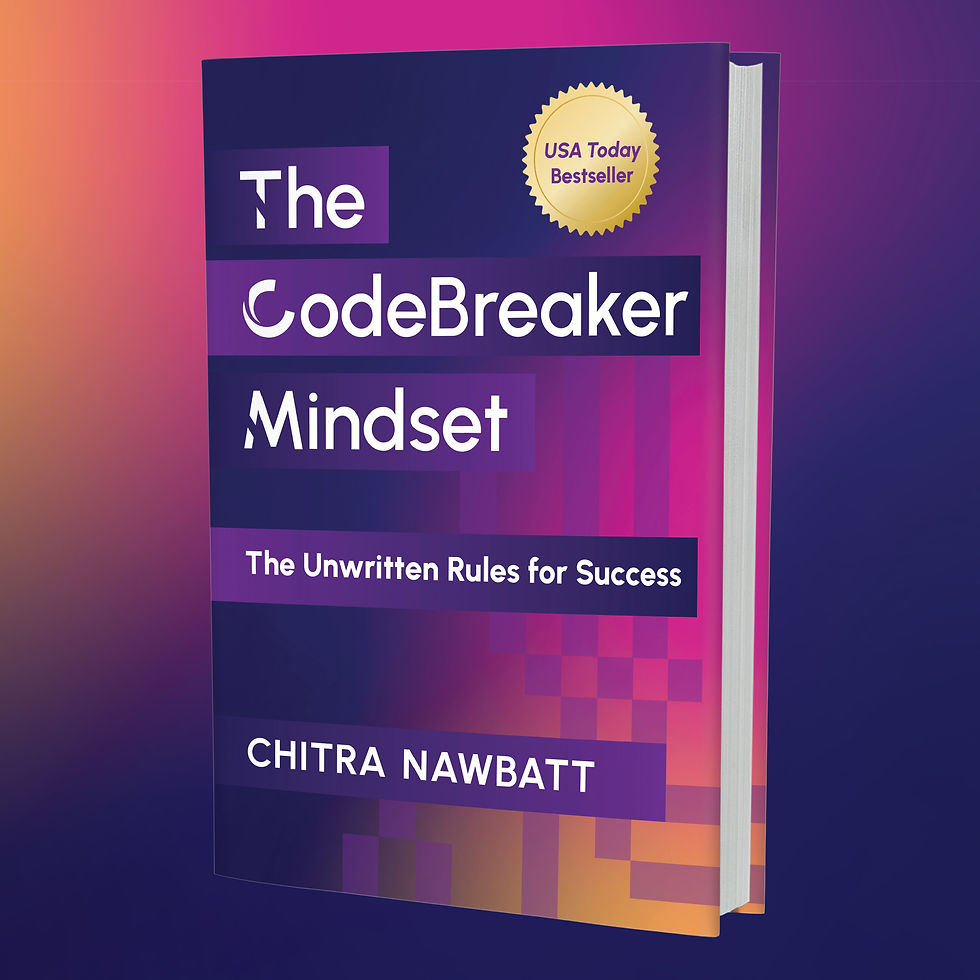
The CodeBreaker Mindset™ book order here: Amazon | Barnes & Noble
The CodeBreaker Mindset™ Ft. Christopher Boone, Oracle, Group VP of Health & Life Sciences Research Services
Chitra Nawbatt (00:10)
Welcome to The CodeBreaker Mindset™, where leaders are the unwritten rules for success. I'm your host, Chitra Nawbatt. Joining us today is Chris Boone, group vice president, research services at Oracle. Chris, welcome. Thank you for joining us.
Chris Boone (00:24)
Oh, thank you for the opportunity. It's an honor to be here.
Chitra Nawbatt (00:27)
Chris, where does the health care business fit in? Oracle's roughly $53 billion revenue pie.
Chris Boone (00:35)
Well, I mean, there's multiple ways to answer that question, I think. But the first thing, just from a financial perspective, you know, I would say that the healthcare and life sciences business is roughly 10% of that number. So it's a pretty large, business for Oracle. But I think the more important piece is how Larry seasoned, which is why he made the investment in Cerner a few years ago.
Which is by far by far the largest acquisition Oracle has ever made. That's roughly $29 billion. And it was really his commitment to this vision that he thinks that Oracle could very much be a health care company in the future, like fully. Right. And all that it could bring. And, he's very, very committed to it and advancing the science of medicine, aging.
He's doing a lot of work. And, with clinical trials in, in the continent of Africa. So you can see, this is a real, a real thing, a real vision for him and that he's been executing on and he's brought in a lot of great talent to make that happen.
Chitra Nawbatt (01:30)
Talk about the product and services and how it's differentiated from the thousands of other health tech startups that are out there and even epic.
Chris Boone (01:40)
Yeah, yeah. No, I think that the the difference you'll find with Oracle because it's Oracle Health and Life Sciences. So it's the British bridging those two worlds. And there's no there's no other company out there that's uniquely positioned to be able to do that. I mean, we have the we have very much some some, life sciences applications, like clinical trial management software and others.
And then you also have the services, on top of which is the business elite around research services that we can utilize. And I think the the wonderful thing about it is that you took Cerner, which were very much, experts in building edge platforms. You combine it with a leading technology company that's going to utilize, its Oracle tech stack, which is a cloud cybersecurity, all of those benefits to to ensure that efficiency, that scale, and even that security of data, which has been a big thing for providers.
But you also now layer in these analytical AI tech capabilities that we have, that we've used in many other industries that we learned from. And you can apply to health care now. So I think, you won't find another company that can do that. You find many of the startups that are pinpoint solutions. You find an epic which has been in the air space that now has to sort of almost transform itself to be a, digitally native or even a cloud based platform.
You know, Oracle committed and we announced last year at our Oracle Health Summit that they were going to that we were going to reconstruct the entire H.R platform from the bottom up to make it cloud native. It's difficult to take a platform that's been used for decades and make it cloud native. Right. And that's that was one of the key lessons I think we learned, over the last couple of years and trying to re-engineer the, the, Cerner platform.
Chitra Nawbatt (03:24)
Bring that to life for us in terms of talking about some of the key stakeholders and the outcomes you drive.
Chris Boone (03:30)
Yeah. I think that, one of the it's interesting because I think that when I'm speaking to stakeholders externally, I can be talking to, a medtech company. I could be talking to a pharma company. I could be talking to what is sort of a I will call it a research institute. We could be talking to AMCs or, academic medical centers or providers, payers.
I mean, it's sort of covers it's a 360 view on the industry. And I think that Oracle has positioned itself to be a, to create a connected ecosystem of all the different sectors and their ability to get data and insights from that. And that's that's great.
Chitra Nawbatt (04:05)
So talking about the word connected, how did you get connected to Oracle. Because you're a journey. You've been in healthcare data analytics for more than 25 years, maybe longer. Early days at Pfizer, AbbVie. You also have taught health information, and analytics at NYU. So talk about how you got your path.
Chris Boone (04:26)
Yeah, I well, I still teach. We had to be clear on that. So yeah, I'm still a professor at NYU. I love doing that. I'm an adjunct, so I, you know, I fly up in the summertime and, to New York to do my, to teach my course, but, you know, I think I'll kind of start briefly from the beginning.
I mean, I actually came I came into health care more because I wanted to be a CEO of a public hospital. That was my sort of goal. I think the key lesson that I learned is that that path wasn't for me. And I realized that after several years, and I realized my talents were not maximized in the data technology space.
But the beautiful thing about it is it set me up to then go into a whole world of research, which is like the secondary use of that data that I never even fathom. That's been a career path. It's like all these things were sort of materialized with the sort of ubiquitous adoption of EHRs and, and all the other digital tech that started coming out.
I just happened to be at the American Heart Association, where they were pushing that, from a clinical research perspective, I think it opened up a lot for me. And then, and then I chose to do a PhD in public affairs and health policy. And so it just sort of it rounded out a lot of things. And, and I think all of has been instrumental in my success thus far.
Chitra Nawbatt (05:35)
So talking about all those ingredients and something you said earlier about Oracle and the transition that the company is going through, especially specifically the health care business, let's talk about the rules of the game. What's the top tailwind for the business. And and what's the unwritten rule or rules that you're using to seize that opportunity.
The Rules of the Game
Chris Boone (05:56)
That the top tailwind for Oracle.
Chitra Nawbatt (05:58)
For the for the health care business.
Chris Boone (06:00)
For the health care business, I think is for.
Chitra Nawbatt (06:01)
For the health care business at Oracle.
Chris Boone (06:03)
Yeah. Yeah yeah yeah. Gotcha. And for the health care business at Oracle, I think our top tailwind is the technology stack that we're building this new platform on. And the ability to sort of, and the convergence that we, we have going on with the different applications that we have that are going to all be interconnected natively. Right.
And so you so we'll have, you know, and this new EHR, you have the, the capability to identify patients and recruit them for clinical trials. That clinical trial module will be part of the HR. And there's a seamless integration currently. If you think about it, you usually have to have these dual systems. You have this here and you have this clinical trial management system.
So you find a lot of dual double entry, on behalf of the providers in entering these systems. And so I mean, it's not really a play on interoperability because interoperability is to me is is a system to system, exchange like an HR or we're talking about is changing the entire workflow of, clinical care and clinical research, which is a whole nother level of, of that.
And then I think that, there's super exciting with the, advanced analytics and AI capabilities we're building that it's going to be. So we're going to make everyone so much smarter.
Chitra Nawbatt (07:11)
The barrier to profitable growth. What's the top barrier?
Chris Boone (07:15)
I think the barrier to profitable growth, it's going to be, people don't tip it well. So if you think about like health systems specifically, they don't tend to swap out EHRs as readily, right. And so, you know, you usually have a system. It's a significant investment for many of these health systems. They go through a lot of due diligence in a lot of stakeholders inside their organization.
They have to sign off on it. So usually they they're pretty committed. So I think that, what we're going to have to do is create a value proposition that strong enough to, to sort of, have them to be open to that particular conversation. But another piece that out of that, too, though, is that that's really particularly focused on the U.S. market, right.
But if you look at all the other countries around the world, many of them don't have the level of EHR adoption we have in the U.S.. So Oracle is very committed to sort of international expansion, too, and our teams have been doing a great job. We have, we're represented in roughly 80% of, UK hospitals. There's so many conversations happening in the Middle East and Asia and other places.
So I think that, the growth is, is sort of excuse, for us, but I think the there, I think there's a lot to be gained and market share within the US as well.
Chitra Nawbatt (08:24)
But on that market share in the United States, let's go a little bit further, which is, is, you know, what's the hack? What is the unwritten rule, if you will, on how to penetrate? Because especially when it comes about nonprofit, nonprofit health systems. And you talked about it, you know, in a prior life, I've had to sell into nonprofit systems.
It is it is incredibly it's the toughest constituent I've ever had to try to, quote unquote, sell into. Is there an unwritten rule, a hack on how to.
Chris Boone (08:50)
I think the unwritten rule is to be unique, to be that's your that's your differentiator, right? And for Oracle, we have to sort of pride ourselves on no one Oracle approach. I mean you've got to remember. So we have the HR but there's ERP applications. There's so many other technology offerings that can that can easily be you can create a one oracle solution which could literally run the entire hospital from a digital tech perspective.
Right. And I think that for us, we're the only ones who can claim that legitimately. Right. And I think that, you'll see some of the fusion applications. Of course, you'll see the HR, you see all of the other sort of adjacent applications that touch into those, but you can really get a full understanding of the business, the financial, the clinical, impact of these technologies in your organization.
I think that is where we're going to really be, different. And then it's all going to be cloud based. It's all going to be highly secure. It's going to have all the advanced AI capabilities one could have. So you'll get all the benefits of all these technologies and all these different applications in your entire business. So you're and you're dealing with one, one source.
Chitra Nawbatt (09:55)
You talked about being unique. Is there a written rule and unwritten rule that has served you continuously in terms of contributing to your success as a leader?
Chris Boone (10:08)
I think it's the same thing. I think it's, knowing myself well enough, being highly self-aware, knowing what my strengths, my talents really are. You know, I think that, you know, I think knowing your talents and knowing how to position yourself, I always use this with my mentees. I tell them, I say, you know, there are so many talented people in the world, but they play on the wrong team.
And I said, you almost got to think of it like a professional athlete, right? When they're on one team, they're just phenomenal athlete. Like, oh my gosh, this guy can't get any better. He gets traded or he leaves and goes to another team is like, dude, it's terrible what happened. Well, he was put in the wrong system. He's still the same player, but he's put in the wrong context.
The wrong environment may not have the support from the leadership. He may not be playing the right position. Or he or she may not be playing the right position. You know, they may not have the right scheme. And the thing that I think that I've always been thoughtful about is I know myself, I know what I'm good at.
I know what I need to surround myself to be even better. Yeah. And I know the content and the types of environments that I thrive the best in. And, and that's really. And you know what? I also, I am not afraid to adjust and pivot as I need to. Right. And, and I think that level of adaptability is serve me well.
That's how I've been able to go to all these different industries within the healthcare space generally, but, and, and do pretty well.
Chitra Nawbatt (11:30)
You talked about the word pivot. So let's get into the pivots. Yeah. What's a significant business pivot that you've led.
The Pivots
Chris Boone (11:38)
That's significant. Well I'm doing one right now. Right. I mean, we're transforming a what was a traditional, we'll say, consulting and services based organization into one that is a much more hybrid, data tech enabled, tech driven, services business. Right? With a lot of, with a a host of very smart subject matter experts and, and it's going to be something that's very unique, I think, to the industry.
We sort of, again, are uniquely positioned to do that. And I think that that's a pivot for the business. I think, for me personally, the pivot would have been from going from ABC to Oracle. It was a two very different environments to different industries. Right. But but it's, it's I think the, the more miraculous part of it is that leadership is leadership.
Right. And I know what I know. And so, I chose the right team.
Chitra Nawbatt (12:31)
On the pivot on the business side. Was that voluntary or involuntary? And, you know, going further, what were the signals? What was the signals or the pattern recognition where you and your colleagues were like, okay, we need to pivot this business in this direction. So was it was it more proactive, voluntary, or was it involuntary because of all the heated competition in the market and what the buyers were saying?
Chris Boone (12:53)
I think I think there were market pressures. I think you could start to see the conversations and dialogs of many of our customers in our clients changing their needs, evolving. So I think, you know, if you look at all the customers that we have, all of their businesses are being disrupted and they're changing. Of course, it's natural.
It's going to force us to do something different, right? So I think, so, you know, I think competition. Sure. But I think from a competitor perspective, we're all in that same boat of trying to figure out what do we need to do now in this new paradigm, because it's still hasn't settled yet. And so I think, it's more the market pressures and what you see your customer evolving into.
Chitra Nawbatt (13:32)
Artificial intelligence is the new norm. Talk about top use case at scale where you're investing level of that investment. If you can quantify the level of that investment, top use case and outcomes.
Chris Boone (13:49)
Yeah, I mean I sort of look at it from two different perspectives on the health side, which is the HR side, you're going to have those generative AI capabilities going to be able to hopefully make most of the providers, much more and clinicians much more efficient. Right. And and actually generating summaries and things and notes for, you from the structured and unstructured data for the provide a real time to where they're not combing through, you know, amount amounts of data.
I think that's going to be a huge thing. Just add generative AI capability. We also have something called Clinical Digital Assistant, which is an ambient listening tool to. And it's sort of all in the spirit of reducing the amount of time that a clinician or care provider has to be in an actual, laptop or computer or whatnot.
And so I think those things are great for efficiencies for them. On the life sciences side, I think you're seeing a tremendous amount of reconstructing the way data is sort of unified. So you have you know, I lived in the pharma world and data was siloed by function. And and we really and honestly, you can never really transform the business.
Not that there was a lot of incentive to because the revenue was still the same. But I think as drug discovery and development evolves, and it's a requirement because the current model is just too unsustainable. Right? It takes too long, is too expensive. I think those are going to be the market forces that drives, you know, a sort of review, and you're going to say, okay, well, how about the state of how can I be a smarter organization?
How can I be much more targeted, and the sort of molecules that I want to take through and sort of de-risk that process more? How can I accelerate and optimize clinical trials, to where they are getting generated, the evidence that is sufficient, not just to the regulators, but also to many of the decision makers on the other side is whether it be payers and providers, patients and so on and so forth.
So I think, the, the bigger use cases on the life sciences side are going to be in how we do discovery. This is primarily, target identification, validation, how we optimize clinical trials, how we even, how are we even commercializing you? Large drugs will be different, right? I just think the entire. And we saw this happening when I was at Avita, you know, we saw it it was during a pandemic.
So the engagement that we had, you know, before we had these pharma reps, sorry, these medical, science liaisons engaging with providers, they they were like, why are you in my office? I don't want you in office anymore. That that interaction had evolved. They now want it portals and different things like that. So I think that, as you see that shift to much more digital tools, becoming the norm, I think you're going to see more AI being applied and utilized in those cases, too.
Chitra Nawbatt (16:25)
How does this impact to stakeholder experience?
Chris Boone (16:30)
You know, I think so personally, what I would say that I love, I love I that bad, by the way, let me be absolutely clear on that. The only thing, and I think it does make everyone more productive. And I and I was sharing this with a friend earlier today. I said, you know, I think that one concern, if I had a concern or two concerns, I do worry about the ethics, right?
Because in health care it's different. It's a privacy issue. There's a lot going on that we have to consider. And we have we have to think about it as Oracle on a global scale. So all the countries there's no harmonization of AI laws across the world. Right. So that's something you could say. There's not even harmonization across in the US there's like state by state.
They're treating privacy and all these things very differently. I think that what I do get concerned about is the loss of human cognition. You know, I do think, you know, we can go down this path of tool dependency and, you know, and generally you think about it, you know, we get smarter by studying. So it's almost like obtaining the information, retaining information, and then applying it, you know, with, I as sort of a tool you don't have to obtain any information is being obtained and summarized and everything else for you.
Right? So, you know, I think that, if I had a concern and that's just crass, right? It it may be, more theoretical or philosophical in nature and, but but that is something that I do think about.
Chitra Nawbatt (17:52)
Let's get into the magic.
The Magic
Chris Boone (17:53)
Yeah.
Chitra Nawbatt (17:54)
How do you define serendipity? And where has serendipity had played a critical role in a business outcome?
Chris Boone (18:02)
I define serendipity, as being at the right place at the right time with the right people. And, and I've had that happen many times in my career. I think from a business perspective, I think, just looking at, you know, where Oracle and Oracle Health and Life Sciences is right now, this is a serendipitous moment.
I mean, you don't find a situation where you have all the components to do something that's truly transformative to the industry. Everyone has claimed it. We truly do have all the key components to make it happen. And we just got to pull it all together and make that vision a reality. And no one. And even if someone had, let's just say, a fraction of the components that we have, they can't scale it on a global level the way we can.
Right. And so that's another unique advantage that I think that we have as a business. So I think, you know, I think the moment, the time is now and it's sort of our ball to not fumble. Right. And so, but I think for me personally, you know, I feel like my entire career has been building up for this moment.
I've been in many different environments and, and I've worked with data and technology and public policy and all these things, like, as you mentioned earlier and so it's sort of prepare me for this the moment that I'm in right now. And to sort of lead this, this transformation and, and sort of hopefully work with, the other leaders to usher us into a new era.
Chitra Nawbatt (19:25)
Chris, what's your advice on how to cultivate The CodeBreaker Mindset™?
Chris Boone (19:31)
My face, I think, you know, you will always hear me say self-awareness is key, right? I do think people don't spend. And it sounds cliche, but I don't think people. And when I say self-awareness, I'm saying you. When you know thyself, you know your talents, you know your triggers. You know what you need to to really succeed, I think, is overachievers are talented people.
We think we can thrive anywhere. And it's just not true. And we see we're professional athletes, as I mentioned earlier. So I think that, knowing yourself and knowing where you thrive is the most important thing. And then you know how to surround yourself with people that compliment you. And so I've, I've always had this great talent of identifying talent and especially complimentary talent to myself.
Right. Because I know what what I, what I know what I do well, and I know things that I don't do as well or that I don't like to do at all. And, and so usually surround yourself with people who are very passionate, those things. And it works. It works beautifully.
Chitra Nawbatt (20:25)
Chris, thank you so much for joining us.
Chris Boone (20:27)
Yeah. My pleasure. Thanks for having me.
Chitra Nawbatt (20:30)
Thank you for supporting The CodeBreaker Mindset™. For more episodes, go to www.ChitraNawbatt.com to like and subscribe. Connect with me on social media, @ChitraNawbatt.
The CodeBreaker Mindset™ Ft. Christopher Boone, Oracle, Group VP of Health & Life Sciences Research Services
Chitra Nawbatt (00:10)
Welcome to The CodeBreaker Mindset™, where leaders are the unwritten rules for success. I'm your host, Chitra Nawbatt. Joining us today is Chris Boone, group vice president, research services at Oracle. Chris, welcome. Thank you for joining us.
Chris Boone (00:24)
Oh, thank you for the opportunity. It's an honor to be here.
Chitra Nawbatt (00:27)
Chris, where does the health care business fit in? Oracle's roughly $53 billion revenue pie.
Chris Boone (00:35)
Well, I mean, there's multiple ways to answer that question, I think. But the first thing, just from a financial perspective, you know, I would say that the healthcare and life sciences business is roughly 10% of that number. So it's a pretty large, business for Oracle. But I think the more important piece is how Larry seasoned, which is why he made the investment in Cerner a few years ago.
Which is by far by far the largest acquisition Oracle has ever made. That's roughly $29 billion. And it was really his commitment to this vision that he thinks that Oracle could very much be a health care company in the future, like fully. Right. And all that it could bring. And, he's very, very committed to it and advancing the science of medicine, aging.
He's doing a lot of work. And, with clinical trials in, in the continent of Africa. So you can see, this is a real, a real thing, a real vision for him and that he's been executing on and he's brought in a lot of great talent to make that happen.
Chitra Nawbatt (01:30)
Talk about the product and services and how it's differentiated from the thousands of other health tech startups that are out there and even epic.
Chris Boone (01:40)
Yeah, yeah. No, I think that the the difference you'll find with Oracle because it's Oracle Health and Life Sciences. So it's the British bridging those two worlds. And there's no there's no other company out there that's uniquely positioned to be able to do that. I mean, we have the we have very much some some, life sciences applications, like clinical trial management software and others.
And then you also have the services, on top of which is the business elite around research services that we can utilize. And I think the the wonderful thing about it is that you took Cerner, which were very much, experts in building edge platforms. You combine it with a leading technology company that's going to utilize, its Oracle tech stack, which is a cloud cybersecurity, all of those benefits to to ensure that efficiency, that scale, and even that security of data, which has been a big thing for providers.
But you also now layer in these analytical AI tech capabilities that we have, that we've used in many other industries that we learned from. And you can apply to health care now. So I think, you won't find another company that can do that. You find many of the startups that are pinpoint solutions. You find an epic which has been in the air space that now has to sort of almost transform itself to be a, digitally native or even a cloud based platform.
You know, Oracle committed and we announced last year at our Oracle Health Summit that they were going to that we were going to reconstruct the entire H.R platform from the bottom up to make it cloud native. It's difficult to take a platform that's been used for decades and make it cloud native. Right. And that's that was one of the key lessons I think we learned, over the last couple of years and trying to re-engineer the, the, Cerner platform.
Chitra Nawbatt (03:24)
Bring that to life for us in terms of talking about some of the key stakeholders and the outcomes you drive.
Chris Boone (03:30)
Yeah. I think that, one of the it's interesting because I think that when I'm speaking to stakeholders externally, I can be talking to, a medtech company. I could be talking to a pharma company. I could be talking to what is sort of a I will call it a research institute. We could be talking to AMCs or, academic medical centers or providers, payers.
I mean, it's sort of covers it's a 360 view on the industry. And I think that Oracle has positioned itself to be a, to create a connected ecosystem of all the different sectors and their ability to get data and insights from that. And that's that's great.
Chitra Nawbatt (04:05)
So talking about the word connected, how did you get connected to Oracle. Because you're a journey. You've been in healthcare data analytics for more than 25 years, maybe longer. Early days at Pfizer, AbbVie. You also have taught health information, and analytics at NYU. So talk about how you got your path.
Chris Boone (04:26)
Yeah, I well, I still teach. We had to be clear on that. So yeah, I'm still a professor at NYU. I love doing that. I'm an adjunct, so I, you know, I fly up in the summertime and, to New York to do my, to teach my course, but, you know, I think I'll kind of start briefly from the beginning.
I mean, I actually came I came into health care more because I wanted to be a CEO of a public hospital. That was my sort of goal. I think the key lesson that I learned is that that path wasn't for me. And I realized that after several years, and I realized my talents were not maximized in the data technology space.
But the beautiful thing about it is it set me up to then go into a whole world of research, which is like the secondary use of that data that I never even fathom. That's been a career path. It's like all these things were sort of materialized with the sort of ubiquitous adoption of EHRs and, and all the other digital tech that started coming out.
I just happened to be at the American Heart Association, where they were pushing that, from a clinical research perspective, I think it opened up a lot for me. And then, and then I chose to do a PhD in public affairs and health policy. And so it just sort of it rounded out a lot of things. And, and I think all of has been instrumental in my success thus far.
Chitra Nawbatt (05:35)
So talking about all those ingredients and something you said earlier about Oracle and the transition that the company is going through, especially specifically the health care business, let's talk about the rules of the game. What's the top tailwind for the business. And and what's the unwritten rule or rules that you're using to seize that opportunity.
The Rules of the Game
Chris Boone (05:56)
That the top tailwind for Oracle.
Chitra Nawbatt (05:58)
For the for the health care business.
Chris Boone (06:00)
For the health care business, I think is for.
Chitra Nawbatt (06:01)
For the health care business at Oracle.
Chris Boone (06:03)
Yeah. Yeah yeah yeah. Gotcha. And for the health care business at Oracle, I think our top tailwind is the technology stack that we're building this new platform on. And the ability to sort of, and the convergence that we, we have going on with the different applications that we have that are going to all be interconnected natively. Right.
And so you so we'll have, you know, and this new EHR, you have the, the capability to identify patients and recruit them for clinical trials. That clinical trial module will be part of the HR. And there's a seamless integration currently. If you think about it, you usually have to have these dual systems. You have this here and you have this clinical trial management system.
So you find a lot of dual double entry, on behalf of the providers in entering these systems. And so I mean, it's not really a play on interoperability because interoperability is to me is is a system to system, exchange like an HR or we're talking about is changing the entire workflow of, clinical care and clinical research, which is a whole nother level of, of that.
And then I think that, there's super exciting with the, advanced analytics and AI capabilities we're building that it's going to be. So we're going to make everyone so much smarter.
Chitra Nawbatt (07:11)
The barrier to profitable growth. What's the top barrier?
Chris Boone (07:15)
I think the barrier to profitable growth, it's going to be, people don't tip it well. So if you think about like health systems specifically, they don't tend to swap out EHRs as readily, right. And so, you know, you usually have a system. It's a significant investment for many of these health systems. They go through a lot of due diligence in a lot of stakeholders inside their organization.
They have to sign off on it. So usually they they're pretty committed. So I think that, what we're going to have to do is create a value proposition that strong enough to, to sort of, have them to be open to that particular conversation. But another piece that out of that, too, though, is that that's really particularly focused on the U.S. market, right.
But if you look at all the other countries around the world, many of them don't have the level of EHR adoption we have in the U.S.. So Oracle is very committed to sort of international expansion, too, and our teams have been doing a great job. We have, we're represented in roughly 80% of, UK hospitals. There's so many conversations happening in the Middle East and Asia and other places.
So I think that, the growth is, is sort of excuse, for us, but I think the there, I think there's a lot to be gained and market share within the US as well.
Chitra Nawbatt (08:24)
But on that market share in the United States, let's go a little bit further, which is, is, you know, what's the hack? What is the unwritten rule, if you will, on how to penetrate? Because especially when it comes about nonprofit, nonprofit health systems. And you talked about it, you know, in a prior life, I've had to sell into nonprofit systems.
It is it is incredibly it's the toughest constituent I've ever had to try to, quote unquote, sell into. Is there an unwritten rule, a hack on how to.
Chris Boone (08:50)
I think the unwritten rule is to be unique, to be that's your that's your differentiator, right? And for Oracle, we have to sort of pride ourselves on no one Oracle approach. I mean you've got to remember. So we have the HR but there's ERP applications. There's so many other technology offerings that can that can easily be you can create a one oracle solution which could literally run the entire hospital from a digital tech perspective.
Right. And I think that for us, we're the only ones who can claim that legitimately. Right. And I think that, you'll see some of the fusion applications. Of course, you'll see the HR, you see all of the other sort of adjacent applications that touch into those, but you can really get a full understanding of the business, the financial, the clinical, impact of these technologies in your organization.
I think that is where we're going to really be, different. And then it's all going to be cloud based. It's all going to be highly secure. It's going to have all the advanced AI capabilities one could have. So you'll get all the benefits of all these technologies and all these different applications in your entire business. So you're and you're dealing with one, one source.
Chitra Nawbatt (09:55)
You talked about being unique. Is there a written rule and unwritten rule that has served you continuously in terms of contributing to your success as a leader?
Chris Boone (10:08)
I think it's the same thing. I think it's, knowing myself well enough, being highly self-aware, knowing what my strengths, my talents really are. You know, I think that, you know, I think knowing your talents and knowing how to position yourself, I always use this with my mentees. I tell them, I say, you know, there are so many talented people in the world, but they play on the wrong team.
And I said, you almost got to think of it like a professional athlete, right? When they're on one team, they're just phenomenal athlete. Like, oh my gosh, this guy can't get any better. He gets traded or he leaves and goes to another team is like, dude, it's terrible what happened. Well, he was put in the wrong system. He's still the same player, but he's put in the wrong context.
The wrong environment may not have the support from the leadership. He may not be playing the right position. Or he or she may not be playing the right position. You know, they may not have the right scheme. And the thing that I think that I've always been thoughtful about is I know myself, I know what I'm good at.
I know what I need to surround myself to be even better. Yeah. And I know the content and the types of environments that I thrive the best in. And, and that's really. And you know what? I also, I am not afraid to adjust and pivot as I need to. Right. And, and I think that level of adaptability is serve me well.
That's how I've been able to go to all these different industries within the healthcare space generally, but, and, and do pretty well.
Chitra Nawbatt (11:30)
You talked about the word pivot. So let's get into the pivots. Yeah. What's a significant business pivot that you've led.
The Pivots
Chris Boone (11:38)
That's significant. Well I'm doing one right now. Right. I mean, we're transforming a what was a traditional, we'll say, consulting and services based organization into one that is a much more hybrid, data tech enabled, tech driven, services business. Right? With a lot of, with a a host of very smart subject matter experts and, and it's going to be something that's very unique, I think, to the industry.
We sort of, again, are uniquely positioned to do that. And I think that that's a pivot for the business. I think, for me personally, the pivot would have been from going from ABC to Oracle. It was a two very different environments to different industries. Right. But but it's, it's I think the, the more miraculous part of it is that leadership is leadership.
Right. And I know what I know. And so, I chose the right team.
Chitra Nawbatt (12:31)
On the pivot on the business side. Was that voluntary or involuntary? And, you know, going further, what were the signals? What was the signals or the pattern recognition where you and your colleagues were like, okay, we need to pivot this business in this direction. So was it was it more proactive, voluntary, or was it involuntary because of all the heated competition in the market and what the buyers were saying?
Chris Boone (12:53)
I think I think there were market pressures. I think you could start to see the conversations and dialogs of many of our customers in our clients changing their needs, evolving. So I think, you know, if you look at all the customers that we have, all of their businesses are being disrupted and they're changing. Of course, it's natural.
It's going to force us to do something different, right? So I think, so, you know, I think competition. Sure. But I think from a competitor perspective, we're all in that same boat of trying to figure out what do we need to do now in this new paradigm, because it's still hasn't settled yet. And so I think, it's more the market pressures and what you see your customer evolving into.
Chitra Nawbatt (13:32)
Artificial intelligence is the new norm. Talk about top use case at scale where you're investing level of that investment. If you can quantify the level of that investment, top use case and outcomes.
Chris Boone (13:49)
Yeah, I mean I sort of look at it from two different perspectives on the health side, which is the HR side, you're going to have those generative AI capabilities going to be able to hopefully make most of the providers, much more and clinicians much more efficient. Right. And and actually generating summaries and things and notes for, you from the structured and unstructured data for the provide a real time to where they're not combing through, you know, amount amounts of data.
I think that's going to be a huge thing. Just add generative AI capability. We also have something called Clinical Digital Assistant, which is an ambient listening tool to. And it's sort of all in the spirit of reducing the amount of time that a clinician or care provider has to be in an actual, laptop or computer or whatnot.
And so I think those things are great for efficiencies for them. On the life sciences side, I think you're seeing a tremendous amount of reconstructing the way data is sort of unified. So you have you know, I lived in the pharma world and data was siloed by function. And and we really and honestly, you can never really transform the business.
Not that there was a lot of incentive to because the revenue was still the same. But I think as drug discovery and development evolves, and it's a requirement because the current model is just too unsustainable. Right? It takes too long, is too expensive. I think those are going to be the market forces that drives, you know, a sort of review, and you're going to say, okay, well, how about the state of how can I be a smarter organization?
How can I be much more targeted, and the sort of molecules that I want to take through and sort of de-risk that process more? How can I accelerate and optimize clinical trials, to where they are getting generated, the evidence that is sufficient, not just to the regulators, but also to many of the decision makers on the other side is whether it be payers and providers, patients and so on and so forth.
So I think, the, the bigger use cases on the life sciences side are going to be in how we do discovery. This is primarily, target identification, validation, how we optimize clinical trials, how we even, how are we even commercializing you? Large drugs will be different, right? I just think the entire. And we saw this happening when I was at Avita, you know, we saw it it was during a pandemic.
So the engagement that we had, you know, before we had these pharma reps, sorry, these medical, science liaisons engaging with providers, they they were like, why are you in my office? I don't want you in office anymore. That that interaction had evolved. They now want it portals and different things like that. So I think that, as you see that shift to much more digital tools, becoming the norm, I think you're going to see more AI being applied and utilized in those cases, too.
Chitra Nawbatt (16:25)
How does this impact to stakeholder experience?
Chris Boone (16:30)
You know, I think so personally, what I would say that I love, I love I that bad, by the way, let me be absolutely clear on that. The only thing, and I think it does make everyone more productive. And I and I was sharing this with a friend earlier today. I said, you know, I think that one concern, if I had a concern or two concerns, I do worry about the ethics, right?
Because in health care it's different. It's a privacy issue. There's a lot going on that we have to consider. And we have we have to think about it as Oracle on a global scale. So all the countries there's no harmonization of AI laws across the world. Right. So that's something you could say. There's not even harmonization across in the US there's like state by state.
They're treating privacy and all these things very differently. I think that what I do get concerned about is the loss of human cognition. You know, I do think, you know, we can go down this path of tool dependency and, you know, and generally you think about it, you know, we get smarter by studying. So it's almost like obtaining the information, retaining information, and then applying it, you know, with, I as sort of a tool you don't have to obtain any information is being obtained and summarized and everything else for you.
Right? So, you know, I think that, if I had a concern and that's just crass, right? It it may be, more theoretical or philosophical in nature and, but but that is something that I do think about.
Chitra Nawbatt (17:52)
Let's get into the magic.
The Magic
Chris Boone (17:53)
Yeah.
Chitra Nawbatt (17:54)
How do you define serendipity? And where has serendipity had played a critical role in a business outcome?
Chris Boone (18:02)
I define serendipity, as being at the right place at the right time with the right people. And, and I've had that happen many times in my career. I think from a business perspective, I think, just looking at, you know, where Oracle and Oracle Health and Life Sciences is right now, this is a serendipitous moment.
I mean, you don't find a situation where you have all the components to do something that's truly transformative to the industry. Everyone has claimed it. We truly do have all the key components to make it happen. And we just got to pull it all together and make that vision a reality. And no one. And even if someone had, let's just say, a fraction of the components that we have, they can't scale it on a global level the way we can.
Right. And so that's another unique advantage that I think that we have as a business. So I think, you know, I think the moment, the time is now and it's sort of our ball to not fumble. Right. And so, but I think for me personally, you know, I feel like my entire career has been building up for this moment.
I've been in many different environments and, and I've worked with data and technology and public policy and all these things, like, as you mentioned earlier and so it's sort of prepare me for this the moment that I'm in right now. And to sort of lead this, this transformation and, and sort of hopefully work with, the other leaders to usher us into a new era.
Chitra Nawbatt (19:25)
Chris, what's your advice on how to cultivate The CodeBreaker Mindset™?
Chris Boone (19:31)
My face, I think, you know, you will always hear me say self-awareness is key, right? I do think people don't spend. And it sounds cliche, but I don't think people. And when I say self-awareness, I'm saying you. When you know thyself, you know your talents, you know your triggers. You know what you need to to really succeed, I think, is overachievers are talented people.
We think we can thrive anywhere. And it's just not true. And we see we're professional athletes, as I mentioned earlier. So I think that, knowing yourself and knowing where you thrive is the most important thing. And then you know how to surround yourself with people that compliment you. And so I've, I've always had this great talent of identifying talent and especially complimentary talent to myself.
Right. Because I know what what I, what I know what I do well, and I know things that I don't do as well or that I don't like to do at all. And, and so usually surround yourself with people who are very passionate, those things. And it works. It works beautifully.
Chitra Nawbatt (20:25)
Chris, thank you so much for joining us.
Chris Boone (20:27)
Yeah. My pleasure. Thanks for having me.
Chitra Nawbatt (20:30)
Thank you for supporting The CodeBreaker Mindset™. For more episodes, go to www.ChitraNawbatt.com to like and subscribe. Connect with me on social media, @ChitraNawbatt.
Disclaimer: the show notes and transcript are powered by artificial intelligence (AI).
Featured Episodes and Insights