The CodeBreaker Mindset™ Ft. Dan Reed, Meta, Reality Labs, COO


In this episode of The CodeBreaker Mindset™, Dan Reed, COO of Meta's Reality Labs, shares insights on the intersection of technology and human connection. He discusses the evolution of Reality Labs, his unique journey from the NBA to tech, and the importance of understanding both written and unwritten rules in leadership. Dan emphasizes the role of data and AI in shaping the future of wearables and the metaverse, while also reflecting on the significance of serendipity and curiosity in career development.
Chapters
00:00 Introduction to Meta and Reality Labs
02:58 Dan Reed's Journey from Sports to Tech
05:59 Understanding the Written and Unwritten Rules
08:53 Navigating Leadership with Iconic Figures
11:50 Pivots and Product Development in Reality Labs
15:10 The Future of AI and Wearables
18:00 The Role of Serendipity in Career Success
21:04 Cultivating The CodeBreaker Mindset™
Episode Resources
Dan Reed | Bio
Chitra Nawbatt | Bio
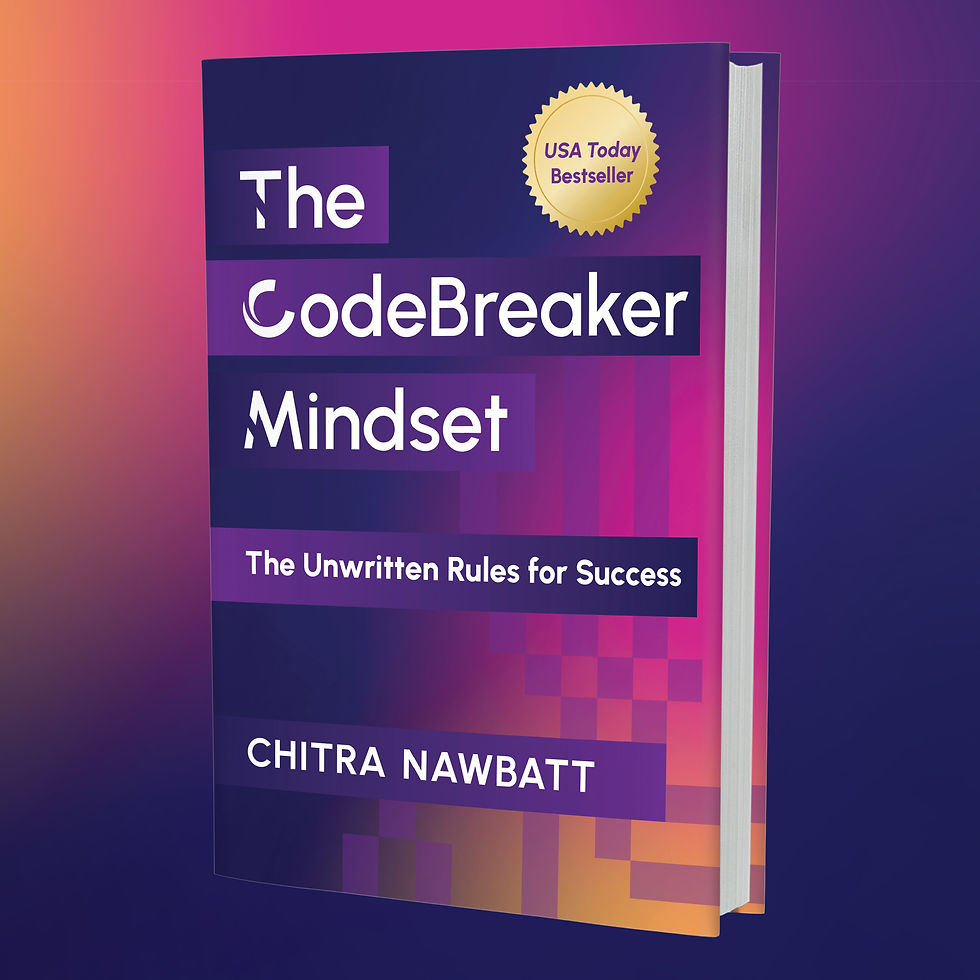
The CodeBreaker Mindset™ book order here: Amazon | Barnes & Noble
The CodeBreaker Mindset™, Ft. Dan Reed, Meta, Reality Labs, COO
Chitra Nawbatt (00:10)
Welcome to The CodeBreaker Mindset™, where leaders share the unwritten rules for success. I'm your host, Chitra Nawbatt Joining us today is Dan Reed, Chief Operating Officer of Meta's Reality Labs. Dan, welcome. Thank you for joining us.
Dan Reed (00:24)
Thanks so much for having me. Chitra.
Chitra Nawbatt (00:26)
Meta. Fortune 50 company with roughly $100 billion in revenue. Tell us about Meta and where Reality Labs fits in.
Dan Reed (00:35)
So met as a mission driven company. And the mission is to build the future of human connection and the technology that empowers that. And in many ways, that's what Reality Labs does. Reality labs is at the core of that, where we want to enable people to connect anytime, anywhere, anyhow. And we're building technologies that really take that to the next level that we believe are the world's next computing platforms.
There's two major sort of groups to think about with Reality Labs. One is what we call metaverse. These are our quest headsets. This is virtual reality. This is mixed reality. This is spatial computing. We think that over time, that will do the job better than today's laptops, televisions, computers that we use today. And the other division is wearables, where these are the Ray-Ban Metas, which is the leading AI wearable in the marketplace.
And there's a very exciting roadmap of things to come that we believe will ultimately do the job of the mobile phone today, ultimately better in the future with glasses. Wrist wearables and and others down the road. And so we're we're very excited about it.
Chitra Nawbatt (01:46)
Before you get into the exciting things to come. What's the size of the pie right now that you that you take up that reality? Labs, has and then talk about the exciting things to come?
Dan Reed (01:58)
Yeah. I mean, Reality Labs is a it's a it's a pretty large division within Meta. There's probably on a given day, 16, 18,000 people in the group. And, we're we are we're emerging out of R&D mode, I would say. It's it's when we bought Oculus back in 2014, I believe, that was the start of this journey.
So we're over ten years in, and, you know, we're there's a very large budget attached to inventing these technologies. But the good news is that the business is starting to emerge. And that's really what my role is, is to start, bringing these products to market. Growing the business that businesses now over $2 billion a year run rate business has continued to grow, obviously, on the Meta scale.
That's still a relatively small business. But we think this is a huge opportunity. If you think about, the, the general computing market and all the things associated with it. Obviously it's a very big opportunity. And that's that's ultimately the opportunity that we see.
Chitra Nawbatt (02:58)
You didn't grow up in tech. You came to tech from the NBA being president of the G League. Take us, take us through your journey.
Dan Reed (03:07)
Yeah, it's funny, actually, you say that, but my first job out of college was at, Kearney Consulting firm in Silicon Valley. And I worked with a lot of tech companies. So in a way, I kind of did, which is, which is sort of interesting as a sort of full circle. But yes, after I went to business school, after that consulting stint, I really decided I wanted to work in sports.
And so I joined the NBA, ended up being at the NBA for ten years. I joined, first in our in a consulting group in the NBA, leveraging my previous experience to help advise NBA teams on how to grow their business. That was my transition point. I know, talk about pivots in a second. And and then I transitioned into more of a general management role where, I got the opportunity to be president of the G League, which is a Sports league commissioner job.
I joke, but it's kind of true that it's the same job as Adam Silver. David Stern, you just move the decimal point over 2 or 3 places. And I learned a ton in that space. And ultimately, though, moving to then Facebook at the time, I would like to say that I had crystal clear 2020 vision for where the future of digital content was going in the sports space and media and entertainment and content, and that I knew that the sort of the platforms video emerged, we're going to emerge as major players in that space.
I wanted the opportunity to shape that lead that that is what ended up happening. But I, I joined Facebook because I wanted to continue to live with my wife and kid, my wife, who's a brilliant lawyer. And now a startup founder, had this amazing opportunity to move from her law firm to go to Google at Google X, their research group, to be the first, legal employee in all of their health work.
Which is her passion. But this is 2014, so you had to move when you worked, when you moved to a company like Google. And so we had to move from New York, where we were based before, to the Bay area. And, that forced me to look my head up. Put my head up and really think about, okay, I need to move to the Bay area.
I have my dream job in many ways at that stage in my career. How do I top that? What? How do I how do I do this? And ultimately, Facebook seemed like a great opportunity that seemed like it could emerge to be this thing that ultimately end up being, but that wasn't the impetus for, for for me going and ultimately taking it.
And it was turning out to be one of the best career decisions I ever made. But it was made for personal reasons. And then, at at Meta. I've been there now ten and a half years. So the first 7 or 8 years was starting our sports partnerships team, our sports efforts, and really, reinventing in many ways the way the content is produced, distributed, monetized in the sports world across the entire industry, sports leagues, teams, athletes, broadcasters, agencies, everywhere in between, both working with the industry to help them understand how to use platforms like Facebook and Instagram and WhatsApp and, you know, ultimately not Reality Labs, to grow their business, publish content, reinvent their their business models. But also working really closely within Meta with product leaders, engineering and, you know, working across Cross-functionally to build the products and the tools and the systems, to enable that business flywheel to work. That ultimately grows both Mata's business, our engagement, our revenue associated with it, but also the business of our partners.
But then in the last 2 or 2 and a half years, I moved into this Reality Labs group because really, I was inspired by the ambition of the bet, the technology that we were building, the size of the business opportunity. And I wanted to get back into sort of a more classical general management role, where when I was president of the G League, I was league commissioner.
I responsible for the PNL. And I really loved that. And, I wanted to move back in that role. And that's very similar to what I have now where, I run ten different functions, ranging from product marketing and sales to go to market functions, marketing comms partnerships, to, product partnership functions like analytics, data science, data engineering, user research.
And then, you know, horizontal functions, legal policy, that sort of thing. And ultimately, we're responsible for the business results, the top line growth of Reality Labs, making sure that we're building products that can be commercially successful and partnering with product teams to do that, and then making sure horizontally that we're operating really well, we're continuing to improve the sophistication of our operations.
And that's that's that's me.
Chitra Nawbatt (07:42)
We're going to go even further on, on on that to you. Right. Getting into the rules of the game. Yeah.
Dan Reed (07:48)
Cool.
The Rules of the Game
Chitra Nawbatt (07:49)
So two dimensions, both within sports as well as technology, a Meta which is in a relatively short period of time, a relatively, you know, young quote unquote, age group. You are president of the G League on the other side, coming into Meta over the last ten plus years, how did you so in sports and in tech, how did you learn the written and the unwritten rules of the game?
Yeah, literally and figuratively. How did you learn the written and the unwritten rules of the game? Let's start there. Before we get into the some of the more on the unwritten side. Yeah.
Dan Reed (08:23)
I mean, so you want to talk about written first. Yeah. Okay. I mean, written is relatively straightforward. You ask around, you understand the job description. You're really clear about what the responsibility is. I remember when I first happened as G League president, I asked David Stern, is the commissioner of the NBA at the time. Okay. Like what are your top priority?
What are your top priority outcomes for for the G League? And it was funny. I sort of said, hey, should we think about this like an R&D department where, our job is to develop players, coaches, referees, front office executives for the NBA, which was a stated goal, or is it about growing the business? Is it about, growing our broadcasting capabilities and growing our audience and improving profitability of the teams and growing franchise value?
And, you know, ultimately turning this to a successful standalone business. And his response was, yes. So that was pretty clear, right? That's a written that's a written rule. That okay. That that translates into my my top priorities, my KPIs, making sure that my leadership team understands that make sure that my, my stakeholders understand that.
And then, and then, you know, in many ways, my time working at the NBA, I helped to understand, I know whether there's a written or unwritten, but a lot of it was about how do you get things done, how do you capitalize on the resources and capabilities the broader NBA has and bring those to bear, for the benefit of the G League?
And I just learned that really through, working, working within the NBA relationships I had. And so you kind of understand over time how to get things done. At Meta, Meta, it's very clear they literally make posters there on the walls with the written rules of the game. And right now, since then, we've codified clear values and, and priorities.
But at the time, they're just literally you go to an orientation and the orientation room has all these posters with big, huge font on the wall that really embeds these sort of mottos. You know, this is your company now, right? So they're trying to cultivate an ownership mindset, famously move fast, break things. Right. That was still we hadn't removed the brick things yet.
From the motto at the time when I started, and then there were a lot of these rules that really did succinctly summarize how you were expected to operate. It mattered. And I thought that was great because Meta has one of the strongest cultures I've ever seen within a company where people really do understand how to get stuff done, because it literally is written down in many ways.
Now, of course, there's a bunch of unwritten things over time that you learn. But I would say in response to the question about written rules, those are some of the approaches that I took.
Chitra Nawbatt (11:19)
And on the unwritten side.
Dan Reed (11:21)
Yeah, the unwritten side, I think it's a mix. I would say at the NBA, it was a lot of trial and error and frankly, a lot of failure. Where and I think one of the, one of the biggest unwritten rules that I did not understand and no one told me even and in fact, I think I if there was written advice, it was not it didn't turn out to be true.
Was the importance of, you know, to sort of use a corporate word, stakeholder management. As a commissioner of a sports league, you have a lot of stakeholders, and as a commissioner, as the president of the G League, in many ways, we had a more complex set of stakeholders because the G League is owned by the NBA.
So the 30 NBA owners, that's a stakeholder group. Then you have, you know, my my management chain, which is Adam Silver and David Stern, and their leadership team, who I was tasked with working with to help support their business. But also I needed them to grow my business. Then there are the owners of the G League teams, and this was the gap.
I don't think I, I don't think I respected understood enough how important that stakeholder group was, and that my job was really to deeply understand what their concerns were, what their priorities were, and serve them. And and then there are NBA DMs who see the G League as a training ground for players. GM's, you and then you obviously have the fans, you have the sponsors, you have the broadcasters, you have your employee base, you have everybody.
Right. That's sort of pretty standard. And it was really that unwritten rule of your job as a, as a commissioner is really to be a servant leader to your owners. And I think I just I miss prioritize the ownership groups. And, and so I learned that over time. And then I sort of, you know, really realized that a lot of my job is to spend a lot of time with, with our owners and really think about my job as helping them grow, helping them succeed, because through their success, the league gets stronger.
And that's the platform on which everything rests. And, that was a really important unwritten rule because that that was the catalyst to, you know, flipping the profitability model for teams that we ultimately 12 evaluations of, of teams we improve the on encore product. And a lot of that came from just listening to really all these stakeholders and then synthesizing all to an approach and getting that by and and driving that through.
And, you know, no one really told me that no one really that was not like, okay, your job as commissioner of this league is to do this. You just sort of have to figure it out on your own. I think probably, probably we could have done a better job that. So it wasn't. It wasn't so much trial and error and learning through failure.
But that's life. That's the way. That's the way it goes. At met, you know, I don't know, I think that there there's, you know, what what is there and how do they learn it? I guess the question same thing, which is you just learn by by doing and you understand how to work with certain stakeholders.
And there's tactics and approaches that you take that can be more effective with one person versus the other. One of the unwritten rules at Meta that I learned relatively early is a product led company. Mark is one of the greatest product managers ever. And, he makes decisions through a product product management lens. And so PMS really drive programs and engineering really drive a lot of the decisions, the budget allocation, how things work.
And as a business person, a person who worked across all the areas that I described before, that was a real challenge to figure out how to do that, because I needed products built in order to deliver a business outcome for, for my partners or an opportunity that I saw because of my expertise in the sports space.
But I didn't I wasn't positioned in the organization to be able to just do that. I had to seek out influence and educate and, and ultimately work in partnership, cross-functional partner with product management engineering and then a whole bunch of other functions to get stuff done. And that's just how you get stuff done at a, at a place like Meta.
And yeah, I guess it maybe there was some education about that, but you don't really realize how deep and how important and how critical that is. Until you really start to get into the nitty gritty. So those are those are a couple examples.
Chitra Nawbatt (16:20)
You've mentioned three iconic leaders, iconic individuals just now, Mark Zuckerberg, Adam Silver, David Stern, what were the unwritten rules? What are what were and are the unwritten rules in dealing with, those three leaders? And I and I ask that also from the perspective of, especially as folks are climbing in their career, oftentimes you're having to deal with very strong figures, iconic leaders, who can be very nuanced, very nuanced.
Dan Reed (16:58)
So, look, they're very busy, number one. They're very busy people. So you don't have a lot of time, and you can't you don't have a lot of air time. You have to be very tight. You have to be very opinionated. You have to be well-researched because they can smell bullshit. They will. They will go deep on on an area.
And you have to be able to demonstrate that what you're saying, what you're proposing, what you're pushing back on, is rock solid. They have a lot of context. They have a lot of wisdom. And in many cases, they are seeing way beyond where most others have seen. I think that's true. These things, these these things are really true about all of them.
They manifest differently. Their styles are different. And so, but I think that in many ways you just sort of have to come, you know, what's the what's the Omar phrase from the why are you come into can you best not miss, it's kind of like that. You have you have an opportunity and if you if you are, you know, sort of tight, concise, well-researched, well backed, you've gotten the buy in from the key stakeholders that that they know are important and people that they trust.
You can unlock amazing things. And if you're not, then you won't. And and in many cases, you may not get another opportunity, because they're off to the next thing. So I don't know. Those are, those are for the and you have to build a relationship. And a and a rapport. Because I do think that that sort of that trust, that nuance.
The hallway conversation and those things are all very important to.
Chitra Nawbatt (19:00)
I want to get into the pivots. Yeah. And something you said around Meta being deeply and Mark Zuckerberg as a leader, being deeply product manager or product centric organization. And so talk about then in the context of Reality Labs and what's coming next, there's a couple of different influences, right? So talk about tailwinds that headwinds you see. But marry that with it takes a lot of time and energy and dollars to get the product right.
Especially you talked about focus on human connection right. So to get the product right across the two buckets. So your life to date pattern recognition right. Your life to date pattern recognition in terms of how do you problem solve. And more. So, you know, the unwritten rule is your own unique approach hack, if you will, on how do you get the product right.
Truncate the time to market to the extent you can, because there's so much that goes into that. But you got to, you know, you got to produce scale, you got to produce traction. You want to get user adoption. It's got to translate to revenue numbers like all these pieces.
The Pivots
Dan Reed (20:06)
Right. Well, I'd say like one of the, one of the attractive things about this pivot I made into being CEO of Reality Labs is I am in the product group, I am in there. I, you know, I, I report to the CTO of the company, I am in, in the, in the group with product and engineering leaders and I have a seat at that table.
I have the functions that I need to to really partner deeply with these teams to make sure that we're making those types of decisions that are ultimately going to result in great business outcomes. And I would say that there was there have been 2 or 2 approaches that I've taken generally to try and manifest that maybe three, one is really sort of bring bringing the market directly into the room.
And this is like literally classic, like understanding. Getting away from this tech is really cool. It could do this amazing thing. But then when you look at you size that opportunity in a marketplace that's like, yeah, that's really huge. Or like, hey, actually that's really small. And look, we do not have an unlimited budget. We do not have an unlimited time.
So we can work on a lot of different things. We're still early stage. We should try and fail at a lot of things, but let's at least understand which things have the biggest potential and which things do not. And and I think we have successfully guided our product development towards, technologies and use cases and technology plus content, plus software that actually unlocks the most value for the most people, that creates the biggest business opportunity.
So that's one. The second one is bring the customer's voice into the product development process, and making sure that's consistently brought in through the go to market process. And so we we over the past few years have implemented user journeys, which our user research team and our product marketing team leads, along with a bunch of other teams.
And that's literally developing archetypes based on that market, that market sizing, and that defines the roadmap. And we talk about customers as people, and that that helps us stack, rank the features that we're building that also then translates directly into when when we're ready to bring something to market. Obviously, those are what we're prioritizing in our marketing, in our sales, in our comms, in our partnerships that we're using to run out that value proposition.
The third is data is we've really significantly improved our data foundation where we're measuring and understanding everything. And in the early, early stage, especially hardware, research operation, sometimes having too much data is not great because it's so early. You don't possibly have all the data at scale. To make smart decisions. You have to do you have to just do trial and error intuition.
Now that we've reached the scale that we are, we really need that data foundation to make sure that we're constantly measuring and pivoting and changing. And this is really a super power of Meta. This is another unwritten rule is data. Rules are decision making. And of course at Meta, what Facebook and Instagram, we have that scale.
So we're running small experiments all the time. And we want to ship things early even before they're baked, so that we can get the learning and then iterate and improve. You can always do that in hardware. So we've had to tweak how we, measure and how fast we iterate. And frankly, we need to make more durable decisions earlier than we do on the software side.
And so we've sort of tweaked how we approach that, in a way that we think, allows for the scaling and the growth and making sure that we're making smart decisions with the resources we have.
Chitra Nawbatt (23:53)
So on both of those dimensions, software versus hardware, what is the what will we see as the next horizon of innovation for Meta and human connection? Because you said, yeah, Facebook, Instagram threads.
Dan Reed (24:07)
Right.
Chitra Nawbatt (24:08)
What what you're doing in reality labs. But the next horizon, I mean we'll look at broader, broader things in the market. Twitter, blue sky, TikTok. You know, eight years ago we didn't even think we couldn't even imagine TikTok dancing or how TikTok started to what it's evolved to. That's right. And the dramatic effect it has had on so many countries and on so many issues.
So next horizon.
Dan Reed (24:29)
I mean, I think that the twin long term bets for Meta are one Reality Labs, which I think are the future computing platforms that will be transformative for how humans interact with computing, as the personal computer and the mobile phone have been. That will probably take 20 or 30 years to unfurl. And we think they will take the form of a form factor of wearables that are just more natural computing.
You have to look down into a two inch screen to have access to the world's information. It will be in your field of view, it will be talking to you. There will be AI that will help you synthesize all that information and help you make better decisions. And be more productive and be more efficient in everything you do, which is kind of been the long march of technology in general for humans.
We think that's the next wave, and we're pretty determined to be a leader in that. And to help invent a lot of those technologies and help popularize those, because we also think that by doing that, we want to put humans at the center of those technologies. We want to be in the loop, and we want it to enhance human human connection, because that's really again, we're mission based company.
That's what we're trying to do. The other is A.I., which, of course, there's been a lot of conversation about AI. We don't need to regurgitate all of that, but needless to say, it's probably the most important technology that's come around since the internet. And we'll be as transformative, if not more transformative. And Matt is one of the few companies that has all the tools, to really be a leader in the AI space.
And help ensure AI is helping to achieve helping to achieve this mission. And this is not just in our family of apps, where it's helping to make those family of apps better, for users. But there's an entirely new set of use cases and capabilities that I will enable, both in terms of the app ecosystem and software that we think about, but also integrated with the hardware, which will unlock entirely new capabilities.
Chitra Nawbatt (26:31)
Well, on that front, since you are sitting at the edge of innovation every day, every hour, what is that? What is that top couple of use cases that are going to be very differentiating top use cases for AI, that are going to be very differentiating where you all are investing a lot, you know, a preview of those outcomes.
Yeah. Or outcomes we might already see that will only multiply.
Dan Reed (26:57)
Yeah. So I'll I'll talk about AI wearables, where our Ray-Ban glasses are the, the leading AI wearable in the market where you, you know, pair of stylish glasses with AI built in that can see what you see, can hear what you hear, and can talk to you privately and ultimately, that use case we think will be the really value creating differentiating opportunity.
And that's really unique. And I'll give you without revealing our entire roadmap.
Dan Reed (27:28) You can, I could but I won't the we have a feature. There's I'll highlight two features that exist today. One is live translation. So if I'm wearing my Ray-Ban Metas and you're speaking to me in Spanish, it will translate it to me in English in my ear. And over time, we believe that that can really help eliminate or greatly reduce the barrier of language, which is sort of it's hard to think about, but will be truly transformative, in so many ways.
Not just make everyone's life easier, but just, like, improve human connection. In in really profound ways. Another, another, feature that we have today on these glasses is called live AI, where I can start a session where I basically I'm turning on my cameras, and the Meta AI built into the glasses is seeing what I'm seeing and observing what I'm doing and can help me out in real time with basically all generative AI capabilities at my fingertips.
So, you know, imagine I'm cooking. We all we've all tried. We've all cooked. You know, we have a we have our phone with the recipe and, you know, all our stuff over here. And then you're using your like dirty finger to like, open your phone and it's very clunky. I can have a minute. I just say, here's the recipe.
Help me walk me through it as I go. And it will see. It will see what I'm doing. And I can ask questions and it will proactively, you know, help me understand, too many onions or, you know, you need this ingredient. And what's a good replacement if I don't have that agreement ingredient? And, and it just it makes you smarter and makes you more efficient.
You can imagine that playing out over time, where, you've had that capability for more, more hours in the day. How much that could help you, make day to day decisions, synthesize, synthesize your day, help you recall things. They can improve your memory, and even help with your with your vision, with your hearing.
There's a lot of ultimate capabilities that, I on a in a wearable form factor, can really help with that, I think are quite profound.
Chitra Nawbatt (29:50)
In everything you've talked about. There are elements of magic. So I want to get into the magic. And you talked a little bit earlier that, serendipitously, your move to California, your wife got a job with Google, actually wanted to stay married to her and literally live with you. Live with your child. So let's get into the magic.
What's your definition of serendipity and where did serendipity play a significant role in a business outcome?
The Magic
Dan Reed (30:16)
Yeah, I mean, it's the classic definition of luck to me, which is preparation meets opportunity. And preparation is not just you preparing for an opportunity, but it's also the relationships you build and the information you consume and, the intentional decisions you make to put yourself in places where great things could happen. You're not sure that that will happen.
That's not why you're going. And so that's the preparation. And the opportunity is just is truly the, the thing that you couldn't have possibly predicted that happens. But these things probably, you know, we think and I'll tell you a couple of examples, but probably there have been many other opportunities for serendipity or magic that I missed because I wasn't prepared or wasn't in the room or I didn't show up or whatever.
But, but because, because or because I wasn't prepared, it did happen, but I just didn't. I didn't say the right thing. I didn't do the right thing. I didn't show the right thing. One example is the way I. The means in which I, got the job as president of the G League, where I knew that job was open and available, but I did not think I was qualified.
I was 30 years old at the time. I obviously didn't apply, but I had, I done a good job in my in my current role. So that's really important. Is crush your current job. And I did tell my manager at the time that I was interested in transitioning to a more general management role from a consulting background.
And, unbeknownst to me at the time, they were doing a search for a president role. And they ultimately they ultimately hit on what we have this we have this person who wants to move into this kind of function that this job represents. This person is doing a great job. We're looking to create step up opportunities. He expressed an interest, and so let's take a shot of him.
All that happened without me saying anything specific about that. It was just I developed great relationships with what the people involved. They thought highly of me. I made my interest known. And then magic happened. And if any one of those things hadn't happened properly, that would that opportunity would have passed. Never would have known about it, never would have known I was in consideration, never knowing I was capable of doing that job.
So, you know, that's an example. Another one is actually my pivot from leading sports and media partnerships at Meta into Reality Labs, where I was the darkhorse candidate for that job. It was not obvious why, a sports guy, would be a great c CIO for a moonshot consumer tech play. But two things really worked in my favor.
One is I did have relationships with a lot of the people involved in Reality Labs. My predecessor in the role I worked really closely with in a number of different areas. And when I sort of reached out to express interest and ask questions, she immediately put me in the interview loop. Just because we had that relationship. And she knew she she knew the kind of work that I did.
I also had relationships with a lot of other leaders within Reality Labs that I had worked with in different contexts, who could see past the the facade of this is a sports person and and to know this is a great general manager who understands product who understands engineering, who understands technology, who understands how to work, work the system and understands how to get stuff done, will be a good partner.
And, and then actually my experience at the G League running the G League ultimately was the convincing factor, because running ten functions in this sort of environment is not unlike running a sports league where I describe all the stakeholders and all the functions and all the complexity. The names are different, the functions are different, but the job is the same.
So those lessons that I learned that I described to you earlier in the G League, I apply every day in this role, and it's what's made me successful and what's allowed us to do these things. And again, that that is kind of magic. A lot of things had to happen properly in order for that to take place.
Chitra Nawbatt (34:31)
Dan, what's your advice on how to cultivate The CodeBreaker Mindset™?
Dan Reed (34:36)
A couple of things I'd say. One is you have to be curious. You know, one of the aspects that I know is important to The CodeBreaker Mindset™. I understand the written unwritten rules, the written rules. You just read them. It's fine. It's obvious. The unwritten rules. You have to get curious. You have to ask questions. You have to have a open mind.
You have to ask for feedback. And you should embrace that. So have a curious mindset. Ask for feedback. Be open to it. Listen to it. That's the only way you're going to get that unwritten rule and understand how you can pivot, to make sure you're meeting and exceeding expectations for folks. Also, curiosity will help you reimagine what's possible for you as you pivot and also allow you to pivot to entirely different circumstances.
And in terms of magic, I really do think number one, magic does not happen if people do not think highly of you and you're not doing your current job well, it just doesn't. So even if you have aspirations, even if you like, you know, are interested in this thing over there, this thing over here, you have to crush your current job.
And then after you crush your current job, then you have the opportunity to explore other things and you have to build those relationships. You have to make those interests known. And you have to be ready to actually change and then crush that next job. And so, I don't know, those are a couple of things that at least work for me that I don't think I would describe myself as having The CodeBreaker Mindset™, but I think it's spot on.
And over the course of a career, you learn these things over time. So the fact that you're breaking it down and, you know, sort of pulling these words of wisdom out, I think are great. And those are at least a few things that occur to me.
Chitra Nawbatt (36:26)
Dan, thank you so much for joining us.
Dan Reed (36:28)
Thanks for having me.
Chitra Nawbatt (36:30)
Thank you for supporting The CodeBreaker Mindset™. For more episodes, go to www.ChitraNawbatt.com to like and subscribe. Connect with me on social media, @ChitraNawbatt .
The CodeBreaker Mindset™, Ft. Dan Reed, Meta, Reality Labs, COO
Chitra Nawbatt (00:10)
Welcome to The CodeBreaker Mindset™, where leaders share the unwritten rules for success. I'm your host, Chitra Nawbatt Joining us today is Dan Reed, Chief Operating Officer of Meta's Reality Labs. Dan, welcome. Thank you for joining us.
Dan Reed (00:24)
Thanks so much for having me. Chitra.
Chitra Nawbatt (00:26)
Meta. Fortune 50 company with roughly $100 billion in revenue. Tell us about Meta and where Reality Labs fits in.
Dan Reed (00:35)
So met as a mission driven company. And the mission is to build the future of human connection and the technology that empowers that. And in many ways, that's what Reality Labs does. Reality labs is at the core of that, where we want to enable people to connect anytime, anywhere, anyhow. And we're building technologies that really take that to the next level that we believe are the world's next computing platforms.
There's two major sort of groups to think about with Reality Labs. One is what we call metaverse. These are our quest headsets. This is virtual reality. This is mixed reality. This is spatial computing. We think that over time, that will do the job better than today's laptops, televisions, computers that we use today. And the other division is wearables, where these are the Ray-Ban Metas, which is the leading AI wearable in the marketplace.
And there's a very exciting roadmap of things to come that we believe will ultimately do the job of the mobile phone today, ultimately better in the future with glasses. Wrist wearables and and others down the road. And so we're we're very excited about it.
Chitra Nawbatt (01:46)
Before you get into the exciting things to come. What's the size of the pie right now that you that you take up that reality? Labs, has and then talk about the exciting things to come?
Dan Reed (01:58)
Yeah. I mean, Reality Labs is a it's a it's a pretty large division within Meta. There's probably on a given day, 16, 18,000 people in the group. And, we're we are we're emerging out of R&D mode, I would say. It's it's when we bought Oculus back in 2014, I believe, that was the start of this journey.
So we're over ten years in, and, you know, we're there's a very large budget attached to inventing these technologies. But the good news is that the business is starting to emerge. And that's really what my role is, is to start, bringing these products to market. Growing the business that businesses now over $2 billion a year run rate business has continued to grow, obviously, on the Meta scale.
That's still a relatively small business. But we think this is a huge opportunity. If you think about, the, the general computing market and all the things associated with it. Obviously it's a very big opportunity. And that's that's ultimately the opportunity that we see.
Chitra Nawbatt (02:58)
You didn't grow up in tech. You came to tech from the NBA being president of the G League. Take us, take us through your journey.
Dan Reed (03:07)
Yeah, it's funny, actually, you say that, but my first job out of college was at, Kearney Consulting firm in Silicon Valley. And I worked with a lot of tech companies. So in a way, I kind of did, which is, which is sort of interesting as a sort of full circle. But yes, after I went to business school, after that consulting stint, I really decided I wanted to work in sports.
And so I joined the NBA, ended up being at the NBA for ten years. I joined, first in our in a consulting group in the NBA, leveraging my previous experience to help advise NBA teams on how to grow their business. That was my transition point. I know, talk about pivots in a second. And and then I transitioned into more of a general management role where, I got the opportunity to be president of the G League, which is a Sports league commissioner job.
I joke, but it's kind of true that it's the same job as Adam Silver. David Stern, you just move the decimal point over 2 or 3 places. And I learned a ton in that space. And ultimately, though, moving to then Facebook at the time, I would like to say that I had crystal clear 2020 vision for where the future of digital content was going in the sports space and media and entertainment and content, and that I knew that the sort of the platforms video emerged, we're going to emerge as major players in that space.
I wanted the opportunity to shape that lead that that is what ended up happening. But I, I joined Facebook because I wanted to continue to live with my wife and kid, my wife, who's a brilliant lawyer. And now a startup founder, had this amazing opportunity to move from her law firm to go to Google at Google X, their research group, to be the first, legal employee in all of their health work.
Which is her passion. But this is 2014, so you had to move when you worked, when you moved to a company like Google. And so we had to move from New York, where we were based before, to the Bay area. And, that forced me to look my head up. Put my head up and really think about, okay, I need to move to the Bay area.
I have my dream job in many ways at that stage in my career. How do I top that? What? How do I how do I do this? And ultimately, Facebook seemed like a great opportunity that seemed like it could emerge to be this thing that ultimately end up being, but that wasn't the impetus for, for for me going and ultimately taking it.
And it was turning out to be one of the best career decisions I ever made. But it was made for personal reasons. And then, at at Meta. I've been there now ten and a half years. So the first 7 or 8 years was starting our sports partnerships team, our sports efforts, and really, reinventing in many ways the way the content is produced, distributed, monetized in the sports world across the entire industry, sports leagues, teams, athletes, broadcasters, agencies, everywhere in between, both working with the industry to help them understand how to use platforms like Facebook and Instagram and WhatsApp and, you know, ultimately not Reality Labs, to grow their business, publish content, reinvent their their business models. But also working really closely within Meta with product leaders, engineering and, you know, working across Cross-functionally to build the products and the tools and the systems, to enable that business flywheel to work. That ultimately grows both Mata's business, our engagement, our revenue associated with it, but also the business of our partners.
But then in the last 2 or 2 and a half years, I moved into this Reality Labs group because really, I was inspired by the ambition of the bet, the technology that we were building, the size of the business opportunity. And I wanted to get back into sort of a more classical general management role, where when I was president of the G League, I was league commissioner.
I responsible for the PNL. And I really loved that. And, I wanted to move back in that role. And that's very similar to what I have now where, I run ten different functions, ranging from product marketing and sales to go to market functions, marketing comms partnerships, to, product partnership functions like analytics, data science, data engineering, user research.
And then, you know, horizontal functions, legal policy, that sort of thing. And ultimately, we're responsible for the business results, the top line growth of Reality Labs, making sure that we're building products that can be commercially successful and partnering with product teams to do that, and then making sure horizontally that we're operating really well, we're continuing to improve the sophistication of our operations.
And that's that's that's me.
Chitra Nawbatt (07:42)
We're going to go even further on, on on that to you. Right. Getting into the rules of the game. Yeah.
Dan Reed (07:48)
Cool.
The Rules of the Game
Chitra Nawbatt (07:49)
So two dimensions, both within sports as well as technology, a Meta which is in a relatively short period of time, a relatively, you know, young quote unquote, age group. You are president of the G League on the other side, coming into Meta over the last ten plus years, how did you so in sports and in tech, how did you learn the written and the unwritten rules of the game?
Yeah, literally and figuratively. How did you learn the written and the unwritten rules of the game? Let's start there. Before we get into the some of the more on the unwritten side. Yeah.
Dan Reed (08:23)
I mean, so you want to talk about written first. Yeah. Okay. I mean, written is relatively straightforward. You ask around, you understand the job description. You're really clear about what the responsibility is. I remember when I first happened as G League president, I asked David Stern, is the commissioner of the NBA at the time. Okay. Like what are your top priority?
What are your top priority outcomes for for the G League? And it was funny. I sort of said, hey, should we think about this like an R&D department where, our job is to develop players, coaches, referees, front office executives for the NBA, which was a stated goal, or is it about growing the business? Is it about, growing our broadcasting capabilities and growing our audience and improving profitability of the teams and growing franchise value?
And, you know, ultimately turning this to a successful standalone business. And his response was, yes. So that was pretty clear, right? That's a written that's a written rule. That okay. That that translates into my my top priorities, my KPIs, making sure that my leadership team understands that make sure that my, my stakeholders understand that.
And then, and then, you know, in many ways, my time working at the NBA, I helped to understand, I know whether there's a written or unwritten, but a lot of it was about how do you get things done, how do you capitalize on the resources and capabilities the broader NBA has and bring those to bear, for the benefit of the G League?
And I just learned that really through, working, working within the NBA relationships I had. And so you kind of understand over time how to get things done. At Meta, Meta, it's very clear they literally make posters there on the walls with the written rules of the game. And right now, since then, we've codified clear values and, and priorities.
But at the time, they're just literally you go to an orientation and the orientation room has all these posters with big, huge font on the wall that really embeds these sort of mottos. You know, this is your company now, right? So they're trying to cultivate an ownership mindset, famously move fast, break things. Right. That was still we hadn't removed the brick things yet.
From the motto at the time when I started, and then there were a lot of these rules that really did succinctly summarize how you were expected to operate. It mattered. And I thought that was great because Meta has one of the strongest cultures I've ever seen within a company where people really do understand how to get stuff done, because it literally is written down in many ways.
Now, of course, there's a bunch of unwritten things over time that you learn. But I would say in response to the question about written rules, those are some of the approaches that I took.
Chitra Nawbatt (11:19)
And on the unwritten side.
Dan Reed (11:21)
Yeah, the unwritten side, I think it's a mix. I would say at the NBA, it was a lot of trial and error and frankly, a lot of failure. Where and I think one of the, one of the biggest unwritten rules that I did not understand and no one told me even and in fact, I think I if there was written advice, it was not it didn't turn out to be true.
Was the importance of, you know, to sort of use a corporate word, stakeholder management. As a commissioner of a sports league, you have a lot of stakeholders, and as a commissioner, as the president of the G League, in many ways, we had a more complex set of stakeholders because the G League is owned by the NBA.
So the 30 NBA owners, that's a stakeholder group. Then you have, you know, my my management chain, which is Adam Silver and David Stern, and their leadership team, who I was tasked with working with to help support their business. But also I needed them to grow my business. Then there are the owners of the G League teams, and this was the gap.
I don't think I, I don't think I respected understood enough how important that stakeholder group was, and that my job was really to deeply understand what their concerns were, what their priorities were, and serve them. And and then there are NBA DMs who see the G League as a training ground for players. GM's, you and then you obviously have the fans, you have the sponsors, you have the broadcasters, you have your employee base, you have everybody.
Right. That's sort of pretty standard. And it was really that unwritten rule of your job as a, as a commissioner is really to be a servant leader to your owners. And I think I just I miss prioritize the ownership groups. And, and so I learned that over time. And then I sort of, you know, really realized that a lot of my job is to spend a lot of time with, with our owners and really think about my job as helping them grow, helping them succeed, because through their success, the league gets stronger.
And that's the platform on which everything rests. And, that was a really important unwritten rule because that that was the catalyst to, you know, flipping the profitability model for teams that we ultimately 12 evaluations of, of teams we improve the on encore product. And a lot of that came from just listening to really all these stakeholders and then synthesizing all to an approach and getting that by and and driving that through.
And, you know, no one really told me that no one really that was not like, okay, your job as commissioner of this league is to do this. You just sort of have to figure it out on your own. I think probably, probably we could have done a better job that. So it wasn't. It wasn't so much trial and error and learning through failure.
But that's life. That's the way. That's the way it goes. At met, you know, I don't know, I think that there there's, you know, what what is there and how do they learn it? I guess the question same thing, which is you just learn by by doing and you understand how to work with certain stakeholders.
And there's tactics and approaches that you take that can be more effective with one person versus the other. One of the unwritten rules at Meta that I learned relatively early is a product led company. Mark is one of the greatest product managers ever. And, he makes decisions through a product product management lens. And so PMS really drive programs and engineering really drive a lot of the decisions, the budget allocation, how things work.
And as a business person, a person who worked across all the areas that I described before, that was a real challenge to figure out how to do that, because I needed products built in order to deliver a business outcome for, for my partners or an opportunity that I saw because of my expertise in the sports space.
But I didn't I wasn't positioned in the organization to be able to just do that. I had to seek out influence and educate and, and ultimately work in partnership, cross-functional partner with product management engineering and then a whole bunch of other functions to get stuff done. And that's just how you get stuff done at a, at a place like Meta.
And yeah, I guess it maybe there was some education about that, but you don't really realize how deep and how important and how critical that is. Until you really start to get into the nitty gritty. So those are those are a couple examples.
Chitra Nawbatt (16:20)
You've mentioned three iconic leaders, iconic individuals just now, Mark Zuckerberg, Adam Silver, David Stern, what were the unwritten rules? What are what were and are the unwritten rules in dealing with, those three leaders? And I and I ask that also from the perspective of, especially as folks are climbing in their career, oftentimes you're having to deal with very strong figures, iconic leaders, who can be very nuanced, very nuanced.
Dan Reed (16:58)
So, look, they're very busy, number one. They're very busy people. So you don't have a lot of time, and you can't you don't have a lot of air time. You have to be very tight. You have to be very opinionated. You have to be well-researched because they can smell bullshit. They will. They will go deep on on an area.
And you have to be able to demonstrate that what you're saying, what you're proposing, what you're pushing back on, is rock solid. They have a lot of context. They have a lot of wisdom. And in many cases, they are seeing way beyond where most others have seen. I think that's true. These things, these these things are really true about all of them.
They manifest differently. Their styles are different. And so, but I think that in many ways you just sort of have to come, you know, what's the what's the Omar phrase from the why are you come into can you best not miss, it's kind of like that. You have you have an opportunity and if you if you are, you know, sort of tight, concise, well-researched, well backed, you've gotten the buy in from the key stakeholders that that they know are important and people that they trust.
You can unlock amazing things. And if you're not, then you won't. And and in many cases, you may not get another opportunity, because they're off to the next thing. So I don't know. Those are, those are for the and you have to build a relationship. And a and a rapport. Because I do think that that sort of that trust, that nuance.
The hallway conversation and those things are all very important to.
Chitra Nawbatt (19:00)
I want to get into the pivots. Yeah. And something you said around Meta being deeply and Mark Zuckerberg as a leader, being deeply product manager or product centric organization. And so talk about then in the context of Reality Labs and what's coming next, there's a couple of different influences, right? So talk about tailwinds that headwinds you see. But marry that with it takes a lot of time and energy and dollars to get the product right.
Especially you talked about focus on human connection right. So to get the product right across the two buckets. So your life to date pattern recognition right. Your life to date pattern recognition in terms of how do you problem solve. And more. So, you know, the unwritten rule is your own unique approach hack, if you will, on how do you get the product right.
Truncate the time to market to the extent you can, because there's so much that goes into that. But you got to, you know, you got to produce scale, you got to produce traction. You want to get user adoption. It's got to translate to revenue numbers like all these pieces.
The Pivots
Dan Reed (20:06)
Right. Well, I'd say like one of the, one of the attractive things about this pivot I made into being CEO of Reality Labs is I am in the product group, I am in there. I, you know, I, I report to the CTO of the company, I am in, in the, in the group with product and engineering leaders and I have a seat at that table.
I have the functions that I need to to really partner deeply with these teams to make sure that we're making those types of decisions that are ultimately going to result in great business outcomes. And I would say that there was there have been 2 or 2 approaches that I've taken generally to try and manifest that maybe three, one is really sort of bring bringing the market directly into the room.
And this is like literally classic, like understanding. Getting away from this tech is really cool. It could do this amazing thing. But then when you look at you size that opportunity in a marketplace that's like, yeah, that's really huge. Or like, hey, actually that's really small. And look, we do not have an unlimited budget. We do not have an unlimited time.
So we can work on a lot of different things. We're still early stage. We should try and fail at a lot of things, but let's at least understand which things have the biggest potential and which things do not. And and I think we have successfully guided our product development towards, technologies and use cases and technology plus content, plus software that actually unlocks the most value for the most people, that creates the biggest business opportunity.
So that's one. The second one is bring the customer's voice into the product development process, and making sure that's consistently brought in through the go to market process. And so we we over the past few years have implemented user journeys, which our user research team and our product marketing team leads, along with a bunch of other teams.
And that's literally developing archetypes based on that market, that market sizing, and that defines the roadmap. And we talk about customers as people, and that that helps us stack, rank the features that we're building that also then translates directly into when when we're ready to bring something to market. Obviously, those are what we're prioritizing in our marketing, in our sales, in our comms, in our partnerships that we're using to run out that value proposition.
The third is data is we've really significantly improved our data foundation where we're measuring and understanding everything. And in the early, early stage, especially hardware, research operation, sometimes having too much data is not great because it's so early. You don't possibly have all the data at scale. To make smart decisions. You have to do you have to just do trial and error intuition.
Now that we've reached the scale that we are, we really need that data foundation to make sure that we're constantly measuring and pivoting and changing. And this is really a super power of Meta. This is another unwritten rule is data. Rules are decision making. And of course at Meta, what Facebook and Instagram, we have that scale.
So we're running small experiments all the time. And we want to ship things early even before they're baked, so that we can get the learning and then iterate and improve. You can always do that in hardware. So we've had to tweak how we, measure and how fast we iterate. And frankly, we need to make more durable decisions earlier than we do on the software side.
And so we've sort of tweaked how we approach that, in a way that we think, allows for the scaling and the growth and making sure that we're making smart decisions with the resources we have.
Chitra Nawbatt (23:53)
So on both of those dimensions, software versus hardware, what is the what will we see as the next horizon of innovation for Meta and human connection? Because you said, yeah, Facebook, Instagram threads.
Dan Reed (24:07)
Right.
Chitra Nawbatt (24:08)
What what you're doing in reality labs. But the next horizon, I mean we'll look at broader, broader things in the market. Twitter, blue sky, TikTok. You know, eight years ago we didn't even think we couldn't even imagine TikTok dancing or how TikTok started to what it's evolved to. That's right. And the dramatic effect it has had on so many countries and on so many issues.
So next horizon.
Dan Reed (24:29)
I mean, I think that the twin long term bets for Meta are one Reality Labs, which I think are the future computing platforms that will be transformative for how humans interact with computing, as the personal computer and the mobile phone have been. That will probably take 20 or 30 years to unfurl. And we think they will take the form of a form factor of wearables that are just more natural computing.
You have to look down into a two inch screen to have access to the world's information. It will be in your field of view, it will be talking to you. There will be AI that will help you synthesize all that information and help you make better decisions. And be more productive and be more efficient in everything you do, which is kind of been the long march of technology in general for humans.
We think that's the next wave, and we're pretty determined to be a leader in that. And to help invent a lot of those technologies and help popularize those, because we also think that by doing that, we want to put humans at the center of those technologies. We want to be in the loop, and we want it to enhance human human connection, because that's really again, we're mission based company.
That's what we're trying to do. The other is A.I., which, of course, there's been a lot of conversation about AI. We don't need to regurgitate all of that, but needless to say, it's probably the most important technology that's come around since the internet. And we'll be as transformative, if not more transformative. And Matt is one of the few companies that has all the tools, to really be a leader in the AI space.
And help ensure AI is helping to achieve helping to achieve this mission. And this is not just in our family of apps, where it's helping to make those family of apps better, for users. But there's an entirely new set of use cases and capabilities that I will enable, both in terms of the app ecosystem and software that we think about, but also integrated with the hardware, which will unlock entirely new capabilities.
Chitra Nawbatt (26:31)
Well, on that front, since you are sitting at the edge of innovation every day, every hour, what is that? What is that top couple of use cases that are going to be very differentiating top use cases for AI, that are going to be very differentiating where you all are investing a lot, you know, a preview of those outcomes.
Yeah. Or outcomes we might already see that will only multiply.
Dan Reed (26:57)
Yeah. So I'll I'll talk about AI wearables, where our Ray-Ban glasses are the, the leading AI wearable in the market where you, you know, pair of stylish glasses with AI built in that can see what you see, can hear what you hear, and can talk to you privately and ultimately, that use case we think will be the really value creating differentiating opportunity.
And that's really unique. And I'll give you without revealing our entire roadmap.
Dan Reed (27:28) You can, I could but I won't the we have a feature. There's I'll highlight two features that exist today. One is live translation. So if I'm wearing my Ray-Ban Metas and you're speaking to me in Spanish, it will translate it to me in English in my ear. And over time, we believe that that can really help eliminate or greatly reduce the barrier of language, which is sort of it's hard to think about, but will be truly transformative, in so many ways.
Not just make everyone's life easier, but just, like, improve human connection. In in really profound ways. Another, another, feature that we have today on these glasses is called live AI, where I can start a session where I basically I'm turning on my cameras, and the Meta AI built into the glasses is seeing what I'm seeing and observing what I'm doing and can help me out in real time with basically all generative AI capabilities at my fingertips.
So, you know, imagine I'm cooking. We all we've all tried. We've all cooked. You know, we have a we have our phone with the recipe and, you know, all our stuff over here. And then you're using your like dirty finger to like, open your phone and it's very clunky. I can have a minute. I just say, here's the recipe.
Help me walk me through it as I go. And it will see. It will see what I'm doing. And I can ask questions and it will proactively, you know, help me understand, too many onions or, you know, you need this ingredient. And what's a good replacement if I don't have that agreement ingredient? And, and it just it makes you smarter and makes you more efficient.
You can imagine that playing out over time, where, you've had that capability for more, more hours in the day. How much that could help you, make day to day decisions, synthesize, synthesize your day, help you recall things. They can improve your memory, and even help with your with your vision, with your hearing.
There's a lot of ultimate capabilities that, I on a in a wearable form factor, can really help with that, I think are quite profound.
Chitra Nawbatt (29:50)
In everything you've talked about. There are elements of magic. So I want to get into the magic. And you talked a little bit earlier that, serendipitously, your move to California, your wife got a job with Google, actually wanted to stay married to her and literally live with you. Live with your child. So let's get into the magic.
What's your definition of serendipity and where did serendipity play a significant role in a business outcome?
The Magic
Dan Reed (30:16)
Yeah, I mean, it's the classic definition of luck to me, which is preparation meets opportunity. And preparation is not just you preparing for an opportunity, but it's also the relationships you build and the information you consume and, the intentional decisions you make to put yourself in places where great things could happen. You're not sure that that will happen.
That's not why you're going. And so that's the preparation. And the opportunity is just is truly the, the thing that you couldn't have possibly predicted that happens. But these things probably, you know, we think and I'll tell you a couple of examples, but probably there have been many other opportunities for serendipity or magic that I missed because I wasn't prepared or wasn't in the room or I didn't show up or whatever.
But, but because, because or because I wasn't prepared, it did happen, but I just didn't. I didn't say the right thing. I didn't do the right thing. I didn't show the right thing. One example is the way I. The means in which I, got the job as president of the G League, where I knew that job was open and available, but I did not think I was qualified.
I was 30 years old at the time. I obviously didn't apply, but I had, I done a good job in my in my current role. So that's really important. Is crush your current job. And I did tell my manager at the time that I was interested in transitioning to a more general management role from a consulting background.
And, unbeknownst to me at the time, they were doing a search for a president role. And they ultimately they ultimately hit on what we have this we have this person who wants to move into this kind of function that this job represents. This person is doing a great job. We're looking to create step up opportunities. He expressed an interest, and so let's take a shot of him.
All that happened without me saying anything specific about that. It was just I developed great relationships with what the people involved. They thought highly of me. I made my interest known. And then magic happened. And if any one of those things hadn't happened properly, that would that opportunity would have passed. Never would have known about it, never would have known I was in consideration, never knowing I was capable of doing that job.
So, you know, that's an example. Another one is actually my pivot from leading sports and media partnerships at Meta into Reality Labs, where I was the darkhorse candidate for that job. It was not obvious why, a sports guy, would be a great c CIO for a moonshot consumer tech play. But two things really worked in my favor.
One is I did have relationships with a lot of the people involved in Reality Labs. My predecessor in the role I worked really closely with in a number of different areas. And when I sort of reached out to express interest and ask questions, she immediately put me in the interview loop. Just because we had that relationship. And she knew she she knew the kind of work that I did.
I also had relationships with a lot of other leaders within Reality Labs that I had worked with in different contexts, who could see past the the facade of this is a sports person and and to know this is a great general manager who understands product who understands engineering, who understands technology, who understands how to work, work the system and understands how to get stuff done, will be a good partner.
And, and then actually my experience at the G League running the G League ultimately was the convincing factor, because running ten functions in this sort of environment is not unlike running a sports league where I describe all the stakeholders and all the functions and all the complexity. The names are different, the functions are different, but the job is the same.
So those lessons that I learned that I described to you earlier in the G League, I apply every day in this role, and it's what's made me successful and what's allowed us to do these things. And again, that that is kind of magic. A lot of things had to happen properly in order for that to take place.
Chitra Nawbatt (34:31)
Dan, what's your advice on how to cultivate The CodeBreaker Mindset™?
Dan Reed (34:36)
A couple of things I'd say. One is you have to be curious. You know, one of the aspects that I know is important to The CodeBreaker Mindset™. I understand the written unwritten rules, the written rules. You just read them. It's fine. It's obvious. The unwritten rules. You have to get curious. You have to ask questions. You have to have a open mind.
You have to ask for feedback. And you should embrace that. So have a curious mindset. Ask for feedback. Be open to it. Listen to it. That's the only way you're going to get that unwritten rule and understand how you can pivot, to make sure you're meeting and exceeding expectations for folks. Also, curiosity will help you reimagine what's possible for you as you pivot and also allow you to pivot to entirely different circumstances.
And in terms of magic, I really do think number one, magic does not happen if people do not think highly of you and you're not doing your current job well, it just doesn't. So even if you have aspirations, even if you like, you know, are interested in this thing over there, this thing over here, you have to crush your current job.
And then after you crush your current job, then you have the opportunity to explore other things and you have to build those relationships. You have to make those interests known. And you have to be ready to actually change and then crush that next job. And so, I don't know, those are a couple of things that at least work for me that I don't think I would describe myself as having The CodeBreaker Mindset™, but I think it's spot on.
And over the course of a career, you learn these things over time. So the fact that you're breaking it down and, you know, sort of pulling these words of wisdom out, I think are great. And those are at least a few things that occur to me.
Chitra Nawbatt (36:26)
Dan, thank you so much for joining us.
Dan Reed (36:28)
Thanks for having me.
Chitra Nawbatt (36:30)
Thank you for supporting The CodeBreaker Mindset™. For more episodes, go to www.ChitraNawbatt.com to like and subscribe. Connect with me on social media, @ChitraNawbatt .
Disclaimer: the show notes and transcript are powered by artificial intelligence (AI).
Featured Episodes and Insights