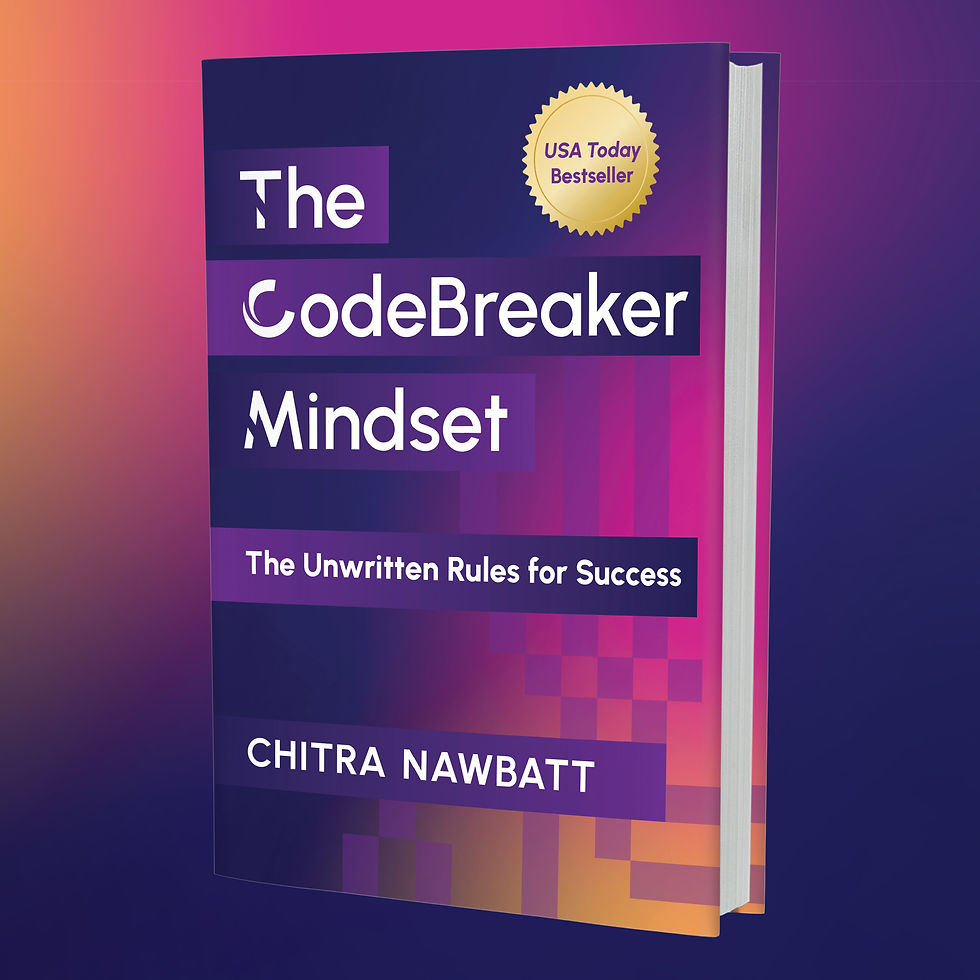
The CodeBreaker Mindset™ Ft. Michelle Peluso, Revlon, CEO and Nike, Board Member


In this conversation, Michelle Peluso, CEO of Revlon, shares her journey from consulting to becoming a four-time CEO, emphasizing the importance of curiosity, leadership philosophy, and the intersection of technology and consumer needs. She discusses her approach to navigating board relationships, making industry pivots, and modernizing iconic brands like Revlon. Michelle highlights the significance of combining data with serendipity in decision-making and the importance of understanding outliers in trend spotting. Finally, she offers insights on cultivating The CodeBreaker Mindset™ to challenge norms and drive innovation.
Chapters
00:00 From Consulting to CEO: A Journey of Transformation
03:01 Leadership Philosophy: The Rules of the Game
06:02 Navigating Board Relationships: Insights from Experience
09:01 Pivots in Industry: Adapting Across Diverse Sectors
11:57 Modernizing Revlon: A New Era for Iconic Brands
14:55 The Intersection of Data and Serendipity
17:53 Understanding Outliers: Trend Spotting for the Future
19:02 Cultivating The CodeBreaker Mindset™
Episode Resources
Michelle Peluso | Bio
Chitra Nawbatt | Bio
The CodeBreaker Mindset™ book order here: Amazon | Barnes & Noble
The CodeBreaker Mindset™ Ft. Michelle Peluso, Revlon, CEO and Nike, Board Member
Chitra Nawbatt (00:10)
Welcome to The CodeBreaker Mindset™, where leaders and influencers share the rules, pivots, and serendipity to achieving goals and dreams. I'm your host, Chitra Nawbatt. Joining us today is Michelle Peluso, the CEO of Revlon. Michelle, welcome. Thank you for joining us.
Michelle Peluso (00:28)
Hi Chitra. Great to see you.
Chitra Nawbatt (00:32)
Michelle. I'm grateful to have known you for more than a decade. We had an amazing first interview when you were CEO of Gilt Group in 2015. After Gilt. You became the chief marketing officer of IBM and led digital sales. Then the chief customer experience officer at CVS Health. Earlier in your career, you had leadership roles at Citigroup. You were CEO of Travelocity.
Chitra Nawbatt (00:54)
Boston Consulting Group is where you started your career as a consultant. Take us through your journey from consulting to becoming a full time CEO.
Michelle Peluso (01:05)
Well, it really started with my parents. My dad was an entrepreneur and was passionate about business, and so I grew up watching this amazing entrepreneurial father and a schoolteacher mom. And that was really the beginning of the inspiration to be in the business world. I have always been at the intersection of technology and especially digital trends, and now, of course, cloud and AI and everything else and consumer.
Michelle Peluso (01:30)
And so every time industries have started to remake themselves with technology and the consumer, I have found myself at the intersection of that.
Chitra Nawbatt (01:40)
How did you make each of those pivots, though, from consulting to financial services, then the CEO suite and from company industry to industry?
Michelle Peluso (01:50)
Yeah. Well, I think when you move from industry to industry, one of the most important things is just incredible curiosity, right? And having the sort of knowing digital knowing, you know, marketing and consumer trends, but then having this great curiosity about learning new industries. I started my career as a consultant, when I was at the white House, as a white House fellow.
Michelle Peluso (02:14)
I was going to go back to BCG, but again, inspired by my entrepreneurial father and the beginning of the digital revolution. I really felt like it was a great time to start my own company, so called BCG and said, I'm sorry, I'm not going to come back. I'm going to start my own thing. Actually, they were thinking of new business ideas to take advantage of the technology.
Michelle Peluso (02:35)
You know, it's starting to become more and more prevalent with with the internet. And they said, well, listen, why don't you come back and brainstorm with us if there's a great idea we have together, we will give you the seed money to go ahead and start that company. So it was an incredible entree into the world of digital.
Michelle Peluso (02:51)
That started site 59, which was then acquired by Travelocity, which is how I really started and moved from consulting over to to industry.
Chitra Nawbatt (03:01)
Let's get into the rules of the game. What are the most important written and unwritten rules that you discovered on how to succeed and endure in being a CEO, since you've done it four times now?
The Rules of the Game
Michelle Peluso (03:15)
Yeah, well, you know, it's funny, a couple of years ago, my CEO at the time, Karen Lynn, CEO of CVS health, asked us to write our leadership philosophy. And for me, for someone who is so passionate about leadership and culture, it was a very hard exercise. Because how do you really crystallize all your experience into a leadership philosophy?
Michelle Peluso (03:35)
And so I wrote it and rewrote it and scrubbed it and ripped it up and redid it and edited it. And in the end, I landed on some really core principles that I think make CEOs successful. So just to review a few of them, the first one is really knowing your Northstar. I think great CEOs, but great leaders in general, their teams know what is it that their North Star is?
Michelle Peluso (03:58)
For me, that's the consumer. It's always been the consumer. And so when I'm in meetings, when I'm in discussions, you always see me starting with what is that consumer experience? How is that different? How can we make it better? What are consumers really want need? If we get past that, we can get to the financials and the operations and the talent required and the investments required.
Michelle Peluso (04:17)
But I'm always grounded in what is that consumer experience and how do we uniquely make a difference in ways that that matter to her? The second for me is leading for the betterment of others. I've always been team obsessed. Watching my dad, put such an emphasis on his people and culture, helped instill in me a deep appreciation for talent and for creating the culture that people can do their best work leading for the betterment of others, not for you, for the betterment of others.
Michelle Peluso (04:46)
That's always been a second principle, and I remember seeing that phrase carved on a wallet at a West Point, and it really struck me as powerful. The third thing for me is sort of what I referenced earlier. Satya Nadella had a quote or has a quote that I've always loved, which is you learn it all, how to know it all and to succeed in multiple industries when you and when you get to the top, you don't know, you know, 90% of what's going on in the company.
Michelle Peluso (05:14)
You really don't know. You're not an expert in a lot of things, but what you have to have is just curiosity is learning agility to make sure you're bringing out the best. You're asking the right questions from your team. And as I've gone from industry to industry, that constant learning has been at the forefront of my leadership philosophy.
Michelle Peluso (05:32)
The fourth is be bold and edit to amplify. That's so critical. There's always by the time things get to you, they're good ideas. Your job is to really help make sure that you're editing down the list of things you possibly could do to the things that can have the biggest impact. And so that's the fourth. And then finally and perhaps, you know, in many ways, most importantly, play with joy.
Michelle Peluso (05:55)
You know, things are never as bad as they seem when they're bad, and they're also never as good as they seem when they're good. And so this notion of cultivating joy and, and making sure that you're creating an environment where people, you know, feel like they can be themselves and they feel certainly like, like they're playing with joy, I think is really critical.
Chitra Nawbatt (06:12)
How does that play into the boardroom? Because being a CEO and executive, you've had to deal with boards of directors, you've been on the public, you've been on a public company board, Nike, for more than a decade. So talk about your pattern recognition of the written and unwritten rules in building productive relationships with boards.
Michelle Peluso (06:32)
Well, first of all, you know, it's really critical that you have alignment with the board, as a management team and as a CEO on objectives, priorities and scorecard. And people skip over that sometimes. I've seen CEOs fail when they're, sort of always changing what they're reporting to the board. I think getting, you know, spending the time upfront to be really crystal clear on what defines success, what are the most important things we're we're aiming to achieve as a company?
Michelle Peluso (06:58)
And how are we measuring ourselves? How do we know whether we're tracking or not? That's critical. If you don't have alignment with the board and that, you know, it creates a lot of uncomfortable conversations online. The second thing I think is incredible transparency. You know, my job is not to show and tell for the board. My job is to really transparently share how we're doing, what things are going well, but also what are the things aren't going well and what are we doing about it?
Michelle Peluso (07:22)
I think boards appreciate transparency and honesty. Of course, confidence and of course solution orientation. But transparency and honesty about, you know, what's working in that. Third, I think is always really critical to have an external perspective, because the board does. And so, you know, when you're having board conversations, it's not just about what your company's doing, but what's the industry context, what competitors are doing a better job than we are?
Michelle Peluso (07:45)
Where are we winning or losing? Not by our own scorecard, but the kind of by by external scorecard too. So I think I think that's critical. And I think, you know, just constant communication. I mean, I think boards are structured to meet 4 or 5 times a year, but far better to be sending kind of regular notes in between, updates positive and negative, so that the board feels, feels really confident in what you're doing.
Michelle Peluso (08:13)
And maybe last but not least, use the board. Use the board. I think some CEOs almost feel like the board is like this obligation like check the box obligation on governance. If you really understand each of your different board members true skills, there's so many ways that they can lean in on mentoring and supporting your best people help you make talent decisions by interview.
Michelle Peluso (08:35)
You know, interviewing around candidates, introduce you to people that could help your business, share with you things they're seeing in other boardrooms and other geographies that could be headlights for you in terms of what you're navigating as well. Help you think through your biggest, you know, sort of toughest problems. So I think using the board effectively is also really important.
Chitra Nawbatt (09:00)
With everything that you've just described. There are a lot of pivots, involved in that. So let's get into the pivots. How did you make the pivots through the different industries and the different functions? Because you're a diverse multi industry multi-functional executive. So many industries financial services, tech, travel, fashion, beauty, consumer retail, so many. And then on the functional side, strategy, marketing, sales CEO how did you make those pivots industry wise functionally.
The Pivots
Michelle Peluso (09:35)
Yeah. Well I think, you know, knowing what you really are good at and what your core strength is, and then sort of learning and surround yourself with people who are. And so for me, my core strength has always been consumer and tech. I mean, really, it's the intersection of consumer tech that is defined my career. I was fortunate to start at the beginning of kind of the real internet revolution, and so I was fortunate to build the skill set both in terms of the substance.
Michelle Peluso (09:59)
But but even as it pivoted as search engines and mobile and social and all these pivots, you know, I've been at the forefront of those areas in the tech perspective. And I've always been really consumer obsessed. And so that's my brand. And you know, then the question is, well, how does that brand translate into different industries? And, you know, the reality is you talked about it fashion, finance, retail, all of them, just like travel, have gone through this kind of reckoning of like what is new technology and really deeply understanding the consumer mean for the transformation of my industry.
Michelle Peluso (10:33)
Nobody has been left, you know, untouched by digitization, by, you know, social, mobile and now by AI. And so having this core strength of I can do pattern recognition. And I can see often, you know, around the corners on how companies need to think about technology and consumer. But at the same time, the second really important thing is like, I have a lot of humility about what I don't know, I'm not an expert in healthcare insurance, right?
Michelle Peluso (11:00)
I'm not an expert. And I never was in sort of thinking about credit card financing or risk based decisions. So the combination of here's what I know and here's what I bring to the table with, here's what I don't know. Here's what I have to learn. Here's what we need to surround me with for me to be successful.
Michelle Peluso (11:15)
I think that's been very transparent for the companies. You know, I've had the and the amazing CEOs I've had the privilege to work with. And then last but not least, every company is different. Every company's culture is different. And so I have tried to be a student of culture. I mean, there's things that I hold dear, there's principles I hold dear.
Michelle Peluso (11:33)
But when you walk into a new place, having that learning agility, not just on the substance of the industry, but on what makes the company work, what makes the culture work, what motivates people? Why do people come to this company which the unwritten cultural rules of the company? I've tried to be a really, you know, always a very artful student of that as well.
Chitra Nawbatt (11:57)
Getting into the pivots of business. You talked about, you know, part of your brand being, you know, very consumer oriented voice of the customer. Also, too, there's a there's a pattern and a theme of transformation throughout your journey. Talk about how you go about pivoting businesses and maybe talk about Revlon in terms of giving us a little bit of the context of the situation that you've inherited, the dynamic and how you are now going about pivoting this business.
Michelle Peluso (12:22)
Yeah, well, I'm super excited to be here at Revlon. And these brands are amazing, storied brands. And, you know, whether it's Elizabeth Arden, over 118 years old, founded by an immigrant without a formal education of one of the first female powerhouses in the business world, to the Revlon brands alma, American crew creme of nature like these are really storied brands with incredible histories.
Michelle Peluso (12:44)
And for me, the opportunity. But but what do they need? They need, you know, modernization. They need kind of how is tech and digital and omnichannel affecting? What is the next generation of these brands? That is my sweet spot. That's so when, you know, when the call came on Revlon and you think you know it, it's brands.
Michelle Peluso (13:05)
I absolutely love, products I adore, very popular at home with teenage kids. When you're working at Revlon, in New York City, you can see it behind me here. But, you know, a city that that I deeply love, that that's kind of exciting. That's, actually, I think you see Brooklyn behind me technically. But, that's that's pretty exciting to be in an industry that is so creative with products and brands that have such storied, rich history that I love.
Michelle Peluso (13:33)
But to be the person asked to bring these brands forward to really modernize, you know, Revlon went through bankruptcy. So there was a bunch of years where there was just a total lack of investment. And so I have the wonderful, you know, advantage with the amazing new board and through the bankruptcy to kind of help steer the ship and revitalize these brands for generations to come.
Chitra Nawbatt (13:56)
Take us into this modernization journey, give us a little bit of tangible, tangible areas of of what you're working on.
Michelle Peluso (14:04)
Yeah. Well, I mean, it always starts with the consumer in every industry. And I think what's exciting is and we operate everywhere in the world, what's exciting is about the consumers needs are changing really rapidly. You see that in terms of how she's getting educated about beauty products, how she's trying beauty products. And so we have been doing a lot of work to really reignite our passion for the consumer, our ability to learn, you know, and to spot and understand trends.
Michelle Peluso (14:29)
Secondly, it's about innovation with scale. So we have been reducing the R&D pipeline. With the kind of what we believe the next generation of innovation needs to be across our portfolio hair, fragrance, skincare and color cosmetics. So a lot of work happening. There. Third, of course, it's about omnichannel. And I mean, I think we have historically been very focused on physical which which is will always be critical, but making sure that we're truly showing up in ways in sort of an omni world for digital and physical is very top of mind for us.
Michelle Peluso (15:04)
And then as you would expect, there's a bunch of programs that we think can transform our cost structure or transform, you know, use technology or data in AI and new ways to be a more efficient, effective organization. But most importantly, it's about the team making sure we revive kind of the culture and the talent and the passion for winning across the team.
Chitra Nawbatt (15:24)
Let's get into the magic. How do you define, serendipity and intuition?
The Magic
Michelle Peluso (15:32)
Yeah, it's a great question because, you know, there's so much data and that's always incredibly important. But then at some point, you just have to feel your way through things too, right? You leverage the data and maybe they give you a good example. We've been looking a lot at the alma brand, which is, you know, this incredible brand that's been around since the 1930s, I believe.
Michelle Peluso (15:53)
But has been a long time since there's been much energy and investment behind your brand. From a data perspective, we see that there's, you know, big opportunity in that kind of skin. First, makeup, clean makeup that doesn't exist at mass exists and prestige doesn't exist. Mass. And then we go back to the archives. And this is where the kind of magic and serendipity comes in.
Michelle Peluso (16:14)
And it turns out we find an ad from alma in the 1960s all about how alma was the first brand to never put in that era, 55 leading, you know, leading things that other makeup cosmetic companies put into, but that alma deemed not good for your skin. And so you, you sort of have this magical moment where we've done all the research we've done, we know what consumers want, and then we go back to the archive.
Michelle Peluso (16:41)
And here, you know, with a lot of serendipity, it's like, well, here's some of the things I've always done. Now, how do you modernize that and make it relevant now? But the history of being kind of a skin first brand, sensitive skin brand, a clean brand, you know, that's all the way back in our roots. And so that's sometimes when you can take data and serendipity and kind of magic and bring them together and come up with something powerful.
Chitra Nawbatt (17:04)
Well, on that point of, taking data and serendipity and bringing them together, that actually gets into a little bit of an outliers, this concept of outliers, because that brand in the 1960s was then very much an outlier. Do you study outliers and how do you think about outliers, studying the patterns of outliers that potentially becoming the norm over time until the next outlier?
Michelle Peluso (17:27)
What's a fascinating question? I mean, you're really talking in some ways about trend spotting, right. And and do how do you understand when an outlier just an outlier versus the outliers, the start of something more important. And so, it's a great question. And I think, you know, there's no doubt that so many things, if I looked back five years before something became a big deal, you know, the signs were there, the, the, and so that was true in social.
Michelle Peluso (17:55)
I remember like the very, very early days of my space, you know, and and you're like something about that. It was so Nathan. So beginning. But something about that concept felt very powerful. We all remember, you know, of course, the early days of I was at IBM and, you know, when, when, and I remember, you know, in the archives you're looking when I be watching beat jeopardy, which is before my time, but a real seminal moment for the country in terms of.
Michelle Peluso (18:23)
But it took what's that? 20 years now before I starting to kind of hit the mainstream, you know. And so, I don't know, I think it's it's a very fascinating question. I don't think I have a perfect answer, but I think just being open to and curious about those things that, that that could potentially be very disruptive, you know, and I think that's probably one of the more important things when you're thinking about outliers, you really want to be focused on the things that can be truly disruptive, truly change the game, right?
Michelle Peluso (18:54)
Truly break the rules as you know it. Those are the things that, you know, we probably want to spend more attention to, you know, time with as leaders.
Chitra Nawbatt (19:02)
And bringing in this all bringing this all together. We've talked a little bit about the rules of the game, the pivots, the magic, all of this being a part of The CodeBreaker Mindset™. What's your take? What's your take on The CodeBreaker Mindset™?
Michelle Peluso (19:15)
Yeah. Well great question. First of all, it's fun to see you doing all this to try. It's fun to see how, how here you're always bringing kind of the conversation to a new place. Look, I think the, the, it comes together exactly as you said. When you think about the people who have redefined the rules of the world, which is really sort of what The CodeBreaker Mindset™ is, who are the people who have redefined the rules?
Michelle Peluso (19:36)
The world. It is that fascinating mix of of data and serendipity and, and, you know, kind of magic. But but I hope for my career that with a CodeBreaker Mindset™ always means for me is giving myself the space and the people around me to challenge the norms, to challenge conventions and think ahead, to never get to the stack in what we're doing today and the success we're having today.
Michelle Peluso (19:59)
To not be thinking about how to disrupt the future. Really, that's the critical piece for me.
Chitra Nawbatt (20:05)
And finally, what's your advice on how to cultivate The CodeBreaker Mindset™?
Michelle Peluso (20:10)
Well, I think it's a lot about how you use your time, right? I think it's so easy to get caught up in the day to day. It's so easy to feel like, you know, oh my gosh, I had this incredibly full day. I had, you know, meetings all day long. And then I went home and I had the kids and the husband and the, you know, the sort of board that I'm on, the community that I'm doing and checking in with my family and friends, I think the question becomes, you know, how do you make sure you're cultivating the time and the network and the reading?
Michelle Peluso (20:38)
You know, whatever it takes to put yourself in the space of the future, to put yourself in the space of being a disruptor. And that can happen in the meetings you're in every day, just taking some space to ask the question how might we be wrong? You know, how might technology fundamentally change the way we perceive supply chain today?
Michelle Peluso (20:56)
Or, you know, forward loading inventory today? Or it might be in bigger moments where you, you know, cultivate a few hours out of the day job to bring a futurist and or to bring somebody who thinks about the world really differently to kind of talk to you in the team. So but I do think it's, it's it's the mindset.
Michelle Peluso (21:13)
It's the time. And it's the kind of networking learning that helps you make sure you're always future proofing your own career, your own company.
Chitra Nawbatt (21:22)
Michelle, thank you so much for joining us.
Michelle Peluso (21:26)
Great to see you. Great to see you. Take care.
Chitra Nawbatt (21:29)
Thank you for supporting The CodeBreaker Mindset™. For more episodes, go to
www.ChitraNawbatt.com to like and subscribe. Connect with me on social media
@ChitraNawbatt.
The CodeBreaker Mindset™ Ft. Michelle Peluso, Revlon, CEO and Nike, Board Member
Chitra Nawbatt (00:10)
Welcome to The CodeBreaker Mindset™, where leaders and influencers share the rules, pivots, and serendipity to achieving goals and dreams. I'm your host, Chitra Nawbatt. Joining us today is Michelle Peluso, the CEO of Revlon. Michelle, welcome. Thank you for joining us.
Michelle Peluso (00:28)
Hi Chitra. Great to see you.
Chitra Nawbatt (00:32)
Michelle. I'm grateful to have known you for more than a decade. We had an amazing first interview when you were CEO of Gilt Group in 2015. After Gilt. You became the chief marketing officer of IBM and led digital sales. Then the chief customer experience officer at CVS Health. Earlier in your career, you had leadership roles at Citigroup. You were CEO of Travelocity.
Chitra Nawbatt (00:54)
Boston Consulting Group is where you started your career as a consultant. Take us through your journey from consulting to becoming a full time CEO.
Michelle Peluso (01:05)
Well, it really started with my parents. My dad was an entrepreneur and was passionate about business, and so I grew up watching this amazing entrepreneurial father and a schoolteacher mom. And that was really the beginning of the inspiration to be in the business world. I have always been at the intersection of technology and especially digital trends, and now, of course, cloud and AI and everything else and consumer.
Michelle Peluso (01:30)
And so every time industries have started to remake themselves with technology and the consumer, I have found myself at the intersection of that.
Chitra Nawbatt (01:40)
How did you make each of those pivots, though, from consulting to financial services, then the CEO suite and from company industry to industry?
Michelle Peluso (01:50)
Yeah. Well, I think when you move from industry to industry, one of the most important things is just incredible curiosity, right? And having the sort of knowing digital knowing, you know, marketing and consumer trends, but then having this great curiosity about learning new industries. I started my career as a consultant, when I was at the white House, as a white House fellow.
Michelle Peluso (02:14)
I was going to go back to BCG, but again, inspired by my entrepreneurial father and the beginning of the digital revolution. I really felt like it was a great time to start my own company, so called BCG and said, I'm sorry, I'm not going to come back. I'm going to start my own thing. Actually, they were thinking of new business ideas to take advantage of the technology.
Michelle Peluso (02:35)
You know, it's starting to become more and more prevalent with with the internet. And they said, well, listen, why don't you come back and brainstorm with us if there's a great idea we have together, we will give you the seed money to go ahead and start that company. So it was an incredible entree into the world of digital.
Michelle Peluso (02:51)
That started site 59, which was then acquired by Travelocity, which is how I really started and moved from consulting over to to industry.
Chitra Nawbatt (03:01)
Let's get into the rules of the game. What are the most important written and unwritten rules that you discovered on how to succeed and endure in being a CEO, since you've done it four times now?
The Rules of the Game
Michelle Peluso (03:15)
Yeah, well, you know, it's funny, a couple of years ago, my CEO at the time, Karen Lynn, CEO of CVS health, asked us to write our leadership philosophy. And for me, for someone who is so passionate about leadership and culture, it was a very hard exercise. Because how do you really crystallize all your experience into a leadership philosophy?
Michelle Peluso (03:35)
And so I wrote it and rewrote it and scrubbed it and ripped it up and redid it and edited it. And in the end, I landed on some really core principles that I think make CEOs successful. So just to review a few of them, the first one is really knowing your Northstar. I think great CEOs, but great leaders in general, their teams know what is it that their North Star is?
Michelle Peluso (03:58)
For me, that's the consumer. It's always been the consumer. And so when I'm in meetings, when I'm in discussions, you always see me starting with what is that consumer experience? How is that different? How can we make it better? What are consumers really want need? If we get past that, we can get to the financials and the operations and the talent required and the investments required.
Michelle Peluso (04:17)
But I'm always grounded in what is that consumer experience and how do we uniquely make a difference in ways that that matter to her? The second for me is leading for the betterment of others. I've always been team obsessed. Watching my dad, put such an emphasis on his people and culture, helped instill in me a deep appreciation for talent and for creating the culture that people can do their best work leading for the betterment of others, not for you, for the betterment of others.
Michelle Peluso (04:46)
That's always been a second principle, and I remember seeing that phrase carved on a wallet at a West Point, and it really struck me as powerful. The third thing for me is sort of what I referenced earlier. Satya Nadella had a quote or has a quote that I've always loved, which is you learn it all, how to know it all and to succeed in multiple industries when you and when you get to the top, you don't know, you know, 90% of what's going on in the company.
Michelle Peluso (05:14)
You really don't know. You're not an expert in a lot of things, but what you have to have is just curiosity is learning agility to make sure you're bringing out the best. You're asking the right questions from your team. And as I've gone from industry to industry, that constant learning has been at the forefront of my leadership philosophy.
Michelle Peluso (05:32)
The fourth is be bold and edit to amplify. That's so critical. There's always by the time things get to you, they're good ideas. Your job is to really help make sure that you're editing down the list of things you possibly could do to the things that can have the biggest impact. And so that's the fourth. And then finally and perhaps, you know, in many ways, most importantly, play with joy.
Michelle Peluso (05:55)
You know, things are never as bad as they seem when they're bad, and they're also never as good as they seem when they're good. And so this notion of cultivating joy and, and making sure that you're creating an environment where people, you know, feel like they can be themselves and they feel certainly like, like they're playing with joy, I think is really critical.
Chitra Nawbatt (06:12)
How does that play into the boardroom? Because being a CEO and executive, you've had to deal with boards of directors, you've been on the public, you've been on a public company board, Nike, for more than a decade. So talk about your pattern recognition of the written and unwritten rules in building productive relationships with boards.
Michelle Peluso (06:32)
Well, first of all, you know, it's really critical that you have alignment with the board, as a management team and as a CEO on objectives, priorities and scorecard. And people skip over that sometimes. I've seen CEOs fail when they're, sort of always changing what they're reporting to the board. I think getting, you know, spending the time upfront to be really crystal clear on what defines success, what are the most important things we're we're aiming to achieve as a company?
Michelle Peluso (06:58)
And how are we measuring ourselves? How do we know whether we're tracking or not? That's critical. If you don't have alignment with the board and that, you know, it creates a lot of uncomfortable conversations online. The second thing I think is incredible transparency. You know, my job is not to show and tell for the board. My job is to really transparently share how we're doing, what things are going well, but also what are the things aren't going well and what are we doing about it?
Michelle Peluso (07:22)
I think boards appreciate transparency and honesty. Of course, confidence and of course solution orientation. But transparency and honesty about, you know, what's working in that. Third, I think is always really critical to have an external perspective, because the board does. And so, you know, when you're having board conversations, it's not just about what your company's doing, but what's the industry context, what competitors are doing a better job than we are?
Michelle Peluso (07:45)
Where are we winning or losing? Not by our own scorecard, but the kind of by by external scorecard too. So I think I think that's critical. And I think, you know, just constant communication. I mean, I think boards are structured to meet 4 or 5 times a year, but far better to be sending kind of regular notes in between, updates positive and negative, so that the board feels, feels really confident in what you're doing.
Michelle Peluso (08:13)
And maybe last but not least, use the board. Use the board. I think some CEOs almost feel like the board is like this obligation like check the box obligation on governance. If you really understand each of your different board members true skills, there's so many ways that they can lean in on mentoring and supporting your best people help you make talent decisions by interview.
Michelle Peluso (08:35)
You know, interviewing around candidates, introduce you to people that could help your business, share with you things they're seeing in other boardrooms and other geographies that could be headlights for you in terms of what you're navigating as well. Help you think through your biggest, you know, sort of toughest problems. So I think using the board effectively is also really important.
Chitra Nawbatt (09:00)
With everything that you've just described. There are a lot of pivots, involved in that. So let's get into the pivots. How did you make the pivots through the different industries and the different functions? Because you're a diverse multi industry multi-functional executive. So many industries financial services, tech, travel, fashion, beauty, consumer retail, so many. And then on the functional side, strategy, marketing, sales CEO how did you make those pivots industry wise functionally.
The Pivots
Michelle Peluso (09:35)
Yeah. Well I think, you know, knowing what you really are good at and what your core strength is, and then sort of learning and surround yourself with people who are. And so for me, my core strength has always been consumer and tech. I mean, really, it's the intersection of consumer tech that is defined my career. I was fortunate to start at the beginning of kind of the real internet revolution, and so I was fortunate to build the skill set both in terms of the substance.
Michelle Peluso (09:59)
But but even as it pivoted as search engines and mobile and social and all these pivots, you know, I've been at the forefront of those areas in the tech perspective. And I've always been really consumer obsessed. And so that's my brand. And you know, then the question is, well, how does that brand translate into different industries? And, you know, the reality is you talked about it fashion, finance, retail, all of them, just like travel, have gone through this kind of reckoning of like what is new technology and really deeply understanding the consumer mean for the transformation of my industry.
Michelle Peluso (10:33)
Nobody has been left, you know, untouched by digitization, by, you know, social, mobile and now by AI. And so having this core strength of I can do pattern recognition. And I can see often, you know, around the corners on how companies need to think about technology and consumer. But at the same time, the second really important thing is like, I have a lot of humility about what I don't know, I'm not an expert in healthcare insurance, right?
Michelle Peluso (11:00)
I'm not an expert. And I never was in sort of thinking about credit card financing or risk based decisions. So the combination of here's what I know and here's what I bring to the table with, here's what I don't know. Here's what I have to learn. Here's what we need to surround me with for me to be successful.
Michelle Peluso (11:15)
I think that's been very transparent for the companies. You know, I've had the and the amazing CEOs I've had the privilege to work with. And then last but not least, every company is different. Every company's culture is different. And so I have tried to be a student of culture. I mean, there's things that I hold dear, there's principles I hold dear.
Michelle Peluso (11:33)
But when you walk into a new place, having that learning agility, not just on the substance of the industry, but on what makes the company work, what makes the culture work, what motivates people? Why do people come to this company which the unwritten cultural rules of the company? I've tried to be a really, you know, always a very artful student of that as well.
Chitra Nawbatt (11:57)
Getting into the pivots of business. You talked about, you know, part of your brand being, you know, very consumer oriented voice of the customer. Also, too, there's a there's a pattern and a theme of transformation throughout your journey. Talk about how you go about pivoting businesses and maybe talk about Revlon in terms of giving us a little bit of the context of the situation that you've inherited, the dynamic and how you are now going about pivoting this business.
Michelle Peluso (12:22)
Yeah, well, I'm super excited to be here at Revlon. And these brands are amazing, storied brands. And, you know, whether it's Elizabeth Arden, over 118 years old, founded by an immigrant without a formal education of one of the first female powerhouses in the business world, to the Revlon brands alma, American crew creme of nature like these are really storied brands with incredible histories.
Michelle Peluso (12:44)
And for me, the opportunity. But but what do they need? They need, you know, modernization. They need kind of how is tech and digital and omnichannel affecting? What is the next generation of these brands? That is my sweet spot. That's so when, you know, when the call came on Revlon and you think you know it, it's brands.
Michelle Peluso (13:05)
I absolutely love, products I adore, very popular at home with teenage kids. When you're working at Revlon, in New York City, you can see it behind me here. But, you know, a city that that I deeply love, that that's kind of exciting. That's, actually, I think you see Brooklyn behind me technically. But, that's that's pretty exciting to be in an industry that is so creative with products and brands that have such storied, rich history that I love.
Michelle Peluso (13:33)
But to be the person asked to bring these brands forward to really modernize, you know, Revlon went through bankruptcy. So there was a bunch of years where there was just a total lack of investment. And so I have the wonderful, you know, advantage with the amazing new board and through the bankruptcy to kind of help steer the ship and revitalize these brands for generations to come.
Chitra Nawbatt (13:56)
Take us into this modernization journey, give us a little bit of tangible, tangible areas of of what you're working on.
Michelle Peluso (14:04)
Yeah. Well, I mean, it always starts with the consumer in every industry. And I think what's exciting is and we operate everywhere in the world, what's exciting is about the consumers needs are changing really rapidly. You see that in terms of how she's getting educated about beauty products, how she's trying beauty products. And so we have been doing a lot of work to really reignite our passion for the consumer, our ability to learn, you know, and to spot and understand trends.
Michelle Peluso (14:29)
Secondly, it's about innovation with scale. So we have been reducing the R&D pipeline. With the kind of what we believe the next generation of innovation needs to be across our portfolio hair, fragrance, skincare and color cosmetics. So a lot of work happening. There. Third, of course, it's about omnichannel. And I mean, I think we have historically been very focused on physical which which is will always be critical, but making sure that we're truly showing up in ways in sort of an omni world for digital and physical is very top of mind for us.
Michelle Peluso (15:04)
And then as you would expect, there's a bunch of programs that we think can transform our cost structure or transform, you know, use technology or data in AI and new ways to be a more efficient, effective organization. But most importantly, it's about the team making sure we revive kind of the culture and the talent and the passion for winning across the team.
Chitra Nawbatt (15:24)
Let's get into the magic. How do you define, serendipity and intuition?
The Magic
Michelle Peluso (15:32)
Yeah, it's a great question because, you know, there's so much data and that's always incredibly important. But then at some point, you just have to feel your way through things too, right? You leverage the data and maybe they give you a good example. We've been looking a lot at the alma brand, which is, you know, this incredible brand that's been around since the 1930s, I believe.
Michelle Peluso (15:53)
But has been a long time since there's been much energy and investment behind your brand. From a data perspective, we see that there's, you know, big opportunity in that kind of skin. First, makeup, clean makeup that doesn't exist at mass exists and prestige doesn't exist. Mass. And then we go back to the archives. And this is where the kind of magic and serendipity comes in.
Michelle Peluso (16:14)
And it turns out we find an ad from alma in the 1960s all about how alma was the first brand to never put in that era, 55 leading, you know, leading things that other makeup cosmetic companies put into, but that alma deemed not good for your skin. And so you, you sort of have this magical moment where we've done all the research we've done, we know what consumers want, and then we go back to the archive.
Michelle Peluso (16:41)
And here, you know, with a lot of serendipity, it's like, well, here's some of the things I've always done. Now, how do you modernize that and make it relevant now? But the history of being kind of a skin first brand, sensitive skin brand, a clean brand, you know, that's all the way back in our roots. And so that's sometimes when you can take data and serendipity and kind of magic and bring them together and come up with something powerful.
Chitra Nawbatt (17:04)
Well, on that point of, taking data and serendipity and bringing them together, that actually gets into a little bit of an outliers, this concept of outliers, because that brand in the 1960s was then very much an outlier. Do you study outliers and how do you think about outliers, studying the patterns of outliers that potentially becoming the norm over time until the next outlier?
Michelle Peluso (17:27)
What's a fascinating question? I mean, you're really talking in some ways about trend spotting, right. And and do how do you understand when an outlier just an outlier versus the outliers, the start of something more important. And so, it's a great question. And I think, you know, there's no doubt that so many things, if I looked back five years before something became a big deal, you know, the signs were there, the, the, and so that was true in social.
Michelle Peluso (17:55)
I remember like the very, very early days of my space, you know, and and you're like something about that. It was so Nathan. So beginning. But something about that concept felt very powerful. We all remember, you know, of course, the early days of I was at IBM and, you know, when, when, and I remember, you know, in the archives you're looking when I be watching beat jeopardy, which is before my time, but a real seminal moment for the country in terms of.
Michelle Peluso (18:23)
But it took what's that? 20 years now before I starting to kind of hit the mainstream, you know. And so, I don't know, I think it's it's a very fascinating question. I don't think I have a perfect answer, but I think just being open to and curious about those things that, that that could potentially be very disruptive, you know, and I think that's probably one of the more important things when you're thinking about outliers, you really want to be focused on the things that can be truly disruptive, truly change the game, right?
Michelle Peluso (18:54)
Truly break the rules as you know it. Those are the things that, you know, we probably want to spend more attention to, you know, time with as leaders.
Chitra Nawbatt (19:02)
And bringing in this all bringing this all together. We've talked a little bit about the rules of the game, the pivots, the magic, all of this being a part of The CodeBreaker Mindset™. What's your take? What's your take on The CodeBreaker Mindset™?
Michelle Peluso (19:15)
Yeah. Well great question. First of all, it's fun to see you doing all this to try. It's fun to see how, how here you're always bringing kind of the conversation to a new place. Look, I think the, the, it comes together exactly as you said. When you think about the people who have redefined the rules of the world, which is really sort of what The CodeBreaker Mindset™ is, who are the people who have redefined the rules?
Michelle Peluso (19:36)
The world. It is that fascinating mix of of data and serendipity and, and, you know, kind of magic. But but I hope for my career that with a CodeBreaker Mindset™ always means for me is giving myself the space and the people around me to challenge the norms, to challenge conventions and think ahead, to never get to the stack in what we're doing today and the success we're having today.
Michelle Peluso (19:59)
To not be thinking about how to disrupt the future. Really, that's the critical piece for me.
Chitra Nawbatt (20:05)
And finally, what's your advice on how to cultivate The CodeBreaker Mindset™?
Michelle Peluso (20:10)
Well, I think it's a lot about how you use your time, right? I think it's so easy to get caught up in the day to day. It's so easy to feel like, you know, oh my gosh, I had this incredibly full day. I had, you know, meetings all day long. And then I went home and I had the kids and the husband and the, you know, the sort of board that I'm on, the community that I'm doing and checking in with my family and friends, I think the question becomes, you know, how do you make sure you're cultivating the time and the network and the reading?
Michelle Peluso (20:38)
You know, whatever it takes to put yourself in the space of the future, to put yourself in the space of being a disruptor. And that can happen in the meetings you're in every day, just taking some space to ask the question how might we be wrong? You know, how might technology fundamentally change the way we perceive supply chain today?
Michelle Peluso (20:56)
Or, you know, forward loading inventory today? Or it might be in bigger moments where you, you know, cultivate a few hours out of the day job to bring a futurist and or to bring somebody who thinks about the world really differently to kind of talk to you in the team. So but I do think it's, it's it's the mindset.
Michelle Peluso (21:13)
It's the time. And it's the kind of networking learning that helps you make sure you're always future proofing your own career, your own company.
Chitra Nawbatt (21:22)
Michelle, thank you so much for joining us.
Michelle Peluso (21:26)
Great to see you. Great to see you. Take care.
Chitra Nawbatt (21:29)
Thank you for supporting The CodeBreaker Mindset™. For more episodes, go to
www.ChitraNawbatt.com to like and subscribe. Connect with me on social media
@ChitraNawbatt.
Disclaimer: the show notes and transcript are powered by artificial intelligence (AI).
Featured Episodes and Insights