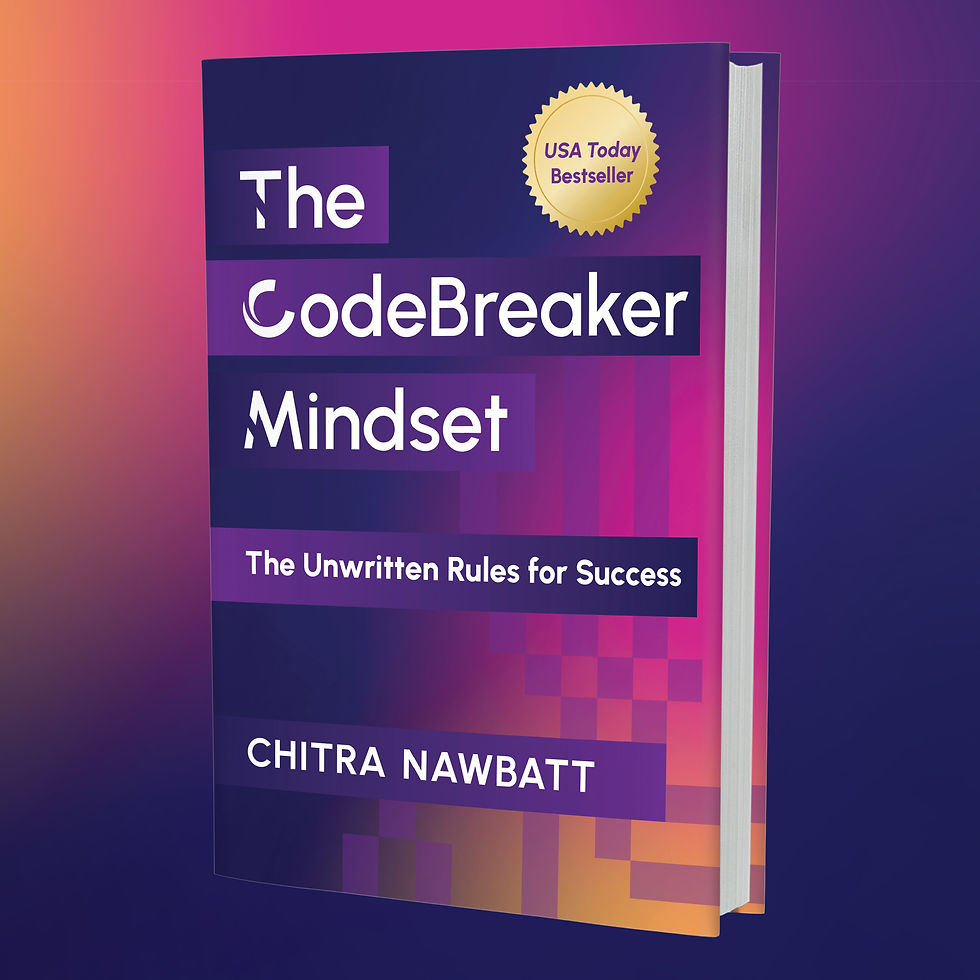
The CodeBreaker Mindset™ Ft. Paxton Baker, Washington Nationals Founding Partners Group, Chairman


In this conversation, Paxton Baker shares his journey from media and entertainment to becoming a significant figure in sports ownership, particularly with the Washington Nationals. He discusses the importance of relationships, the challenges of managing a sports team, and the strategies he employs for risk mitigation and investment. Baker emphasizes the need for passion in one's work and the unpredictable nature of sports, highlighting how luck and timing play crucial roles in success. In this conversation, Baker discusses his investment strategies, particularly in women's sports, and the significant growth in this area. He highlights the importance of recognizing opportunities and the role of artificial intelligence in sports management. The discussion also touches on the concepts of luck and serendipity in achieving success, emphasizing the need for respect and positive relationships in business. Baker concludes with insights on building a winning team culture and the fundamentals of success.
Chapters
(00:00) Introduction to Paxton Baker and the Washington Nationals
(01:58) The Journey of Acquiring the Washington Nationals
(05:02) Transition from Media to Sports Ownership
(09:06) Understanding the Rules of Sports Ownership
(11:58) Navigating Challenges in Sports Management
(14:45) Risk Mitigation and Investment Strategies
(18:35) Investing in Passion and Partnerships
(19:57) The Growth of Women's Sports
(20:51) Recognizing Opportunities in Women's Sports
(22:44) Artificial Intelligence in Sports
(25:38) The Role of Luck and Serendipity
(28:32) Fundamentals of Success and Respect
(30:10) Building a Winning Team Culture
Episode Resources
Paxton Baker | Bio
Chitra Nawbatt | Bio
The CodeBreaker Mindset™ book order here: Amazon | Barnes & Noble
The CodeBreaker Mindset™ Ft. Paxton Baker, Washington Nationals Founding Partners Group, Chairman
Chitra Nawbatt (00:10)
Welcome to The CodeBreaker Mindset™, where leaders share the unwritten rules for success. I'm your host, Chitra Nawbatt. Joining us today is Paxton Baker, chairman of the Washington Nationals founding partners group. Paxton, welcome. Thank you for joining us.
Paxton Baker (00:25)
Chitra, thank you for having me. And that was great.
Chitra Nawbatt (00:30)
So tell us about the Washington Nationals founding partners group. Lengthy title. Tell us about it. Areas of focus. Investments.
Paxton Baker (00:41)
Yeah, kind of a kind of advancements. The Montreal Expos were taken over by Major League Baseball and moved to Washington, D.C. back in 2005. And it was put out to bid, and it was about 13 different groups that were vying to buy the team. And, our group, which was led by the Lerner family, a real estate development family here in the metropolitan D.C., or the DMV, as we would call it, district Maryland and Virginia, put together group and, we put together a group of minority partners, along with, the Lerner family.
And we were successful in purchasing the team. It was 13 groups had bid down to eight. That bid down to four. And then one group collapsed into our group, and we were the, the team that actually won the bid to buy the team in May of 2006. And as fate would have it, this very same hotel that we're in right now was where we did the press conference for it.
When we won that team. So it's a nice little, I was have a wonderful time being in this building, kind of with that memory, which was a life changing opportunity for me to be a part of a group that bought a major league franchise. As you're aware, there's 30 teams in baseball. 30 teams in basketball.
32. That's in football now. And so it's a very I was a really a select group. Baseball is unique in that it's the longest sport of all of them. Basketball and hockey have 82 games each. Baseball is 162 games. So it literally is America's kind of pastime from the length of time. It's one of the historic, original founding sports of of American sports overall, and one that's, globalized really nicely.
So our founding partners group, there are six minority partners in the group. And, we get along great. It's been a wonderful working relationship with the Lerner family. We've had a great run, here in the city with the baseball team. Sports can be somewhat mercurial, and that you go really, really high for a long time.
We try to sustain that for as long as you have. And then invariably, you will have a period where you go back down again. All great teams have it. Dallas Cowboys Pittsburgh Steelers, Los Angeles Lakers. I'm a diehard Lakers fan. Philadelphia 70 Sixers. All the teams you have period. Celtics where everybody goes up for long periods of time.
You try to get as much laurels as you can and build as much heritage as you can and team spirit behind it, but you are going to take those down slopes, at some point or another. And, you just try to, make sure those don't happen as often.
Chitra Nawbatt (03:25)
Well, we're going to get into some of the ups and downs, but right now, the Washington Nationals baseball team, that's the asset in the group. Any plans to add others or not for.
Paxton Baker (03:38)
So there are, there are a affiliated franchises that are part of the minor leagues. Baseball, for the NBA, there's one is the G League. But for baseball, there are most teams have at least a minimum of five to maybe some to have as many as 12 farm system clubs that that are the minor leagues as they refer to.
But for the Lerner family, it's it's the Washington Nationals. I'm in other, sports ownership groups. I'm in about six groups right now on the sports ownership side and then a couple of leagues as well. In addition to the, the teams, and I have a I've, I've kind of developed a passion for it. It's worked out really well.
I've done I've done well with it, with regards to developing relationships. And there's if you, if you do it right, there's, there's a pretty decent amount of money that you can make in sports.
Chitra Nawbatt (04:35)
We'll talk about your journey into sports, because you had a rich 20 plus year career in media and entertainment specifically, but the leading black entertainment network where you led a TV division and live events. So how do you go for media and entertainment? Sports as part of media and entertainment? However, traditional media in entertainment. Correct. Tell us about your journey to Bet and then into sports and and the diversity of teams that you've invested in.
Paxton Baker (05:02)
Sure. So on a it's it's been my opinion and I've certainly I've heard it long before it became my opinion of people saying do things that you're passionate about and that if you work on things that you work on things with or in that you're passionate about, the likelihood for success is much greater than if you just kind of wander into something that you're not really happy and you're not really passionate about.
For myself as a kid, my two great loves as a, as a child were music and sports. So, I did not necessarily set about planning to transition into sports on the other side of, of media and, and music entertainment, but it just happened to work out that way. And it's something I'm overwhelmingly passionate about. So that's what kind of got me into it.
I played baseball, basketball, football as a kid through high school and, and started collecting music when I was 11 years old, started producing concerts when I was in college at Temple University. So I started producing jazz concerts in college, ended up having a career producing jazz festivals from around the world. Starting, my first international festival I produced was Aruba in 1990, the Aruba Jazz Latin Music Festival.
The year after that, I produced the Drum Jazz Festival, and at one point was producing somewhere between 6 to 8 music festivals internationally a year. I ended up selling that company to Bob Johnson at BT the year before. Bob so BT, Viacom. And so I was a part of that, that climb. The sports came while I was, president of BT productions and executive vice president of, of BT jazz, which became centric.
And I had the opportunity through, I call in the world's most famous dentist, whose name was Doctor Ronnie Rosenberg, to do something to learn a family. He did their teeth needed my teeth. So I was like, I tell people, relationships are the most critical part, in my opinion, of the sports space and media and entertainment is very important as well.
Relationships are everything. So, built up a lot of relationships. Ronnie Rosenberg introduced me to the learned family. The first meeting that I had with them was supposed to be a 45 minute meeting. That almost lasted about three hours. I felt a great immediate connection with them. I think they're an amazing family and had put together a great organization, and I'm thankful to be a part of it.
So, that's how I got into baseball was through through, meeting the learners. And once I got into baseball, from. It's just kind of picked up from there. I met a gentleman named Mark I. And he was one of the principal partners of the Washington Commanders. Mark was the principal owner of the Washington Castles, which is a part of World Team Tennis.
Got the tennis in 2015. Gentleman named Steve Boardman and introduced me to, he was the principal owner of the Washington Spirit, which we ended up winning the 2021 National Women's Soccer League championship. And, and then literally from there, it's been, see, I'm in, old Glory Rugby, which is, Major League Rugby. It's, DC team, there are ten teams and in, in, in Major League rugby in the US.
I sold my interest in the spirit in 2021 after we won the championship. 2022 after we won the championship. And then I just got back into the new women's soccer league called the tomorrow. It's called the Super League. And, that's the new women's sports league that's formed by the USL. And, we just started last year.
So in DC it's women's soccer, baseball and rugby and, Jason Levien, who owns the DC United, also owns the new women's club. The DC power is a principal owner. He owns he has a team and and, Brisbane, Australia, which I'm a partner with him on. And then I bought into the, the Tomorrow Golf League with Tiger Woods.
And we're at McIlroy, which has been on ESPN for a while for about the last two months. And, the unrivaled league, which is women's basketball. It's, three and three basketball, which just started up in January as well.
Chitra Nawbatt (09:25)
So let's get into the rules of the game, because with all that involvement in so many different rules and teams, so many different leagues and teams, male and female. Let's get into the rules of the game. Gawker Media Entertainment, a senior seasoned executive into sports. How did you learn the written and the unwritten rules of the game? And what are those?
The Rules of the Game
Paxton Baker (09:43)
Yeah, well, I think some of them, you have to feel you just kind of feel your way along. I mentioned the importance of relationships earlier. Just like with corporate boards, the bulk of those are done by people referring other people to joint boards. Sports ownership is the same way. It's literally you, when you're given the opportunity to put together a group to be a part of a team, you go to people that you know and people that you've had a relationship with.
You clearly have to have the, the financial capital to be able to join something, but it's it's about building relationships. And, you know that quite well. The whole piece about relationships and the importance of that. So I don't know if I would say there are so many kind of unwritten hardcore rules. I think living in Washington, DC, I've been here for 35 years now.
If you can make your way around Washington. I've lived in New York City. I'm from Los Angeles. You can pretty much find your way around a wide array of different things. So it's you having the relationship, building the relationships, building capital to be able to make quality investments and then getting lucky, you know, candidly.
Chitra Nawbatt (10:56)
Well and all that. Let's go a little bit further, which is take us into your pattern recognition. Right. Because as a seasoned executive, you talk about relationships, but you would have gone through many highs and lows in the market in media, entertainment. Now in sports, what you're witnessing. And so talk about your perspective on tailwinds, headwinds, the top tailwind, top headwind facing the Washington Nationals, specifically baseball sports.
Right. Because you talked about it earlier. Major League Baseball last year hit a record of more than 12 billion in revenue. There are 30 teams. Washington Nationals is valued at around two 2.5 billion, ranking about halfway in the pack by valuations amongst all of the teams. So top tailwind, top headwind that you're seeing and you as an ownership group, your pattern recognition on how you're taking advantage of positive opportunities, problem solving issues.
Paxton Baker (11:56)
Well good question. And I think, you know, candidly, part of it use what success. Success begets success and builds on success. And I believe that you, once you become successful in a given vein, that you start to be able to just sense things and it almost becomes kind of like a second nature, much like being an athlete.
When you study your opposition and even the people who are on your own team, you know the strengths and weaknesses of everybody that you're working with. That's something that you just immediately kind of map out right from the very beginning. Teams are the chemistry on teams aren't much different. Like literally it's a it's a, it's a team chemistry kind of a piece.
And that's actually one of the beauties of, of democracy is that you have the opportunity to learn and grow and observe different things. And, and then once you kind of get in the door with something, I think that I literally believe that, Napoleon Hill, the great Napoleon Hill, the great writer of the book Think Grow Rich called it magnetism on like, actually like a magnet of tracking positive things to you.
It works both ways. Positive things and negative things that you kind of attract to you. The whole piece about the key of being around positive people, having positive people around you in your life, sports is pretty much the same thing by way of building a winning culture. It is. It is a fact. You have the great teams, the Boston Celtics, 18 championships, the Los Angeles Lakers, 17 championships.
You keep going. Golden State Warriors five five championships. That's not the team that was there three years ago. The Warriors, like, right now, they've been pretty much for the whole season of basketball. They've been around between 10 to 12, like just barely making the play in. Like I think if the if it was today, they may get in but they may be a game out.
So one of the greatest modern franchises of winning in sports history, the San Antonio Spurs five championships are Gregg Popovich. Right now the Spurs aren't going to make the playoffs this year. They haven't made it for the last few years. So, the goal of a culture is to establish a winning culture for an organization that is there for you, that withstands the highs and lows of sports, which is invariable like so, and organizing a group and a team, you worked to build that there.
So that's kind of like the ground floor. With the way free agency is, has been for quite some time. And all sports, superstar gets there. You have a good run 6 or 7 years in a particular location. Then you're going to go to another team and probably a bigger market team. We suffer from that. DC this is not a massive media market.
We would be a second tier market. So when you say that we're kind of in the middle of the pack, that's probably fair. A very fair assessment for the teams in Washington that, you got bigger markets. And then and then for some teams like, baseball and football, you've got Baltimore, which is right up the road. That's only about a 30, 40 minute drive from here.
So you got some pretty intense competition there as well. So I like to kind of come back to, where you're at, putting a great culture together, building a winning organization and winning mindset. And then the other part of it is you have to get lucky. And when I say lucky, for me, it's things like, our star star pitcher, Stephen Strasburg, ended up having Tommy John surgery.
The year after we won the World Series. He pretty much wasn't the same after that. Even though we signed him to a massive contract, it didn't quite work out for us from a health perspective. And in sports, that is part of the reality of it is your superstars invariably get injured most of the time, and, often they're not the same player on the other side of it.
So it's it's being lucky. I don't mean to just throw that out, that it all depends on luck, but good health. It's like, you have a LeBron James who's what, 21st year in the NBA? His injuries had been pretty slight over the years, but that's extremely rare. And the average career for for most athletes is 3 to 6 years.
Chitra Nawbatt (16:02)
So then for you, risk mitigation, scenario planning, how do you risk mitigate. And a couple of the points you talked about. So player player health is one dimension. You talked about where you're situated in Washington and the that it's not a top media market. You're a seasoned media executive. So your pattern recognition in terms of unwritten rules of how you to you know to the extent that you can risk mitigate.
Paxton Baker (16:30)
Well I think or.
Chitra Nawbatt (16:31)
Other artificial buffers or props meaning you know pushing up, you know, wherever you can provide support.
Paxton Baker (16:42)
Yeah. Well I think to some for, for me and my motto is, I started collecting memorabilia and art when I was in my, early 30s. So 30 plus years ago, one of the things I learned early on, someone said to me, hey, never buy a piece that you don't like because you may end up keeping it.
May not appreciate, for everything else that you might like, but if you like it, that's what's important to you. So I feel that way about sports, like, I. I enjoy sports a lot, and I'll sit and flip on ESPN or something else and just watch. And like with all the other sports nets that are out there now, you can watch all different kinds of sports.
And so, I buy, I invest into sports that I like that I will enjoy going down to the park or the field and seeing it, seeing them play it. So that's important to me. And as far as the mitigation part, on any one investment that I do, I don't invest any more on one investment than I can afford to lose.
So, I've, I've heard some incredible I've seen some incredible investment opportunities that invest in a number of them that have worked out, but I've invest in number ones that didn't work out as well. And I've seen things fold as well. So you have to be able to withstand that from a loss perspective of knowing that whatever you put into that one single investment, the whole investment may be lost.
So you have to be able to withstand that. And afford that and not like, have it affect your life negatively because you made too much of a bet on one particular thing. So that's important to me. And then as I just mentioned, like doing things that you enjoy that, that that's a critical part of the journey to me.
Over as far as, as far as business is concerned, I think that entrepreneurs become more seasoned over time. You can smell something that doesn't feel like it's going to be a good investment or something that doesn't feel like it's going to work out. I try to stay away from those things and, and, act on things that I like and, people who I like and feel good about.
And, I work at being a great business partner myself as well.
Chitra Nawbatt (18:51)
Let's get into the pivots. What's the significant business pivot that you've led?
The Pivots
Paxton Baker (18:58)
A business pivot that I participated in.
Chitra Nawbatt (19:01)
That you like?
Paxton Baker (19:01)
Okay. Well, one of.
Chitra Nawbatt (19:03)
The sports or whether it be.
Paxton Baker (19:05)
One of them I mentioned a little bit earlier, and that was the Washington Spirit. I when I purchased into the group, in 20 end of 2019, 2020, the team was valued at 7 million. We sold it in March of 22 or 35 million. And when we sold, that team, that Chicago team went for 35 million right after that.
And then the franchise rights for the San Francisco, league went for our team, went for 60 million. And then now the valuations for the women's soccer clubs are in the, 200 million range from three years earlier, a team that was $7 million. So, sports overall, I'm really pleased and, was thankful to be a part of the forefront of, women's sports, the, early entrepreneurs.
And that would have been the WNBA, which those valuations are now climbing. But women's soccer was kind of the second wave of it. And it's only going to continue to grow. I'm so happy to, see women's sports being taken more seriously now by pretty much everybody across the board. And, I was glad to see that Caitlin Clark, Angel Reese boost that it gave to the WNBA.
But I think that that boost was for all of women's sports, not just not just the WNBA overall. So, glad to be a pioneer, one of the pioneers in that space. And, I think that other sports have the capacity with all the different platforms. One of the things that's needed on all the platforms is content. So live sports is one of the things that's been one of the leaders, from a content perspective.
And, I think it's only going to continue to grow. And if you look at the valuations for the teams that's marrying that out.
Chitra Nawbatt (20:56)
Well, you talked about being an early investor in women's sports. What made you do that. Because take us into your pattern recognition in terms of the signals you look out for. You analyze those signals and you say, yep, I'm going to do this, I'm going to get into this. So you being an early investor in women's sports, what was it about the data set?
What was it about the signals that motivated you to act?
Paxton Baker (21:19)
Well, I, I thought the I thought the opportunity was good and was going to grow, if for nothing else, because of the platforms that were being out there. And then also, the, the, the level of competition is as high as it's ever been. And I think college sports has been good for women's college sports has been good for such a long time.
It was only to be a matter of time before that started to crossover into the professional parts. And then the, the entry points were I thought were very favorable from, like right now in the NBA. The my, my, a minority owner of an NBA team has to be able to at least put in 1% of, 1% of value to get into a group, meaning that it cost, probably the lowest wrong NBA teams right now are about 2 billion.
So you have to have 20 million of free cash flow that you can invest into a group for 1%, knowing that you're not going to have any majority say on anything. So it has to be relationships. You have to one have the capital and then two, I'd like to think you have to get along really well with your senior partners for them.
One to give you the opportunity to join their group, but then to to be in their group. And at that point you're looking for what are the opportunities that you have that you can what's next for yourself. Because that can't be the end of it. It's got to be other things that you're participating in and growing toward.
Chitra Nawbatt (22:49)
Let's get into artificial intelligence. Artificial intelligence is the is the new norm.
Paxton Baker (22:54)
Yeah.
Chitra Nawbatt (22:55)
What's the opportunity set that you all are pursuing with the Washington Nationals in terms of using artificial intelligence at scale? That type of investment and the impact on, on outcomes I think.
Paxton Baker (23:11)
I think it's, it's fairly early on right now as to how far it's going to go and how far it's carried. I think we're at the early phase of of sports for it. Certainly right now it's helping you make decisions. And, baseball teams, we were baseball early on the and I if you remember the Moneyball, movie and book that kind of came out with Theo Epstein in that part of it.
And that's now and spread to the evaluation part. And baseball was almost kind of like gut instinct early on for what you thought a player could do, how hearty that player was, how far you could ride with them. Now you have the analytics that kind of go along and go hand in hand with the gut instinct part.
Artificial intelligence takes that analytics to another level. And I don't think we've really scratched the surface for how far that's going to be able to go. And there may be a point, at some point in sports where, you know, artificial intelligence is even more a day to day part of it. And you may end up having some sports that you're betting on, robots or, or different types of beings or entities that are playing sports that may be coming down the road as well.
While I was in San Francisco for the, NBA All-Star weekend, where we met, I got a chance to ride in one of the Waymo taxis. I don't know if you participate. Did you write in one of those?
Chitra Nawbatt (24:39)
Not not this, not this trip.
Paxton Baker (24:40)
You've done it before.
Chitra Nawbatt (24:42)
No.
Paxton Baker (24:43)
You haven't tried it yet? It was great. It was great. Now I posted it on, on, Instagram. And a lot of people asked me, like, I was I was afraid I didn't feel afraid, and I didn't feel afraid, but it was overwhelmingly unique of, like, you're looking at the steering wheel drive itself and turn blinkers come on and there's nobody sitting there.
You're in the back seat looking at the whole thing kind of happened to participating with it. And, so it was it was a great experience. I think sports were going to continue to have more and more of that. But from the administration point of view, clearly artificial intelligence is being utilized. Now. I think it's going to be, a much stronger part of, scouting.
I think that's probably where you'll see the greatest effect of it early on is scouting, to kind of take that, component of the game to a higher level. And, but I think that the, the mental part of the gut instinct will continue to be there. And I don't know if artificial intelligence get you there or not.
Chitra Nawbatt (25:46)
You used a word earlier. Luck. I want to get into the magic. So this notion of your take on serendipity, and where and how serendipity played a significant role in a business outcome or a career outcome for you?
The Magic
Paxton Baker (26:06)
Well, certainly just being lucky enough to be in the right place at the right time, that has a lot to do with it. And then I think that all of what you all of the experience that that goes into who the experiences that you've experience for yourself as a human being, growing up and growing into an adult, that every time you walk into a room, you bring all those things with you.
And, when you're arriving at a decision, same kind of a thing. If you bring all those things with you which help you arrive at the decision. The luck part is just kind of the break at that moment that, you know, you were lucky enough to know somebody who knew, somebody who made an introduction for you, and you were capitalized to be able to invest on that, on that investment or that business relationship.
And you ended up making a good return on your investment for it. It's a it's a luck sequence, but you have to prepare yourself to be lucky.
Chitra Nawbatt (27:06)
Go a bit further. What do you.
Paxton Baker (27:07)
Mean? If if you run across a good opportunity and you don't have the money to invest in it, you're not able to take advantage of of what the opportunity was because you didn't have the capital at the time to make the investment. So it might have been a great opportunity, but you don't know because you weren't able to participate in it.
So getting lucky enough to be in the right room is one thing. And then being capitalized to be able to make the investment for being in that room and, and then the other side of it is for it to to turn. When we won the World Series, in 2019, it had been since 1924, since a Washington baseball team that won the world Series.
And that's a long time. Right. And, when we went on our run for the World Series, it was, we were 19 and 21, 12 games below 500 and put together an incredible run. We had won the National League East four times prior to when we when we in 2019, we won the World Series. Each time we got eliminated in the first round of the playoffs.
It was heartbreaking, literally heartbreaking. Losing sucks. It's like it's like, you know, it would be nice to just kind of like think, oh, you just blow it off when you leave the stadium. Now you carry that home and it stays with you for a long time. Like losing is painful. And so, I if, if given the opportunity to win without losing, I would I always take winning.
But it always doesn't work that way. So. But I hope I explain the sequencing like and as much as I use the word luck, there's a million fundamentals that kind of go on around that piece of just getting lucky or being lucky and, always being capitalized to be able to take advantage of an investment.
Chitra Nawbatt (28:50)
But in addition to being capitalized, you talk about many pieces around that luck. So in addition to being capitalized, other 1 or 2 critical unwritten rules, ingredients that you just see consistently over time, that has served you where it's like, hey, you know what? I've got to make sure I do this and this or this is what's critical.
Paxton Baker (29:12)
Yeah, well, one certainly is respecting people and, respecting people and people respecting you. That's, a like just kind of a critical piece to me. That's, that was in the entertainment business. That was in the sports business is, fundamental respect and then people liking you. There's something that's simple. Most people do things that people they like, and some people who they catch a good energy or good vibe from.
And if you have that, pleasing spirit, Napoleon Hill called it the positive mental attitude to have that positive mental attitude. It goes a long way and people just catching a good vibration or a good energy from you. We talked about that when we met each other. And so, you might call it pivots. You kind of like, you know, maybe I've described different pivots, but for me it's it's just, respect and, respect and, and being given an opportunity and then delivering once you get that opportunity.
Chitra Nawbatt (30:10)
Well, on the positive mental attitude, let's, go back to the Washington Nationals, which is it finished fourth, in the National League East division behind the Philadelphia Phillies, Atlanta Braves, New York Mets. So this year, what can we look forward to in terms of, positive mental attitude, or how are you going to pivot the team higher?
Joe? World series championship.
Paxton Baker (30:34)
Yes. So, we have a really good core group of young players that we've been developing over the last two years, 2 to 3 years. So, when you, when, your draft picks go down, so the winning teams you're drafting, you know, somewhere between 20 to 30 on the draft side, when you lose your drafting, be 21 to 10.
So and even then for basketball, the the ball's the way that ball's that you kind of the commissioner lifts out that thing for you know where someone's draft is going to go. You still may not end up getting the number one draft pick. That's luck. That's literally the luck of of a ball that you pull out of, of a hole.
And, so but overall, you start to get really good draft picks. You had you had the Kansas City Royals, they went to the World Series twice. They won one and lost one. And and then they kind of slid back off again. Most sports teams, unless you're the big market teams like the, the, the Dodgers, Yankees, possibly Atlanta, but certainly Atlanta had just an amazing run where they were in the playoffs for 16.
So it may have been 18 years that they made the playoffs. For that many years. They had five World Series runs. For the older team. And then the new one, just one, one what, 2 or 3 years ago? But it's winning organizations like having that winning organization, knowing that there's going to be a slight because last year the Braves barely made the playoffs.
They got eliminated in the first round. Same thing with the Mets. So, it's it's it's it's not a, it's not an easy thing. The Yankees just made the World Series for the first time last year in about, what, ten years or actually longer than that? I think since 2009, since they had been in the World Series.
And then they lost in six games to the Dodgers. The Dodgers are a juggernaut right now for just the amount of money they put into that team and the level of organization they have. It's a winning franchise for any organization. Great. Organization. And I know a lot of the people who are over there cast in as the president of the Dodgers.
It was was our president when we bought the team, from MLB and was with us for five years, before we ended up in Los Angeles. They've got great leadership, amazing organization. It's luck still, though, because, they lost to the, Astros and, or two years ago when the Arizona Diamondbacks and the Texas Rangers were in the World Series.
Two years prior to that, they were in last place. So it's it's it. I mean, you can't beat it from a luck perspective, but you put together a good core, you add some veterans to it. You, you develop a winning franchise winning mindset, and then you hope you get lucky the right time.
Chitra Nawbatt (33:30)
I just want to remind you, don't forget the Toronto Blue Jays because it represents a large market, which is the entire country of Canada. As a as a proud Canadian. So don't don't forget to talk about don't forget the talking about the Toronto. Don't gotta always be worried about the Toronto Blue Jays.
Paxton Baker (33:48)
Yeah, well well, we don't really worry much about the Blue Jays because they're you know, they're in the, you know the American League. Yeah. So I mean we do play them every year now. Baseball the way they redid the schedule. Every team plays everybody at least once. And then it's so we'll have like 2 or 3 games in Toronto one year.
The next year they'd have 2 or 3 games in Washington.
Chitra Nawbatt (34:10)
Paxton to close. What's your advice on how to cultivate The CodeBreaker Mindset™?
Paxton Baker (34:17)
Well, my fundamentals are certainly, like my my success guru. I read when I was 17 years old, which was a long time ago. And you're probably how I think I grow rich. And that's a positive mental attitude. Physical health, harmony, human relationships, labor of love on all subjects, economic security. A lot of those things go along with it.
But, for me, at the end of the day, is treating people the way you'd like to be treated yourself. And it's not always easy. The North Star is always, you know, never say anything about somebody else that you wouldn't want to say about yourself. And, to be as kind and gracious as you possibly can at all times.
That's what I work at, being for myself. And I do try to treat other people like I'd like to be treated. And in fairness and respect and kindness and candor, all of those things, simple stuff that my mother, grandmother taught me. And I try to apply that in my business acumen and also in my, living and how I treat people.
Chitra Nawbatt (35:16)
Paxton, thank you so much for joining us.
Paxton Baker (35:19)
Thanks, Chitra. Appreciate it. Thank you for having me. And, The CodeBreaker Mindset™. I look forward to learning more about it on a regular basis. And I look at some of your other shows and, hopefully see people out at the nationals ballpark at some point soon.
Chitra Nawbatt (35:34)
Thank you for supporting The CodeBreaker Mindset™. For more episodes, go to www.ChitraNawbatt.com to like and subscribe. Connect with me on social media @ChitraNawbatt.
The CodeBreaker Mindset™ Ft. Paxton Baker, Washington Nationals Founding Partners Group, Chairman
Chitra Nawbatt (00:10)
Welcome to The CodeBreaker Mindset™, where leaders share the unwritten rules for success. I'm your host, Chitra Nawbatt. Joining us today is Paxton Baker, chairman of the Washington Nationals founding partners group. Paxton, welcome. Thank you for joining us.
Paxton Baker (00:25)
Chitra, thank you for having me. And that was great.
Chitra Nawbatt (00:30)
So tell us about the Washington Nationals founding partners group. Lengthy title. Tell us about it. Areas of focus. Investments.
Paxton Baker (00:41)
Yeah, kind of a kind of advancements. The Montreal Expos were taken over by Major League Baseball and moved to Washington, D.C. back in 2005. And it was put out to bid, and it was about 13 different groups that were vying to buy the team. And, our group, which was led by the Lerner family, a real estate development family here in the metropolitan D.C., or the DMV, as we would call it, district Maryland and Virginia, put together group and, we put together a group of minority partners, along with, the Lerner family.
And we were successful in purchasing the team. It was 13 groups had bid down to eight. That bid down to four. And then one group collapsed into our group, and we were the, the team that actually won the bid to buy the team in May of 2006. And as fate would have it, this very same hotel that we're in right now was where we did the press conference for it.
When we won that team. So it's a nice little, I was have a wonderful time being in this building, kind of with that memory, which was a life changing opportunity for me to be a part of a group that bought a major league franchise. As you're aware, there's 30 teams in baseball. 30 teams in basketball.
32. That's in football now. And so it's a very I was a really a select group. Baseball is unique in that it's the longest sport of all of them. Basketball and hockey have 82 games each. Baseball is 162 games. So it literally is America's kind of pastime from the length of time. It's one of the historic, original founding sports of of American sports overall, and one that's, globalized really nicely.
So our founding partners group, there are six minority partners in the group. And, we get along great. It's been a wonderful working relationship with the Lerner family. We've had a great run, here in the city with the baseball team. Sports can be somewhat mercurial, and that you go really, really high for a long time.
We try to sustain that for as long as you have. And then invariably, you will have a period where you go back down again. All great teams have it. Dallas Cowboys Pittsburgh Steelers, Los Angeles Lakers. I'm a diehard Lakers fan. Philadelphia 70 Sixers. All the teams you have period. Celtics where everybody goes up for long periods of time.
You try to get as much laurels as you can and build as much heritage as you can and team spirit behind it, but you are going to take those down slopes, at some point or another. And, you just try to, make sure those don't happen as often.
Chitra Nawbatt (03:25)
Well, we're going to get into some of the ups and downs, but right now, the Washington Nationals baseball team, that's the asset in the group. Any plans to add others or not for.
Paxton Baker (03:38)
So there are, there are a affiliated franchises that are part of the minor leagues. Baseball, for the NBA, there's one is the G League. But for baseball, there are most teams have at least a minimum of five to maybe some to have as many as 12 farm system clubs that that are the minor leagues as they refer to.
But for the Lerner family, it's it's the Washington Nationals. I'm in other, sports ownership groups. I'm in about six groups right now on the sports ownership side and then a couple of leagues as well. In addition to the, the teams, and I have a I've, I've kind of developed a passion for it. It's worked out really well.
I've done I've done well with it, with regards to developing relationships. And there's if you, if you do it right, there's, there's a pretty decent amount of money that you can make in sports.
Chitra Nawbatt (04:35)
We'll talk about your journey into sports, because you had a rich 20 plus year career in media and entertainment specifically, but the leading black entertainment network where you led a TV division and live events. So how do you go for media and entertainment? Sports as part of media and entertainment? However, traditional media in entertainment. Correct. Tell us about your journey to Bet and then into sports and and the diversity of teams that you've invested in.
Paxton Baker (05:02)
Sure. So on a it's it's been my opinion and I've certainly I've heard it long before it became my opinion of people saying do things that you're passionate about and that if you work on things that you work on things with or in that you're passionate about, the likelihood for success is much greater than if you just kind of wander into something that you're not really happy and you're not really passionate about.
For myself as a kid, my two great loves as a, as a child were music and sports. So, I did not necessarily set about planning to transition into sports on the other side of, of media and, and music entertainment, but it just happened to work out that way. And it's something I'm overwhelmingly passionate about. So that's what kind of got me into it.
I played baseball, basketball, football as a kid through high school and, and started collecting music when I was 11 years old, started producing concerts when I was in college at Temple University. So I started producing jazz concerts in college, ended up having a career producing jazz festivals from around the world. Starting, my first international festival I produced was Aruba in 1990, the Aruba Jazz Latin Music Festival.
The year after that, I produced the Drum Jazz Festival, and at one point was producing somewhere between 6 to 8 music festivals internationally a year. I ended up selling that company to Bob Johnson at BT the year before. Bob so BT, Viacom. And so I was a part of that, that climb. The sports came while I was, president of BT productions and executive vice president of, of BT jazz, which became centric.
And I had the opportunity through, I call in the world's most famous dentist, whose name was Doctor Ronnie Rosenberg, to do something to learn a family. He did their teeth needed my teeth. So I was like, I tell people, relationships are the most critical part, in my opinion, of the sports space and media and entertainment is very important as well.
Relationships are everything. So, built up a lot of relationships. Ronnie Rosenberg introduced me to the learned family. The first meeting that I had with them was supposed to be a 45 minute meeting. That almost lasted about three hours. I felt a great immediate connection with them. I think they're an amazing family and had put together a great organization, and I'm thankful to be a part of it.
So, that's how I got into baseball was through through, meeting the learners. And once I got into baseball, from. It's just kind of picked up from there. I met a gentleman named Mark I. And he was one of the principal partners of the Washington Commanders. Mark was the principal owner of the Washington Castles, which is a part of World Team Tennis.
Got the tennis in 2015. Gentleman named Steve Boardman and introduced me to, he was the principal owner of the Washington Spirit, which we ended up winning the 2021 National Women's Soccer League championship. And, and then literally from there, it's been, see, I'm in, old Glory Rugby, which is, Major League Rugby. It's, DC team, there are ten teams and in, in, in Major League rugby in the US.
I sold my interest in the spirit in 2021 after we won the championship. 2022 after we won the championship. And then I just got back into the new women's soccer league called the tomorrow. It's called the Super League. And, that's the new women's sports league that's formed by the USL. And, we just started last year.
So in DC it's women's soccer, baseball and rugby and, Jason Levien, who owns the DC United, also owns the new women's club. The DC power is a principal owner. He owns he has a team and and, Brisbane, Australia, which I'm a partner with him on. And then I bought into the, the Tomorrow Golf League with Tiger Woods.
And we're at McIlroy, which has been on ESPN for a while for about the last two months. And, the unrivaled league, which is women's basketball. It's, three and three basketball, which just started up in January as well.
Chitra Nawbatt (09:25)
So let's get into the rules of the game, because with all that involvement in so many different rules and teams, so many different leagues and teams, male and female. Let's get into the rules of the game. Gawker Media Entertainment, a senior seasoned executive into sports. How did you learn the written and the unwritten rules of the game? And what are those?
The Rules of the Game
Paxton Baker (09:43)
Yeah, well, I think some of them, you have to feel you just kind of feel your way along. I mentioned the importance of relationships earlier. Just like with corporate boards, the bulk of those are done by people referring other people to joint boards. Sports ownership is the same way. It's literally you, when you're given the opportunity to put together a group to be a part of a team, you go to people that you know and people that you've had a relationship with.
You clearly have to have the, the financial capital to be able to join something, but it's it's about building relationships. And, you know that quite well. The whole piece about relationships and the importance of that. So I don't know if I would say there are so many kind of unwritten hardcore rules. I think living in Washington, DC, I've been here for 35 years now.
If you can make your way around Washington. I've lived in New York City. I'm from Los Angeles. You can pretty much find your way around a wide array of different things. So it's you having the relationship, building the relationships, building capital to be able to make quality investments and then getting lucky, you know, candidly.
Chitra Nawbatt (10:56)
Well and all that. Let's go a little bit further, which is take us into your pattern recognition. Right. Because as a seasoned executive, you talk about relationships, but you would have gone through many highs and lows in the market in media, entertainment. Now in sports, what you're witnessing. And so talk about your perspective on tailwinds, headwinds, the top tailwind, top headwind facing the Washington Nationals, specifically baseball sports.
Right. Because you talked about it earlier. Major League Baseball last year hit a record of more than 12 billion in revenue. There are 30 teams. Washington Nationals is valued at around two 2.5 billion, ranking about halfway in the pack by valuations amongst all of the teams. So top tailwind, top headwind that you're seeing and you as an ownership group, your pattern recognition on how you're taking advantage of positive opportunities, problem solving issues.
Paxton Baker (11:56)
Well good question. And I think, you know, candidly, part of it use what success. Success begets success and builds on success. And I believe that you, once you become successful in a given vein, that you start to be able to just sense things and it almost becomes kind of like a second nature, much like being an athlete.
When you study your opposition and even the people who are on your own team, you know the strengths and weaknesses of everybody that you're working with. That's something that you just immediately kind of map out right from the very beginning. Teams are the chemistry on teams aren't much different. Like literally it's a it's a, it's a team chemistry kind of a piece.
And that's actually one of the beauties of, of democracy is that you have the opportunity to learn and grow and observe different things. And, and then once you kind of get in the door with something, I think that I literally believe that, Napoleon Hill, the great Napoleon Hill, the great writer of the book Think Grow Rich called it magnetism on like, actually like a magnet of tracking positive things to you.
It works both ways. Positive things and negative things that you kind of attract to you. The whole piece about the key of being around positive people, having positive people around you in your life, sports is pretty much the same thing by way of building a winning culture. It is. It is a fact. You have the great teams, the Boston Celtics, 18 championships, the Los Angeles Lakers, 17 championships.
You keep going. Golden State Warriors five five championships. That's not the team that was there three years ago. The Warriors, like, right now, they've been pretty much for the whole season of basketball. They've been around between 10 to 12, like just barely making the play in. Like I think if the if it was today, they may get in but they may be a game out.
So one of the greatest modern franchises of winning in sports history, the San Antonio Spurs five championships are Gregg Popovich. Right now the Spurs aren't going to make the playoffs this year. They haven't made it for the last few years. So, the goal of a culture is to establish a winning culture for an organization that is there for you, that withstands the highs and lows of sports, which is invariable like so, and organizing a group and a team, you worked to build that there.
So that's kind of like the ground floor. With the way free agency is, has been for quite some time. And all sports, superstar gets there. You have a good run 6 or 7 years in a particular location. Then you're going to go to another team and probably a bigger market team. We suffer from that. DC this is not a massive media market.
We would be a second tier market. So when you say that we're kind of in the middle of the pack, that's probably fair. A very fair assessment for the teams in Washington that, you got bigger markets. And then and then for some teams like, baseball and football, you've got Baltimore, which is right up the road. That's only about a 30, 40 minute drive from here.
So you got some pretty intense competition there as well. So I like to kind of come back to, where you're at, putting a great culture together, building a winning organization and winning mindset. And then the other part of it is you have to get lucky. And when I say lucky, for me, it's things like, our star star pitcher, Stephen Strasburg, ended up having Tommy John surgery.
The year after we won the World Series. He pretty much wasn't the same after that. Even though we signed him to a massive contract, it didn't quite work out for us from a health perspective. And in sports, that is part of the reality of it is your superstars invariably get injured most of the time, and, often they're not the same player on the other side of it.
So it's it's being lucky. I don't mean to just throw that out, that it all depends on luck, but good health. It's like, you have a LeBron James who's what, 21st year in the NBA? His injuries had been pretty slight over the years, but that's extremely rare. And the average career for for most athletes is 3 to 6 years.
Chitra Nawbatt (16:02)
So then for you, risk mitigation, scenario planning, how do you risk mitigate. And a couple of the points you talked about. So player player health is one dimension. You talked about where you're situated in Washington and the that it's not a top media market. You're a seasoned media executive. So your pattern recognition in terms of unwritten rules of how you to you know to the extent that you can risk mitigate.
Paxton Baker (16:30)
Well I think or.
Chitra Nawbatt (16:31)
Other artificial buffers or props meaning you know pushing up, you know, wherever you can provide support.
Paxton Baker (16:42)
Yeah. Well I think to some for, for me and my motto is, I started collecting memorabilia and art when I was in my, early 30s. So 30 plus years ago, one of the things I learned early on, someone said to me, hey, never buy a piece that you don't like because you may end up keeping it.
May not appreciate, for everything else that you might like, but if you like it, that's what's important to you. So I feel that way about sports, like, I. I enjoy sports a lot, and I'll sit and flip on ESPN or something else and just watch. And like with all the other sports nets that are out there now, you can watch all different kinds of sports.
And so, I buy, I invest into sports that I like that I will enjoy going down to the park or the field and seeing it, seeing them play it. So that's important to me. And as far as the mitigation part, on any one investment that I do, I don't invest any more on one investment than I can afford to lose.
So, I've, I've heard some incredible I've seen some incredible investment opportunities that invest in a number of them that have worked out, but I've invest in number ones that didn't work out as well. And I've seen things fold as well. So you have to be able to withstand that from a loss perspective of knowing that whatever you put into that one single investment, the whole investment may be lost.
So you have to be able to withstand that. And afford that and not like, have it affect your life negatively because you made too much of a bet on one particular thing. So that's important to me. And then as I just mentioned, like doing things that you enjoy that, that that's a critical part of the journey to me.
Over as far as, as far as business is concerned, I think that entrepreneurs become more seasoned over time. You can smell something that doesn't feel like it's going to be a good investment or something that doesn't feel like it's going to work out. I try to stay away from those things and, and, act on things that I like and, people who I like and feel good about.
And, I work at being a great business partner myself as well.
Chitra Nawbatt (18:51)
Let's get into the pivots. What's the significant business pivot that you've led?
The Pivots
Paxton Baker (18:58)
A business pivot that I participated in.
Chitra Nawbatt (19:01)
That you like?
Paxton Baker (19:01)
Okay. Well, one of.
Chitra Nawbatt (19:03)
The sports or whether it be.
Paxton Baker (19:05)
One of them I mentioned a little bit earlier, and that was the Washington Spirit. I when I purchased into the group, in 20 end of 2019, 2020, the team was valued at 7 million. We sold it in March of 22 or 35 million. And when we sold, that team, that Chicago team went for 35 million right after that.
And then the franchise rights for the San Francisco, league went for our team, went for 60 million. And then now the valuations for the women's soccer clubs are in the, 200 million range from three years earlier, a team that was $7 million. So, sports overall, I'm really pleased and, was thankful to be a part of the forefront of, women's sports, the, early entrepreneurs.
And that would have been the WNBA, which those valuations are now climbing. But women's soccer was kind of the second wave of it. And it's only going to continue to grow. I'm so happy to, see women's sports being taken more seriously now by pretty much everybody across the board. And, I was glad to see that Caitlin Clark, Angel Reese boost that it gave to the WNBA.
But I think that that boost was for all of women's sports, not just not just the WNBA overall. So, glad to be a pioneer, one of the pioneers in that space. And, I think that other sports have the capacity with all the different platforms. One of the things that's needed on all the platforms is content. So live sports is one of the things that's been one of the leaders, from a content perspective.
And, I think it's only going to continue to grow. And if you look at the valuations for the teams that's marrying that out.
Chitra Nawbatt (20:56)
Well, you talked about being an early investor in women's sports. What made you do that. Because take us into your pattern recognition in terms of the signals you look out for. You analyze those signals and you say, yep, I'm going to do this, I'm going to get into this. So you being an early investor in women's sports, what was it about the data set?
What was it about the signals that motivated you to act?
Paxton Baker (21:19)
Well, I, I thought the I thought the opportunity was good and was going to grow, if for nothing else, because of the platforms that were being out there. And then also, the, the, the level of competition is as high as it's ever been. And I think college sports has been good for women's college sports has been good for such a long time.
It was only to be a matter of time before that started to crossover into the professional parts. And then the, the entry points were I thought were very favorable from, like right now in the NBA. The my, my, a minority owner of an NBA team has to be able to at least put in 1% of, 1% of value to get into a group, meaning that it cost, probably the lowest wrong NBA teams right now are about 2 billion.
So you have to have 20 million of free cash flow that you can invest into a group for 1%, knowing that you're not going to have any majority say on anything. So it has to be relationships. You have to one have the capital and then two, I'd like to think you have to get along really well with your senior partners for them.
One to give you the opportunity to join their group, but then to to be in their group. And at that point you're looking for what are the opportunities that you have that you can what's next for yourself. Because that can't be the end of it. It's got to be other things that you're participating in and growing toward.
Chitra Nawbatt (22:49)
Let's get into artificial intelligence. Artificial intelligence is the is the new norm.
Paxton Baker (22:54)
Yeah.
Chitra Nawbatt (22:55)
What's the opportunity set that you all are pursuing with the Washington Nationals in terms of using artificial intelligence at scale? That type of investment and the impact on, on outcomes I think.
Paxton Baker (23:11)
I think it's, it's fairly early on right now as to how far it's going to go and how far it's carried. I think we're at the early phase of of sports for it. Certainly right now it's helping you make decisions. And, baseball teams, we were baseball early on the and I if you remember the Moneyball, movie and book that kind of came out with Theo Epstein in that part of it.
And that's now and spread to the evaluation part. And baseball was almost kind of like gut instinct early on for what you thought a player could do, how hearty that player was, how far you could ride with them. Now you have the analytics that kind of go along and go hand in hand with the gut instinct part.
Artificial intelligence takes that analytics to another level. And I don't think we've really scratched the surface for how far that's going to be able to go. And there may be a point, at some point in sports where, you know, artificial intelligence is even more a day to day part of it. And you may end up having some sports that you're betting on, robots or, or different types of beings or entities that are playing sports that may be coming down the road as well.
While I was in San Francisco for the, NBA All-Star weekend, where we met, I got a chance to ride in one of the Waymo taxis. I don't know if you participate. Did you write in one of those?
Chitra Nawbatt (24:39)
Not not this, not this trip.
Paxton Baker (24:40)
You've done it before.
Chitra Nawbatt (24:42)
No.
Paxton Baker (24:43)
You haven't tried it yet? It was great. It was great. Now I posted it on, on, Instagram. And a lot of people asked me, like, I was I was afraid I didn't feel afraid, and I didn't feel afraid, but it was overwhelmingly unique of, like, you're looking at the steering wheel drive itself and turn blinkers come on and there's nobody sitting there.
You're in the back seat looking at the whole thing kind of happened to participating with it. And, so it was it was a great experience. I think sports were going to continue to have more and more of that. But from the administration point of view, clearly artificial intelligence is being utilized. Now. I think it's going to be, a much stronger part of, scouting.
I think that's probably where you'll see the greatest effect of it early on is scouting, to kind of take that, component of the game to a higher level. And, but I think that the, the mental part of the gut instinct will continue to be there. And I don't know if artificial intelligence get you there or not.
Chitra Nawbatt (25:46)
You used a word earlier. Luck. I want to get into the magic. So this notion of your take on serendipity, and where and how serendipity played a significant role in a business outcome or a career outcome for you?
The Magic
Paxton Baker (26:06)
Well, certainly just being lucky enough to be in the right place at the right time, that has a lot to do with it. And then I think that all of what you all of the experience that that goes into who the experiences that you've experience for yourself as a human being, growing up and growing into an adult, that every time you walk into a room, you bring all those things with you.
And, when you're arriving at a decision, same kind of a thing. If you bring all those things with you which help you arrive at the decision. The luck part is just kind of the break at that moment that, you know, you were lucky enough to know somebody who knew, somebody who made an introduction for you, and you were capitalized to be able to invest on that, on that investment or that business relationship.
And you ended up making a good return on your investment for it. It's a it's a luck sequence, but you have to prepare yourself to be lucky.
Chitra Nawbatt (27:06)
Go a bit further. What do you.
Paxton Baker (27:07)
Mean? If if you run across a good opportunity and you don't have the money to invest in it, you're not able to take advantage of of what the opportunity was because you didn't have the capital at the time to make the investment. So it might have been a great opportunity, but you don't know because you weren't able to participate in it.
So getting lucky enough to be in the right room is one thing. And then being capitalized to be able to make the investment for being in that room and, and then the other side of it is for it to to turn. When we won the World Series, in 2019, it had been since 1924, since a Washington baseball team that won the world Series.
And that's a long time. Right. And, when we went on our run for the World Series, it was, we were 19 and 21, 12 games below 500 and put together an incredible run. We had won the National League East four times prior to when we when we in 2019, we won the World Series. Each time we got eliminated in the first round of the playoffs.
It was heartbreaking, literally heartbreaking. Losing sucks. It's like it's like, you know, it would be nice to just kind of like think, oh, you just blow it off when you leave the stadium. Now you carry that home and it stays with you for a long time. Like losing is painful. And so, I if, if given the opportunity to win without losing, I would I always take winning.
But it always doesn't work that way. So. But I hope I explain the sequencing like and as much as I use the word luck, there's a million fundamentals that kind of go on around that piece of just getting lucky or being lucky and, always being capitalized to be able to take advantage of an investment.
Chitra Nawbatt (28:50)
But in addition to being capitalized, you talk about many pieces around that luck. So in addition to being capitalized, other 1 or 2 critical unwritten rules, ingredients that you just see consistently over time, that has served you where it's like, hey, you know what? I've got to make sure I do this and this or this is what's critical.
Paxton Baker (29:12)
Yeah, well, one certainly is respecting people and, respecting people and people respecting you. That's, a like just kind of a critical piece to me. That's, that was in the entertainment business. That was in the sports business is, fundamental respect and then people liking you. There's something that's simple. Most people do things that people they like, and some people who they catch a good energy or good vibe from.
And if you have that, pleasing spirit, Napoleon Hill called it the positive mental attitude to have that positive mental attitude. It goes a long way and people just catching a good vibration or a good energy from you. We talked about that when we met each other. And so, you might call it pivots. You kind of like, you know, maybe I've described different pivots, but for me it's it's just, respect and, respect and, and being given an opportunity and then delivering once you get that opportunity.
Chitra Nawbatt (30:10)
Well, on the positive mental attitude, let's, go back to the Washington Nationals, which is it finished fourth, in the National League East division behind the Philadelphia Phillies, Atlanta Braves, New York Mets. So this year, what can we look forward to in terms of, positive mental attitude, or how are you going to pivot the team higher?
Joe? World series championship.
Paxton Baker (30:34)
Yes. So, we have a really good core group of young players that we've been developing over the last two years, 2 to 3 years. So, when you, when, your draft picks go down, so the winning teams you're drafting, you know, somewhere between 20 to 30 on the draft side, when you lose your drafting, be 21 to 10.
So and even then for basketball, the the ball's the way that ball's that you kind of the commissioner lifts out that thing for you know where someone's draft is going to go. You still may not end up getting the number one draft pick. That's luck. That's literally the luck of of a ball that you pull out of, of a hole.
And, so but overall, you start to get really good draft picks. You had you had the Kansas City Royals, they went to the World Series twice. They won one and lost one. And and then they kind of slid back off again. Most sports teams, unless you're the big market teams like the, the, the Dodgers, Yankees, possibly Atlanta, but certainly Atlanta had just an amazing run where they were in the playoffs for 16.
So it may have been 18 years that they made the playoffs. For that many years. They had five World Series runs. For the older team. And then the new one, just one, one what, 2 or 3 years ago? But it's winning organizations like having that winning organization, knowing that there's going to be a slight because last year the Braves barely made the playoffs.
They got eliminated in the first round. Same thing with the Mets. So, it's it's it's it's not a, it's not an easy thing. The Yankees just made the World Series for the first time last year in about, what, ten years or actually longer than that? I think since 2009, since they had been in the World Series.
And then they lost in six games to the Dodgers. The Dodgers are a juggernaut right now for just the amount of money they put into that team and the level of organization they have. It's a winning franchise for any organization. Great. Organization. And I know a lot of the people who are over there cast in as the president of the Dodgers.
It was was our president when we bought the team, from MLB and was with us for five years, before we ended up in Los Angeles. They've got great leadership, amazing organization. It's luck still, though, because, they lost to the, Astros and, or two years ago when the Arizona Diamondbacks and the Texas Rangers were in the World Series.
Two years prior to that, they were in last place. So it's it's it. I mean, you can't beat it from a luck perspective, but you put together a good core, you add some veterans to it. You, you develop a winning franchise winning mindset, and then you hope you get lucky the right time.
Chitra Nawbatt (33:30)
I just want to remind you, don't forget the Toronto Blue Jays because it represents a large market, which is the entire country of Canada. As a as a proud Canadian. So don't don't forget to talk about don't forget the talking about the Toronto. Don't gotta always be worried about the Toronto Blue Jays.
Paxton Baker (33:48)
Yeah, well well, we don't really worry much about the Blue Jays because they're you know, they're in the, you know the American League. Yeah. So I mean we do play them every year now. Baseball the way they redid the schedule. Every team plays everybody at least once. And then it's so we'll have like 2 or 3 games in Toronto one year.
The next year they'd have 2 or 3 games in Washington.
Chitra Nawbatt (34:10)
Paxton to close. What's your advice on how to cultivate The CodeBreaker Mindset™?
Paxton Baker (34:17)
Well, my fundamentals are certainly, like my my success guru. I read when I was 17 years old, which was a long time ago. And you're probably how I think I grow rich. And that's a positive mental attitude. Physical health, harmony, human relationships, labor of love on all subjects, economic security. A lot of those things go along with it.
But, for me, at the end of the day, is treating people the way you'd like to be treated yourself. And it's not always easy. The North Star is always, you know, never say anything about somebody else that you wouldn't want to say about yourself. And, to be as kind and gracious as you possibly can at all times.
That's what I work at, being for myself. And I do try to treat other people like I'd like to be treated. And in fairness and respect and kindness and candor, all of those things, simple stuff that my mother, grandmother taught me. And I try to apply that in my business acumen and also in my, living and how I treat people.
Chitra Nawbatt (35:16)
Paxton, thank you so much for joining us.
Paxton Baker (35:19)
Thanks, Chitra. Appreciate it. Thank you for having me. And, The CodeBreaker Mindset™. I look forward to learning more about it on a regular basis. And I look at some of your other shows and, hopefully see people out at the nationals ballpark at some point soon.
Chitra Nawbatt (35:34)
Thank you for supporting The CodeBreaker Mindset™. For more episodes, go to www.ChitraNawbatt.com to like and subscribe. Connect with me on social media @ChitraNawbatt.
Disclaimer: the show notes and transcript are powered by artificial intelligence (AI).
Featured Episodes and Insights