The CodeBreaker Mindset™ Ft. Yannick Colaco, FanCode, Co-Founder, and former NBA, India, Managing Director


In this episode of The CodeBreaker Mindset™, host Chitra Nawbatt speaks with Yannick Colaco, co-founder of FanCode and former head of NBA India. They discuss Yannick's journey in the sports industry, the growth of sports fandom in India, and the challenges and opportunities in building a sports streaming platform. Yannick shares insights on the importance of relationships, data-driven decision-making, and the mindset required for entrepreneurship. The conversation highlights the unique passion in sports, the necessity of hard work, and the role of timing and serendipity in achieving success.
Chapters
(00:00) Journey Through Sports Passion
(07:01) The Growth of Sports in India
(11:36) Building Fan Code: A New Era
(14:08) Understanding the Sports Business
(18:11) Building Relationships with Key Stakeholders
(23:31) Navigating Pivots in Business
(26:22) Leveraging Data for Business Decisions
(30:50) The Force of Nature in Entrepreneurship
(33:40) Serendipity vs. Intuition in Business
(36:41) Building Profitable Tech Companies
(40:37) Cultivating The CodeBreaker Mindset™
Episode Resources
Yannick Colaco | Bio
Chitra Nawbatt | Bio
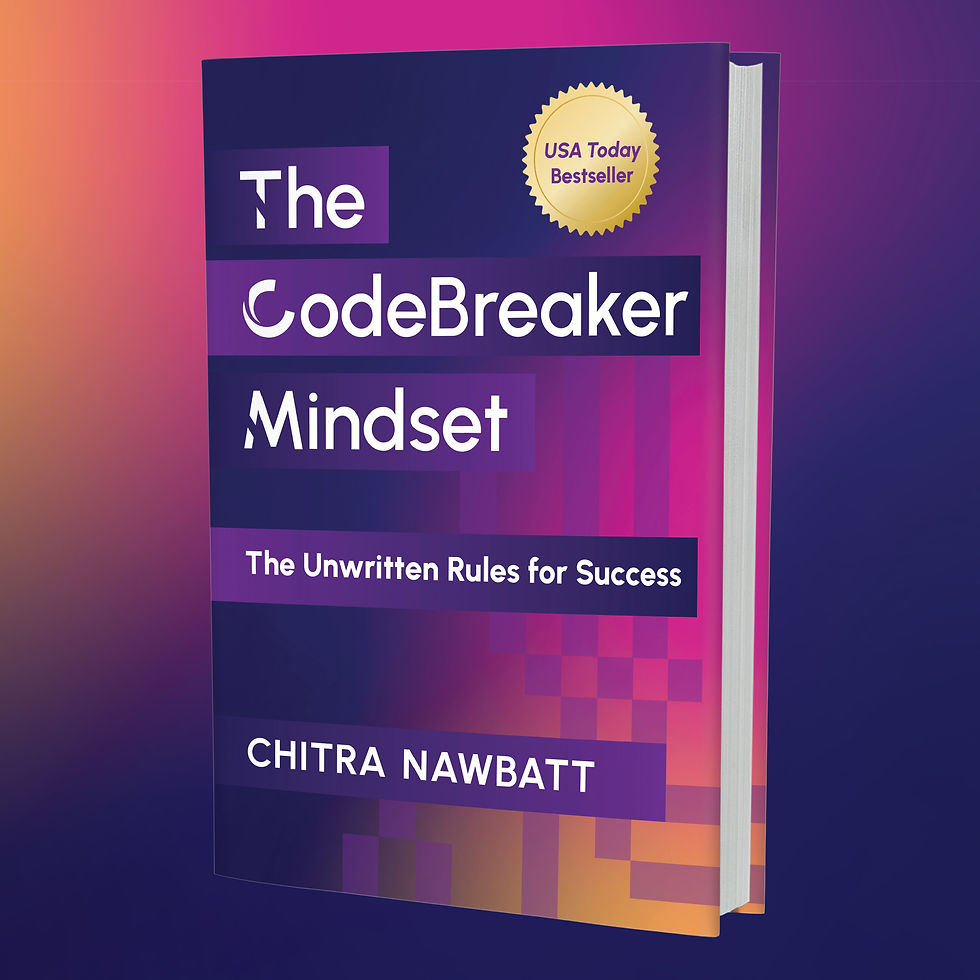
The CodeBreaker Mindset™ book order here: Amazon | Barnes & Noble
The CodeBreaker Mindset™ Ft. Yannick Colaco, FanCode, Co-Founder, and former NBA, India, Managing Director
Chitra Nawbatt (00:10)
Welcome to The CodeBreaker Mindset™, where leaders share the unwritten rules for success. I'm your host, Chitra Nawbatt. Joining us today is Yannick Colaco, co-founder of FanCode. Yannick welcome. Thank you for joining us.
Yannick Colaco (00:24)
Thank you for having me, Chitra.
Chitra Nawbatt (00:26)
You've been passionate about democratizing access to sports, especially for youth, for most of your career. You were the first head of NBA India before co-founding Fan Code. Take us through your journey.
Yannick Colaco (00:40)
You know, I, I've always I've grown up completely, extremely passionate about sport itself. Right. I've grown up as someone who, played sports really passionately. You followed sports, as a kid. As a teenager. And, you know, when I started working in media, I was really fortunate enough to be able to join a very niche in sports industry in the early 2000.
Initially with IMG, then with a company called Nimbus Sport, which ran this amazing commercial program for rights, across India and many parts of the world. And then obviously with the NBA and the time code. So I think, from my perspective, being able to have the opportunity to work in a profession and industries I'm so passionate about has been something that I've been very fortunate, to be able to do.
I, you know, my first stint when I actually started, working in, in, in cricket, I was working with, this company, Nimbus, and we were doing a lot of stuff around, the ICC Cricket World Cup. I spent some time in South Africa in 2003, setting up the commercial rights office there. A lot of the stuff that I've seen in the initial time when sport was actually growing up in, in India to where it is now, there's been a sea change, especially among, sports fans and followers of sport across the country.
So, you know, when I joined the NBA in, in 2000 and the early 2013, 2014, the goal was always to try and figure out how can you actually grow the game of basketball and with it, the brand of the NBA. But everything was about doing it from the grassroots, from the bottom up. And that was a vision which at that point, you know, Commissioner David Stern, then Commissioner David Stern had and obviously Adam Silver has been really pushing.
So it was a really, really great experience for me to be able to look at work with this global brand, which is so successful. You know, obviously in the US and many other countries across the world and try to bring this brand and the vision that it had of building sports from the bottom up into India. So I did that for close to six years, worked with them in terms of setting up their first junior NBA program, for youth, or close to 8 to 9 million views across the country.
You know, the licensing program bringing the first NBA global game into India. And then close to six years ago. I wanted to get on to working more in sports, and especially, as you said, like Democrats democratizing access to sport, in which which is why, you know, I, co-founded at that point, the sports fans on the streaming platform, called fan code.
And, you know, we've been we started by saying that we wanted to provide access to a whole bunch of sport, to fans across the country. And today we have crossed over 160 million users. We now stream, you know, close to 20,000 live games a year, across 12 different sports. And, you know, we've been extremely excited by the business that we're building.
Chitra Nawbatt (03:52)
So before we get more into fan code, how did the NBA India find you or vice versa?
Yannick Colaco (03:59)
So I actually, you know, while I was working with Nimbus, I was actually extremely keen, as I said, right. In terms of figuring how could I actually contribute to growing sport as a, as a genre, as an industry in India? And I was really keen about trying to figure how I could get, I could activate or work with activation, especially in grassroots sports.
One of the challenges that India has had is the level of training, the level of exposure, the level of access to kids in sport was very limited. So I chanced on a meeting, with, the then, president of international of the NBA, Heidi Ueberroth, who was looking at there, just set up a nascent office or wanted to set up a decent office in India.
And, they spoke to me about, you know, you know, their plans and saying that, you know, is this something you would be interested in? And I was yeah. You know, NBA is a big global brand. They want to obviously build this great business in India, which is sounds exciting, but it was a little bit different from what I wanted to do at that point, which was really work into the weeds of grassroots training.
But then Heidi was kind enough to invite me to the, the NBA office in the US and, you know, to kind of meet the senior management and talk to and, you know, as someone in the sports industry or growing up in the sports industry, I looked looked up to David Stern as someone who was like, you know, the the pinnacle of what sports administration and sports business drivers were.
So I was extremely excited to meet David Stern and a whole bunch of other NBA people. And it was really interesting. I met, David Stern, Adam Silver at that point. And, you know, David was kind enough to spend close to, I think, a couple of hours on a Tuesday with me. And I was completely blown away by the way he envisioned the NBA and basketball and its global global growth.
And the bottom line was that he always talked about the and India's destiny in any country being directly linked to that of basketball. And when he spoke about how the process was more important in terms of making basketball popular from the bottom up, getting kids to play, teaching them the right way, building talent, and then that would eventually lead in the growth of the NBA.
That really, you know, that really excited me. And that's something that, you know, I was fortunate enough I walked away from that meeting saying, hey, I want to be a part of this. And, I was fortunate enough, to, you know, be tasked with that role. And I spend, you know, six years of, you know, really rewarding years of working with the NBA, working across multiple things.
It did from, as I said, the building, the junior NBA program, in India to, building NBA schools, building their first NBA academy and, you know, helping being the first global game and stuff to the country. So that was really exciting period for me, both professionally as well as personally as a as a massive sports fan.
Chitra Nawbatt (07:01)
Give us a sense of the size and scale of of of basketball on the broader sports market in India because India's almost 1.5 billion people. You talked about fan code having 160 million users talk about the, the market opportunity for sports in India, and then how you came up with the idea for fan code.
Yannick Colaco (07:23)
Yeah. I think, you know, India has, is a very young country, right? I mean, it's, India, the country was born in 1947. So it's not, it's a country which is close to, what, 75, 76 years, since it was independence. So there's been a transformative change, especially among youth in the country in the last 2 or 3 decades.
You know, 25 years ago, the concept of sport as a means of, as a part of culture almost didn't exist. Education, especially for kids in school education was, you know, how you did in math and science and sports was something you did if you had the time. So it wasn't really something that was, you know, an important part of the fabric of society that's changed significantly in the last two decades.
And what has changed is that, the younger population has started adopting sport. You see a lot more, kids playing sport. Sport has become now part of the fabric of and the culture of schools, right? Where every child is playing sport. I know you've you've made a few trips to India recently. If you walk through, any, any suburb in Mumbai, you will find a lot of tops where kids are playing football, basketball, they're playing, pickleball or tennis.
This whole bunch is this entire revolution about participation. And with that has come from them. So I actually think that in the last 20 years, the, the, the fandom of sport, especially among young audiences, has grown significantly. There's some estimates that say that sport fandom in India is over 600 million sports fans in this country. What's really interesting for me, or what was really interesting and what kind of birth of the idea of fan code was when we looked at about 6 or 7 years ago when I was with the NBA.
But sports fandom was growing significantly. The economics of linear television and linear broadcasting meant that people, all stakeholders, continued to be focused more on mass, mass, mass popular sports. Right. So the IPO, which is the Indian Premier League, was available on close to 28 linear channels, right, in different languages and stuff. Had tremendous amount of marketing and coverage, but the, LaLiga or the Bundesliga or the, you know, domestic cricket didn't have the same amount of kind of coverage.
So, is too obvious to me when we did research before we launch fan code that close to 99% of sports activity, professional sports activity in the world didn't have proper coverage, which essentially meant that sports what sports fandom was growing access for those sports fans of live sport that they loved was actually not growing at all. And, that's where we saw that as an opportunity of using digital and building a digital platform which could actually address these, these kind of, problems that sports fans faced.
And obviously, the advantage of digital is unlike a linear channel where you can only at one point of time put, broadcast one game on one channel, digital doesn't have the same restriction, right? You're able to actually cater to niche audiences across the country. You can build, journeys where you can get them to retain them. You can build, businesses around, lifetime value around those customers.
So that was really what fueled the, start of fan core web, essentially started our content business by saying, how do we solve this problem of access of sports content to sports fans in this country? So, we launched, you know, next week we're going to be six years old. So we literally launch almost six years ago, and we started off, with a whole bunch of sport, as you know, as I said, like this, you know, a couple of weekends ago, we were doing on a Saturday close to 150 live games across nine different sports.
So it's really, and the ability to service audiences across the country, that's something that we've been really excited about.
Chitra Nawbatt (11:36)
So let's get into the rules of the game, because you've launched two businesses, Fan Code and NBA India and sports is, as you and I have talked about, as the intersection of consumer media technology, what are the rules of the game in the sports business?
The Rules of the Game
Yannick Colaco (11:55)
So I think everything starts with, it's, you know, it. We keep talking about it starts with consumer need. Right? I think, in the sports business, it's what, what kind of differs it a little bit from everything else. So it regular businesses is the I think the indexation of passion. Right. The I don't think anything incites the level of tribalism or level of passion that sports does among fans.
That I think is something which is unique to the business of sport, and that's something which is, which needs to be harnessed. It's obviously also, it's a big challenge because you can't afford to make mistakes, right? You can you can afford to have a little buffering on your movie, but you can't afford to have a single second of dropped content on a live game because you know, that same passion.
Then goes away from the sports fan and goes towards the technology provider. And, and so that's something that's unique about sports. I think the other thing which is unique about sports, which we've looked really, really tap in, is that sports is a form of entertainment, is is pure in the sense that the story being written in a game of sport, right.
The story that you're watching as a consumer is actually being written as you watch. No one knows what's going to happen today when you're watching a movie on, you know, on Netflix, on your favorite audio streamer, you know that this is, you know, it's a drama, it's a comedy show. It's got a, you know, a cast of characters.
You know that there is the story's already been written, but you're kind of watching it. You're getting entertained with it. A a live sports game is unique in the sense that once that game, once a moment is finished and it's recorded, then the nature of that entertainment changes. So that's also something which is really unique about sport, and something we've looked to harness in a sense that the live the life element of it is what really, really binds communities together, brings fans together, kind of pushes that passion up.
And that's something that you really, really have to build for both in terms of, the experience, you'll be able for consumers as well as in terms of your business model. So that's something which is unique to the sport itself.
Chitra Nawbatt (14:08)
And was there a specific unwritten rule that you learned along the way, launching and building NBA India and then launching and building fan code?
Yannick Colaco (14:19)
So I think the, the, it's a double edged sword being passionate about sport. So I think, you know, and especially both an NBA and, and fan code. Right. I think, being passionate about the sport, you watch the sport, you're serving consumers sometimes you miss steak yourself for every consumer. Right. So it's also extremely important to have a balancing act.
It's important to be able to say, hey, like when we think about features sometimes on fan code, like we're like, oh, you know, this is a feature which every fan would love, but this is a feature which I would love, right? So it's important to be able to balance that so that that sort of passion to be able to at one point sit back or have another view.
And that's where data really, really helps. It really, really helps tell you whether what you're doing is, you're being blind to certain sports, you're being blind, the own passion that you have for a sport. So that's, it's kind of a double edged sword that you need to constantly play around with and make sure you're balanced out.
Chitra Nawbatt (15:23)
And who taught you the rules of the game? Especially the the unwritten, the unwritten ones. And let's look at it in two buckets, because you as the first head of NBA India, it's a well-established brand in the United States. In other parts of the world, multibillion dollar franchise property business. You're now bringing that into India, launching it, shepherding it.
So who taught you the written and the unwritten rules in terms of how you interact and build that productive relationship with the NBA headquartered out in New York, and then similarly teaching you as you full entrepreneurship with fan code.
Yannick Colaco (16:04)
So I think the two biggest I think, again, I've been extremely fortunate to have, people have been very comfortable in, informal mentorship. Right. As I said, like every single time I spend time with David Stern, with Adam Silver, with people around, you know, in India who've been kind enough to spend, give their time to me.
I think just being able to bounce ideas off of people and get their opinion, I think that really is one of the biggest ways to kind of understand, because the fact that it's unwritten means that no one really knows what the rule is, right? I think being able to learn from other people's experience, being able to toss ideas to them and get their opinion on how to behave in certain ways, and I think, most importantly, is following when you say leading by example, I think that's the other way.
Also following by people. You are following by example of people you admire, how they behave, how they behave at others, how they, are able to interact in certain situations, how they react to that situation. I think that's something that's really, really helped me kind of navigate a lot of this. And I think the second thing is I'm really, really curious person by nature.
So I read a lot. I talk to a lot of people. I'm constantly asking people their opinions on what they think. I think that really helps. And that kind of, you know, sets in terms of, being able to, absorb new information, being able to, analyze that, being able to apply that and being able to kind of figure out what version of that is something which is right for me.
I think that's also really important to be able to.
Chitra Nawbatt (17:42)
You talked about a couple of, strong leaders, a couple of key figures, and along the way of of what you've had to do both at FanCode as well as NBA, India is building critical relationships and networks that you just mentioned with, with complex, nuanced stakeholders. At Fan Code, a critical relationship is with your investor. Harsh Jain. The founder of Dream Sports.
And when you were at the NBA, it was with the late David Stern, former NBA commissioner, the current commissioner Adam Silver, Mukesh Ambani, the Ambani family. These people have strong personalities, highly driven, very complex, very nuanced. How did you build meaningful relationships with them? And if you could give us an example.
Yannick Colaco (18:25)
So I think it's it's as I said, right. I think it's it kind of changes the fact that each person you build a relationship with is unique, irrespective of how successful they are. Right? I mean, you you've talked about some very, very successful people, but I think that's applicable to, peers. It's applicable to, you know, people who work in fan code.
So I think that every single person, I think the most important thing is to actually be able to find how you connect with people. And a lot of it is natural. So I I'll give you an example of, you know, hush, hush. And I, I've known each other for, for years. And, you know, we share a common passion for Manchester United, right?
We're both massive fans and the both generally massive sports fans like. And I think being a being a massive sports fan, you can speak a language which is similar. We, we actually did business with each other. And in the past, we actually, I mean, the idea of fan code and of dream sports investing and, you know, kind of incubating it actually came from the fact when I went to him for advice of this project, I wanted to start not as an investor and just saying that this is something I want to start in this book ecosystem.
He had already gone through the process of setting up a very, very successful startup in sports, which is Dream11, right, this extremely successful fantasy gaming, company. So I actually went to him for advice saying that, hey, you know, how did you deal with investors? How did you start up? And that eventually turned into a conversation where he said, hey, why don't you come and do this with us?
You know, in this space? Because we kind of have the same kind of, engagement, within it. I think the relationship with, David Stern, with obviously Adam Silver was this. I just found it on, you know, that entire their vision for what they believe the NBA stood for and, me, me trying to figure out how we could actually replicate that or manifest that into building it in India.
So it was really about asking, being curious, asking about questions, giving them feedback about. Obviously, India works differently than Australia, differently than the US being giving them the opportunity to also understand that, both David and Adam made trips to India. They took time out of their schedules to come and visit market, which was, I think, really important to be able to understand, meet people around you, understand nuances.
In fact, it was on, David's first trip that we actually built a relationship at the Ambani's where, you know, David had, just meeting with Mukesh Ambani and, you know, they hit it off, and you spoke about trying to build, this entire program for grassroots, which is where the Reliance Foundation Junior NBA program started form.
And we actually started I remember that time like, no one really knew that whether this could work. This was about getting, training PE teachers to actually teach their school kids how to learn the game of basketball. And we started that with two cities, and we went on, you know, to, you know, a few years ago when I left, it was in, I think, like 35 cities across the country, and it had like 9 million kids.
A lot of that. Again, as, as I said, it's about leveraging, people that leveraging what you understand of what you have and then being able to find commonality. I think the, the biggest advantage that most people who are passionate about sports have is that most other people in the industrial so passionate about sports, you you start with the common ground.
We all love, you know, the business we're in. So that's obviously a big kind of, advantage because you're starting from there.
Chitra Nawbatt (21:59)
What do you think it was that got the Ambani family bought in, because they get approached by hundreds, thousands of opportunities on a yearly basis, perhaps more than that. What got them body you think?
Yannick Colaco (22:13)
Yeah, I think at that time it was just David Stern. I mean, I think this this meeting that David had with, Mukesh and Nita Ambani and this was literally, I want to say, over ten, 12 years ago, for them to launch the Reliance Foundation Junior MBA program. It was just that meeting where they, were kind enough to host him at their, at their house and hosted dinner for him.
And there was this conversation with David, spoke about his vision of building grassroots sports, and building, but grassroots basketball and, you know, we kind of left the meeting where, the Ambani family actually told, you know, David and the NBA saying, listen, tell us how we can help. And we went back and we, you know, go deep into this.
We ran this. We said, we'll do this pilot program. And then immediately, David sent an official letter to, Mr. Money and immediately got back saying, yeah, we're in. We're happy to help. And that's where that relationship began.
Chitra Nawbatt (23:11)
Let's get into the pivots, because in building both the NBA, India as well as fan code, there are voluntary and involuntary pivots. Talk about a critical pivot in scaling NBA India. And then let's discuss the same in fan code.
The Pivots
Yannick Colaco (23:31)
So I think in in in NBA was less about pivots as to more kind of trying to understand piece by piece what we trying to build. I think the, the vision was very clear that the vision was let's build basketball from the grass, from the bottom up, and then let's try and figure out how we can continue to continue working with partners, working with good partners.
I think that that culture, that ethos hasn't changed. That was always the converse way across collaborate, work with good partners in each market and help build basketball from the ground up. So, I think what was important in the NBA at that point was to try and build the right way. And I think that that that may be like a different thread with the NBA and the sand court and the NBA.
The NBA was very sure it was already a massive global brand. It was very sure about who the NBA was and is obviously because it's such a successful brand. So it was about building things the right way. Taking small steps started with the junior NBA program and then built, you know, an academy. Then it had schools, basketball, it had basketball schools.
It had, this entire licensing program with partners had a media partnership. So all of it was, it was almost, it was this, playbook. But try and trying to figure out what's the right modification, what's the right version of that for India. Right. And I think that was really important, was important to kind of discuss and build that out from a fan code perspective in a startup.
I think for us here was really when you're trying to build the India's first sports only platform, and it was it was never done before. Right? I think it was for us, it was about trying to, you know, build quickly and learn, keep learning. So, you know, we have this system, we have this, internal kind of acronym.
We look, we call heel, which is hypothesis, experimentation, actuals and learning. So we say that you ought to have a hypothesis which you go through. You have to experiment. So you've got to do a lot of ab testing and stuff and everything. We're kind of building. You got to look at the actuals against hypothesis, and you have a bunch of learnings from it.
And the idea is to kind of build that out really quickly, because you can only kind of adapt and kind of decide, you know, how do you modify course correct consistently or constantly and kind of build your product? So when something works, how do you double down and grow that really quickly when something doesn't work, reassess, maybe make some changes or even drop it?
So I think that is that's something which is unique to find good and also unique to tech companies. Right. But you have the ability to get consumer feedback so quickly. And there's so much of rich data that you're constantly getting from consumers. So that's something that's been very, unique to, you know, the startup world.
And it's something I've had to learn very quickly.
Chitra Nawbatt (26:22)
And on that front of the data, take us into your pattern recognition, because what's the data? The signals that you look at that you're constantly responding to that you're pivoting your business model.
Yannick Colaco (26:37)
So I think the main, main aspects of data, right? I mean, we just have so many, being a direct to consumer product, you know, so many signals that we have from how people use our product. You know, we have things like heatmaps in terms of how people scroll, how people click funnels in terms of their users go to where they drop off.
So I think the first thing we try to focus is new users and recurring use, how they're spending time on the product features they're using. You know, we, we ages back decided to launch a feature where we actually found, well, first we found from data that when users were watching cricket on mobile, they were, for a T20 game, which is approximately 3.5 hours.
They on an average game in and out of the game, close to eight times. So, you know, because were watching on a mobile, they obviously either had distractions or they were dead time between games, between all of us in a cricket game. So they came in and out, in and out, in and out, which is not a great way.
Which meant they weren't engaged enough by that game. Right. So we said, how can we create an experience which is more engaging? So what we did was we said during how do we actually what's the main thing which engages outside live play? It's just stats. It's right how players performing. It's things like you know, and you know, where they are hitting their shots.
What's their weakness? There's thing in cricket called Wagon Wheel where you scoring your runs up. So all these stats we kind of presented life to a user. In an overlay, user could tap on the screen and then they could have a drop down, which essentially during the live game, they were able to look at scat scorecards and stuff also.
So the second thing we found is that, you know, users sometimes joined late or they need to kind of get quickly up to date in the game. So we did real time highlights where user could minimize the screen and essentially watch highlights of the four Sixers wickets. That happened immediately, almost like a minute after they actually happened. So we kind of introduced these features test to the modern various forms, and we found that the segments, the time users were spending on our platform for that single game actually grew to X because they were finding ways to engage themselves.
So and we saw the problem. The users were actually coming in and out eight times. It reduced to four times with their segment. Time was increasing. So that's just an example of how you actually use real time data, to be able to kind of look at, you know, whether what a user reacts to and kind of build your product and build experience on the basis of that.
Chitra Nawbatt (29:10)
Earlier you talked about this notion of manifesting the vision. So both when it comes to fan code, building a business from scratch, all of the capital requirements, technology the force required with NBA India earlier you talked about 1.5 billion people in India, basketball new to the country, the cultural nuances, getting parents bought in around having their kids, having their children learn basketball, play and basketball versus studying.
So, in each of these, in each of these situations, is there a notion of being a new entrant, having to be a force of nature? What's your take on that?
Yannick Colaco (29:53)
So I actually think a lot of doing doing things which are little bit which are new. Right? I think the first you almost need to have you need to from a personality perspective, you almost need to have some level of irrational optimism. Right? You need to you need to believe. And it's it's, it's you know, I, I often take like the most things in life, I, you take the example from the sports field, right.
You every time you know, basketball is a great example. Every time Steph Curry shoots a shot he expects it to go in. Right? Steph Curry can miss five three pointers in a row. He'll still take the sixth right. And he expects it to go. And so I think there's a level of being able to of belief that you need to have there's a level of adjustment that you need to constantly be adjusting to be to the, to the information that you have around you.
And most importantly, this is a level of work that you need to put in, right. You cannot you need to put in the work, especially for new things which are not really been developed before. You need to put the hard work which is in the research, as you said, in the relationships, in, in building stuff from the ground up, you need to persevere knowing that what you build may not really be what the consumer wants.
You may need to scrap it completely and build again. So I think those are the kind of the characteristics that are really important. But I think, you know, to have a great belief in your ability to persevere, and to be able to, you know, constantly work with other people and kind of modify as you go along.
I think that's really important.
Chitra Nawbatt (31:28)
How do you tap into that force of nature within and punch through, regardless of the naysayers or even in those low moments? How do you how do you tap into that force of nature within and fuel that and punch through no matter what?
Yannick Colaco (31:48)
I you know, there are there are many versions of this which I read and are many versions of this which people tell me read about how they kind of deal with adversity. For me, it's unique. I think, at least for myself, is that it's people, right? For me, it's, there is no this I don't and I know other people a lot of, a lot of successful entrepreneurs have this, that this inner strength of like, you know, really being able to punch through, as you said, a lot of this on their own.
For me, it's just the people around you, it's people, who believe in you. It's people who trust that you will do the right thing. And that's that's for me. It's, everyone around in fan code, for example. It's every single fan code, every single person who works with fan code. It's their belief. It's their trust that you will kind of fuel.
You know it through downtimes. You kind of figure out a solution and, you know that there kind of always be there. Back to you. And again, it's close family circle. It's close friends, mentors, people you trust. I think that's really the the biggest, biggest, kind of, support that is that you are able to put things in perspective a lot, at least for me.
Chitra Nawbatt (33:15)
You use this phrase irrational optimism. Let's get into the magic. How do you define serendipity versus intuition?
The Magic
Yannick Colaco (33:15)
I think that you have to you have to have some level. Listen, there's a level of good fortune that always keeps coming on right this. But I, I think that's almost in terms of opportunity. You need to be able to seize the opportunity when it comes along. And I think intuition is one aspect, but I think you need to put the hard work in.
You need to be prepared for that opportunity. Right. So if you haven't done the hard work building up to that, it doesn't matter. When that opportunity comes along, you're not going to be able to take advantage of it. So you know, we talk about as an organization, right? We kind to build a culture off in fan code, for example.
We're trying to build this culture of innovation, this culture of kind of user first working together to kind of build this. It's the hard miles you've put every single day, which kind of sets you up for whenever these opportunities come along. And I think it's, it's like an e-sports team, right? If you think about it, it's, it's, you know, it's, it's a cricket player or cricket batsman, and he's facing for balls.
He waits for the one bad ball, and he's able to dispatch it off after to for a 4 or 6. It's all the work he's put in which allows him to do that. So I think putting for me the the work you put in the effort, the hard work that I think is non-negotiable, I don't think anyone can be successful without putting the hard work in, the rest.
It's sometimes timing, as you said, right? It's sometimes it's good fortune in terms of when the time comes in. But I think it's the hard work that you put in to be prepared, to be able to take that, take advantage of that moment that is non-negotiable.
Chitra Nawbatt (35:05)
So where has serendipity played a critical role in business, whether NBA, indie or fan code or your life?
Yannick Colaco (35:15)
So I think in terms of timing, even in terms of setting up fan code red, I think, it was the right time where if you look at the confluence of the fact that, as I said earlier, sports fandom has been growing so much, the linear television business was. Flat is not really growing because digital was digital as a mode of consumption was increasing tremendously.
And the opportunity in the fact that fandom was growing, digital penetration was growing, but access to sport hadn't been sold. Innovation around sport wasn't really being done. So it was the opportunity of saying, hey, like, I've been working in sports and media for years. You know, I've done a lot of work around understanding consumers. The NBA helped me understand what great businesses and great brands and sports should be able to do and should what outcomes are for a great brand is like.
So taking all of that and the timing of it, along with a partner and an investor who had this huge base of sports fans already on their platform and was willing to kind of, you know, help us build with those, that was kind of a confluence of all these things which came together, which gave us the opportunity to launch fan code.
Chitra Nawbatt (36:28)
And talking, given the dynamics that you've just talked about, what's your pattern recognition on how to build and scale a profitable tech? And I related sports companies. So I what do they what are the critical ingredients.
Yannick Colaco (36:45)
So I think the for a direct to consumer company, I think the critical ingredient is to be able to essentially build great products for consumers. So I think, you know, we're at the confluence of when you talk about, you know, growth, you talk about, you know, we keep talking about user metrics are to lifetime value, all kind of things, which are very business metrics, driven.
I think building great products is essentially one of the biggest, it's extremely tough, but it's one of the biggest kind of challenges that we are trying to actually build. So actually building a great product, which consumers are actually, you know, have a great experience with and they, you know, have have an emotional connect with, we have the content which brings the consumers on our platform and they, you know, enjoy it.
And we give a great experience. But building a product which gives them that great experience and they can walk over and say, wow, like, you know, I want to go to Fancourt to watch sports content. That's something which is something we've constantly working on.
Chitra Nawbatt (37:47)
Do you study outliers? What's their role in the equation for you?
Yannick Colaco (37:53)
How do you mean, outliers?
Chitra Nawbatt (37:56)
Because you talked about heal your process AGL. Right. And so whether it's a particular outcome, a data point, something that's an anomaly, something that's off the charts and oftentimes an outlier today might become routine and norm over time. Like if you think about so many years prior, 15, 20 years ago or whenever YouTube was first created, YouTube was first an outlier.
Social media was first an outlier. Now it's, well, the norm part of every day.
Yannick Colaco (38:27)
Yeah, yeah. Listen, I think for us, a lot of what we are building, which is new, right, is based on consumer research and being a direct to consumer come other I said earlier, you get a lot of feedback very quickly. So you know, when one of the things we did, a fan code was essentially, solving a problem again, which I personally had.
Right, in the sense that every time I wanted to watch a sports event when I went on one of the entertainment platforms in India, I was like, you know, you want to watch the finals of the French Open here? By my annual pass. I mean, I don't care about the the product. I already had like five subscriptions of different products.
So one of the things that I was very, very conscious of trying to solve for, on fan code was how do we actually give users choice, right? How do we actually give users the ability to consume what they want and at the same time increase the kind of number of users who are willing to pay for content, sports content on on fan code.
So we tested this out a little bit and we got a lot of great feedback. And then, you know, four years ago, 4 or 5 years ago, we launched a sachet pricing, sachet pricing and packaging on fan code. So essentially a user could come on the platform and if they were to watch 1 or 2 watch only, a, a weekend of racing or Formula One, they could buy just that.
They could also buy the entire season of Formula One and not have access to anything else or fan code. So being able to create that. So that was really something that was an outlier at that time, I think a lot more, companies in future will start doing that in terms of being able to give users, you know, the freedom of choice to be able to choose the content they want and stuff and make the payments and stuff a lot easier.
So, you know, that's an example of something that we did, which was, you know, not normal. And I think it's going to become, more kind of standard going forward.
Chitra Nawbatt (40:33)
What's your take on The CodeBreaker Mindset™?
Yannick Colaco (40:37)
So you, you need to, elaborate that for me again.
Chitra Nawbatt (40:43)
Sure. So that there's written and unwritten rules, pivots, serendipity, all part of your journey, part of the equation as you're pursuing whatever opportunity you are, whether it's career life, building a business. This type of work.
Yannick Colaco (41:01)
Yeah. So I think, you know, it's, I think everything you do, whether it's in your personal life and professional and this from my from my perspective, it's about the mindset is always about where you are in that moment, right? And where you are in that particular phase of your life and that particular time that you actually have the opportunity to have things around you.
So I think the mentality to be able to use all your past experiences, the information that you have from the past, information that you've already assimilated, to be able to react to situations in front of you, and the ability to not get too, too obsessed with looking too in front of you. Right looking five years, six years because no one knows, right?
I mean, everyone wants to be able to know. I think that ability is something that I think was really up for people today. And I think for professionals not getting too consumed by what I'm going to be three years from now, five years from now, one year from now, I think that's something is which, you know, kind of really will help and helps me at least, able to kind of go through stuff both personally and professionally.
Chitra Nawbatt (42:12)
What's your advice on how to cultivate The CodeBreaker Mindset™?
Yannick Colaco (42:19)
So I would think, for me, the most important thing is, you know, to be present, to be able to, be present. And this is not just professionally right. I've kind of learned this for myself in everything I do. Right? But this time, spending time with my kids, with to spend time with friends around you. You know, the deputy commissioner of, the NBA, Mark Tatum, is to be amazing.
These to have meetings with with Mark. And, when you sat with Mark in the meeting, you knew that 100% of his attention was always with you. And I always admired that because I, I always struggle to have, like, you know, you always have thoughts in my mind, right? I always struggle when I was with someone to be able to.
And I've always tried to. It's something that I learned. And I mean, again, it's something that I've always tried to imitate. I can't do that as well as he does, but I think being present and being able to do that, it's takes a lot of practice. But I think that really is something that helps me, you know, be, you know, more impactful in terms of everything that I have interpersonal relationships, professional relationships.
Chitra Nawbatt (43:31)
Yannick, thank you so much for joining us.
Yannick Colaco (43:34)
Thank you for having me Chitra.
Chitra Nawbatt (43:37)
Thank you for supporting The CodeBreaker Mindset™. For more episodes, go to www.ChitraNawbatt.com to like and subscribe. Connect with me on social media @ChitraNawbatt.
The CodeBreaker Mindset™ Ft. Yannick Colaco, FanCode, Co-Founder, and former NBA, India, Managing Director
Chitra Nawbatt (00:10)
Welcome to The CodeBreaker Mindset™, where leaders share the unwritten rules for success. I'm your host, Chitra Nawbatt. Joining us today is Yannick Colaco, co-founder of FanCode. Yannick welcome. Thank you for joining us.
Yannick Colaco (00:24)
Thank you for having me, Chitra.
Chitra Nawbatt (00:26)
You've been passionate about democratizing access to sports, especially for youth, for most of your career. You were the first head of NBA India before co-founding Fan Code. Take us through your journey.
Yannick Colaco (00:40)
You know, I, I've always I've grown up completely, extremely passionate about sport itself. Right. I've grown up as someone who, played sports really passionately. You followed sports, as a kid. As a teenager. And, you know, when I started working in media, I was really fortunate enough to be able to join a very niche in sports industry in the early 2000.
Initially with IMG, then with a company called Nimbus Sport, which ran this amazing commercial program for rights, across India and many parts of the world. And then obviously with the NBA and the time code. So I think, from my perspective, being able to have the opportunity to work in a profession and industries I'm so passionate about has been something that I've been very fortunate, to be able to do.
I, you know, my first stint when I actually started, working in, in, in cricket, I was working with, this company, Nimbus, and we were doing a lot of stuff around, the ICC Cricket World Cup. I spent some time in South Africa in 2003, setting up the commercial rights office there. A lot of the stuff that I've seen in the initial time when sport was actually growing up in, in India to where it is now, there's been a sea change, especially among, sports fans and followers of sport across the country.
So, you know, when I joined the NBA in, in 2000 and the early 2013, 2014, the goal was always to try and figure out how can you actually grow the game of basketball and with it, the brand of the NBA. But everything was about doing it from the grassroots, from the bottom up. And that was a vision which at that point, you know, Commissioner David Stern, then Commissioner David Stern had and obviously Adam Silver has been really pushing.
So it was a really, really great experience for me to be able to look at work with this global brand, which is so successful. You know, obviously in the US and many other countries across the world and try to bring this brand and the vision that it had of building sports from the bottom up into India. So I did that for close to six years, worked with them in terms of setting up their first junior NBA program, for youth, or close to 8 to 9 million views across the country.
You know, the licensing program bringing the first NBA global game into India. And then close to six years ago. I wanted to get on to working more in sports, and especially, as you said, like Democrats democratizing access to sport, in which which is why, you know, I, co-founded at that point, the sports fans on the streaming platform, called fan code.
And, you know, we've been we started by saying that we wanted to provide access to a whole bunch of sport, to fans across the country. And today we have crossed over 160 million users. We now stream, you know, close to 20,000 live games a year, across 12 different sports. And, you know, we've been extremely excited by the business that we're building.
Chitra Nawbatt (03:52)
So before we get more into fan code, how did the NBA India find you or vice versa?
Yannick Colaco (03:59)
So I actually, you know, while I was working with Nimbus, I was actually extremely keen, as I said, right. In terms of figuring how could I actually contribute to growing sport as a, as a genre, as an industry in India? And I was really keen about trying to figure how I could get, I could activate or work with activation, especially in grassroots sports.
One of the challenges that India has had is the level of training, the level of exposure, the level of access to kids in sport was very limited. So I chanced on a meeting, with, the then, president of international of the NBA, Heidi Ueberroth, who was looking at there, just set up a nascent office or wanted to set up a decent office in India.
And, they spoke to me about, you know, you know, their plans and saying that, you know, is this something you would be interested in? And I was yeah. You know, NBA is a big global brand. They want to obviously build this great business in India, which is sounds exciting, but it was a little bit different from what I wanted to do at that point, which was really work into the weeds of grassroots training.
But then Heidi was kind enough to invite me to the, the NBA office in the US and, you know, to kind of meet the senior management and talk to and, you know, as someone in the sports industry or growing up in the sports industry, I looked looked up to David Stern as someone who was like, you know, the the pinnacle of what sports administration and sports business drivers were.
So I was extremely excited to meet David Stern and a whole bunch of other NBA people. And it was really interesting. I met, David Stern, Adam Silver at that point. And, you know, David was kind enough to spend close to, I think, a couple of hours on a Tuesday with me. And I was completely blown away by the way he envisioned the NBA and basketball and its global global growth.
And the bottom line was that he always talked about the and India's destiny in any country being directly linked to that of basketball. And when he spoke about how the process was more important in terms of making basketball popular from the bottom up, getting kids to play, teaching them the right way, building talent, and then that would eventually lead in the growth of the NBA.
That really, you know, that really excited me. And that's something that, you know, I was fortunate enough I walked away from that meeting saying, hey, I want to be a part of this. And, I was fortunate enough, to, you know, be tasked with that role. And I spend, you know, six years of, you know, really rewarding years of working with the NBA, working across multiple things.
It did from, as I said, the building, the junior NBA program, in India to, building NBA schools, building their first NBA academy and, you know, helping being the first global game and stuff to the country. So that was really exciting period for me, both professionally as well as personally as a as a massive sports fan.
Chitra Nawbatt (07:01)
Give us a sense of the size and scale of of of basketball on the broader sports market in India because India's almost 1.5 billion people. You talked about fan code having 160 million users talk about the, the market opportunity for sports in India, and then how you came up with the idea for fan code.
Yannick Colaco (07:23)
Yeah. I think, you know, India has, is a very young country, right? I mean, it's, India, the country was born in 1947. So it's not, it's a country which is close to, what, 75, 76 years, since it was independence. So there's been a transformative change, especially among youth in the country in the last 2 or 3 decades.
You know, 25 years ago, the concept of sport as a means of, as a part of culture almost didn't exist. Education, especially for kids in school education was, you know, how you did in math and science and sports was something you did if you had the time. So it wasn't really something that was, you know, an important part of the fabric of society that's changed significantly in the last two decades.
And what has changed is that, the younger population has started adopting sport. You see a lot more, kids playing sport. Sport has become now part of the fabric of and the culture of schools, right? Where every child is playing sport. I know you've you've made a few trips to India recently. If you walk through, any, any suburb in Mumbai, you will find a lot of tops where kids are playing football, basketball, they're playing, pickleball or tennis.
This whole bunch is this entire revolution about participation. And with that has come from them. So I actually think that in the last 20 years, the, the, the fandom of sport, especially among young audiences, has grown significantly. There's some estimates that say that sport fandom in India is over 600 million sports fans in this country. What's really interesting for me, or what was really interesting and what kind of birth of the idea of fan code was when we looked at about 6 or 7 years ago when I was with the NBA.
But sports fandom was growing significantly. The economics of linear television and linear broadcasting meant that people, all stakeholders, continued to be focused more on mass, mass, mass popular sports. Right. So the IPO, which is the Indian Premier League, was available on close to 28 linear channels, right, in different languages and stuff. Had tremendous amount of marketing and coverage, but the, LaLiga or the Bundesliga or the, you know, domestic cricket didn't have the same amount of kind of coverage.
So, is too obvious to me when we did research before we launch fan code that close to 99% of sports activity, professional sports activity in the world didn't have proper coverage, which essentially meant that sports what sports fandom was growing access for those sports fans of live sport that they loved was actually not growing at all. And, that's where we saw that as an opportunity of using digital and building a digital platform which could actually address these, these kind of, problems that sports fans faced.
And obviously, the advantage of digital is unlike a linear channel where you can only at one point of time put, broadcast one game on one channel, digital doesn't have the same restriction, right? You're able to actually cater to niche audiences across the country. You can build, journeys where you can get them to retain them. You can build, businesses around, lifetime value around those customers.
So that was really what fueled the, start of fan core web, essentially started our content business by saying, how do we solve this problem of access of sports content to sports fans in this country? So, we launched, you know, next week we're going to be six years old. So we literally launch almost six years ago, and we started off, with a whole bunch of sport, as you know, as I said, like this, you know, a couple of weekends ago, we were doing on a Saturday close to 150 live games across nine different sports.
So it's really, and the ability to service audiences across the country, that's something that we've been really excited about.
Chitra Nawbatt (11:36)
So let's get into the rules of the game, because you've launched two businesses, Fan Code and NBA India and sports is, as you and I have talked about, as the intersection of consumer media technology, what are the rules of the game in the sports business?
The Rules of the Game
Yannick Colaco (11:55)
So I think everything starts with, it's, you know, it. We keep talking about it starts with consumer need. Right? I think, in the sports business, it's what, what kind of differs it a little bit from everything else. So it regular businesses is the I think the indexation of passion. Right. The I don't think anything incites the level of tribalism or level of passion that sports does among fans.
That I think is something which is unique to the business of sport, and that's something which is, which needs to be harnessed. It's obviously also, it's a big challenge because you can't afford to make mistakes, right? You can you can afford to have a little buffering on your movie, but you can't afford to have a single second of dropped content on a live game because you know, that same passion.
Then goes away from the sports fan and goes towards the technology provider. And, and so that's something that's unique about sports. I think the other thing which is unique about sports, which we've looked really, really tap in, is that sports is a form of entertainment, is is pure in the sense that the story being written in a game of sport, right.
The story that you're watching as a consumer is actually being written as you watch. No one knows what's going to happen today when you're watching a movie on, you know, on Netflix, on your favorite audio streamer, you know that this is, you know, it's a drama, it's a comedy show. It's got a, you know, a cast of characters.
You know that there is the story's already been written, but you're kind of watching it. You're getting entertained with it. A a live sports game is unique in the sense that once that game, once a moment is finished and it's recorded, then the nature of that entertainment changes. So that's also something which is really unique about sport, and something we've looked to harness in a sense that the live the life element of it is what really, really binds communities together, brings fans together, kind of pushes that passion up.
And that's something that you really, really have to build for both in terms of, the experience, you'll be able for consumers as well as in terms of your business model. So that's something which is unique to the sport itself.
Chitra Nawbatt (14:08)
And was there a specific unwritten rule that you learned along the way, launching and building NBA India and then launching and building fan code?
Yannick Colaco (14:19)
So I think the, the, it's a double edged sword being passionate about sport. So I think, you know, and especially both an NBA and, and fan code. Right. I think, being passionate about the sport, you watch the sport, you're serving consumers sometimes you miss steak yourself for every consumer. Right. So it's also extremely important to have a balancing act.
It's important to be able to say, hey, like when we think about features sometimes on fan code, like we're like, oh, you know, this is a feature which every fan would love, but this is a feature which I would love, right? So it's important to be able to balance that so that that sort of passion to be able to at one point sit back or have another view.
And that's where data really, really helps. It really, really helps tell you whether what you're doing is, you're being blind to certain sports, you're being blind, the own passion that you have for a sport. So that's, it's kind of a double edged sword that you need to constantly play around with and make sure you're balanced out.
Chitra Nawbatt (15:23)
And who taught you the rules of the game? Especially the the unwritten, the unwritten ones. And let's look at it in two buckets, because you as the first head of NBA India, it's a well-established brand in the United States. In other parts of the world, multibillion dollar franchise property business. You're now bringing that into India, launching it, shepherding it.
So who taught you the written and the unwritten rules in terms of how you interact and build that productive relationship with the NBA headquartered out in New York, and then similarly teaching you as you full entrepreneurship with fan code.
Yannick Colaco (16:04)
So I think the two biggest I think, again, I've been extremely fortunate to have, people have been very comfortable in, informal mentorship. Right. As I said, like every single time I spend time with David Stern, with Adam Silver, with people around, you know, in India who've been kind enough to spend, give their time to me.
I think just being able to bounce ideas off of people and get their opinion, I think that really is one of the biggest ways to kind of understand, because the fact that it's unwritten means that no one really knows what the rule is, right? I think being able to learn from other people's experience, being able to toss ideas to them and get their opinion on how to behave in certain ways, and I think, most importantly, is following when you say leading by example, I think that's the other way.
Also following by people. You are following by example of people you admire, how they behave, how they behave at others, how they, are able to interact in certain situations, how they react to that situation. I think that's something that's really, really helped me kind of navigate a lot of this. And I think the second thing is I'm really, really curious person by nature.
So I read a lot. I talk to a lot of people. I'm constantly asking people their opinions on what they think. I think that really helps. And that kind of, you know, sets in terms of, being able to, absorb new information, being able to, analyze that, being able to apply that and being able to kind of figure out what version of that is something which is right for me.
I think that's also really important to be able to.
Chitra Nawbatt (17:42)
You talked about a couple of, strong leaders, a couple of key figures, and along the way of of what you've had to do both at FanCode as well as NBA, India is building critical relationships and networks that you just mentioned with, with complex, nuanced stakeholders. At Fan Code, a critical relationship is with your investor. Harsh Jain. The founder of Dream Sports.
And when you were at the NBA, it was with the late David Stern, former NBA commissioner, the current commissioner Adam Silver, Mukesh Ambani, the Ambani family. These people have strong personalities, highly driven, very complex, very nuanced. How did you build meaningful relationships with them? And if you could give us an example.
Yannick Colaco (18:25)
So I think it's it's as I said, right. I think it's it kind of changes the fact that each person you build a relationship with is unique, irrespective of how successful they are. Right? I mean, you you've talked about some very, very successful people, but I think that's applicable to, peers. It's applicable to, you know, people who work in fan code.
So I think that every single person, I think the most important thing is to actually be able to find how you connect with people. And a lot of it is natural. So I I'll give you an example of, you know, hush, hush. And I, I've known each other for, for years. And, you know, we share a common passion for Manchester United, right?
We're both massive fans and the both generally massive sports fans like. And I think being a being a massive sports fan, you can speak a language which is similar. We, we actually did business with each other. And in the past, we actually, I mean, the idea of fan code and of dream sports investing and, you know, kind of incubating it actually came from the fact when I went to him for advice of this project, I wanted to start not as an investor and just saying that this is something I want to start in this book ecosystem.
He had already gone through the process of setting up a very, very successful startup in sports, which is Dream11, right, this extremely successful fantasy gaming, company. So I actually went to him for advice saying that, hey, you know, how did you deal with investors? How did you start up? And that eventually turned into a conversation where he said, hey, why don't you come and do this with us?
You know, in this space? Because we kind of have the same kind of, engagement, within it. I think the relationship with, David Stern, with obviously Adam Silver was this. I just found it on, you know, that entire their vision for what they believe the NBA stood for and, me, me trying to figure out how we could actually replicate that or manifest that into building it in India.
So it was really about asking, being curious, asking about questions, giving them feedback about. Obviously, India works differently than Australia, differently than the US being giving them the opportunity to also understand that, both David and Adam made trips to India. They took time out of their schedules to come and visit market, which was, I think, really important to be able to understand, meet people around you, understand nuances.
In fact, it was on, David's first trip that we actually built a relationship at the Ambani's where, you know, David had, just meeting with Mukesh Ambani and, you know, they hit it off, and you spoke about trying to build, this entire program for grassroots, which is where the Reliance Foundation Junior NBA program started form.
And we actually started I remember that time like, no one really knew that whether this could work. This was about getting, training PE teachers to actually teach their school kids how to learn the game of basketball. And we started that with two cities, and we went on, you know, to, you know, a few years ago when I left, it was in, I think, like 35 cities across the country, and it had like 9 million kids.
A lot of that. Again, as, as I said, it's about leveraging, people that leveraging what you understand of what you have and then being able to find commonality. I think the, the biggest advantage that most people who are passionate about sports have is that most other people in the industrial so passionate about sports, you you start with the common ground.
We all love, you know, the business we're in. So that's obviously a big kind of, advantage because you're starting from there.
Chitra Nawbatt (21:59)
What do you think it was that got the Ambani family bought in, because they get approached by hundreds, thousands of opportunities on a yearly basis, perhaps more than that. What got them body you think?
Yannick Colaco (22:13)
Yeah, I think at that time it was just David Stern. I mean, I think this this meeting that David had with, Mukesh and Nita Ambani and this was literally, I want to say, over ten, 12 years ago, for them to launch the Reliance Foundation Junior MBA program. It was just that meeting where they, were kind enough to host him at their, at their house and hosted dinner for him.
And there was this conversation with David, spoke about his vision of building grassroots sports, and building, but grassroots basketball and, you know, we kind of left the meeting where, the Ambani family actually told, you know, David and the NBA saying, listen, tell us how we can help. And we went back and we, you know, go deep into this.
We ran this. We said, we'll do this pilot program. And then immediately, David sent an official letter to, Mr. Money and immediately got back saying, yeah, we're in. We're happy to help. And that's where that relationship began.
Chitra Nawbatt (23:11)
Let's get into the pivots, because in building both the NBA, India as well as fan code, there are voluntary and involuntary pivots. Talk about a critical pivot in scaling NBA India. And then let's discuss the same in fan code.
The Pivots
Yannick Colaco (23:31)
So I think in in in NBA was less about pivots as to more kind of trying to understand piece by piece what we trying to build. I think the, the vision was very clear that the vision was let's build basketball from the grass, from the bottom up, and then let's try and figure out how we can continue to continue working with partners, working with good partners.
I think that that culture, that ethos hasn't changed. That was always the converse way across collaborate, work with good partners in each market and help build basketball from the ground up. So, I think what was important in the NBA at that point was to try and build the right way. And I think that that that may be like a different thread with the NBA and the sand court and the NBA.
The NBA was very sure it was already a massive global brand. It was very sure about who the NBA was and is obviously because it's such a successful brand. So it was about building things the right way. Taking small steps started with the junior NBA program and then built, you know, an academy. Then it had schools, basketball, it had basketball schools.
It had, this entire licensing program with partners had a media partnership. So all of it was, it was almost, it was this, playbook. But try and trying to figure out what's the right modification, what's the right version of that for India. Right. And I think that was really important, was important to kind of discuss and build that out from a fan code perspective in a startup.
I think for us here was really when you're trying to build the India's first sports only platform, and it was it was never done before. Right? I think it was for us, it was about trying to, you know, build quickly and learn, keep learning. So, you know, we have this system, we have this, internal kind of acronym.
We look, we call heel, which is hypothesis, experimentation, actuals and learning. So we say that you ought to have a hypothesis which you go through. You have to experiment. So you've got to do a lot of ab testing and stuff and everything. We're kind of building. You got to look at the actuals against hypothesis, and you have a bunch of learnings from it.
And the idea is to kind of build that out really quickly, because you can only kind of adapt and kind of decide, you know, how do you modify course correct consistently or constantly and kind of build your product? So when something works, how do you double down and grow that really quickly when something doesn't work, reassess, maybe make some changes or even drop it?
So I think that is that's something which is unique to find good and also unique to tech companies. Right. But you have the ability to get consumer feedback so quickly. And there's so much of rich data that you're constantly getting from consumers. So that's something that's been very, unique to, you know, the startup world.
And it's something I've had to learn very quickly.
Chitra Nawbatt (26:22)
And on that front of the data, take us into your pattern recognition, because what's the data? The signals that you look at that you're constantly responding to that you're pivoting your business model.
Yannick Colaco (26:37)
So I think the main, main aspects of data, right? I mean, we just have so many, being a direct to consumer product, you know, so many signals that we have from how people use our product. You know, we have things like heatmaps in terms of how people scroll, how people click funnels in terms of their users go to where they drop off.
So I think the first thing we try to focus is new users and recurring use, how they're spending time on the product features they're using. You know, we, we ages back decided to launch a feature where we actually found, well, first we found from data that when users were watching cricket on mobile, they were, for a T20 game, which is approximately 3.5 hours.
They on an average game in and out of the game, close to eight times. So, you know, because were watching on a mobile, they obviously either had distractions or they were dead time between games, between all of us in a cricket game. So they came in and out, in and out, in and out, which is not a great way.
Which meant they weren't engaged enough by that game. Right. So we said, how can we create an experience which is more engaging? So what we did was we said during how do we actually what's the main thing which engages outside live play? It's just stats. It's right how players performing. It's things like you know, and you know, where they are hitting their shots.
What's their weakness? There's thing in cricket called Wagon Wheel where you scoring your runs up. So all these stats we kind of presented life to a user. In an overlay, user could tap on the screen and then they could have a drop down, which essentially during the live game, they were able to look at scat scorecards and stuff also.
So the second thing we found is that, you know, users sometimes joined late or they need to kind of get quickly up to date in the game. So we did real time highlights where user could minimize the screen and essentially watch highlights of the four Sixers wickets. That happened immediately, almost like a minute after they actually happened. So we kind of introduced these features test to the modern various forms, and we found that the segments, the time users were spending on our platform for that single game actually grew to X because they were finding ways to engage themselves.
So and we saw the problem. The users were actually coming in and out eight times. It reduced to four times with their segment. Time was increasing. So that's just an example of how you actually use real time data, to be able to kind of look at, you know, whether what a user reacts to and kind of build your product and build experience on the basis of that.
Chitra Nawbatt (29:10)
Earlier you talked about this notion of manifesting the vision. So both when it comes to fan code, building a business from scratch, all of the capital requirements, technology the force required with NBA India earlier you talked about 1.5 billion people in India, basketball new to the country, the cultural nuances, getting parents bought in around having their kids, having their children learn basketball, play and basketball versus studying.
So, in each of these, in each of these situations, is there a notion of being a new entrant, having to be a force of nature? What's your take on that?
Yannick Colaco (29:53)
So I actually think a lot of doing doing things which are little bit which are new. Right? I think the first you almost need to have you need to from a personality perspective, you almost need to have some level of irrational optimism. Right? You need to you need to believe. And it's it's, it's you know, I, I often take like the most things in life, I, you take the example from the sports field, right.
You every time you know, basketball is a great example. Every time Steph Curry shoots a shot he expects it to go in. Right? Steph Curry can miss five three pointers in a row. He'll still take the sixth right. And he expects it to go. And so I think there's a level of being able to of belief that you need to have there's a level of adjustment that you need to constantly be adjusting to be to the, to the information that you have around you.
And most importantly, this is a level of work that you need to put in, right. You cannot you need to put in the work, especially for new things which are not really been developed before. You need to put the hard work which is in the research, as you said, in the relationships, in, in building stuff from the ground up, you need to persevere knowing that what you build may not really be what the consumer wants.
You may need to scrap it completely and build again. So I think those are the kind of the characteristics that are really important. But I think, you know, to have a great belief in your ability to persevere, and to be able to, you know, constantly work with other people and kind of modify as you go along.
I think that's really important.
Chitra Nawbatt (31:28)
How do you tap into that force of nature within and punch through, regardless of the naysayers or even in those low moments? How do you how do you tap into that force of nature within and fuel that and punch through no matter what?
Yannick Colaco (31:48)
I you know, there are there are many versions of this which I read and are many versions of this which people tell me read about how they kind of deal with adversity. For me, it's unique. I think, at least for myself, is that it's people, right? For me, it's, there is no this I don't and I know other people a lot of, a lot of successful entrepreneurs have this, that this inner strength of like, you know, really being able to punch through, as you said, a lot of this on their own.
For me, it's just the people around you, it's people, who believe in you. It's people who trust that you will do the right thing. And that's that's for me. It's, everyone around in fan code, for example. It's every single fan code, every single person who works with fan code. It's their belief. It's their trust that you will kind of fuel.
You know it through downtimes. You kind of figure out a solution and, you know that there kind of always be there. Back to you. And again, it's close family circle. It's close friends, mentors, people you trust. I think that's really the the biggest, biggest, kind of, support that is that you are able to put things in perspective a lot, at least for me.
Chitra Nawbatt (33:15)
You use this phrase irrational optimism. Let's get into the magic. How do you define serendipity versus intuition?
The Magic
Yannick Colaco (33:15)
I think that you have to you have to have some level. Listen, there's a level of good fortune that always keeps coming on right this. But I, I think that's almost in terms of opportunity. You need to be able to seize the opportunity when it comes along. And I think intuition is one aspect, but I think you need to put the hard work in.
You need to be prepared for that opportunity. Right. So if you haven't done the hard work building up to that, it doesn't matter. When that opportunity comes along, you're not going to be able to take advantage of it. So you know, we talk about as an organization, right? We kind to build a culture off in fan code, for example.
We're trying to build this culture of innovation, this culture of kind of user first working together to kind of build this. It's the hard miles you've put every single day, which kind of sets you up for whenever these opportunities come along. And I think it's, it's like an e-sports team, right? If you think about it, it's, it's, you know, it's, it's a cricket player or cricket batsman, and he's facing for balls.
He waits for the one bad ball, and he's able to dispatch it off after to for a 4 or 6. It's all the work he's put in which allows him to do that. So I think putting for me the the work you put in the effort, the hard work that I think is non-negotiable, I don't think anyone can be successful without putting the hard work in, the rest.
It's sometimes timing, as you said, right? It's sometimes it's good fortune in terms of when the time comes in. But I think it's the hard work that you put in to be prepared, to be able to take that, take advantage of that moment that is non-negotiable.
Chitra Nawbatt (35:05)
So where has serendipity played a critical role in business, whether NBA, indie or fan code or your life?
Yannick Colaco (35:15)
So I think in terms of timing, even in terms of setting up fan code red, I think, it was the right time where if you look at the confluence of the fact that, as I said earlier, sports fandom has been growing so much, the linear television business was. Flat is not really growing because digital was digital as a mode of consumption was increasing tremendously.
And the opportunity in the fact that fandom was growing, digital penetration was growing, but access to sport hadn't been sold. Innovation around sport wasn't really being done. So it was the opportunity of saying, hey, like, I've been working in sports and media for years. You know, I've done a lot of work around understanding consumers. The NBA helped me understand what great businesses and great brands and sports should be able to do and should what outcomes are for a great brand is like.
So taking all of that and the timing of it, along with a partner and an investor who had this huge base of sports fans already on their platform and was willing to kind of, you know, help us build with those, that was kind of a confluence of all these things which came together, which gave us the opportunity to launch fan code.
Chitra Nawbatt (36:28)
And talking, given the dynamics that you've just talked about, what's your pattern recognition on how to build and scale a profitable tech? And I related sports companies. So I what do they what are the critical ingredients.
Yannick Colaco (36:45)
So I think the for a direct to consumer company, I think the critical ingredient is to be able to essentially build great products for consumers. So I think, you know, we're at the confluence of when you talk about, you know, growth, you talk about, you know, we keep talking about user metrics are to lifetime value, all kind of things, which are very business metrics, driven.
I think building great products is essentially one of the biggest, it's extremely tough, but it's one of the biggest kind of challenges that we are trying to actually build. So actually building a great product, which consumers are actually, you know, have a great experience with and they, you know, have have an emotional connect with, we have the content which brings the consumers on our platform and they, you know, enjoy it.
And we give a great experience. But building a product which gives them that great experience and they can walk over and say, wow, like, you know, I want to go to Fancourt to watch sports content. That's something which is something we've constantly working on.
Chitra Nawbatt (37:47)
Do you study outliers? What's their role in the equation for you?
Yannick Colaco (37:53)
How do you mean, outliers?
Chitra Nawbatt (37:56)
Because you talked about heal your process AGL. Right. And so whether it's a particular outcome, a data point, something that's an anomaly, something that's off the charts and oftentimes an outlier today might become routine and norm over time. Like if you think about so many years prior, 15, 20 years ago or whenever YouTube was first created, YouTube was first an outlier.
Social media was first an outlier. Now it's, well, the norm part of every day.
Yannick Colaco (38:27)
Yeah, yeah. Listen, I think for us, a lot of what we are building, which is new, right, is based on consumer research and being a direct to consumer come other I said earlier, you get a lot of feedback very quickly. So you know, when one of the things we did, a fan code was essentially, solving a problem again, which I personally had.
Right, in the sense that every time I wanted to watch a sports event when I went on one of the entertainment platforms in India, I was like, you know, you want to watch the finals of the French Open here? By my annual pass. I mean, I don't care about the the product. I already had like five subscriptions of different products.
So one of the things that I was very, very conscious of trying to solve for, on fan code was how do we actually give users choice, right? How do we actually give users the ability to consume what they want and at the same time increase the kind of number of users who are willing to pay for content, sports content on on fan code.
So we tested this out a little bit and we got a lot of great feedback. And then, you know, four years ago, 4 or 5 years ago, we launched a sachet pricing, sachet pricing and packaging on fan code. So essentially a user could come on the platform and if they were to watch 1 or 2 watch only, a, a weekend of racing or Formula One, they could buy just that.
They could also buy the entire season of Formula One and not have access to anything else or fan code. So being able to create that. So that was really something that was an outlier at that time, I think a lot more, companies in future will start doing that in terms of being able to give users, you know, the freedom of choice to be able to choose the content they want and stuff and make the payments and stuff a lot easier.
So, you know, that's an example of something that we did, which was, you know, not normal. And I think it's going to become, more kind of standard going forward.
Chitra Nawbatt (40:33)
What's your take on The CodeBreaker Mindset™?
Yannick Colaco (40:37)
So you, you need to, elaborate that for me again.
Chitra Nawbatt (40:43)
Sure. So that there's written and unwritten rules, pivots, serendipity, all part of your journey, part of the equation as you're pursuing whatever opportunity you are, whether it's career life, building a business. This type of work.
Yannick Colaco (41:01)
Yeah. So I think, you know, it's, I think everything you do, whether it's in your personal life and professional and this from my from my perspective, it's about the mindset is always about where you are in that moment, right? And where you are in that particular phase of your life and that particular time that you actually have the opportunity to have things around you.
So I think the mentality to be able to use all your past experiences, the information that you have from the past, information that you've already assimilated, to be able to react to situations in front of you, and the ability to not get too, too obsessed with looking too in front of you. Right looking five years, six years because no one knows, right?
I mean, everyone wants to be able to know. I think that ability is something that I think was really up for people today. And I think for professionals not getting too consumed by what I'm going to be three years from now, five years from now, one year from now, I think that's something is which, you know, kind of really will help and helps me at least, able to kind of go through stuff both personally and professionally.
Chitra Nawbatt (42:12)
What's your advice on how to cultivate The CodeBreaker Mindset™?
Yannick Colaco (42:19)
So I would think, for me, the most important thing is, you know, to be present, to be able to, be present. And this is not just professionally right. I've kind of learned this for myself in everything I do. Right? But this time, spending time with my kids, with to spend time with friends around you. You know, the deputy commissioner of, the NBA, Mark Tatum, is to be amazing.
These to have meetings with with Mark. And, when you sat with Mark in the meeting, you knew that 100% of his attention was always with you. And I always admired that because I, I always struggle to have, like, you know, you always have thoughts in my mind, right? I always struggle when I was with someone to be able to.
And I've always tried to. It's something that I learned. And I mean, again, it's something that I've always tried to imitate. I can't do that as well as he does, but I think being present and being able to do that, it's takes a lot of practice. But I think that really is something that helps me, you know, be, you know, more impactful in terms of everything that I have interpersonal relationships, professional relationships.
Chitra Nawbatt (43:31)
Yannick, thank you so much for joining us.
Yannick Colaco (43:34)
Thank you for having me Chitra.
Chitra Nawbatt (43:37)
Thank you for supporting The CodeBreaker Mindset™. For more episodes, go to www.ChitraNawbatt.com to like and subscribe. Connect with me on social media @ChitraNawbatt.
Disclaimer: the show notes and transcript are powered by artificial intelligence (AI).
Featured Episodes and Insights